Teaser Image
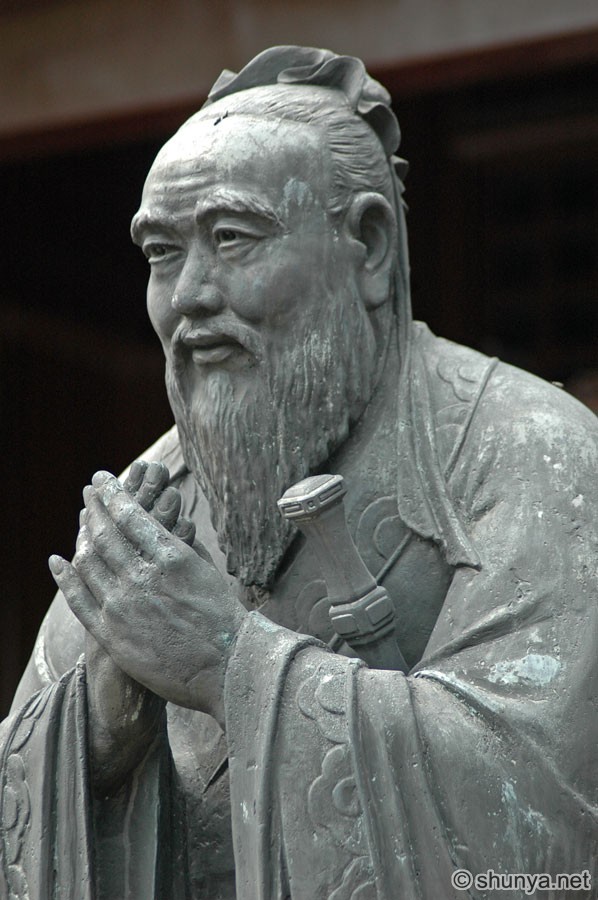
confucius

Confucius

Confucius

confucius


CONFUCIUS OF CHINA

BORN 551 B. C. E.


This moral teacher, religious chieftain, and philosopher,

though not subjected to the ignominious death of the cross, deserves a passing notice for the excellency of his morals and the acquisition of a world-wide fame.

In the following particulars his history bears a strong analogy to that of Jesus Christ.


1. He commenced as a religious teacher when about thirty years of age.

2. The Golden Rule was his favorite maxim.

3. Most of his moral maxims were sound and of a high order. The New American Cyclopedia says (vol. v. p. 6o4), “His writings approach the Christian standard of morality;” and in some respects they excel.

4. He traveled in different countries, preaching and teaching his doctrines.

5. He made a host of converts, amounting now to one hundred and fifty millions.

6. His religion and morals have been propagated by apostles and missionaries, some of whom are now traveling in this country, laboring to convert Christians. to their superior religion and morals. “There was a time,” says the work above quoted, “when European philosophers vied with each other in extolling Confucius as one of the sublimest teachers of truth among mankind.”


In the following respects his teachings were superior to those of Christ :

1. He taught that “the knowledge of one’s self is the basis of all real advances in morals and manners.” A lesson Christ neglected to teach.

2. “The duties man owes to society and himself are minutely defined by Confucius,” says the Cyclopedia.

Teaser Image
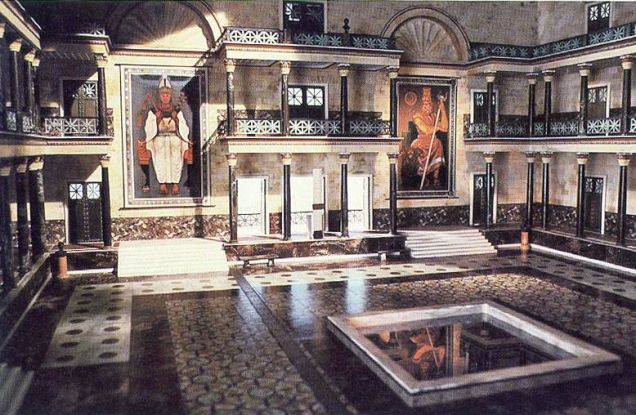
alexander library

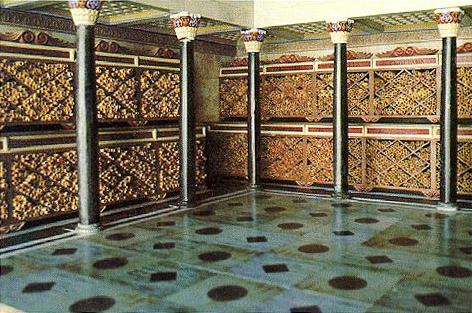
Alexandria Library

Alexandria Library

alexander library


Alexandria library

Alexandria library

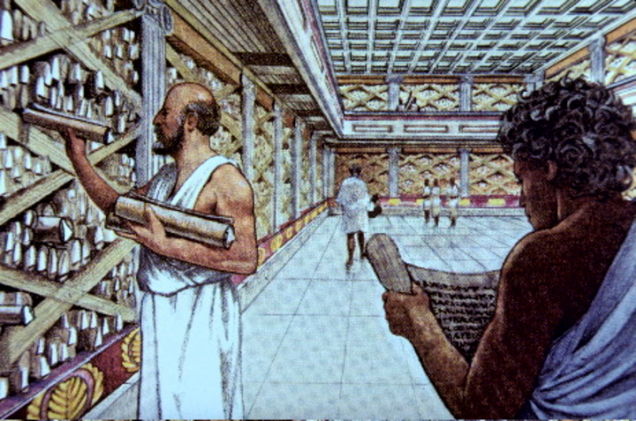
The home of the world’s great conqueror Alexander the Great, in 331 BCE, was at one period of time the great focal center for religious speculation and propagandism, the great emporium for religious dogmas throughout the East, and a place of resort for the disciples of nearly every system of religious faith existing at that time.  Nearly all existing religions in the world today were transformed and remodeled in Alexandria.

This capital city of Egypt had five hundred thousand inhabitants which was a huge city for those times.  It had a very voluminous library.  Every faith and religious order had theological schools throughout the city.  It was the custom of the people to discuss religious ideas and to improve and remodel their religious systems and even change their long accepted creeds.

At the time of the Babylonian captivity the Essenian Jews fled to Egypt.  The Essenes were Jews that mixed their faith with the Pythagorean and Egyptian oriental theology, or Buddhism.  The doctrine of Pythagoras is intensely Buddhistic.  This is the beginnings of the Christian religion.  Their Jewish sect religion was totally changed by the intermixture of heathen doctrines.

The leading doctrines of the Essenes are the same that comprise the Christian doctrines of today exception the doctrine of divine incarnation.  The “God manifest in the flesh” was a doctrine well know from the Ganges to the Yellow Sea to the Ilissus.  It is the fundamental principle of the Indian Buddhists, the basis of Zoroasterism, and is pure Platonism.  This incarnation theology merged with the Essenes theology in Alexandria.  Christianity originated nothing.  It has no new doctrines or precepts.  It is incontrovertible that Christian theology grew out of Buddhism and Essenian theology.

Then Barnabas went to Tarsus to look for Saul, 26 and when he found him, he brought him to Antioch. So for a whole year Barnabas and Saul met with the church and taught great numbers of people. The disciples were called Christians first at Antioch.       Acts 11:25

The Essenian sect went out of history right around that time.  The Essenian sect must have changed their name to Christians.


Teaser Image
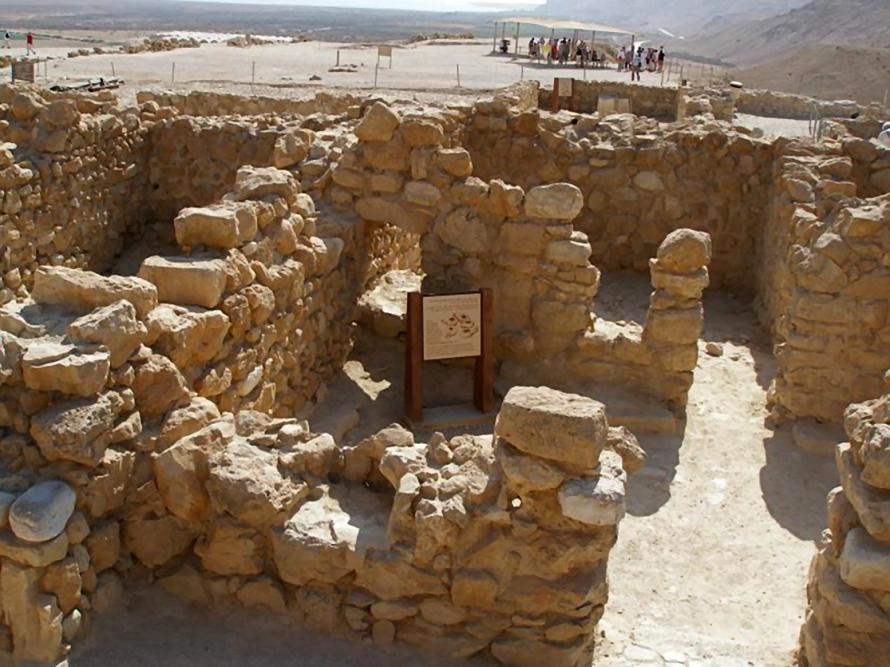
essenes

Essenes

Essenes


There was an ancient system known as Essenism – a religion whose origin has never been discovered, though it is known that the Essenes existed in the days of Jonathan Maccabeus, B.C.E. 1, and that they were of Jewish origin, and constituted one of the three Jewish sects (the other two being Pharisees and Sadducees). We have but fragments of their history as furnished by Philo, Josephus, Pliny, and their copyists, Eusebius, Dr. Ginsburg, and others, on whose authority show that Alexandrian and Judean Essenism was identically the same system in spirit and essence as its successor Judean Christianity; in other words, Judean Christianity teaches the same doctrines and moral precepts which had been previously inculcated by the disciples of the Essenian religion .

60 PARALLEL EXHIBITIONS OF THE PRECEPTS AND PRACTICAL LIVES OF CHRIST AND THE ESSENES.

From the writings of Philo, Josephus, and other authors.


1. Philo says, “It is our first duty to seek the kingdom of God and his righteousness;” so the Essenes believed and taught.

Scripture parallel.   “Seek first the kingdom of God, and his righteousness, and all else shall be added (Matt. 6:33: Luke 12:31.)


2. Philo says, “They abjured all amusements, all elegancies, and all pleasures of the senses.”

Scripture parallel.   “Forsake the world and the things thereof.”


3. The Essenes say, “Lay up nothing on earth, but fix your mind solely on heaven.”

Scripture parallel.   “Lay not up treasures on earth,” &c.


4. “The Essenes, having laid aside all the anxieties of life,” says Philo, “and leaving society, they make their residence in solitary wilds and in gardens.”

Scripture parallel.   “They wandered in deserts, and in mountains, and in dens, and in Caves of the earth.” (Heb. 11:38.)


5. Josephus says, “They neither buy nor sell among themselves, but give of what they have to him that wanteth.”

Scripture parallel.   “And parted them (their goods) to all men as every man had need.” (Acts 2:45.)


6. Eusebius says, “Even as it is related in the Acts of the Apostles, all (the Essenes) … were wont to sell their possessions and their substance, and divide among all according as any one had need, so that there was not one among them in want.”

Scripture parallel.   “Neither was there any among them that lacked, for as many as were possessors of lands or houses sold them, and brought the price of the things  that were sold, &c. (Acts 4:34.)


7· Eusebius says, “For whoever, of Christ’s disciples, were owners of estates or houses, sold them, and brought the price thereof, and laid them at the apostles’ feet, and distribution was made as every one had need. So Philo relates things exactly similar of the Essenes.”

Scripture parallel.   (The text above quoted.)


8. “Philo tells us (says Eusebius) that the Essenes forsook father, mother, brothers and sisters, houses and lands, for their religion.”

Scripture parallel.   “Whosoever forsaketh not father and mother, houses and lands, &c. cannot be my disciples.’’


9· “Their being sometimes called monks was owing to their abstraction from the world,” says Eusebius.

Scripture parallel.   “They are not of the world, even as I am not of the world.” (John 17:16.)


10. “And the name Ascetics was applied to them on account of their rigid discipline, their prayers, fasting, self mortification. &c., as they made themselves eunuchs.”

Scripture parallel.   “There be eunuchs which have made themselves eunuchs for the kingdom of heaven’s sake.”


11. “They maintained a perfect community of goods, and an equality of external rank.” (Mich. vol. iv. p. 83.)

Scripture parallel.   “Whosoever will be chief among you, let him be your servant.” (Matt. 20:27.)


12. “The Essenes had all things in common, and appointed one of their number to manage the common bag.” (Dr. Ginsburg.)

Scripture parallel.   “And had all things in common.” (Acts 2:44; see also Acts 4:32.)


13. “All ornamental dress they (Essenes) detested.” (Mich. vol. iv. p. 83.)

Scripture parallel.   “Whose adorning let it not be that outward adorning of plaiting the hair, and of wearing of gold, and putting on of apparel.” ( 1 Peter 3:3)


14. “They would call no man master.” (Mich.)

Scripture parallel.   “Be not called Rabbi, for one is your Master.” (Matt. 23:8.)


15. “They said the Creator made all mankind equal.” (Mich.)

Scripture parallel.   “God hath made of one blood all them that dwell upon the earth.”


16. “They renounced oaths, saying, He who cannot be believed without swearing is condemned already.” (Mich.)

Scripture parallel.   “Swear not at all.”


17. “They would not eat anything which had blood in it, or meat which had been offered to idols. Their food was hyssop, and bread., and salt ; and water their only drink.” (Mich.)

Scripture parallel.   “That ye abstain from meat offered to idols, and from blood.” (Acts 15:29.)


18. “Take nothing with them, neither meat or drink, nor anything necessary for the wants of the body.”

Scripture parallel.   “Take nothing for your journey; neither staves nor script; neither bread, neither money, neither have two coats apiece.”


19. “They expounded the literal sense of the Holy Scriptures by allegory.” .

Scripture parallel.   “Which things are an allegory.” (Gal. 4:24.)


20. “They abjured the pleasures of the body, not desiring mortal offspring, and they renounced marriage, believing it to be detrimental to a holy life.” (Mich.)

Scripture parallel.   It will be recollected that neither Jesus nor Paul ever married, and that they discouraged the marriage relation.

Christ says, “They that shall be counted worthy of that world and the resurrection neither marry nor are given in marriage.” And Paul says, “The unmarried careth for the things of the Lord.” (1 Cor. 7:32.)


21. “They strove to disengage their minds entirely from the world.”

Scripture parallel.   “If any man love the world, the love of the Father is not in him.”


22. “Devoting themselves to the Lord, they provide not for future subsistence.”

Scripture parallel.   “Take no thought for the morrow what ye shalt eat and drink,” &c.


23. “Regarding the body as a prison, they were ashamed to give it sustenance.” (c. ii. 71.)

Scripture parallel.   “Who shall change our vile bodies?” (Phil. 3:21.)


24. ‘’They spent nearly all their time in silent meditation and inward prayer.” (c. ii. 71.)

Scripture parallel.   “Men ought always to pray.” (Luke 18:1.) “Pray without ceasing.” (1 Thess. 5:17.)


25. “Believing the poor were the Lord’s favorites they vowed perpetual chastity and poverty.” (c. ii. 71.)

Scripture parallel.   “Blessed be ye poor.” (Luke 6:20.) “Hath not God chosen the poor?” (James 2:5)


26. “They devoted themselves entirely to contemplation in divine things.” (c. ii. 71.)

Scripture parallel.   “Mediate upon these (divine) things; give thyself wholly to them.” (I Tim. 4:15)


27. ‘’They fasted often, sometimes tasting food but once in three or even six days.”

Scripture parallel.   Christ’s disciples were “in fastings often.” (2 Cor. 11:27; see also 5:34)


28. “They offered no sacrifices, believing that a serious and devout soul was most acceptable.” (c. ii. 71.)

Scripture parallel.   “There is no more offering for sin.” (Heb. 10:18)


29. “They believed in and practiced baptizing the dead.” (c. ii. 7 1.)

Scripture parallel.   “Else what shall they do which are baptized for the dead.” (I Cor. 15:29)


30. “They gave a mystical sense to the Scriptures, disregarding the letter:”

Scripture parallel.   “The letter killeth, but the spirit maketh alive.” (1 Cor. 3:6.).


31. “They taught by metaphors, symbols, and parables.”

Scripture parallel.   “Without a parable spake be not unto them.” (Matt. 13:34.)


32. “They had many mysteries in their religion which they were sworn to keep secret.”

Scripture parallel.   “To you it is given to know the mysteries of the kingdom; to them it is not given.” (Matt. 13:11.) “Great is the mystery of godliness.”


33. “They had in their churches, bishops, elders, deacons, and priests.’;

Scripture parallel.   “Ordained elders in every church.” (Acts 14:23.) For ”deacons,” see 1 Tim. 3:1.


34. “When assembled together they would often sing psalms.”

Scripture parallel.   .. Teaching and admonishing one another in psalms.” (Col. 3:16.)


35. “They healed and cured the minds and bodies of those who joined them.”

Scripture parallel.   “Healing· all manner of sickness,” &c. (Matt. 4:23.)


36. “They practiced certain ceremonial purifications by water.”

Scripture parallel.   “The accompishment of the days of purification.” (Acts 21:26.)


37· “They assembled at the Sabbath festivals clothed in white garments.”

Scripture parallel.    “ Shall ‘be clothed in white garments.” (Rev. 3:4.)


38. “They disbelieved in the resurrection of the external body.”

Scripture parallel.   “It is sown a natural body, it is raised a spiritual body.” (I Cor. 15:44.)


39. Pliny says,·” They were the only sort of men who lived without money and without women.”

Scripture parallel.   “ The love of money is the root of all evil.” ( 1 Tim. 6:10.)  Christ’s disciples .travelled without money and without scrip, and “eschew the lusts of the flesh.”


40. “They practiced the extremest charity to the poor.” (c. ii. 71,)

Scripture parallel.   “Bestow all thy goods to feed the poor.” · (1 Cor. 13:3)


41. “They were skillful’ in interpreting dreams, and in foretelling future events.”

Scripture parallel.   “Your sons and daughters shall prophesy, and your old men shall dream dreams.” (Acts 2:17.)


42. cc They believed in a paradise, … and in a place of never-ending lamentations.”

Scripture parallel.   “Life everlasting.” (Gal. 8:8.) “Weeping, wailing, and gnashing of teeth.” (Matt. 8:42.)


43. “They affirmed,” says . Josephus, “that God fore· ordained all the events of human life.”

Scripture parallel.   “Foreordained before the foundation of the world.” (1 Peter.)


44. They believed in Mediators between God and the souls of men.”

Scripture parallel.   “ One Mediator between God and men.” (1 Tim. 2:5.)


45. “They practiced the pantomimic representation of the death, burial, and resurrection of God “- Christ the Spirit.

Scripture parallel.   With respect to the death, burial, and resurrection of Christ, see 1 Cor. 15:4·


46. “They inculcated the forgiveness of injuries.”

Scripture parallel.   “Father, forgive them; for they know not what they do.” (Luke 23:34.)


47· “They totally disapproved of all war.”

Scripture parallel.   “ If my kingdom were of this world, then would my servants fight.” (John 18:36.)


48. “ They inculcated obedience to magistrates, and to the civil authorities.”

Scripture parallel.   “Obey them which have the rule over you.” (Heb. 8:17; 26:65.)


49. ”They retired within themselves to receive interior revelations of divine truth.” (c. ii. 71.)

Scripture parallel.    “Every one of you hath a revelation.” (1 Cor. 14:26.)


50. “They were scrupulous in speaking the truth.”

Scripture parallel.   “Speaking all things in truth.” (2 Cor. 7: 14.)


51. “They perform many wonderful miracles.”

Scripture parallel.   Many texts teach us that Christ and his apostles did the same.


52. “Essenism put all its members upon the same level, forbidding the exercise of authority of one over another.” (Dr. Ginsburg.)

Scripture parallel.    Christ did the same. For proof, see Matt. 20:2s; Mark 9:35·


53. “ Essenism laid the greatest stress on being meek and lowly in spirit.” (Dr. Ginsburg.)

Scripture parallel.    See Matt. 5:5; 9:28.


54. “The Essenes commended the poor in spirit,· those who hunger and thirst after righteousness, and the merciful, and the pure in heart.” (Dr Ginsburg.)

Scripture parallel.    For proof that Christ did the same, see Matt.


55· 11 The Essenes commended the peacemakers.” (Dr. Ginsburg.)

Scripture parallel.    “Blessed are the peacemakers.”


56. “The Essenes declared their disciples must cast out evil spirits, and perform miraculous cures, as signs and proof of their faith.” (Dr. Ginsburg.)

Scripture parallel.    Christ’s disciples were to cast out devils, heal the sick, and raise the dead, &c., as signs and proof of their faith. (Mark 16:17.)


57. “They sacrificed the lusts of the flesh to gain spiritual happiness.”

Scripture parallel.    “You abstain from fleshly lusts.” (1 Peter 2:11.)


58. “The breaking of bread was a veritable ordinance among the Essenes.”

Scripture parallel.    “He (Jesus) took bread, .and gave thanks, and brake it.” (Luke 22:19.)


59. 11 The Essenes enjoined the loving of enemies.’’ (Philo.)

Scripture parallel.    So did Christ say, “Love your enemies,” &c.


60. The Essenes enjoined, “Doing unto others as you would have them do unto you.”

Scripture parallel.    So did Christ say,

Teaser Image
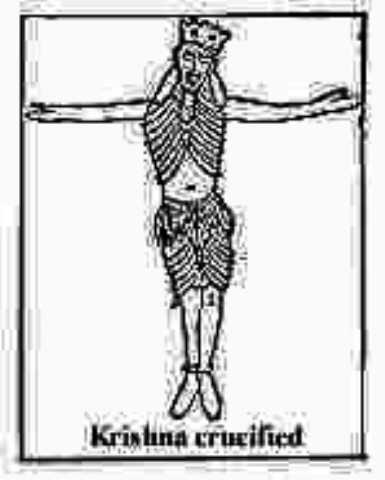
krishna crucified

346 Matches Between Christ and Krishna

krishna crucified

346 STRIKING ANALOGIES BETWEEN CHRIST AND CHRISHNA

Chrishna Crucified


1. The advent of each Savior was miraculously foretold by prophets.

2. The fallen and degenerate condition of the human race is taught in the religion of each.

3. A plan of restoration or salvation is provided for in each case.

4. A divine Savior is considered necessary in both cases.

5. The necessity of atoning for sin is taught in the religion of each.

6. A God, or Son of God, is selected as the victim for the atoning sacrifice in each case.

7. This God is sent down from heaven in each case in the form of a man.

8. The God or Savior in each case is the second person of the Trinity.

9. Chrishna, as well as Christ, was held to be really God incarnate.

10. The mission of each Savior is the same.

11. There is a resemblance in name-Chrishna and Christ.

12. Chrishna, as well as Christ, was incarnated and born of a woman.

13. The mother in each case was a holy virgin.

14. The same peculiarities of a miraculous conception and birth are related of each.

15. Each had an adopted earthly father.

16. The father of Chrishna, as well as that of Christ, was a carpenter.

17. God. is claimed as the real father in both cases.

18. A Spirit or Ghost was the author of the conception of each.

19. There was rejoicing on earth when each Savior was born.

20. There was also joy in heaven at the birth and advent of each.

21. Chrishna, as well as Christ, was of royal descent.

22. Their mothers were both reputedly pious women.

23. The names of two mothers are somewhat similar Mary and Maia.

24. Each had a special female friend-Elizabeth in the one case, and the wife of Nanda in the other.

25. Neither Savior was born in a house, but both in obscure situations.

26. Both were born on the 25th of December.

27. Both, at birth, were visited by wise men and shepherds.

28. The visitors conducted by a star in each case.

29. The rite of purification observed by the mothers of each.

30. An angel warning of impending danger in each case.

31. The incumbent ruler was hostile in each case.

32. A bloody decree in each case for the destruction of be infant Savior.

33. A flight of the parents takes place in both cases.

34. The parents of one sojourned at Muturea, the other at Mathura.

35. Each Savior had a forerunner – John the Baptist in one case, Bali Rama in the other.

36. Both were preternaturally’ smart in childhood.

37. Each disputed with and vanquished learned opponents.

38. Both became objects of search by their parents.

39. And both occasioned anxiety, if not sorrow, to their parents.

40. The mother of each bad other children-that is children begotten by man as well as God.

41. Both Saviors retired to, and spent considerable time in the wilderness.

42. The religious rite of “fasting” was practiced by each Savior.

43. Each delivered a noteworthy sermon, or series of moral lessons.

44. Chrishna, as well as Christ, was called and considered God.

45. Each was both God and the Son of God (so regarded).

46. “Savior” was one of the divine titles of each.

47. Each was designated “the Savior of ‘man,” “the Savior of the world,” &c.

48. Both expressed a desire to “save all.’’

49. Each sustained the character of a Messiah.

50. Chrishna, as well as Christ, was a Redeemer.

51. Each Savior was called “Shepard.”

52. Both were believed to be the Creator of the world.

53. Each is sometimes spoken of, also, as only an agent in the creation.

54. Both were the “Light and Life” of men.

55. Each “brought life and immortality to light.”

56. Both are represented as “the seed of the woman bruising the serpent’s head.”

57. Was Christ a “Dispenser of grace,” so was the Hindu Savior.

58. One was “the lion of the tribe of Judah,” the other “the lion of the tribe of Saki “

59. Christ was “the Beginning of the End,” Chrishna Beginning, the Middle, and the End.”

60. Both proclaimed, “I am the Resurrection.”

61. Each was “the way to the Father.”

62. Both represented emblematically “the Sun of Righteousness.

63. Each is figuratively represented as being “all in all.”

64. Both speak of having existed prior to human birth.

65. A dual existence – an existence in both heaven and earth at once – is claimed by or for both.

66. Chrishna, as well as Christ, was “without sin.’’

67. Both assumed the divine prerogative of forgiving sins.

68. The mission of each was to deliver from sin.

69. Both came to destroy the devil and his works.

70. The doctrine of the “atonement” is practically realized in each case.

71. Each made a voluntary offering for the sins of the world.

72. Both were human as well as divine.

73. Chrishna, as well as Christ, was worshiped as God absolute.

74. Each was regarded as “the Lord from Heaven.”

75. Chrishna, as well as Christ, had applied to him all the attributes of God.

76. Was Christ omniscient, so was Chrishna.

77. Was one omnipotent, so was the other (so believed).

78. And both are represented as being omnipresent.

79. Each was believed to be divinely perfect.

80. Was one “Lord of lords,” so was the other.

81. Each embodied ‘the “power and wisdom of God.”

82. All power was committed unto each (so claimed).

83. Chrishna performed many miracles as well as Christ.

84. One of the first miracles of each was the cure of a leper.

85. Each healed “all manner of diseases.”

86. The work of casting out devils constitutes a part of the mission of each.

87. Each practically proved his power to raise the dead.

88. A miracle appertaining to a tree is related of both.

89. Both could read the thoughts of the people.

90. The power to detect and eject evil spirits was claimed by both.

91. Both had the keys or control of death.

92. Each led an extraordinary life.

93. Each had a character for supernatural greatness.

94. Both possessed or claimed a oneness with the Father.

95. A “oneness with his Lord and Master” is claimed, also, for the disciples of each.

96. A strong reciprocal affection between Master and disciple in each case.

97. Each offers to shoulder the burdens of his disciples.

98. A portion of the life of each was spent in preaching.

99. Both made converts by their miracles and preaching.

100. A numerous retinue of believers springs up in each case.

101. Both bad commissioned apostles to proclaim their religion.

102. Each was an innovator upon the antecedent religion.

103. A beautiful reform in religion was inaugurated by each Savior.

104. Each opposed the existing popular priesthood.

105. Both abolished the law of lineal descent in the ancient priesthood.

106. Each was an object of conspiracy by his enemies.

107. Humility and external poverty distinguished the life of each.

108. Each denounced riches and rich men, and loathed and detested wealth.

109. Both had a character for meekness.

110. Chastity or unmarried life was a distinguishing characteristic of each.

111. Mercy was a noteworthy characteristic of each.

112. Both were censured for associating with sinners.

113. Each was a special friend to the poor.

114. A poor widow woman receives marked attention by each.

115. Each encounters a gentile woman at a well.

116. Both submitted unresistingly to injuries and insults.

117. General practical philanthropy and impartiality marks the life of each Savior.

118. Each took more pleasure in repentant sinners than in virtuous saints.

119. Both practically disclosed God’s attempt to reconcile the world to himself.

120. The closing incidents in the earth-life of each were strikingly similar.

121. A memorable last supper marked the closing career of both.

122. Both were put to death by “wicked hands.”

123. Chrishna, as well as Christ, was crucified.

124. Darkness attended the crucifixion of each.

125. Both were crucified between two thieves.

126. Each is reported to have forgiven his enemies.

127. The age of each at death corresponds (being between thirty and thirty-six years).

128. Each, after giving up the ghost, descends into hell.

129. The resurrection from the dead is a marked period in the history of each.

130. Each ascends to heaven after his resurrection.

131. Many people are reported to have witnessed the ascension in each case.

132. Each is reported as having both descended and ascended.

133. The head of each, while living on earth, was anointed with oil.

II. DOCTRINES.

134. There is a similarity in the doctrines of their respective religions.

135. The same doctrines are propagated by the disciples of each.

136. The doctrine of future rewards and punishments is a part of each system.

137. Analogous views of heaven are found in each system.

138. A third heaven is spoken of in each system.

139. All sin must be punished according to the bible teachings of each.

140. Each has a hell provided for the wicked.

141. Both teach a hell of darkness and a hell of light.

142. An immortal worm finds employment in the hell of each system (‘”the worm that dieth not.”)

143. The arch-demon of the underworld uses brimstone for fuel in one case, and oil in the other.

144. The motive for future punishment is in both cases the same. 145. Each has a purgatory or sort of half-way house.

146. Special divine Judgments on nations are taught by each.

147. A great and final day of judgment is taught by each.

148. A general resurrection also is taught- in each religion.

149. That there is a “Judge of the dead” is a doctrine of each.

150. Two witnesses are to report on human actions ill the final assizes.

151. We are furnished in each case with the dimensions of heaven or the holy city.”

152. Man is enjoined to strive against temptation to sin by each.

153. And repentance for sin is a doctrine taught by the bible of each.

154. Each has a prepared city for a paradise.

155. The bibles of both teach that we have no continuing city here.

156. Souls are carried to heaven by angels, as in the instance of Lazarus, in each case. ,

157. A belief in angels or spirits is a tenant of each religion.

158. The doctrine of fallen or evil angels is found in both system.

159. Obsession by wicked or evil spirits is taught by each.

160. Both teach that sickness or disease is caused by evil spirits.

161. Each has a king-devil or arch-demon with a posse of subalterns or evil spirits.

162. Both bibles record the story of a “hellaballoo” or war in heaven.

163. Both teach that an evil man can neither do nor speak a good thing.

164. Both teach that sin is a disadvantage in the present life as well as in the future.

165. The doctrine of free will or free agency is taught by each.

166. Predestination seems to be inferentially taught by each.

167. In each case man is a prize in a lottery, with God and the devil for ticket-holders.

168. Both make the devil (or devils) a scape-goat for sin.

169. Both teach the devil or evil spirits as the primary cause of all evil.

170. The destiny of both body and soul is pointed out by each.

171. The true believers are known as “saints” under both systems.

172. Saints with “white robes” are spoken of by each.

173. Both specify “the Word of Logos” as God.

174. Wisdom, too, is personified as God by the holy Scriptures of each.

175. Both teach that God may be known by his works.

176. The doctrine of one supreme God is taught in each bible.

177. Light and truth are important words in the religious nomenclature of each.

178. Both profess a high veneration for truth.

179. “Where the treasure is, there is the heart also,” is taught by each.

180. “Seek and ye shall find” is a condition prescribed by each.

181. Religious toleration is a virtue professed by both.

182. All nations are professedly based on an equality by each.

183. Both, however, enjoin partiality to “the household of faith.”

184. The doors of salvation are thrown open to high and low, rich and poor, by each.

185. Each professes to have “the only true and saving faith.”

186. There is a mystery in the mission of each Savior.

187. “Rama” is a well-known word in the bible of each.

188. The understanding of the wise” is a phrase in each.

189. Both speak figuratively of “the blind leading the blind.”

190. “A new heaven and a new earth” is spoken of by each.

191. The doctrine of a Trinity in the Godhead is taught by each.

192. Baptism by water is a tenant and ordinance of each.

193. “Living water” is a metaphor found in each.

194. Baptism by fire seems also to be recognized by each.

195. Fasting is emphatically enjoined by each.

196. Sacrifices are of secondary importance in each system, and are partially or wholly abandoned by each.

197. The higher law is paramount to ceremonies in each religion.

198. The bible of each religion literally condemns idolatry.

199. Both also make concessions to idolatry.

200. Polygamy is not literally encouraged nor openly condemned by either.

201. The power to forgive sins is conferred on the disciples of each.

202. The doctrine of blasphemy is recognized by each.

203. Pantheism, or the reciprocal in-being of God in nature and nature in God, is taught by both.

III. BIBLES AND HOLY SCRIPTURES.

204. Each bas a bible which is ·the idolized fountain of all religious teaching.

205. Both have an Old Testament and a New Testament, virtually.

206. The New Testament inaugurates a new and reform system of religion in each case:

207. “All Scripture is given by inspiration of God” is the faith of the disciples of each.

208. Each system claimed to have its inspired men to write its scriptures.

209. Both hold a spiritual qualification necessary to understand their bibles.

210. It is a sin to become “wise beyond what is written” in their respective bibles.

211. Both recommend knowing the Scriptures in youth.

212. Alteration of their respective bibles is divinely interdicted.

213. The bible is an infallible rule of faith and practice in both cases.

214. “All scripture is profitable for doctrine” is the faith of each;

215. Both explain a way the errors of their bibles.

IV. SPIRITUALITY OF THE TWO RELIGIONS

216. The religion of Chrishna is pre-eminently spiritual no less than Christ’s.

217. Both teach that “to be carnally minded is death.”

218. External rites are practically dispensed with in each religion.

219. The spiritual law written on the heart is recognized by each.

220. ·”God is within you,” Budhists teach as well as Christians.

221. Both recognize an invisible spiritual Savior.

222. “God dwells in the heart,” say Hindu as well as Christians.

223. An inward recognition of the divine law is amply seen in both.

224. Both confess allegiance to an inward monitor.

225. The doctrine of inspiration and internal illumination is found in both.

226. The indwelling Comforter is believed in by both.

227. Both also teach that religion is an inward work.

228. Both speak of being born again i.e., the second birth.

229. A spiritual body is also believed in by both.

230. “Spiritual things are incomprehensible to the natural man” say each.

231. God’s spiritually sustaining power Buddhists also acknowledge.

232. Both give a spiritual interpretation to their bibles.

233. Each has a new and more interior law superseding the old law.

234. The spiritual cross-self-denial or asceticism-is a prominent feature of each religion.

235. The duty of renouncing and abandoning the external world is solemnly enjoined by each.

236. Buddhists renounce the world more practically than Christians.

237. Withdrawal or seclusion from society is recommended by each.

238. Bodily suffering as a benefit to the soul is encouraged by each.

239. Voluntary suffering for righteousness’ sake is a virtue with each.

240. The cross is a religious emblem in each system.

241. Both glory ‘in “the religion of the cross” as better than a religion without suffering.

242. Hence both teach “the greater the cross the greater the crown.”

243. Earthly pleasures are regarded as evil by both.

244. Contempt for the body as an enemy to the soul is visible in both.

245. Retirement for religious contemplation is a duty with each.

246. The forsaking of relations is also enjoined by each.

247. Spiritual relationship is superior to external relationship with both.

248. “To die is great gain” we are taught by each.

249. A subjugation of the passions is a religious duty with each.

250. The road to heaven is a narrow one with each.

251. The same state of religious perfection is aspired to by the disciples of each.

V. THE DOCTRINE OF FAITH OR BELIEF.

252. Faith is an all-important element and doctrine with each.

253. Heresy, or want of faith, is a sin of great magnitude with both.

254. Faith in the Savior is a condition to salvation by both.

255. Confessing the Savior is also required in both cases.

256. ‘’Believe or be damned” is the condition or profess to believe the terrible sine qua non to salvation by each.

257. Skeptics or unbelievers are with both the chief of sinners.

258. “Faith can remove mountains,” either with a Buddhist or a Christian.

259. Both contrast faith with works.

260. Faith without works is dead-so teach both Buddhists and Christians.

VI. THE DOCTRINE AND PRACTICE OF PRAYER.

261. Prayer is an important rite in each religion.

262. Private or secret prayer is recommended by both.

263. Each has also a formula of prayer.

264. “Pray without ceasing” is a Buddhist as well as a Christian injunction.

265. Praying to their respective Saviors ‘in sickness and in health is a custom with both.

266. The custom of praying for the dead is recognized in each system.

VII. TREATMENT OF ENEMIES.

267. It is a Hindu as well as a Christian injunction to treat enemies kindly.

268. Passive submission to injuries and abuse is enjoined by both.

269. The· holy Scriptures of both require us to pray for enemies, and feed them.

270. And even love to enemies is a part of the spirit of each religion.

VIII. THE MILLENNIUM.

271. Hindus, like Christians, prophesy of a great millennial era.

272. There is a remarkable similarity in their notions with respect to it.

273. Both anticipate a Second Advent or new Savior on the occasion.

274. The destruction of the world also is to take place in both cases.

275. And an entire renovation and a new order of things are to be established in each case.

IX. MIRACLES.

276. There is almost a constant display of miraculous power in each system.

277. The disciples of both are professedly endowed with this power.

278. Miraculous cures ·of the lame, the blind, and the sick are reported in both cases.

279. Miracles of handling poisonous reptiles with impunity are reported by both.

280. Swallowing deadly poison is enjoined by Christians and practiced by Hindus.

281. Many cases of the miraculous ejection of devils are reported by both.

282. The miracle of thought-reading is displayed by both.

283. The saints in both cases are reported as raising the dead.

X. PRECEPTS.

284. “The kingdom of heaven” was to be sought first of all things in each case.

285. Love to God is a paramount obligation under each system.

286. And the worship of God is an essential requisition in each religious policy.

287. “Cease to do evil and learn to do well” is virtually enjoined by each.

288. An inward knowledge of God is taught as essential by both systems.

289. A reliance on works is discouraged by both.

290. Purity of heart is inculcated by Hindus as well as Christians.

291. Speak and think evil of no man is a gospel injunction of each.

292. A love of all beings is more prominently the spirit of Buddhism than
that of Christianity.

293. The practice of strict godly virtue is enjoined by both.

294. Moderation and temperance are recommended by both.

295. Patience is a virtue in each religion.

296. The duty of controlling our thoughts is taught by each.

297. Charity has a high appreciation by each.

298. Both make the poor objects of attention.

299. The practice of hospitality is recommended by each.

300. Humility is a duty and a virtue under both systems.

301. Mirthfulness or light conversation is .forbidden by each.

302. Purity of life is a duty with Hindus as well as Christians.

303. Chasteness in conversation is inculcated by both.

304. “Respect to persons” is a sin in the moral polity of I both.

305. Alms-giving is religiously enjoined by the holy Scriptures of both.

306. Both teach that “it is better to give than to receive.”.

307. Loyalty to rulers is a moral requisition of each system.

308. Honor to father and mother is esteemed a great virtue by both.

309. The correct training of children is with each a scriptural duty.

310. “Look not upon a woman” is more than hinted by each.

31 I. The reading of the Holy Scriptures is enjoined by both.

312. Lying or falsehood is with each a sin of great magnitude.

313. Swearing is discountenanced by both religions.

314. Theft or stealing is specially condemned by both.

315. Both deprecate and condemn the practice of war.

316. Both discountenance fighting.

317. Neither of them professes to believe in slavery.

318. Drunkenness and the use of wine are more specifically condemned by the Hindoo religion.

319. Adultery and fornication are ‘heinous sins in the eyes of both.

320. Both condemn covetousness as a great sin.

321. Buddhists more practically condemn anger than Christians do.

XI. MISCELLANEOUS ANA​LOGIES.

322. Both have their apocryphal as well as their canonical Scriptures.

323. Stories are found in the bible of each which would be rejected if found elsewhere.

324. Both make their bible a finality in matters of faith.

325. Both have had their councils and commentaries to reveal their bibles over again.

326. Numerous schisms, divisions, sects, and creeds have sprung up in each.

327. Various religious reforms have sprung up under each.

328. Conversion from one religious sect to another is common to both.

329. Both religions have been troubled with numerous skeptics or infidels.

339. Both have often resorted to new interpretations for their bibles to suit the times.

331. The unconverted are stigmatized by each.

332. “Knock and it shall be opened” is the invitation of each.

333. Public confession of sins in class-meetings is known to each.

334. Death-bed repentance often witnessed under both religious systems.

335. A belief in haunted houses incident to the religious countries of both.

336. A superior respect for woman claimed by each.

337. An idolatrous veneration for religious ancestors by each.

338. Each sustain a numerous horde of expensive priests.

339· A divine call or illumination to preach claimed by each.

340. Religious martyrdom the glory of each.

341. Both have encountered “perils by sea and land” for their religion.

342. He who loseth his life (for his religion) shall find it, say both.

343. Both in ancient times suffered much persecution.

344. The disciples of both have suffered death without flinching from the faith.

345. Each sent numerous missionaries abroad to preach and convert.

346. And, finally, each cherished the hope of converting the world to their religion.

Teaser Image
alt

Jesus the Pagan

Pagan Jesus


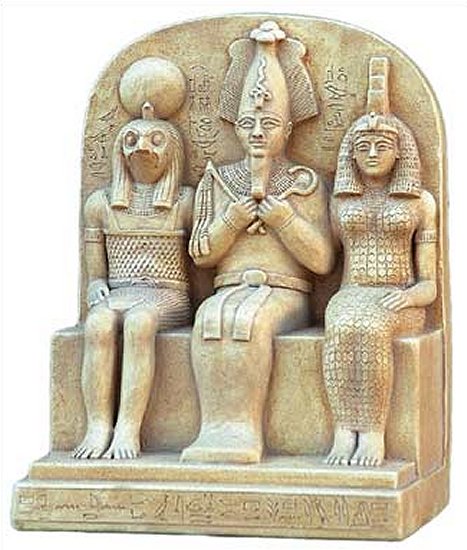
Horus

MAN’S DESIRE TO IDOL WORSHIP HAS A PATTERN —

ISIS

  • Goddess Isis and (Osiris’ son) Aion had a child.

Just like Jesus – the child’s birthday was celebrated on December Twenty-Fifth.

Isis, a God woman, is seen of Egyptian wall paintings back in 1360 B.C.  This goddess was popular because

Just like Jesus – she could be appealed to for personal salvation.

Just like Jesus – People would confess their sins and forgiveness was given through immersion in water.  Personal salvation is stressed through repentance accomplished through a priest who preaches monogamy and family unity.

Isis united with Aion and had a son named Horus whose birthday is January 6, the day the Greek orthodox Christians celebrate their Christmas on.  Europe celebrates January 6 as the “Three Kings Day” where everyone exchanges presents on that day instead on Christmas day.

Just like Jesus – The Madonna & child paintings of Mary and baby Jesus are almost identical to Isis & baby Horus.

HORUS

Just like Jesus – Horus baptized by Anep, Jesus baptized by John.

Just like Jesus – Horus born in Annu, meaning place of bread. Jesus was born in Bethlehem, meaning house of bread.

Just like Jesus – Horus the good shepherd w/ crook on shoulder

Just like Jesus – 7 aboard the boat with Horus, 7 on boat with Jesus

Just like Jesus – Horus as the lamb

Just like Jesus – Horus the lion, Jesus as the lion

Just like Jesus – Horus identified with tat or cross, Jesus identified with cross

Just like Jesus – Horus at 12 years of age showed his special intellect, Jesus also at 12 years

Just like Jesus – Horus at 30 years was baptized

Just like Jesus – Horus the Krst, Jesus the Christ

Just like Jesus – Horus son of God, Jesus son of God

Just like Jesus – Two mothers of Horus were sisters, two mothers in Jesus story sisters

Just like Jesus – Horus adversary Seth, Jesus adversary Satan

Just like Jesus – Horus the sower, Seth the destroyer in harvest field, Jesus the sower of the good seed, Satan the sower of tares

Just like Jesus – Horus and Seth contending on the mount, same with Jesus & Satan

Just like Jesus – Star announced birth of Horus

Just like Jesus – Horus afflicted one, same with Jesus Horus as type of life eternal

Just like Jesus – Horus comes to fulfil the law, same with Jesus Horus came by water, blood, spirit

Just like Jesus – Horus of two horizons, Jesus of two lands

Just like Jesus – Horus walking on water

Just like Jesus – Children around Horus

Just like Jesus – Horus entering in mount to have conversation with his father

Just like Jesus – Horus transfigured on the mount

Just like Jesus – Seven loafs of Horus feeding multitude reclining in fields of Annu

Just like Jesus – 12 followers of Horus called Har-Khutti (disciples)

Just like Jesus – Secret mysteries make known by Taht-Aan, secrets made known by John

Just like Jesus – Anup and Aan as witnesses for Horus, two Johns witness for Jesus

Just like Jesus – Horus the morning star, Jesus the morning star

Just like Jesus – Horus gives morning start to followers

MITHRAS

The most popular and widely spread religion of the ancient world.  – He was worshiped in Persia 1400 B.C. E.  It dates back to before the Iranian race split into two tribes; Persian and Indian. This cult was widely known to be in Asia Minor around the first century C.E.  Mithra religion spread rapidly among the Romans and was protected by the Emperors.  This cult Mithraism was a major competitor to Christianity until around the year 300 C.E. when Constantine created the Christian religion which squashed any competing religion. The papacy of Mithra became the Vatican papacy with the identical hierarchy structure.  The Catholic Encyclopedia states that the priests were called fathers, and the chief father pope was called “pater patratus.”  The Mithratic pope was known as “Pontimus Maximus”, or simply Papa.

Paul said, “They drank from that spiritual rock and that rock was Christ.” 1 cor 10:4.  These are the identical words found in the Mithra scriptures with the word Mithra instead of Christ.  The home of Paul was the site of Mithratic worship.  Vatican hill was sacred to the Mithra priests.  Mithraic remains have been found there.  The merging of Mithaic worship to Christ worship was without interruption.  The Vatican cave belonged to Mithra until 376 C.E. when it was seized by the Vatican in the name of Christ (on December 25).  All of the Vatican rituals of the headresses, altar, host, liturgical formula is all taken from the Mithra mystery rituals.

Just like Jesus – Born December 25, originally recognized to be the winter solstice.

Just like Jesus – Born of a virgin.

Just like Jesus – Born in a cave with shepherds giving gifts.

Just like Jesus – Mithras was born on the darkest day of the year, and they were considered the “light” to the world.

Just like Jesus – Had 12 companions.

Just like Jesus – Promised immortality.

Just like Jesus – Sacrificed himself for world peace (the great bull of the Sun).

Just like Jesus – Rose again 3 days after being buried in a tomb.

Just like Jesus – He is called “the way”, “the truth”, “the light.”

Just like Jesus – He is called “Redeemer”, “Savior”, “Messiah.”

Just like Jesus – His sacred day of the week was Sunday and it was called “the Lord’s day.”

Just like Jesus – He had a Eucharist which was eaten at the Lord’s Supper. (“He who shall not eat of my body and drink of my blood so that he may be one with me and I with him, shall not be saved.)

Just like Jesus – His resurrection is celebrated every year. His principal day for his festival became what today is called Easter.

Just like Jesus – His annual sacrifice is the “Passover of the Magi.”  It is a symbolic atonement for spiritual regeneration.

Just like Jesus – Mithras was regarded as a mediator between God and humans.  The name of the Persian high god that Mithras mediated between was Ajura-Mazda.

Just like Jesus – Mithras aided the souls of humans to heaven.

Just like Jesus – Mithras performed miracles.

Just like Jesus – Mithras killed a “holy bull” and by eating this bull’s body and blood it provides life.  The meal eaten was exactly like the Christian host wafer that is given in communion.

Just like Jesus – Mithras held a “last supper” with his disciples before he returned to Heaven. Just like Jesus – Mithras initiates had to be purified by a baptism.

Just like Jesus – Mithras will have a victory over evil and will sit in judgment of humans. Just like Jesus – Mithras will lead the “saved ones” over a river of fire to become immortal.

OSIRIS-DIONYSUS –

Dates back to 1250 B.C. and is seen on wall painting in Egypt.  In the 5th century Osiris and Dionysus had merged into the god Dionysus.  When Jesus came along Dionysus had been worshiped for centuries.

Just like Jesus – Dionysus was a savior of mankind, a “god” made into man, the “son of God” equal with the “Father.”

Just like Jesus – Dionysus claimed his father was God.

Just like Jesus – the mother of Dionysus was a mortal virgin, called Semele.  Semele wanted to see Zeus, King of gods, in all his glory and was impregnated by one of his lightning bolts.

Just like Jesus – Dionysus’ mother didn’t die but ascended to heaven and became an honored divine being.

Just like Jesus – Dionysus was born on December 25, and to some January 6.

Just like Jesus – Dionysus was born in a humble environment in nature.

Just like Jesus – the Magi (visited Jesus) were followers of Dionysus.

Just like Jesus – The Pagans way of worshiping God was to give gifts of gold, frankincense, and myrrh (6th cent BCE).

Just like Jesus – a prophesized a star represented the birth of Dionysus.  The alleged grove where Jesus was born was an area sacred to Osiris-Dionysus.

Just like Jesus – Dionysus initiates can be “born again” through baptism with water (into the mysteries) for centuries BCE.

Just like Jesus – Dionysus turned water into wine at a marriage ceremony.  Coincidentally it was the same known date when Jesus did his same miracle.

Just like Jesus – Dionysus’ disciples did not recognize him as a God, but then he transfigured before them.

Just like Jesus – Dionysus had twelve disciples.

Just like Jesus – Dionysus was portrayed as a quiet man with long hair and a beard.

Just like Jesus – Dionysus healed the sick.

Just like Jesus – Dionysus exorcised demons.

Just like Jesus – Dionysus provided spectacular miraculous meals.

Just like Jesus – Dionysus helped fishermen make miraculous catches of fish.

Just like Jesus – Dionysus was .not honored in his home town but was a wanderer.

Just like Jesus – Dionysus accused of licentious behavior.

Just like Jesus – Dionysus accused of heresy, stands up to hypocrites and to tyranny.

Just like Jesus – Dionysus accused of bringing a new religion.

Just like Jesus – Dionysus was betrayed for 30 pieces of silver (same as the motif of the Socrates story).

Just like Jesus – Dionysus is equated to bread and wine (body and blood of Jesus)

Just like Jesus – Dionysus the bread and wine are taken to communicate with him.

Just like Jesus – Dionysus rode into town on a donkey and people waved palm leaves at him.

Just like Jesus – Dionysus was hung on a tree and crucified.

Just like Jesus – Dionysus was hung on a tree at Easter time as a sacrifice to atone for the sins of the world.

Just like Jesus – Dionysus died and was resurrected on exactly the same dates.

Just like Jesus – Dionysus was wrapped in linen and was anointed with myrrh.

Just like Jesus – Dionysus descended to hell after his death, then three days later rose from the dead.  He then ascended to heaven.

Just like Jesus – Dionysus was enthroned in heaven by God.

Just like Jesus – Dionysus was visited by three women at his tomb

Just like Jesus – Dionysus’ followers await his reappearance and his divine judgment in the last days.

Just like Jesus – Dionysus’ death and resurrection is celebrated by a meal of bread and wine signifying his body and blood.

KRISHNA

Just like Jesus – Krishna was born of a virgin (Devaki)

Just like Jesus – Krishna was born December 25

Just like Jesus – Krishna father was a carpenter

Just like Jesus – Krishna birth was foreshadowed by a star in the east.

Just like Jesus – Krishna at birth was attended by angels and shepherds who gave gifts of spices

Just like Jesus – Krishna the angels danced and sang at his birth

Just like Jesus – Krishna Declared divine at birth

Just like Jesus – Krishna Forerunner person preceded

Just like Jesus – Krishna Born in distant city from their home

Just like Jesus – Krishna was persecuted by a tyrant who ordered thousands of male babies killed.

Just like Jesus – Krishna healed a woman who anointed him with oil on the head.

Just like Jesus – Krishna healed the lepers, the deaf, and the blind

Just like Jesus – Krishna rose people from the dead and restored these people to life

Just like Jesus – Krishna had a beloved disciple named Ar-jouan (John)

Just like Jesus – Krishna taught in parables about charity and love

Just like Jesus – Krishna lived poor and loved the poor

Just like Jesus – Krishna was transfigured in front of his disciples

Just like Jesus – Krishna Washed the feet of his disciples

Just like Jesus – Krishna gave his disciples the ability to work miracles

Just like Jesus – Krishna when he walked people would stew his path with branches

Just like Jesus – Krishna died on a tree crucified between two thieves (some traditions)

Just like Jesus – Krishna died around the age of 30

Just like Jesus – Krishna Was pierced and crucified

Just like Jesus – Krishna Deaths resulted in a Sun darkening at noon.

Just like Jesus – Krishna “resurrected” from the dead

Just like Jesus – Krishna Descended to hell

Just like Jesus – Krishna ascended to heaven “in the sight of all men”

Just like Jesus – Krishna depicted on a cross with nail holes in his feet and a heart emblem on his clothes

Just like Jesus – Krishna is the “lion” (tribe of Saki)

Just like Jesus – Krishna relieved others of their sins

Just like Jesus – Krishna was called “the Shepherd God”, “Redeemer”, “the First Born”, “Sin bearer”, “Liberator”, “universal Word.”

Just like Jesus – Krishna was deemed “Son of God”, “Our Lord and Savior”,

Just like Jesus – Krishna came earth to die for the salvation of man.

Just like Jesus – Krishna disciples gave him the title of “Jezeus” or “Jeseus” which means pure essence

Just like Jesus – Krishna Sentenced to death by king fearful of his throne

Just like Jesus – Krishna Part of a trinity, the second person

Just like Jesus – Krishna claim they are the creator “God incarnate” (God in the flesh)

Just like Jesus – Krishna will return at the end of days.

Just like Jesus – Krishna will judge the dead

BUDDAH

Just like Jesus – Buddha Baptized in presence of God’s “spirit.”

Just like Jesus – Buddha astounded the elders at the temple at the age of 12 with their infinite wisdom

Just like Jesus – Buddha Was tempted by the devil.

Just like Jesus – Buddha Followers required a sign

Just like Jesus – Buddha Tried to establish the kingdom of heaven here on earth

Just like Jesus – Buddha Made statements of wisdom similar to those made by Jesus

Just like Jesus – Buddha Healed a blind man

Just like Jesus – Buddha A constant preacher with an inner group and an outer group of followers

Just like Jesus – Buddha Wanted followers to renounce all worldly possessions

Just like Jesus – Buddha Had a disciple that walked on water Just like Jesus – Buddha After death there was a supernatural event

Just like Jesus – Buddha Disciples were miracle workers

Just like Jesus – Buddha Born of a virgin

Just like Jesus – Buddha Declared divine at birth Just like Jesus – Buddha Stars in the sky announced their birth

Just like Jesus – Buddha When born angels sang in heaven

Just like Jesus – Buddha had miracle workers

Just like Jesus – Buddha transfigured before witnesses

Just like Jesus – Buddha Part of a trinity

Just like Jesus – Buddha Relieved others of their sins

Just like Jesus – Others claim Buddha was the creator

Just like Jesus – Buddha Will judge the dead Just like Jesus – Buddha Had similar divine titles.

PROMETHEUS

Events occurred in the Caucasus Mountains.

Just like Jesus – He descended from Heaven as “God incarnate” to save mankind.

Just like Jesus – He had a especially close friend named Petraeus (Peter) who was a fisherman and later deserted him.

Just like Jesus – he suffered and was crucified.

Just like Jesus – he rose from the dead

Just like Jesus – he is called Logos or “the Word.”

ATTIS

He was afflicted when God infected him with madness.  He killed himself by castration, then came back to life and danced around.

Just like Jesus – The birthday of Attis is December Twenty-Fifth.

Just like Jesus – born of a virgin (Cybele)

Just like Jesus – was considered the “Savior”

Just like Jesus – was slain for the salvation of mankind

Just like Jesus – his body represented by bread is eaten by his worshipers

Just like Jesus – the priests become “eunuchs for the kingdom of heaven”

Just like Jesus – he is both the divine Son and the divine Father

Just like Jesus – he was crucified on a tree on “black Friday”

Just like Jesus – his holy blood ran down to the ground and redeemed the earth

Just like Jesus – he descended to the underworld (Hell)

Just like Jesus –3 days after his death he resurrected on March 25.  The first day after his death is a day of mourning.  The second day is a day of fasting and physical suffering and deprivation similar to the Christian Lent and Christian Passion Week.

Just like Jesus – after his resurrection he was considered “God most high”

Just like Jesus – A cult was formed around his virgin mother

ZOROASTER/Zarathustra

Just like Jesus – his mother had an “immaculate conception” by a ray of divine reason

Just like Jesus – he was born of a virgin

Just like Jesus – was baptized in a river

Just like Jesus – he was baptized also with the “holy” wind and fire

Just like Jesus – in his youth astounded wise men with his incredible wisdom

Just like Jesus – he was tempted in the wilderness by the devil

Just like Jesus – he began his ministry at the age of 30

Just like Jesus – he cast out demons

Just like Jesus – he restored sight to the blind

Just like Jesus – he taught about heaven and hell

Just like Jesus – revealed mysteries of the resurrection

Just like Jesus – revealed mysteries of judgment and salvation

Just like Jesus – taught of an apocalypse

Just like Jesus – he had a sacred cup or grail

Just like Jesus – he was slain

Just like Jesus – his religion had a Eucharist

Just like Jesus – he was “the Word made flesh”

Just like Jesus – his followers expect a second coming, to occur in the year 2341.  This will usher in a “golden age”

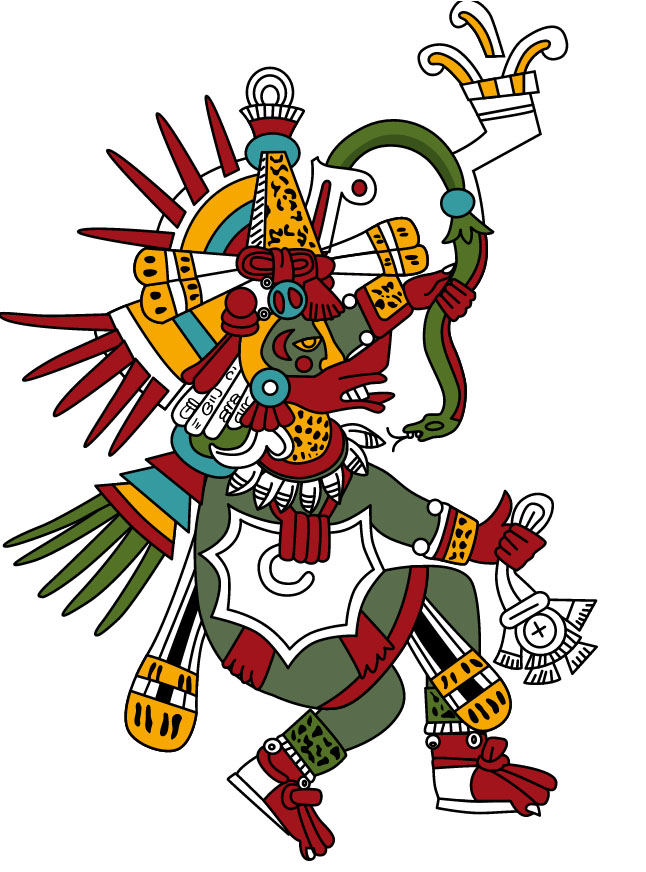
QUETZALCOATL

This God is from Mexico.  The religion had monasteries and nunneries that called their high priests Papes.  Cortes saw the ceremonies were virtually the same as the Catholic’s that he stated, “The Devil had positively taught to the Mexicans the same things that God has taught to Christendom.”  This Devil view of Quetzalcoatl compelled the Spanish to destroy as much of the artifacts as possible.  Few remain today.

Just like Jesus – was called Savior

Just like Jesus – was born of a pure virgin (Sochiquetzal)

Just like Jesus – messenger announced to his mother her son with be without connection with man

Just like Jesus – his mother was portrayed as “Queen of Heaven” (hieroglyph)

Just like Jesus – was designated “the morning star”

Just like Jesus – was tempted and fasted for 40 days

Just like Jesus – shown bending under the weight of a cross

Just like Jesus – called Redeemer who died for the people’s sins

HERCULES / HERACLES

Just like Jesus – born December 25

Just like Jesus – born of a virgin (Alcmene (means moon woman))

Just like Jesus – his father refrained from sexual relations until God impregnated the virgin mother.

Just like Jesus – He was known as the “only Begotten”, the “Universal Word”

Just like Jesus – He had 12 labors which demonstrated him as the Savior

Just like Jesus – called the “Prince of peace”

Just like Jesus – called the “Sun of righteousness”, ‘light of the world”

Just like Jesus – killed, then resurrected as his own divine father

Just like Jesus – ascended to Heaven

ADONIS

– was gored to death by a boar sent by God.

Just like Jesus – he was raised from the dead on the third day.

Just like Jesus – also born of a virgin mother named Myrrh.

BAAL

Just like Jesus – BAAL was killed by Mot, he rose, came back to life.

Teaser Image
miracle locations

Miracle Locations

Miracle Locations

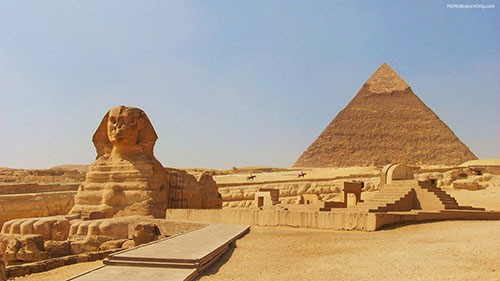
pyramids

Ancient Egyptian Pyramids

THE MIRACLES RECORDED OF ALCIDES, OSIRIS, AND OTHER GODS OF EGYPT.


1. We have the miraculous birth by a virgin in the case of Alcides.

2. Osiris, while a sucking infant in his cradle, killed two serpents which came to destroy him.

3. Alcides performed many miraculous cures.

4. According to Ovid he cured by a miracle the daughter of Archiades.

5· Also the wife of Theogenes, after the doctors had given her up.

6. And both these Gods converted water into wine.

7. Both of them frequently cast out devils.

8. Julius declares Alcides raised Tyndarus and Hippolitus from the dead.

9. When Zulis was crucified, the sun became dark and the moon refused to shine.

10. Both he and Osiris were resurrected by a miracle.

12. Both ascend to heaven in sight of many witnesses.

13. And finally we are told that from Alexandria the whole empire became filled with the fame of these miracle workers, who restored the blind to sight, cured the paralytic, caused the dumb to speak, the lame to walk, &c.


All these miracles were as credibly related of these Gods as similar miracles of Jesus Christ.


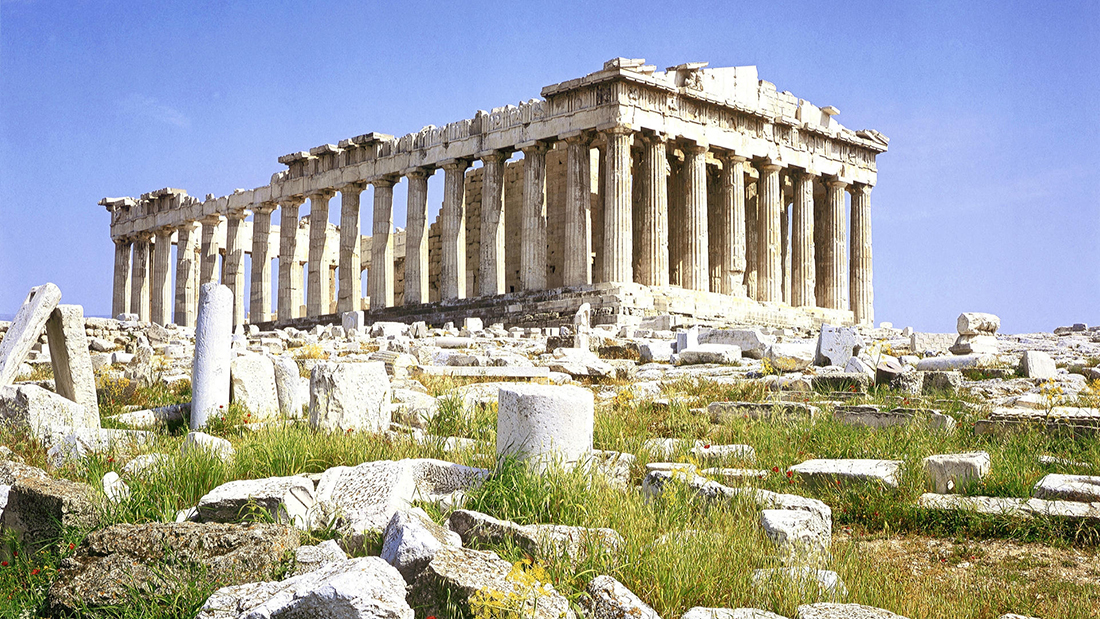
Greek temple

MIRACLES PERFORMED BY PYTHAGORAS AND other Gods of Greece


1. Pythagoras was a spirit in heaven before he was born on earth.

2. His birth was miraculously foretold.

3· His mother conceived him by a specter (the Holy Ghost).

4· His mother (Pytheas) was a holy virgin of great moral purity.

5· Plato’s mother, Paretonia (says Olympiodorus), conceived him by the God Apollo.

6. Pythagoras in his youth astonishes the doctors by his wisdom.

7. Was worshiped as the “Son of God,” “Paraclete,” “Child of Divinity,” etc.

8. Could see events many ages in the future (says Richardson, his biographer).

9. Could bring down the eagle from his lofty height by command.

10. Could approach and subdue the wild, ferocious Daunian bear.

11. Could, like Christ, appear at two places at once.

12. Could walk on the water and travel on the air.

13. Could discern and read the thoughts of his disciples.

14. Could handle poisonous reptiles with impunity.

15. Cured all manner of diseases.

16. Restored sight to the blind.

17. He “cast out devils.”

18. Jamblicus says he could allay storms on the sea.

19. Raised several persons from the dead.

20. And, finally, “a thousand other wonderful things are

told of him,” says Jamblicus.

>With respect to his character, it is said that “for humility, and practical goodness, and the wisdom of his moral precepts, he stood without a rival.” He discarded bloody sacrifices, discouraged wars, forbade the use of wine and other intoxicating drinks, enjoined the forgiveness of enemies and their kind treatment, and also respect to parents. He was a special friend to the poor, and taught that they were the favorites of God. “Blessed are ye poor.” He practiced and recommended the silent worship of God. He retired from the world, and often fasted, and was a great enemy to riches (like Jesus Christ). He considered poverty a virtue, and, despised the pomp of the world. He recommended (like Christ) the abandonment of parents, relations, and friends, houses and lands, &c., for religion’s sake. His disciples, like those of Christ, had a common treasury and a general community of goods, to which all had free access,

so that there was no poverty or suffering amongst them while the supply lasted. All shared alike. In fact, with respect to the spirit of his precepts, his moral lessons, and nearly his whole practical life, he bore a striking resemblance to Jesus Christ, and presented the same kind of evidence, and equally convincing evidence, of being a God. And as he was born into the world five hundred and fifty-four years before Christ, the latter probably obtained the materials of his moral system from that Grecian teacher, or in the same school of the Essenian Buddhists, in which both Pythagoras and Christ appear to have taken lessons.


Roman Columns

MIRACLES OF THE ROMAN GODS QUIRINUS AND PROMETHEUS.


1. Prometheus was honored with a miraculous birth.

2. Quirinus was miraculously preserved in infancy, when threatened with destruction by the tyrant ruler Amulius.

3. He performed the miracles, according to Seneca and Hesiod, of curing the sick, restoring the blind, raising the dead, and casting out devils.

4. Both these Gods were crucified amid signs, and wonders, and miracles.

5. All nature was convulsed, and the saints arose when they were crucified.

6. The sun was also darkened, and refused to shine.

7. Both descended to hell, and rose from it by divine power.

8. And Prometheus was seen to ascend to heaven.


These points are cited as miraculous events as if they are real facts, not because it is believed they were such, but as possessing the same degree of credibility as those events described as occurring of Jesus Christ.


Image removed.Image removed.Image removed.

Miracles and Religion of Apollonius of Tyana (modern Turkey)

1. Everything was subject to his miraculous power.

2. He performed many miraculous cures.

3. He restored sight to the blind.

4. He cast out devils, which sometimes “cut up” like those of Christ.

5. He enabled the lame to walk.

6. He re-animated the dead.

7. He could read the thoughts of bystanders.

8. Sometimes disappeared in a miraculous manner.

9. Caused a tree to bloom, while Christ made another tree to wither away.

10. The laws of nature obeyed him.

11. Could speak in many languages he had never learned.

12. Was at one time transfigured, like Christ.

13. His birth was miraculously foretold by an angel.

14. Was born of a spotless virgin.

15. There were demonstrations of joy and singing at his birth.

16. Exhibited proofs in infancy of being a God.

17. Manifested extraordinary wisdom in childhood.

18. He was called “the Son of God.”

19. Also “the image of the Eternal Father manifested in the flesh.”

20. He was also styled “a prophet.””

21. Like Christ, he retired into mystic silence.

22. His religion was one of exalted spirituality.

23. He taught the doctrine of “the Inner Life.”

24. He possessed exalted views of purity and holiness.

25. Like Christ, he was a religious ascetic.

26. His religion, as in the case of Christ, forbade him to marry.

27. He ate no animal food, and would wear no woolen garments.

28. Gave his substance to the poor.

29. Eschewed love for wine and women.

30. Refrained from artificial ornaments and sumptuous living.

31. He was a high-toned moral reformer.

32. He condemned external sacrifices.

33. Also condemned gladiatorial shows.

32. He religiously opposed dancing and sexual pleasures.

33. He recommended the pursuit of wisdom.

34. Was of a serene temper, and never got angry.

35. Was a true prophet, foresaw and foretold many future events.

36. Foresaw a plague, and stopped it after it had commenced.

37. Crowds were attracted by his great miracles and his wisdom.

38. He disputed with and vanquished the wise men of Greece and Asia, as Christ did the learned doctors in the temple.

40. When imprisoned by Domitian and loaded with chains, he disenthralled himself by divine power.

41. He was followed by crowds when entering Alexandria, like Christ when entering Jerusalem.

42. Was crucified amidst a display of divine power.

43. He rose from the dead.

44. Appeared to his disciples after his resurrection.

45. Like Christ, he convinced a Tommy Didymus by getting him to feel the print of the nails in his hands and feet.

46. Was seen by many witnesses after his resurrection, and was hailed by them as the “God Incarnate,” “the Lord from Heaven.”

47. He finally ascended back to heaven, and now “sits at the right hand of the Father,” pleading for a sinful world.

48. When he entered the temple of Diana, “a voice from above was head saying, ‘come to heaven.’”

49. Accordingly he was seen no more on earth only as a spirit.

50. Accordingly he was seen no more on earth only as a spirit.

The reader will observe that the foregoing list of analogies, drawn from the history of Apollonius, as furnished us by his disciple Damos and his biographer Philostratus, are found also, in almost every particular, in the history of Jesus Christ. And the list might have been extended. It is declared, “A beauty shone in his countenance, and the words he uttered were divine,” which reminds us of Christ’s transfiguration. And his “staying a plague at Ephesus” revives the case of Christ stilling the tempest on the waters. Now, the question very naturally arises here, How came the histories of Apollonius and Christ to be so strikingly alike? Was one plagiarized from the other? As for the miraculous history of Apollonius being reconstructed from that of Jesus Christ, as some Christians have assumed, there is not the slightest foundation for such a conclusion, as the following facts will show, viz.:—

1. The Cappadocian Savior (Apollonius) was born several years anterior to the advent of the Christian Savior, and appeared at an earlier date upon the stage of active life, and thus got the start of Christ in the promulgations of his doctrines and the exhibition of his miracles. Christ’s active life, Christians concede and the bible proves, did not commence till about his twenty-eighth or thirtieth year, which was long after Apollonius had inaugurated his religion, and long after he had commenced the promulgation of his doctrines, and attested them by wonderful miracles, according to his biographer Philostratus.

2. The New American Cyclopedia tells us, “Apollonius labored for the purity of Paganism, and to sustain its tottering edifice against the assaults of the Christians.” So that, being placed in a hostile attitude toward the

representatives of the Christian faith, it is not likely he would condescend to borrow their doctrines and the miraculous history of their incarnate God, to invest his own life with. He was probably one of the “anti-Christs” spoken of in the New Testament; but this circumstance reflects nothing dishonorable upon his character; for some of those distinguished personages denounced as “anti-Christ,” by Christ’s gospel biographers, were, according to impartial history, noble, honest, and righteous men. Their only offense consisted in robbing Christ of his divine laurels, by claiming similar titles, and claiming to perform the same kind of miracles; and there is as much proof that they did achieve these prodigies as that Christ did.

3. The early Christian writers conceded that Apollonius and the other oriental Gods did perform the miracles which are ascribed to them by their respective disciples, but accounted for it by the childish expedient of obsession. Christ was assumed to perform miracles, by divine power, they by the power of the devil—a childish and senseless distinction truly, and one which can have no logical force in this enlightened age.

Teaser Image
alt

Days of the Week

Western Calendar Names are Prior Gods

Days of the Week

  • While much Western culture has been Christianized, the days and months of the Gregorian calendar remain named after ancient Pagan gods and goddesses. Each month in the Astrotheology Calendar will have a short introduction of the history of its name, while the history of names for the days of the week is as follows: 


  • The first day of the week, Sunday, was obviously named after the day star, the sun. •


  • The next day, Monday, was named for the moon, originally being “Moonday.” •


  • The third day of the week, Tuesday, is styled after the Teutonic/Germanic war god Tiu or Tiw, who in the Roman mythology is the god Mars, as in the French “Mardi.” •


  • Wednesday was named after the Teutonic/Germanic storm god Odin or Woden, hence “Wodensday.” •


  • Thursday takes its name from the Norse thunder god Thor. •


  • Friday likewise is named after a Scandinavian deity, the goddess of love Freya, whose equivalent in Rome was Venus. Hence, in French the day is “Vendredi.”


  • Saturday is styled after the Roman harvest god, Saturn.
  • Months of the Year

  • For the description of month names, as well as commentary about notable days in each month, please see the back matter following the actual calendar. This material is placed at the end so that you can refer to it without taking down the calendar.
  • January

  • January was named from the Roman double-faced god Janus, who was the keeper of doors, also representing sunrise and sunset, and facing backwards and forwards. Notable days in January include the first, which is New Year’s Day in many locales, as well as the “Solemnity of the Mother of God” and a traditional date for Jesus’s circumcision, Catholic commemorations deliberately placed on this day in order to Christianize widespread Pagan celebrations. The birthday of Dionysus can be listed on both the 5th and 6th of January, while the god Aion who is born on January 6th is called by Joseph Campbell a “syncretistic personification of Osiris.”[18] Dionysus was likewise identified with both Aion and Osiris in ancient times. In antiquity too, Jesus Christ’s nativity was also placed on the 6th or 7th of January, when it remains celebrated in some factions of the Orthodox Church, such as in Armenia, as well as the Coptic Church. Concerning these dates, Christian theologian Dr. Hugo Rahner remarks: As to the dates, Norden has shown that the change from January 6 to December 25 can be explained as the result of the reform introduced by the more accurate Julian calendar into the ancient Egyptian calculation which had fixed January 6 as the date of the winter solstice.[19] It thus appears that in ancient times these dates of January 5, 6 and 7 represented the winter solstice, which is fitting for sun gods. Indeed, Macrobius later places Dionysus’s birth on December 25th, again appropriate for a sun god.[20] January 6th is also the Catholic celebration of the “Three Kings,” who purportedly attended Christ’s birthday but who are in actuality mythical and astrotheological figures.[21] As another notable day showing Christianization of Pagan holidays, St. Agnes/Ines was supposedly a Christian martyr beheaded on January 21st. However, in consideration of the fact that the same day was sacred to an ancient Danish goddess by the name of Yngona prior to the advent of Christianity,[22] it is likely that this Catholic tale was fabricated in order to usurp the Pagan holiday. The Christian “St. Vincent,” whose Feast Day is celebrated on January 22nd, is claimed to be a remake of the Greek god Apollo, another solar deity.
  • February

  • February was named after the Roman goddess of purity, Juno Februa or Februata, from the verb februare, meaning “to purify.” The word “Februa” seems to have some relationship with the Gaelic “Feabhra,” which in turn was said to be derived from “Fhéile Bríde,” the first day of Spring. The month starts off with a feast day important to Celts which was preempted by the Catholic Church: That of the goddess Brighid, Brigid, Brigit or Bride, who was turned into “St. Brigid.” The month is also notable for February 2nd representing “Peak Winter,” one of the cross-quarter days called “Imbolc,” “Lughnasad” and “Candlemas,” among other titles. In its attempt to supplant this widespread Pagan festival, the Church placed the Purification of Mary and the Presentation of Christ in the Temple on this day, the Purification of Mary in the month named after the purification of the goddess Juno constituting an obvious appropriation. Candlemas is followed on February 3rd by the feast day of St. Blaise, whose name led him to become associated with lighting fires. Blaise’s story is full of fantastic tales, and it is possible that there was no historical figure under all the myths but that he was himself a Catholic rehash of an earlier Pagan deity. February 10th is supposedly the day of Anahita/Anaitis, the Persian love/moon goddess. It has also been the time of the Gamelia, when the Greek goddess and god Hera and Zeus’s marriage was celebrated, a popular fest that may have been deliberately overshadowed by the Catholic Church’s placement on that date of the commemoration of St. Paul’s purported shipwreck. The inclusion of the feast of Our Lady of Lourdes on February 11th is because Lourdes was traditionally a place of the Greek goddess Persephone, one of the many faces of the Divine Feminine that the Virgin Mary supplanted. The date of February 14th as a day of love was copied from the Roman celebration of Lupercalia by the Catholic Church, who put in its stead the feast day of “St. Valentine,” a name for several early Christians, including one who is purported to have led armed mobs in Rumania and Hungary to slaughter and rape Pagans. St. Lucia’s Day on February 22nd is said to be a Christianization of the Roman holiday for the ancient Italian goddess of light, Lucia.
  • March

  • March was named after the Roman god of war, Mars, also known as Ares in Greek mythology and Tiu/Tiw in Teutonic or Germanic mythology. Along with the notorious Bacchanalia of the Greek god Dionysus on March 16th, March is known for its abundant observations of the vernal equinox, which is celebrated in various cultures on March 20th, 21st or 22nd. This latter day was known in ancient times for its important festival of the goddess Cybele—the Great Mother—which began on March 22nd and ended on the 27th. As stated by Rev. Alexander Roberts in The Ante-Nicene Fathers (VI, 496): The festival of Cybele, the “Mother of the Gods,” began on the 22d of March, when a pine tree was introduced into the mysteries, and continued, until the 27th, which was marked by a general purification (lavatio), as Salmasius observed from a calendar of Constantine the Great. [An equinoctial feast, which the Church deposed by the Paschal observances. March 22 is the prima sedes Paschae.][23] Regarding the Cybele equinox festival, Dr. Marvin W. Meyer remarks: The most well-known Roman festival in honor of the Anatolian deities [Cybele and Attis] was celebrated in the spring, during March. Presumably this festival began to take shape during the first century C.E. Much of the evidence for specific components of the festival, however, dates from later centuries, so that the following schedule of events most accurately describes the festival as it was celebrated in the third or fourth century C.E. On March 15 the ceremonies opened, with the reed-bearers (cannonphori) carrying their reeds into the sanctuary. The cut reeds may have been a symbolic representation of a feature of the story of Kybele and Attis: either the abandonment of baby Attis by the side of a river or his self-castration later in his life. The next several days of the spring festival were spent in fasting from bread, wine, and other food, as well as abstaining from sexual intercourse. Then, on March 22 the tree-bearers (dendrophori) carried into the sanctuary a pine tree that was freshly cut and decorated with ornaments such as purple flowers or ribbons and an image of Attis. On that day and the day following, the worshipers mourned over the tree, for it commemorated the death of Attis. According to the sacred myth, Attis castrated himself and died under a pine tree and even could be identified with the tree. As the pine tree was cut down in death, so also was youthful Attis cut down. March 24 was aptly named the Day of Blood (Dies sanguinis). On this day some of the fanatical celebrants flogged themselves until they bled and sprinkled their blood upon the image and the altars in the sanctuary, while others are said to have imitated Attis by castrating themselves. Such painful and dramatic acts allowed the worshipers to identify with the passion and death of Attis. The Hilaria on March 25 brought renewed joy and hope. There was feasting in honor of the Great Mother and good cheer. At least in some fourth-century celebrations of the Hilaria, there also may have been affirmations of the resurrection of Attis. (CP. the hints in Arnobius, The Case Against the Pagans, 5.7, and the denial of Attis’s actual return to life. In Firmicus Maternus, The Error of the Pagan Religions, 3.1ff., explicit mention is made of the resurrection of Attis.) The spring festival came to a close with a muchneeded day of rest (March 26) and a final day (March 27) on which the holy image of the Great Mother was bathed in the Almo River.[24] As we can see, there are several important correlations here with the Christ myth. In City of God (28.54), Augustine stated that Christ died on March 25th. [25] The Christian Creation Day on March 25th was recorded in De Pascha Computus,[26] evidently also reflecting Christ’s conception, which was likewise placed on the 25th, exactly nine months before “Christmas.” As noted, Jesus’s resurrection was likewise placed on the 25th of March, while the Romans had previously celebrated the “Hilaria” on that date, representing the resurrection of life from the death of winter. It is obvious that the Christian celebrations on this date constituted an imitation of Pagan vernal equinox festivals. March 27th was an auspicious day, as it was traditionally the end of the March Roman Cybele festival, the day of the “lavatio” or washing of Cybele in the Almo River. When the calendar was Christianized in the 5th century, Christ’s Resurrection was placed on March 27th for the specific reason of usurping the lavatio.[27]
  • April

  • April is named from the Roman month Aprilis, “perhaps derived from aperire or Latin for ‘to open.’” One tradition holds that the month was named for Aphrodite, the Greek goddess of love. Another important Roman festival of the Great Mother/Magna Mater, called the Megalesia, commenced on April 4th, which this year happens to coincide with Easter, the Christian celebration of the resurrection of life that supplants the Pagan vernal equinox celebrations. On April 5th, the day of the Roman festival of the goddess Fortuna as well as Easter Monday this year, occurs the very ancient Egyptian spring festival of Shamo, which dates back some 4,500 years. Based on Eastern European traditions combining the two, St. George’s Day on April 23rd was likely contrived to co-opt the Roman festival of Parilia, which occurs two days earlier.[28] The Catholic feast may have been placed on the 23rd to supplant the Roman feast of Venus as well, essentially killing two birds with one stone. As is common with saints and prophets, St. George appears to be an amalgam of both mythical and historical figures. St. James the Great’s Feast Day has been placed on April 30th in the Eastern Orthodox Church and July 25th in the Western. In consideration of the repeated takeover of Pagan holidays by the Church, it is likely that the placement of this feast day on April 30th was in order to “overwrite” the “Peak Spring” celebration of Beltane/Walpurgis. Beltane was named for the Celtic god of light, Bel or Beli, also known as Belinus in the Roman, who appears to be related to the Phoenician sun god Baal. The Catholic commemoration of St. James may also have been designed to replace the Artemisian festival of Brauronia, explaining the date’s significance in the Eastern church in particular. However, the latter holiday would be based on the lunar month, so it would be difficult to determine whether or not it was on the mind of the Christian usurpers. In any event, in the year 1 AD/CE and subsequently, the Feast of Ra-neb-dedet, the Egyptian God of Fertility, fell on the same day as that which was later established as the Feast Day of St. James the Great.
  • May

  • May is named after the Roman goddess of the Spring, Maia, mother of the god Mercury, also known as Hermes in the Greek mythology. May 1st is “Peak Spring,” also signifying the “Coming of the Great Ones from the House of Ra,” in the year 1 AD/CE, presuming that the Cairo Calendar was still in currency. Peak Spring is represented by Beltane or Walpurgis in the Celtic/Pagan calendar, a date preempted by the Catholic Church as that of St. Joseph, stepfather of Jesus. The Church apparently also appropriated Walpurgis by claiming it was the feast day of “St. Walpurga,” who supposedly lived in England in the 8th century but who is evidently the remake of the fertility goddess Waldborg.[29] The feast day on April 18th of St. John the Apostle likewise may have been placed in order to arrogate Pagan holidays on or around that date. There exists no scientific evidence that the Apostle John as depicted in the New Testament and Christian tradition was a single, historical personage. Like other “Ascension Days,” that of Jesus occurs on the day before the new moon, representing the disappearance of the sun’s light as the moon wanes. In 2010, the Christian Ascension Day occurs on May 13th. On May 21st of this year occurs the Buddhist celebration of Wesak/Vesak, which commemorates not only the birth of Buddha but also his enlightenment and death. This “coincidence” of all three milestones happening on the same date is an indication of the mythical nature of “the Buddha,” who is in reality a soli-lunar godman, as demonstrated in my book Suns of God: Krishna, Buddha and Christ Unveiled.
  • June

  • June is named for the chief Roman goddess, Juno, queen of heaven and wife of Jupiter. June is the month of the summer solstice, which begins on June 21st but which is celebrated for a few days before and after, including as “Midsummer Day” on the 20th, as well as Inti Raymi or the day of the Inca sun god Inti on the 24th. The Catholic Church superseded the summer solstice by placing the nativity of John the Baptist on the 24th, precisely six months before Christmas Eve, when his “cousin” Jesus—the winter sun—was born. In the New Testament, the Baptist’s mother is six months pregnant when the Virgin Mary conceives (Lk 1:36), and John is later depicted as making an enigmatic remark concerning Jesus: “He must increase, but I must decrease.” (Jn 3:30) This statement makes sense when it is understood that Jesus and John represent the sun at the winter and summer solstices, respectively. The placement in June (28th) of Vidovdan or the Feast of St. Vitus, who is known as the patron saint of dancers, appears to have been designed to Christianize the “midsummer dancing madness” of the Pagans. Likewise, the placing of the feasts of Sts. Peter and Paul on June 29th also served to override Pagan holidays, including possibly the Roman fest of Hercules Musarum or “Hercules of the Muses.”
  • July

  • July was the month of Quintilis (“Fifth”) before being named after the Roman emperor Julius Caesar. Like that of Jesus, the Ascension of Mohammed also occurs on the day before the full moon (July 9th in 2010), indicating various astrotheological aspects of Islam as well. July 11th in the year 1 AD/CE and for centuries following would have been the “Day of the Escape of the Fugitive Eye” in the Egyptian Calendar, referring to the sun god Ra. Oddly enough, the Catholic feast day of St. Benedict was also placed at that time centuries later, peculiar because of the story wherein Benedict had turned a temple of the Greek sun god Apollo into a Christian “oratory of St. John,” after which it was said that the “enraged god returned to torment him in the form of a black monster with flaming eyes.”[30] The heliacal rising of Sirius varies from place to place and era to era, in this modern era usually occurring on July 20th, although alternative dates include the 26th of July[31] and the first of August.[32] The 27th of July is the feast day of the Catholic St. Pantaleon, who is said to be a Christianized Italian god. The five epagomenal days upon which the gods Osiris, Isis and Horus, etc., were said to be born are generally placed in the middle of July. However, in the year 1 AD/CE, for example, these would not have occurred until the following month.
  • August

  • August was previously called Sextilis (“Sixth”) before being renamed after the Roman emperor Caesar Augustus. The first of August represents “Peak Summer,” with attendant Pagan holidays obviously commandeered by the Catholic Church placing the Fast in Honor of the Virgin Mary on this day. This day of Lammas was also co-opted by the Church as the supposed date of St. Peter’s miraculous escape from prison in the book of Acts of the Apostles. As is the case with John the Apostle and many others, there is no concrete evidence of Peter’s existence, and he appears to be a remake of Pagan deities, including the Roman god Jupiter. As with other Catholic feast days, the Transfiguration of the Lord on August 6th was designed to appropriate a Pagan celebration, according to the Catholic Encyclopedia (“Feast of the Transfiguration of Christ,” August 6th): The Armenian bishop Gregory Arsharuni (about 690) ascribes the origin of this feast to St. Gregory the Illuminator (d. 337?), who, he says, substituted it for a pagan feast of Aphrodite called Vartavarh (roseflame), retaining the old appellation of the feast, because Christ opened His glory like a rose on Mount Thabor.[33] The original Pagan celebration was “an early harvest festival celebrated in the western highlands of Asia (Persia, Iran, maybe Afghanistan) dedicated to a goddess called Vartavarh, or Roseflame (early chroniclers identified her with Aphrodite, the Greek goddess of love).”[34] August 15th is also noteworthy because it was the day of an ancient festival of the Roman goddess Vesta, while both the Catholic and Orthodox Churches placed festivities of the Mother of God on that day as well, including the Assumption of the Virgin Mary. August 15th is said to have been chosen by the Catholic Church because on that day the sun rises and sets near the constellation of Virgo, the Virgin, whom the Christian Virgin was designed to supplant. Although they are often placed in July, the important five epagomenal days from the Egyptian calendar constituting the birthdays of the children of Geb and Nut would have occurred from August 24th to the 28th during the year 1 AD/CE. August 29th is another notable day, as it would have served as the birthday of the Egyptian sun god Ra-Horakhty and the beginning of the Egyptian New Year in 1 AD/CE and for centuries afterward. The calendar inscription of Ramesses II at Abydos also names this date as that of the Rising of Sirius, which, again, would signify the beginning of the Egyptian New Year. Meanwhile, centuries later the Catholic Church usurped the day by making it the commemoration of the beheading of John the Baptist. However, the Baptist is demonstrably a mythical figure, and his beheading represents an astrotheological motif. As Rev. Dr. Robert Taylor remarks: John the Baptist is beheaded on the 29th of August, because, on the fourteenth and a half of that day, the bright Star of Aquarius rises in the calendar of Ptolemy, while the rest of his body is below; and as the direct adversary of Aquarius is Leo, whom I have shown to be none other than King Herod: so King Herod, every 30th of August, at half after two in the morning, annually repeats the operation, of cutting off John Baptist's head.[35]
  • September

  • September is named after the Latin term for “Seven,” septem, because it used to represent the seventh of the 10 months in the original Roman calendar. In 2010, September 5th is the Muslim festival of Laylat al Kadr, which is held to be the date when the first verses of the Koran/Quran were received by Mohammed. However, this celebration is an evident takeover of an earlier Arab New Year Festival. Another indication of the astrotheological nature of elements within Islam exists in the celebration of Chaand Ra or “Moon Night,” which occurs on the new moon (Sept. 8th). Interestingly, “Chandra” is the name of the Indian moon god, whose main festival, Karwa Chauth, falls in October (27th in 2010), about nine days before the Hindu holiday of Diwali. The Jewish celebrations Rosh Hashanah, Yom Kippur and Sukkot are likewise based on the phases of the moon, both Islam and Judaism constituting lunar cults, while Christianity, Hinduism and Buddhism are largely solar cults. September 21st, 22nd and 23rd contain various vernal equinox celebrations, including the Coya Raymi of the Inca, as well as the Pagan/Wiccan Mabon and the Catholic Conception of St. John, nine months before his birth at the summer solstice. St. Matthew’s Day was also placed on the 21st of September in order to preempt the Pagan equinox celebrations.
  • October

  • October comes from the Latin/Greek word for “Eight,” octo, originally representing the eighth month of the year. October is full of harvest and wine days. The Zoroastrian/ Persian festival of Mihragan or Mehregan on October 2nd is an important date, as it represents the vernal equinox and harvest time, dedicated to the ancient Persian sun god Mithra, whose feast day represents a sort of resurrection and whose birthday was traditionally celebrated at the winter solstice, specifically on December 25th, before the Catholic Church usurped that date. It appears that the placement of the feast day of St. Denis, Dennis or Denys on October 9th was designed to supersede the Oschophoria/Oskophoria celebrations of Dionysus, as well as the other Dionysian festival on the 3rd, as this Christian saint is evidently a remake of the Greek god. The Feast Day on October 18th of St. Luke, who was associated with horns, may be an appropriation of a Pagan celebration having to do with the Horned God or Herne, also known in the Celtic as Cernunnos. It seems that the placement of St. Luke’s Day on this date was an attempt to co-opt Pagan harvest and fall festivals. Another such supplantation occurs on the 21st of October, with the feast of the Teutonic moon goddess Urschel, as well as the Slavic moon goddess Ursala, being turned into the Catholic St. Ursula’s Day. Ursala or Ursula means “Little bear,” derived from the Latin for “bear,” ursus, and these moon goddesses may also have been bear goddesses equivalent to the Greek deity Artemis. The placement of the Feast Day of St. Simon & Jude on October 28th may have constituted a Christianization of the first day of the Celtic month of Ngetal or “Reed.” The story of the martyrdom of Simon in Britain, as well as his purported death also in Persia, having allegedly been sawn in half, making him the patron saint of woodcutters, causes one to believe he may be a remake of the Celtic woodcutter god Hesus or Esus. Halloween, while celebrated in largely Christian countries, is an ancient “Peak Fall” festival, one of the many “day of the dead” commemorations at this time, which represents a transition to the death of winter.
  • November

  • November was named for the Latin word for “Nine,” novem, was originally the ninth month of the Roman year. The Christian festivals of All Saints and All Souls Days were obviously placed in order to usurp the various Pagan peak fall festival days. The day after Halloween, All Saints Day is also called Hallowmas or All Hallow, followed by All Souls Day, likewise termed the Day of the Dead, as it is in the Maya calendar as well. The Rites of Hella were a Scandinavian festival in which the goddess of the underworld was beseeched to raise the dead. All Souls in the Roman Empire originally occurred on May 13th, likewise appropriated by Christianity: The chosen day, May 13, was a pagan observation of great antiquity, the culmination of three days of the Feast of the Lemures, in which the malevolent and restless spirits of the dead were propitiated.[36] The commemoration of St. Hubert’s Mass on November 3rd is said to be the Christianization of a feast day of the popular Pagan Horned God, this Catholic “hunter’s day” celebrated with dogs, horns and antlers. Although it is claimed that Hubert or Hubertus himself is a remake of the Horned God, his biography indicates he may have been a historical figure who has been reworked to co-opt the Pagan deity and religious motifs and celebrations. The apocryphal story of Hubertus becoming a more devout Catholic after being threatened, while out hunting on a Good Friday, with eternal damnation by a stag with a crucifix between its antlers sounds like a legend designed to convert the Horned God into a Christian saint, the stag or deer with antlers associated with the Celtic Cernunnos or Herne. The stag in the Hubert myth was at times identified as being white, such white stags figuring prominently in pre-Christian myths as well as in Christianity, with Jesus himself identified as a white stag. The deliberate takeover of a Pagan festival is evident in the placement of St. Martin’s Day or Martinmas on November 11th, which was previously the Roman festival of Vinalia, celebrating the Greek wine god Dionysus/Bacchus and the vine. This appropriation is expressed in an old ecclestiacal calendar: As the feast of Martinmas occurs at the genial period of the year when the harvest is in, and cattle are slain for the winter season, and new wine is first opened and tasted, it followed that Martin became the embodiment of good cheer and inherited some of the characteristics of the ancient Bacchus. There is certainly a strong resemblance between the Vinalia of the ancients and the Martinalia of the mediaeval period.… an ancient ecclesiastical calendar…under the head of November 11 expressly says, “The Vinalia, a feast of the ancients removed to this day, Bacchus in the figure of Martin.”[37] The celebration of the Passion of Osiris on November 13th is from the date set forth in the Cairo Calendar and Plutarch, 17 Athyr/Hathor, as it would have occurred in the Roman historian’s era. By this chronology, Osiris is resurrected on the 16th of November, whereas the same or similar important festival is also recorded at Dendera centuries earlier as having taken place from the 18th to the 30th of the month of Khoiak, which in Plutarch’s time would have corresponded to December. One of several dates for the alleged birth of Christ, as put forth by early Church father Clement of Alexandria (c. 150-215 AD/CE), is November 17th or 18th, which actually represents the New Year and feast day of the sun in “the province of Syria.”[38] Christ’s purported November birth is one or two days after the resurrection or rebirth of Osiris, according to the Athyr/Hathor dating of that festival. The placement of the celebrations of Christ the King and Archangel Michael on November 21st was likely designed by the Catholic Church to preempt a Pagan festival. It is interesting to note the contention that the Mexican god Kulkulcan/Quetzalcoatl likewise has his feast on that day. It is possible that the Feast of Christ the King was established in order to supersede the ancient Mexican festival. The Brumalia beginning on November 24th apparently constituted a Roman festival celebrating Bacchus, lasting a month, while the Brumalia fest that honored Bacchus/ Dionysus on December 25th was evidently a Greek commemoration. The confusion comes from two different roots for the word brumalia, one of which, bruma, means “shortest day.” The celebration of St. Andrew on November 30th also likely represents a replacement of a Pagan holiday, as the evidence points to Andrew himself being a rehash of an ancient Greek god representing manhood or “Andros.”[39]
  • December

  • December comes from the Latin word for “Ten,” decem, originally representing the 10th and final month of the Roman calendar. The feast of “Saint Barbara” on December 4th appears to be a remake of the Roman festival dedicated to the important goddess Minerva, also known in the Greek pantheon as Athena. The word barbara in Latin simply means “barbarian woman,” which may have signified the Pagan goddess. December is full of winter solstice celebrations beginning in remotest antiquity. For example, the date of December 21st as the festival of Amaterasu represents her “coming out of the cave,” a typical solar myth. The placement by the Catholic Church of St. Thomas’s Feast Day on December 21st is indicative of his role in questioning Christ’s resurrection, as Jesus is the sun, and “Doubting Thomas”—the “Twin”— symbolizes the time when the day star takes a “stutter step,” unsure whether or not it will return on its long journey back to fullness at the summer solstice. Likewise noteworthy is the festival of the Egyptian baby sun god Sokar occurring on 26 Khoiak, as related in the Calendar of Hathor at Dendera,[40] corresponding at the turn of the common era to December 22nd. The longstanding ritual of Sokar being carried out of the temple on this day in an “ark” closely resembles the censored commentary by Church father Epiphanius (c. 310/320-403) concerning the Egyptians bringing forth the baby sun born of a virgin at the winter solstice. This Egyptian “Christmas” celebration, styled by Epiphanius the “Kikellia,”[41] has also been called the “Rites of Isis” and has been asserted elsewhere to begin a few days earlier than December 25th, such as the “true” solstice of the 21st or 22nd, corresponding to the Sokar festival. The winter-solstice celebrations were so important that at times they exceeded the one or two days of the actual solstice in the Gregorian calendar, i.e., December 21st or 22nd. Solstice celebrations therefore do not necessarily fall on the traditional time of the solstice but may occur up to several days before or after, such as is exemplified by the Roman celebration of Saturnalia, which began on the December 17th and ended on the 23rd. Hence, a “winter solstice” birth as asserted for a number of gods would not necessarily be celebrated on those exact days or even on the more commonly accepted date of December 25th, which signifies the end of the three-day period of the solstice, as perceived in ancient times. The nativity of Inanna and advent of Isis—who possesses solar attributes —as well as the winter-solstice celebrations in India, all of which fall in January, nevertheless representing the return or rebirth of the sun, provide examples of this development. The winter-solstice birthday of the Greek sun and wine god Dionysus was originally recognized in early January but was eventually placed on December 25th, as related by Macrobius. Regardless, the effect is the same: The winter sun god is born around this time, when the day begins to become longer than the night. In 275 AD/CE, December 25th was formalized by Emperor Aurelian as the birthday of Sol Invictus, the Invincible Sun, and it is claimed that Aurelian likewise combined the Greek festival of the sun god Helios, called the Helia, with Saturnalia as well to establish this solstice celebration.[42] The highly important Mysteries of Osiris, which begin on the 14th of December and end with his resurrection on December 26th, follow a wintersolstice pattern similar to the Brumalia, Saturnalia and Christmas celebrations. The facts that this period comprises several festivities having to do with the passion, death and resurrection or rebirth of this prominent Egyptian sun god, and that the dates for these mysteries happened to correspond to the winter solstice when the wandering Egyptian Calendar was finally fixed, are extraordinary. The commemoration of the death of the Persian prophet Zarathustra or Zoroaster during this solstice time (21st or 26th) is also extraordinary, especially in consideration of the memorial of Osiris’s death around the same time. Although many people believe Zoroaster to have been a real person, apocryphal tales surrounding him similar to those of mythical figures, as well as his very name, which in Greek means “living star,” indicate he too may be a mythical figure, possibly a (sun) god made into a prophet, a common act in the ancient world. December 26th is likewise the feast day of St. Stephen, who also is likely a mythical figure, possibly based on the Crown/Corona constellation, stephanos in Greek meaning “crown.” Stephen’s Feast Day may have been placed at this time in order to preempt the resurrection of Osiris, which would have been fixed to this day, based on its Khoiak date, after the Alexandrian Calendar was created. Also, as Dr. Arthur Drews remarks, the Corona constellation “becomes visible at this time on the eastern horizon.”[43] As I further relate in my book Suns of God, the “Northern Crown” or Stephanos Arcticos is the “First Martyr” at the vernal equinox.[44] The date of December 27th for the feast day of St. John, according to tradition the “disciple whom Jesus loved” (Jn 13:23, et al.), may be a contrivance by the Church to co-opt the festival of the Egyptian god Nehebkau, who was the right-hand man of the sun god Ra. Interestingly, Nehebkau is considered a snake god, i.e., a master of the snake, while John’s legend has the saint being immune to snake venom and miraculously producing a snake from the venom in a chalice. Moreover, as I demonstrate in my book Christ in Egypt, the Gospel of John is highly Egyptian in nature and obviously created for an Egyptian audience.
Teaser Image
astro-theology

Astro Theology

Astro-Theology

astro-theology

The Judeo-Christian Bible tells a wonderful story.
It is, in fact, often referred to as  “The Greatest Story Ever Told” (ever SOLD!)
And so it is! You are now about to find out why!

In the New Testament of Christian Bible, a provocative and most serious challenge is laid on the whole of Christianity. Since it bears directly on our subject, we will quote it:

“…if Christ be not risen, then our preaching is in vain, and your faith is also in vain. Yea, and we are found false witnesses of God. And if Christ be not raised, your faith is vain; ye are yet in your sins.” (I Cor 15:14, 15, & 17)

In the New Testament there is a warning given to all who would build a house. Namely, before you lay the foundation, find out what the foundation itself will rest on – solid rock, or sand? The reason is obvious … or said another way; “You need to stand under the foundation to get a true under-standing!

THE FOUNDATIONS

Let’s closely examine the original, conceptual foundations of the faith, and then decide “…if Christ be not risen. ” But in order to do that, we must go back, not 2.000 years to the birth of Christ, but 8 to 10,000 years to the birth of modern man. For when one seeks to establish foundations, one must begin at the beginning.

Many thousands of years ago in what we refer to as the the “primordial world” of the ancients, human life was a far different experience to that which we enjoy today. While it is true that we have less documentation on that prehistoric world than we have on our own age, ample enough is known from the ancient writings to paint a rather clear picture of our primitive ancestry. If we have learned anything at all, it is this: The more we change, the more we stay the same. And nowhere is this more clearly demonstrated than in the history of man’s quest for “God”, and the ancient religion we still keep holy today.

According to the best understanding we have gleaned from the available records, life for our ancient forefathers was a mixture of wonder and fear. Each day, just finding food for one’s family without becoming a meal yourself for the roaming predatory animals, was a life and death struggle. (If you have ever ventured out on a cold night with insufficient clothing, and without friend or family near, you could quickly see how fearful the dark, cold primordial nights could be) And then came winter!

It was from these meager, distressful conditions of the human race that our long history of the search for God and meaning has come. Any evolution, at it’s most accelerated rate, is always agonisingly slow. But from the beginning, man’s’ profound questions demanded answers. When no clear answers were forthcoming from the universe, man turned inward, and developed his own. Keep in mind that all the theological teachings of the Western World were developed in the Northern Hemisphere. The study of this subject is properly called
           – “Astro-Theology” or, “The Worship of the Heavens”.

ASTRO-THEOLOGY------

This is the first, original, and therefore the oldest, and most respected story on Earth! It did not take ancient man very long to decide that in this world the single greatest enemy to be feared was the darkness of night, and all the unknown dangers that came with it. Simply stated, man’s first enemy was darkness.

Understanding this one fact alone, people can readily see why the greatest and most trustworthy friend the human race could ever have was by far, heaven’s greatest gift to the world … that Glorious Rising Orb of Day: …

     the SUN

With this simple truth understood, we can now begin to unravel an ancient and wonderful story.  Today, as in all mankinds’ history, it has once again been told anew.

Modern-day Christianity has often belittled our ancient ancestors who are not here to defend themselves.   They falsely accuse that they were nothing more than ignorant worshippers of the sun. Therefore we can, with assurance, summarily dismiss thousands of years of human spirituality as ignominious myth, believed by well-meaning, but gullible primitives. Too much of this kind of spiritual arrogance and religious pride has continued without challenge. The time has come to set matters straight.

THE CHALLENGE------

First. no people of the ancient world believed the “Sun” to be “God”. That belongs in the “disinformation file”.

In point of fact, every Ancient culture and nation on Earth have all used the Sun as the most logically appropriate symbol to represent the Glory of the unseen Creator of the heavens. Here it is important to remember two points.

First, with the exception of Japan, the ancient world mythologies always understood the Sun to be masculine in qualities, and the moon feminine. Second, the English language is derived from the German. In the Germanic, the word ‘Sun‘ is spelled ‘Sonne’. The two words can (and have been) used interchangeably.

Old Testament:

“The heavens are declaring the Glory of God.” (PS.19: 1)

New Testament:

“Jesus is the Glory of God.” (2 Cor 4:6)

Old Testament:

“The SUN of Righteousness will arise with healings in His wings.” (Mal 4:2)

New Testament:

“God’s Son/Sun…he is risen!” (Matt 4:16)

Saying. “How, often I wanted to gather you under my wing. ”

The Statue of Liberty…to this day, kings still wear a round “crown of thorns,” symbolising the rays of the Sun!

The “Ancient Story” went something like this….

1. The ancient peoples reasoned that no one on Earth could ever lay claim of ownership to the Great Orb of Day. It must belong to the unseen Creator of the Universe. It was, figuratively speaking, not man’s, but “GOD’S SUN”. Truly, “God’s Sun/Son was…

THE LIGHT OF THE WORLD.

2. As stated before, in the dark cold of night man realzed his utter vulnerability to the elements. Each night, mankind was forced to wait for the ” Risen Sun” to chase away the physical and mental insecurity brought on by the darkness. Therefore, the morning Sun focused man’s attention on heavenly dependents for his frail, short existence on Earth, and in doing so, it became the appropriate symbol of divine benevolence from heaven.

3. So just as small fire brought limited light into man’s own little world of darkness, likewise the “Great Fire of Day” served the whole Earth with its heavenly presence.  For this reason, it was said at Deut 4:24, and Heb 12:29 that the God of the Bible was a “Consuming Fire” in heaven. And so He is!

4. It was accepted by all that man was bound to a life on Earth, but the sky was God the Father’s abode – His dwelling place. Naturally, God’s Son/Sun would also reside with his Father ” up in HEAVEN”.

5. Ancient man saw in his male offspring his own image and likeness, and his own existence as a father was proved by the person of his son. It was assumed that God’s ‘Sun was but a visible representative of the unseen Creator in heaven. So it was said, “When you have seen the Sun, you have seen the Father “. or “The Father is glorified in his Sun”.

6. Ancient man had no problem understanding that all life on Earth depended directly on life-giving energy from the Sun. Consequently, all life was lost without the Sun. It followed that God’s ‘Sun’ was nothing less than “Our very Saviour”.  If you don’t think so, wait ’till it don’t come up!

7. Since life is energy, and energy from the Sun gave life, and we sustained our very existence by taking energy in from our food (which came directly from God’s Sun), the Sun must give up its life supporting energy so that we may continue to live.

“God’s Sun gives his life for us to live.”

8. While it was plainly true that our life came from and was sustained each day by “Our Savior… God’s Sun”, it was and would be true only as long as the Sun would return each morning. Our hope of salvation would be secure only in a “RISEN savior”. For if he did not rise from his grave of darkness, all would be lost. All the world waited patiently for His ‘imminent return”. The Divine Father would never leave us at the mercy of this world of darkness. His Heavenly promise concerning his Sun was surely that…”He would come again“…to light our path, and save those lost in the darkness … and He still does…every morning about 5:30 am.

9. Logically, even if man himself died, as long as the Sun comes up each day, life on Earth will continue forever. Therefore, it was said in the ancient texts that everlasting life was “the gift” that the Father gives through his Sun. For…”God so loved the world that he gave his only begotten SUN that we may have life everlasting”….on Earth!  Not for you personally – but ON EARTH… everlasting life!

10. Since evil and harm lurked at every turn in the fearful dark of night, all evil or harmful deeds were naturally, the…”works of darkness.

11. With the return of the Sun each morning, man felt more secure in his world and therefore, was at peace. Therefore, God’s ‘Sun’ was with his warm rays of life and hope…The Great “Prince of Peace“.

12. And of course the reverse was equally true. The dark evil of night was ruled by none other than…”Prince of Darkness“… The EVIL / DEVIL.

13. Our English words ‘Good’ and ‘God’ we get from the German word ‘Goth’ as in ‘Gothic’. Now we see God is Good, and Devil is Evil

14. It was only a short step to see “The Light of God’s Sun” equated with the light of truth – and evil equated with darkness. From then on, it was simple to understand…

      “LIGHT was GOOD – DARK was BAD.”

15. That being true, then the Great Orb of Day (God’s Sun) could rightly say of itself,

“I AM THE LIGHT OF THE WORLD, and no man comes to the Father except through me”, or one comes to God Only by the Light of Truth.

16. We should all “give thanks” to the Father for sending us His “Sun”. For the peace and tranquility he brings to our life is even called ‘Solace’ – from “Solar” = Sun.

17. We now have before us two (2) cosmic brothers – one very good, and one very evil. One brings the “truth to light” with the “light of truth”. The other is the opposite, or in opposition to the light – “The Opposer”…      Prince of this World of Darkness–     The “Devil”.

18. It is at this point that we come to Egypt. More than 3,000 years before Christianity began, the early morning “Sun/ Savior” was pictured in Egypt as the “New Born Babe”. The infant savior’s name was “HORUS”.

19. The early morning Sun or “New Born Babe”, was pictured in two ways.
A) The Dove – Bringer of Peace
B) The Hawk – God of War
(who punishes the enemies of God!).

20. At daybreak. this wonderful, newborn child, God’s ‘Sun’, is … ‘Born Again’ Horus is Risen. Even today, when the Sun comes up, we see it on the “Horus-Risen”, or “Horizon”. His life was also divided into 12 parts or steps across Heaven each day: 12 HORUS = 12 HOURS. This is the origin of the modern ” 12 Step Program”. Horus is the (new-born) Sun, or the Bringer of the Light. In Latin, Light Bringer is Lucis, or Lucifer, or Luke.

21. But now, what about the evil brother of God’s Sun, that old rascally “Prince of Darkness” himself? In the Egyptian, he was called “SET”. We are told in the Bible that when God’s Sun died, He left the world in the hands of the Evil Prince of Darkness. This evil prince took over the world at “SON-SET“.

22. It was generally observed that ‘God’s Sun’ could be depended upon to return in the same manner that he left, namely, “On a Cloud“”..and that “Every eye will see Him“” … Every evening, go out and watch the Sun leave this world “on a cloud”. And next morning, watch to see Him return on a cloud. And every eye will see him come again! … Unless you’re blind!

23. Keep in mind ‘God’s Sun’ symbolically represented the light of truth, but was condemned by His enemies who could not endure the light of truth in their life. The ancients taught that the very act of opposing or denying the light of truth to the point of killing it, happened in one’s own mind! When we are confronted with the harsh realities of life, the light of truth, which we do not wish to face, and which runs counter to our views, such truth is judged in your mind, or judged “in the temple area” of your brain, and put to death in your head !Therefore, ‘God’s Sun – The Truth and The Light – is put to death at “GOLGOTHA” , or “PLACE OF THE SKULL “, located somewhere between your ears! This putting to death of the light of truth in your mind is always accompanied by two thieves: Regret for the past and Fear of the future.

24. And of course God’s ‘Sun’ goes to His death wearing a “corona” – Latin for “Crown of Thorns” . Remember the Statue of Liberty? To this day, Kings still wear a round crown of thorns, symbolizing the rays of the Sun!

25. God’s ‘Sun’ brought His wonderful light to the world, and distributed it over 12 months. So it was said, God’s ‘Sun’ had 12 companions, or helpers, that assisted His life-saving work. So it was, God’s ‘Sun’ had 12 apostles (or months) that followed Him religiously through His life. Incidentally, now you know why the American jury system has 12 jurors who help bring the truth to light, with the “Light of Truth”.

26. As far back as we can go into the ancient world, we find that all known cultures had a “Three-in-one” Triune God. The very first trinity was simply the three stages of the life of the Sun.

   A) New Born Savior at dawn.

   B) Mature, full-grown (The Most High) at 12 (High) noon.

   C) Old and dying, at the end of day (going back to The Father).

All three were of course One Divinity – The Sun   three different phases, but one God!

The Trinity is truly a mystery…Like electricity, radio, TV, and jumbo-jets are all a mystery to the un-enlightened mind!

27. The Egyptians knew that the Sun was at its highest point in the sky (at high noon). At that point, one offered prayers to the “Most High” God! To the ancients, the sky was the abode, or heavenly temple, of the “Most High”. Therefore, God’s ‘Sun’ was doing His heavenly Father’s work of enlightening all in the temple at 12 …not 12 years old, but 12 noon!

28. The world of ancient man kept track of times and seasons by the movement of the Sun daily, monthly, and yearly. For this, the sundial and sun calendars were devised. Not only the daily movement of the Sun was tracked on the round dial, but also the whole year was charted on a round Sun calendar dial. Examples: Ancient Mexican, Mayan, Inca, Aztec, Sumerian, Babylonian, Assyrian, Egyptian, Celtic, Aryan, etc. With this method, certain new concepts emerged in the mind of ancient man.

29. Since the Earth experienced 4 different seasons, all the same and equal (in time) each year, the round Sun calendar was divided into 4 equal parts. This is also why we have, in the Bible, only 4 Gospels. Of this point, there can be no doubt. The 4 Gospels represent the four 4 seasons which collectively tell the entire story of the life of God’s ‘Sun’. Matthew, Mark, Luke, John are Spring, Summer, Autumn and Winter. This is why the famous painting of “The Last Supper” pictures the 12 followers of the Sun in four groups (of three) … the seasons!

30. On the round surface of the yearly calendar, you can draw a straight line directly across the middle, cutting the circle in half… one end being the point of the winter solstice; the other end being the point of the summer solstice. Then you can draw another straight line (crossing the first one); one end of the new line being the spring equinox; the other end being the autumn equinox. You now have the starting points for each of the 4 seasons. This is referred to by all major encyclopedias and reference works, both ancient and modern, as “The Cross of the Zodiac”. Thus, the life of God’s ‘Sun’ is on “the Cross”. This is why we see the round circle of the Sun on the crosses of Christian churches. The next time you pass a Christian church, look for the circle (God’s Sun) on the cross.

The Sun, since the first day of summer, has each day been moving southward, and stops when it reaches its lowest point in the Northern Hemispheric sky (December 22nd – our winter solstice).

At this lowest point, the Sun stops its journey southward.  For three days, December 22nd, 23rd , and 24th, the Sun rises on the exact same latitudinal (declination) degree.

This is the only time in the year that the Sun actually stops its movement Northward or Southward in our sky. On the morning of December 25th the Sun moves one degree northward beginning its annual journey back to us in the Northern Hemisphere, ultimately bringing our spring. Anything steadily moving all year long that suddenly stops moving for three days was considered to have died. Therefore, God’s Sun who was dead for three days, moves one-degree Northward on December 25th beginning its annual journey back to the Northern Hemisphere. The Sun is symbolically ….BORN AGAIN.

And to this day, His worshippers still celebrate His BIRTHDAY!…. Merry Christmas.


31. Today we use expressions when someone dies. We say things like, “They Passed“, or “They Passed On”, or “They Passed Away”. The ancients said “They Passed Over” (from one life to another), And so it was with the coming of spring, as God’s Sun is “Resurrected” from the Death of Winter to His New Life (in spring).

In the ancient world, long before the Hebrews ever existed, the celebration of spring was called “The Pass Over.” The Sun, which was dead in winter, has passed over to His new life in spring. This is the origin of the modern Pass Over celebration.

This is why Christians also celebrate “The Resurrection”, or His return, in spring with a “Sun Rise service”… He kept His Promise, and has returned to us with the Promise of New Life… “HAPPY EASTER-PASSOVER!”

Teaser Image
alt

63 Saviors Prior to Jesus

63 Saviors Prior to Jesus

Jesus

What??? Before me???
63 Prior Jesus Saviors

 1.      Khrishna of Hindostan 1200 BCE born of a virgin, Son of God, crucified, almost identical to the Christian Jesus story but 1200 years before it.

2.      Mithra of Persia/India 600 BCE – born Dec 25

3.      India Buddha Sakia of India –  born of a virgin, Son of God

4.      Attis of Phrygia 1170 BCE –  born of a virgin, crucified

5.      Dionysus/Bacchus of Greece –  born of a virgin, born Dec 25

6.      Heracles (Hercules) of Greece

7.      Osiris and Horus of Egypt 2300 BCE –  born of a virgin, born Dec 25

8.      Quexalcoatl of Mexico 587 BCE –  born of a virgin, crucified, resurrected

9.      Gentaut of Mexico

10.    Serapis of Egypt

11.    Zoroaster/Zarathustra of Persia –  born of a virgin, Son of God, second coming

12.    Odin/Wodin/Woden/Wotan of Scandinavia

13.    Salivahana of Bermuda

14.    Crite of Chaldea 1200 BCE –  Son of God, crucified

15.    Baal and Taut of Babylonia/Phoenicia –  resurrected

16.    Indra of Tibet/India 725 BCE –  crucified

17.    Hesus or Eros, and Bremrillahm, of the Keltic Druids and Gauls 834 BCE –  crucified

18.    Hermes of Egypt/Greece –   born of a virgin

19.    Ixion and Quirinus of Rome 506 BCE –  born of a virgin, crucified, resurrected

20.    Bali of Afghanistan Corisa 725 BCE

21.    Jao/Iao of Nepal 622 BCE –  crucified

22.    Ieo of China

23.    Adonis of Greece –  born of a virgin

24.    Asclepius of Greece

25.    Apollo of Greece

26.    Zeus of Greece

27.    Prometheus of the Caucasus /Greece 547 BCE – Son of God, crucified, resurrected

28.    Wittoba of Bilingonese –  crucified

29.    Tammuz of Syria and Babylon 1160 BCE – crucified

30.    Xamolxis of Thrace

31.    Zoar of the Bonzes

32.    Adad and Marduk of Assyria

33.    Deva Tat and Sammonocadam of Siam

34.    Alcides of Thebes

35.    Mikado of the Sintoos

36.    Beddru of Japan

37.    Thor, son of Odin, of the Gauls

38.    Cadmus of Greece

39.    Hil and Feta of Mandaites

40.    Universal Monarch of the Sibyls

41.    Ischy of Formosa

42.    Divine Teacher of Plato

43.    Holy On of Xaca

44.    Mohammed of Mahornet of Arabia

45.    Thulis of Egypt 1700 BCE –  Son of God, resurrected

46.    Hindu of Sakia 600 BCE

47.    Alcestos of Euripidies 600 BCE – crucified

48.    Wittoba or Vithoba Hindu god of India 552 BCE

49.    Wittoba of Bilingonese/Teligonese

50.    Alcides of Thebes –  born of a virgin

51.    Balder and Frey of Scandinavia

52.    Chu Chulainn of Ireland

53.    Codom and Deva Tat of Siam

54.    Dahzbog of the Slavs

55.    Dumuzi of Sumeria

56.    Fo-hi, Lao-Kiun, Tien and Chang-Ti of China

57.    Issa/Isa of Arabia 400 BCE –  born of a virgin (Mary)

58.    Jupiter/Jove of Rome

59.    Salivahana of southern India –  born of a virgin

60.    Universal Monarch of Sibyls

61.    Zalmoxis of Thrace –  resurrected 3rd day

62.    Zoar of Bronzes

63.   Romulus  –  born of a virgin

64.   Adonis –  born of a virgin

Teaser Image
alt

Prior Gods Crucified

Gods Crucified before Jesus-God


Prior Jesus/God Saviors Crucified

Prior God Saviors that were “CRUCIFIED” has been a popular theme since the beginning of history!

Thulis of Egypt

CRUCIFIED

1700 BCE    –   3500 YEARS AGO.

AKA Zulis represented by sculptures made 1700 B.C.E. found in a small chamber lying over the western adytum of a temple. The story is that the 28 lotus plants near his grave represent the years he lived on earth. This God suffered a violent death, was buried but rose again then ascended to heaven and there he will judge the dead souls of a new future state. We are told that this God came down to earth from heaven to benefit mankind and that he was full of grace and truth

Krishna
Chrishna –  of Hindostan 

CRUCIFIED

 1200 BCE INDIA

AKA Khrishna.  Commonly spelled with a ‘K” – Krishna – to not confuse as being Christian.  This is the most probably source of the words Christ and Christian.  Krishna was born of a virgin (Devaki) on December 25.  He died around the age of 30.  He died on a tree crucified between two thieves (some traditions).  He was pierced and crucified.  The deaths resulted in a Sun darkening at noon.  He  “resurrected” from the dead.  He descended into hell.  He ascended to heaven “in the sight of all men.”   He came to earth to die for the salvation of man. Krishna was deemed “Son of God”, “Our Lord and Savior.”  He was part of a trinity, the second person.  His disciples gave him the title of “pure essence” which sounds close the the name Jesus (in Hindustani).

chaldea
Crite of Chaldea

CRUCIFIED

 1200 BCE

The sacred books of the Chaldeans describe this God as being crucified. He was revered as the Savior, the ever blessed Son of God, the Savior of the race, the atoning offering of an angry God. When he was offered up, both heaven and earth shook to their foundations.

Attis
Attis of Phrygia … more …

CRUCIFIED

 1170 BCE

A Phrygian god of vegetation, and in his self-mutilation, death, and resurrection he represents the fruits of the earth, which die in winter only to rise again in the spring.
There are several account of this God but all seems to concur that he had been an atonement offering for sins. He was suspended on a tree, crucified, buried, and rose again.

Tammuz of Syria and Babylon … more …

CRUCIFIED

 1160 BCE

AKA Dumuzi.  History is just fragments. the full history of the God-Savior is probably that of Ctesias author of Persika (400 B.C.E.). was crucified as a sin offering. A translated line of an ancient text states, “Trust ye in God, for out of his loins salvation has come unto us. Another writer, Julius Firmicus writes about this God rising from the dead for the salvation of the world. Christian writer Parkhurst states that this Savior preceded Christ and fulfilling the same role.

Hesus
Hesus or Eros, and Bremrillahm, of the Keltic Druids … more …

CRUCIFIED

 834 BCE

AKA Esus. The Druids represent this God as having been crucified with a lamb on one side and an elephant on the other side. A representation of this can be seen on the fire-tower of Brechin. The symbolism of the Elephant is that it is the largest animal in the world and represents all the sins of the world. The symbolism of the lamb is one of innocence and represents the victim. Christian use this same symbolism by saying “the lamb of God who takes away the sins of the world.” This infers that Jesus was the victim and takes away the sins of the world. This legend is found among the Canutes of Gaul.

Bali of Afghanistan Corisa

CRUCIFIED

 725 BCE

AKA Baliu or Bel.  In a country known as Orissa in Asia they had this Savior God who was crucified.  They referred to him and the Lord Second referring to him as the second God of a trinity.  The historical record Anacalypsis recorded (Vol I 257) that monuments of this crucified God were found in the ruins of the ancient city of Mahabalipore buried among the other statutes of the temple.

Indra of Tibet … more …

CRUCIFIED

 725 BCE

The crucifixion account can be found in Georgius, Thibetinum Alphabetum p 230. There were plates found representing this tibetan Savior as having been nailed to a cross. There are five wounds representing the nail holes and one representing the piercing of his side.There are marvelous stories about his birth as a divine redeemer to a virgin of black complexion (Jesus is said to have had an ebony hue as is the case with other sin-atoning Saviors). He descended from heaven on a mission of benevolence and after he was cucified he ascended back to his heavenly mansion. He led a life of strict celibacy which he taught was essential to true holiness. He showed great tenderness towards all living creatures. He would walk upon the water and upon the air. He could prophesy the future event with great accuracy. He practiced sever discipline of the boday and mind with devout contemplation and subjected his passions. He was worshiped as a God who is a spirit in all living entities. His followers were called “heavenly teachers.”

Iao of Nepal

CRUCIFIED

 622 BCE

AKA Jao.  This God has definite and specific testimony that he was crucified on a tree in Neapaul (Georgius, p. 202). This Savior’s name appears in the holy bibles and sacred books of other countries. It is often spelled Jao which sounds like the shortened version of Jehovah.

Sakia Buddha, Hindu of India  … more …

CRUCIFIED

 600 BCE

AKA Sakya Budda, Sakia Muni, sa skya, “pale earth”). This god was an extensively worshiped sin atoning savior who was written by several oriental and Christian writers to have been crucified.  One account was an arrow pierced his heart and fastened him against a tree then split at right angles to form a cross that hung the body.  He had a virgin birth that is depicted by a virgin mother holding her child and flowers indicating her virginity and that her immortality was transferred to her son.  His crucifixion was designed as a sin atonement.  He taught that all sin has punishment either in this life or the next.    Sakia suffered a suffering crucifixion where he died, went down to hell to suffer a short period, 3 days, then resurrected.  Before he ascended to heaven he taught soul- elevating precepts.  While alive he made the blind see, the deaf hear, the dumb speak, the lame dance, and the crooked become straight.
His mother was very pious and refined.  She is referred to as the “Holy Virgin, Queen of Heaven.”

Alcestos of Euripidies

CRUCIFIED

 600 BCE

The only example of a female God atoning for the sins of the world by being crucified. This account comes from the writings of the English Classical Journal vol 37. The account includes the doctrine of the trinity and her atonement offering for sins

mythra
Mithra of Persia  …more…

CRUCIFIED

 600 BCE

Born of a virgin on December 25.  Sacrificed himself for world peace.  Died on a cross.  Rose again 3 days after being buried in a tomb.  He is called “Redeemer”, “Savior”, “Messiah.” This God is very close to the Christian story of Jesus.

Quexalcote
Quexalcote of Mexico …more…

CRUCIFIED

 587 BCE

There is an explicit, unequivocal and ineffaceable historical record of this Mexican God being executed upon the cross as a sacrifice for the sins of mankind. This evidence is engraved on steel and metal plates. One plate states he was crucified on a mountain, another plate represents him crucified in heaven (same as St. Justin tells Christ was). Sometimes he is represented as hanging on a cross and other times he is holding a cross in his hand. Sometimes he is represented as having two thieves crucified with him. The Mexican Antiquities confirms that Quexalcote is in the paintings of Codex Borgianus as nailed to the cross. Also in the Codex Borgianus is the account of the crucifiction, his death, his burial, his descent into hell, and his resurrection on the third day. In a similar work entitled Codex Vaticanus is the story of his birth by immaculate conception by a virgin named Chimalman. There are many other references in other writings of his forty days temptation and fasting, his riding on an ass, his purification in the temple, his baptism regenerating him by water, his forgiving of sins, being anointed with oil. These accounts are found through out the sacred books.

Wittoba of Telingonese or Bilingonese

CRUCIFIED

 552 BCE

There is a conclusive historical record that this God was crucified. He is represented in his history with nail holes in hs hands and the soles of his feet. Nails, hammers and pincers are constantly seen on his represented crucifixes and graven objects. The iron crown of Lombardy has within it a nail from the true original cross This crown is much revered on account of this nail. The worship of this God is mainly in Travancore and other southern countries in the Madura region.

Prometheus
Prometheus of the Caucasus …more…

CRUCIFIED

 547 BCE

Seneca, Hesiod, and other writers state that he was nailed to an upright beam of timber to which was affixed a cross member that extended arms of wood.

Quirinus or Ixion of Rome

CRUCIFIED

 506 BCE

This God was conceived by a virgin. His life was sought by the ruler kin Amulius. He was of royal blood. He was put to death by crucifixion by wicked hands. On his exit from his body the whole earth was enveloped in darkness, just like Jesus, Krishna, and Prometheus. He then is resurrected and ascends back to heaven.