Essenes
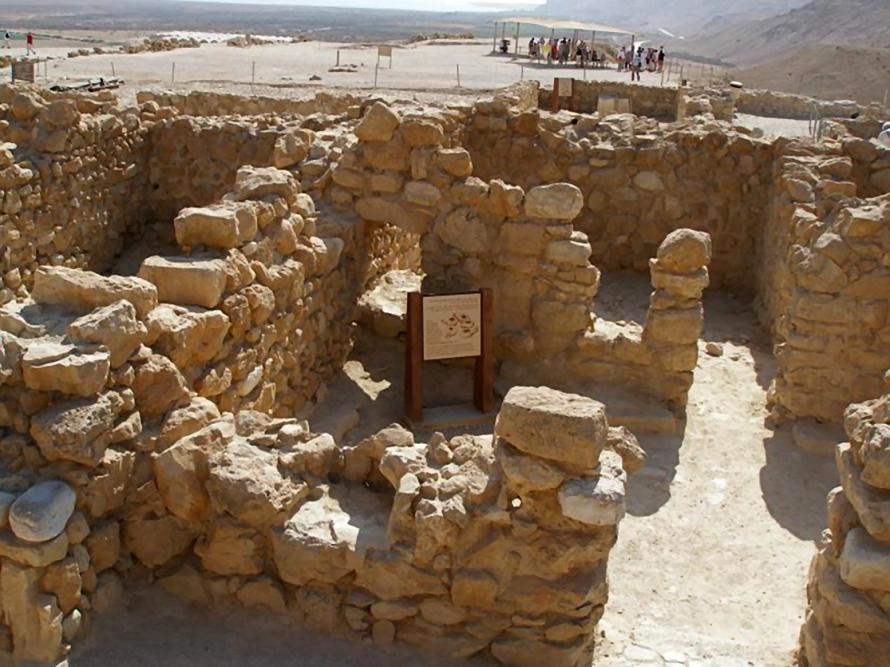
There was an ancient system known as Essenism – a religion whose origin has never been discovered, though it is known that the Essenes existed in the days of Jonathan Maccabeus, B.C.E. 1, and that they were of Jewish origin, and constituted one of the three Jewish sects (the other two being Pharisees and Sadducees). We have but fragments of their history as furnished by Philo, Josephus, Pliny, and their copyists, Eusebius, Dr. Ginsburg, and others, on whose authority show that Alexandrian and Judean Essenism was identically the same system in spirit and essence as its successor Judean Christianity; in other words, Judean Christianity teaches the same doctrines and moral precepts which had been previously inculcated by the disciples of the Essenian religion .
60 PARALLEL EXHIBITIONS OF THE PRECEPTS AND PRACTICAL LIVES OF CHRIST AND THE ESSENES.
From the writings of Philo, Josephus, and other authors.
1. Philo says, “It is our first duty to seek the kingdom of God and his righteousness;” so the Essenes believed and taught.
Scripture parallel. “Seek first the kingdom of God, and his righteousness, and all else shall be added (Matt. 6:33: Luke 12:31.)
2. Philo says, “They abjured all amusements, all elegancies, and all pleasures of the senses.”
Scripture parallel. “Forsake the world and the things thereof.”
3. The Essenes say, “Lay up nothing on earth, but fix your mind solely on heaven.”
Scripture parallel. “Lay not up treasures on earth,” &c.
4. “The Essenes, having laid aside all the anxieties of life,” says Philo, “and leaving society, they make their residence in solitary wilds and in gardens.”
Scripture parallel. “They wandered in deserts, and in mountains, and in dens, and in Caves of the earth.” (Heb. 11:38.)
5. Josephus says, “They neither buy nor sell among themselves, but give of what they have to him that wanteth.”
Scripture parallel. “And parted them (their goods) to all men as every man had need.” (Acts 2:45.)
6. Eusebius says, “Even as it is related in the Acts of the Apostles, all (the Essenes) … were wont to sell their possessions and their substance, and divide among all according as any one had need, so that there was not one among them in want.”
Scripture parallel. “Neither was there any among them that lacked, for as many as were possessors of lands or houses sold them, and brought the price of the things that were sold, &c. (Acts 4:34.)
7· Eusebius says, “For whoever, of Christ’s disciples, were owners of estates or houses, sold them, and brought the price thereof, and laid them at the apostles’ feet, and distribution was made as every one had need. So Philo relates things exactly similar of the Essenes.”
Scripture parallel. (The text above quoted.)
8. “Philo tells us (says Eusebius) that the Essenes forsook father, mother, brothers and sisters, houses and lands, for their religion.”
Scripture parallel. “Whosoever forsaketh not father and mother, houses and lands, &c. cannot be my disciples.’’
9· “Their being sometimes called monks was owing to their abstraction from the world,” says Eusebius.
Scripture parallel. “They are not of the world, even as I am not of the world.” (John 17:16.)
10. “And the name Ascetics was applied to them on account of their rigid discipline, their prayers, fasting, self mortification. &c., as they made themselves eunuchs.”
Scripture parallel. “There be eunuchs which have made themselves eunuchs for the kingdom of heaven’s sake.”
11. “They maintained a perfect community of goods, and an equality of external rank.” (Mich. vol. iv. p. 83.)
Scripture parallel. “Whosoever will be chief among you, let him be your servant.” (Matt. 20:27.)
12. “The Essenes had all things in common, and appointed one of their number to manage the common bag.” (Dr. Ginsburg.)
Scripture parallel. “And had all things in common.” (Acts 2:44; see also Acts 4:32.)
13. “All ornamental dress they (Essenes) detested.” (Mich. vol. iv. p. 83.)
Scripture parallel. “Whose adorning let it not be that outward adorning of plaiting the hair, and of wearing of gold, and putting on of apparel.” ( 1 Peter 3:3)
14. “They would call no man master.” (Mich.)
Scripture parallel. “Be not called Rabbi, for one is your Master.” (Matt. 23:8.)
15. “They said the Creator made all mankind equal.” (Mich.)
Scripture parallel. “God hath made of one blood all them that dwell upon the earth.”
16. “They renounced oaths, saying, He who cannot be believed without swearing is condemned already.” (Mich.)
Scripture parallel. “Swear not at all.”
17. “They would not eat anything which had blood in it, or meat which had been offered to idols. Their food was hyssop, and bread., and salt ; and water their only drink.” (Mich.)
Scripture parallel. “That ye abstain from meat offered to idols, and from blood.” (Acts 15:29.)
18. “Take nothing with them, neither meat or drink, nor anything necessary for the wants of the body.”
Scripture parallel. “Take nothing for your journey; neither staves nor script; neither bread, neither money, neither have two coats apiece.”
19. “They expounded the literal sense of the Holy Scriptures by allegory.” .
Scripture parallel. “Which things are an allegory.” (Gal. 4:24.)
20. “They abjured the pleasures of the body, not desiring mortal offspring, and they renounced marriage, believing it to be detrimental to a holy life.” (Mich.)
Scripture parallel. It will be recollected that neither Jesus nor Paul ever married, and that they discouraged the marriage relation.
Christ says, “They that shall be counted worthy of that world and the resurrection neither marry nor are given in marriage.” And Paul says, “The unmarried careth for the things of the Lord.” (1 Cor. 7:32.)
21. “They strove to disengage their minds entirely from the world.”
Scripture parallel. “If any man love the world, the love of the Father is not in him.”
22. “Devoting themselves to the Lord, they provide not for future subsistence.”
Scripture parallel. “Take no thought for the morrow what ye shalt eat and drink,” &c.
23. “Regarding the body as a prison, they were ashamed to give it sustenance.” (c. ii. 71.)
Scripture parallel. “Who shall change our vile bodies?” (Phil. 3:21.)
24. ‘’They spent nearly all their time in silent meditation and inward prayer.” (c. ii. 71.)
Scripture parallel. “Men ought always to pray.” (Luke 18:1.) “Pray without ceasing.” (1 Thess. 5:17.)
25. “Believing the poor were the Lord’s favorites they vowed perpetual chastity and poverty.” (c. ii. 71.)
Scripture parallel. “Blessed be ye poor.” (Luke 6:20.) “Hath not God chosen the poor?” (James 2:5)
26. “They devoted themselves entirely to contemplation in divine things.” (c. ii. 71.)
Scripture parallel. “Mediate upon these (divine) things; give thyself wholly to them.” (I Tim. 4:15)
27. ‘’They fasted often, sometimes tasting food but once in three or even six days.”
Scripture parallel. Christ’s disciples were “in fastings often.” (2 Cor. 11:27; see also 5:34)
28. “They offered no sacrifices, believing that a serious and devout soul was most acceptable.” (c. ii. 71.)
Scripture parallel. “There is no more offering for sin.” (Heb. 10:18)
29. “They believed in and practiced baptizing the dead.” (c. ii. 7 1.)
Scripture parallel. “Else what shall they do which are baptized for the dead.” (I Cor. 15:29)
30. “They gave a mystical sense to the Scriptures, disregarding the letter:”
Scripture parallel. “The letter killeth, but the spirit maketh alive.” (1 Cor. 3:6.).
31. “They taught by metaphors, symbols, and parables.”
Scripture parallel. “Without a parable spake be not unto them.” (Matt. 13:34.)
32. “They had many mysteries in their religion which they were sworn to keep secret.”
Scripture parallel. “To you it is given to know the mysteries of the kingdom; to them it is not given.” (Matt. 13:11.) “Great is the mystery of godliness.”
33. “They had in their churches, bishops, elders, deacons, and priests.’;
Scripture parallel. “Ordained elders in every church.” (Acts 14:23.) For ”deacons,” see 1 Tim. 3:1.
34. “When assembled together they would often sing psalms.”
Scripture parallel. .. Teaching and admonishing one another in psalms.” (Col. 3:16.)
35. “They healed and cured the minds and bodies of those who joined them.”
Scripture parallel. “Healing· all manner of sickness,” &c. (Matt. 4:23.)
36. “They practiced certain ceremonial purifications by water.”
Scripture parallel. “The accompishment of the days of purification.” (Acts 21:26.)
37· “They assembled at the Sabbath festivals clothed in white garments.”
Scripture parallel. “ Shall ‘be clothed in white garments.” (Rev. 3:4.)
38. “They disbelieved in the resurrection of the external body.”
Scripture parallel. “It is sown a natural body, it is raised a spiritual body.” (I Cor. 15:44.)
39. Pliny says,·” They were the only sort of men who lived without money and without women.”
Scripture parallel. “ The love of money is the root of all evil.” ( 1 Tim. 6:10.) Christ’s disciples .travelled without money and without scrip, and “eschew the lusts of the flesh.”
40. “They practiced the extremest charity to the poor.” (c. ii. 71,)
Scripture parallel. “Bestow all thy goods to feed the poor.” · (1 Cor. 13:3)
41. “They were skillful’ in interpreting dreams, and in foretelling future events.”
Scripture parallel. “Your sons and daughters shall prophesy, and your old men shall dream dreams.” (Acts 2:17.)
42. cc They believed in a paradise, … and in a place of never-ending lamentations.”
Scripture parallel. “Life everlasting.” (Gal. 8:8.) “Weeping, wailing, and gnashing of teeth.” (Matt. 8:42.)
43. “They affirmed,” says . Josephus, “that God fore· ordained all the events of human life.”
Scripture parallel. “Foreordained before the foundation of the world.” (1 Peter.)
44. They believed in Mediators between God and the souls of men.”
Scripture parallel. “ One Mediator between God and men.” (1 Tim. 2:5.)
45. “They practiced the pantomimic representation of the death, burial, and resurrection of God “- Christ the Spirit.
Scripture parallel. With respect to the death, burial, and resurrection of Christ, see 1 Cor. 15:4·
46. “They inculcated the forgiveness of injuries.”
Scripture parallel. “Father, forgive them; for they know not what they do.” (Luke 23:34.)
47· “They totally disapproved of all war.”
Scripture parallel. “ If my kingdom were of this world, then would my servants fight.” (John 18:36.)
48. “ They inculcated obedience to magistrates, and to the civil authorities.”
Scripture parallel. “Obey them which have the rule over you.” (Heb. 8:17; 26:65.)
49. ”They retired within themselves to receive interior revelations of divine truth.” (c. ii. 71.)
Scripture parallel. “Every one of you hath a revelation.” (1 Cor. 14:26.)
50. “They were scrupulous in speaking the truth.”
Scripture parallel. “Speaking all things in truth.” (2 Cor. 7: 14.)
51. “They perform many wonderful miracles.”
Scripture parallel. Many texts teach us that Christ and his apostles did the same.
52. “Essenism put all its members upon the same level, forbidding the exercise of authority of one over another.” (Dr. Ginsburg.)
Scripture parallel. Christ did the same. For proof, see Matt. 20:2s; Mark 9:35·
53. “ Essenism laid the greatest stress on being meek and lowly in spirit.” (Dr. Ginsburg.)
Scripture parallel. See Matt. 5:5; 9:28.
54. “The Essenes commended the poor in spirit,· those who hunger and thirst after righteousness, and the merciful, and the pure in heart.” (Dr Ginsburg.)
Scripture parallel. For proof that Christ did the same, see Matt.
55· 11 The Essenes commended the peacemakers.” (Dr. Ginsburg.)
Scripture parallel. “Blessed are the peacemakers.”
56. “The Essenes declared their disciples must cast out evil spirits, and perform miraculous cures, as signs and proof of their faith.” (Dr. Ginsburg.)
Scripture parallel. Christ’s disciples were to cast out devils, heal the sick, and raise the dead, &c., as signs and proof of their faith. (Mark 16:17.)
57. “They sacrificed the lusts of the flesh to gain spiritual happiness.”
Scripture parallel. “You abstain from fleshly lusts.” (1 Peter 2:11.)
58. “The breaking of bread was a veritable ordinance among the Essenes.”
Scripture parallel. “He (Jesus) took bread, .and gave thanks, and brake it.” (Luke 22:19.)
59. 11 The Essenes enjoined the loving of enemies.’’ (Philo.)
Scripture parallel. So did Christ say, “Love your enemies,” &c.
60. The Essenes enjoined, “Doing unto others as you would have them do unto you.”
Scripture parallel. So did Christ say,