Converting Others
Converting Others
Converting from One Dumb Religion to Another Dumb Religion

One big dummy converting from one stupid fantasy to another stupid fantasy.


One big dummy converting from one stupid fantasy to another stupid fantasy.
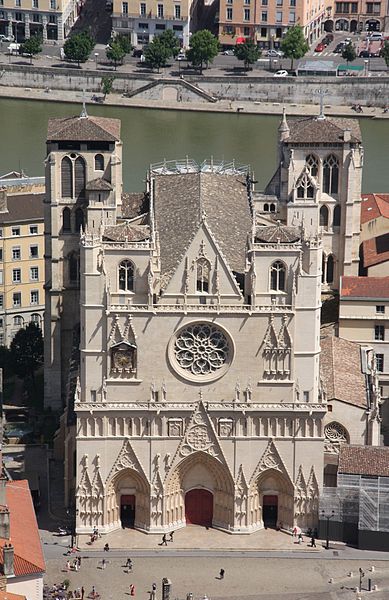
Lyon Basilica – Lyon, France
Only idol worshiping Christians could come up with this one; automatic guilt.
The first indication of such a concept as “Original Sin” was in the 2nd century by Irenaeus, from the Roman Catholic Archdiocese of Lyon, in France.
The Christians claim that Adam is accountable as having brought death into the world by eating the forbidden fruit. Thus all of his offspring are responsible for his wrong doing.
The soul that sinneth, it shall die. The son shall not bear the iniquity of the father, neither shall the father bear the iniquity of the son: the righteousness of the righteous shall be upon him, and the wickedness of the wicked shall be upon him. Ez 18:20
And the Lord smelled a sweet savour; and the Lord said in his heart, I will not again curse the ground any more for man’s sake; for the imagination of man’s heart is evil from his youth; neither will I again smite any more everything living, as I have done. Genesis 8:21
And God saw that the wickedness of man was great in the earth, and that every imagination of the thoughts of his heart was only evil continually. Genesis 6:5-8,
The Bible states that God recognizes that man inherently has evil imaginations. However it is clear that Adam’s sins are his alone.
And where does it say that Adam brought about death? It says it In the Christian New Testament of course. I guess all the dinosaurs didn’t die. And i guess all the animal also inherited death from Adam also.
Wherefore, as by one man sin entered into the world, and death by sin; and so death passed upon all men, for that all have sinned: Romans 5:12
I can see the writer was no Jack London (the Greek gospel writer Paul of course).
Right after that verse Paul states,
for sin indeed was in the world before the law was given, but sin is not counted where there is no law. Romans 5:13
The Christians have to call it the “word of God” otherwise people will start thinking about what the text says.

God cursed the ground, and Adam was to struggle in his labors because the ground was cursed.
To Adam he said, “Because you listened to your wife and ate fruit from the tree about which I commanded you, ‘You must not eat from it,’
“Cursed is the ground because of you; through painful toil you will eat food from it all the days of your life.
18 It will produce thorns and thistles for you, and you will eat the plants of the field.
19 By the sweat of your brow you will eat your food until you return to the ground, since from it you were taken; for dust you are and to dust you will return.” Genesis :17-19
And where does it say that Adam brought about death? In the Christian New Testament they claim death wasn’t around until Adam sinned (ate the fruit). I guess only the animals died and not man???
The Talmud is clear that the this cursing of the ground was later lifted.
Christians don’t want to read and think. They just want to “believe” in whatever a preacher imagines (evil imaginings).
This is a perfect example of the effect of how idol worshipers will be so gullible and believe anything they hear. They want it to be true to satisfy their illusions of grandeur. Someone says this 666 is the word of God. Then everyone says “I believe it.” Now they are the knowing ones and their egos are satisfied because now they are special having learned special knowledge. They have learned illusion.
It might help if they were to look at the original Greek text. It doesn’t say 666. Some say it says 616 as in the Novum Testamentum Graece, Codex Ephraemi Rescriptus, and others. It doesn’t say 616.
Google bible 666 and see all the ridiculous explanations

Look in the Codex Vaticanus. They are not Greek words at all. They are symbols. They are in Arabic. Any Arab knows what they mean.
The first symbol symbolizes the concept “bisim,” which means “in the word of.”
The second symbol is the symbol of “Allah,” (as in – There is no God but Allah, and Muhammad is his messenger).

The third symbol looks similar to an X which symbolizes “Islam.” It today is the bottom part of the symbol of Saudi Arabia. It is also on the flag of Saudi Arabia. It has been the symbol of Islam since it began.

That is not a Palm Tree. That is not the rising Sun. That is blood from the infidels.


The Arabic components that build-up the word “Allah”:
1. alif
2. hamzat waṣl (همزة وصل)
3. lām
4. lām
5. shadda (شدة)
6. dagger alif (ألف خنجرية)
7. hāʾ

Do you judge a person by what they say, or by what they do? The Born Again Christians claim they are so different from the Catholics. They say the Catholics are bad but they the “born again” are so good. Let’s compare.
Worship on Sunday instead of Saturday? Jesus and even Paul worshiped on Saturday. Check your New Testament. When the Catholic Church changed the day of worship from Saturday to Sunday, the Christians followed and also changed their day of worship from Saturday to Sunday. This is a tacit recognition of the absolute authority of Rome and the Catholics because they observe the “Sunday Sabbath” that was ordered by the Pope in the Council of Laodicea (A.D. 364). Most Christian don’t know that Mirthras is the Sun God worshiped by the majority of pagans at that time (and they worshiped on Sunday). The Christians also don’t know what day of the year is the birthday of Mirthras.
The “word of God” texts were decreed (canonized) by the Catholics. Writings claimed to have been written by the original apostles were deliberately left out. Once Catholics said this is the “Word of God”, all the Born Again Christians say “wow …. God wrote those words …….., those Catholics know what truth is. I’m going to follow those people from now on.” And the Born Again Christians (more like born yesterday again and again) and Protestant Christians are mere sheep and accept the authority and decrees of the Catholic Church without question (as to what books comprise the “Word of God”, that worship should be on Sunday instead of Saturday, that Jesus was God in the flesh, etc. etc.).
When the Catholic Church established the doctrine that there were three persons in one God, The Born Again Christians followed without question. There was no such doctrine before the Catholic Church started explaining it.
The Catholics have statutes in their churches which the Born Again Christians say are idols, yet the Christians have crosses in their churches. They rarely have an image of Jesus’s body hanging on it, but a plane cross becomes an idol symbol when the Christians also claim that Jesus was god in the flesh.
The Born Again Christians once again heartily follow the Catholics in their claim that the Old Testament is no longer valid and that the New Testament has replaced it.
When the Catholics declared the day of Jesus’s birth to be December 25, the Born Again Christians respected the Catholics as having the authority to set the day and have honored that day since the Catholic’s decree to the present, just as all the Catholics honor it. The birthday of Mirthas the sun god is December 25.
When the Catholic Church declared the date of Good Friday and the date honoring the resurrection of Jesus, the Born Again Christians also honored both dates that were set (even though it’s not three days). The Catholic Church named the resurrection holiday Easter honoring the pagan god Ishtar. The Born Again Christians didn’t blink an eye and also readily accepted the name the Catholics established for that day.
When the Catholic Church declared the day to honor all the saints, the Born Again Christians acknowledged it by celebrating all hallows eve, also known today as Halloween.
The Catholics glorify the virgin birth of Jesus. The Born Again Christians totally accept the Catholic precept and agree that Jesus was born of a virgin. Of course there are about 8 or more other pagan religions before Jesus that also claimed their leader were born of a virgin.

The Catholics say the holy days decreed to be followed in the Old Testament are no longer valid. The Born Again Christians again follow the Catholics and don’t celebrate those holidays.
The Born Again Christians say the “Blood” of Jesus stopped that practice (What does his “Blood” have anything to do with it?). He was not a temple sacrifice killed by Cohen priests in the temple. Christians saying this are insulting Jesus and what he practiced. These insulting people are just furthering their desire for idol worship. Jesus was murdered by the Romans who saw him as leading a revolt and killing him would send a message to the people. And the Romans were certainly not following any orders from the high priests.
Many of the Christian priests or preachers dress similar to the catholic priests with the white linen robe and a colored cover vestment over it. Also, many Born Again Christian priests wear a white collar and dress in black exactly like the Catholic priests. Funny thing is, even Anton LaVey author of the satanic bible even wore a white collar at one time.
When a person believes in and performs all of the decrees of an organization they are considered to be a member even though they haven’t formally joined (called de jure in law). The Catholic Church considers anyone who follows their precepts to be Catholic and not a heretic.
Now I ask again, do you judge someone by what they say or by what they do?


The Vatican prelature known as Opus Dei is a deeply devout and secret Catholic sect that is composed of lay persons of the working world. They are under the personal protection of the Pope. The members do not answer to the Bishops of the Diocese in which they live.
Opus Dei is Latin and means “the work of God.”
The organization was founded by a Spanish Priest named Josemaria Escriva in the 1930’s, He moved to Rome to better influence the Pope.
Self flagellation is practiced and encouraged. Escriva wrote in his guidebook The Way, “Where there is no mortification there is no virtue.” (The Way, #180). He further wrote, “Unless you mortify yourself, you will never be a prayful soul.” (The Way #172). The bathroom walls of the founder Escriva were covered in speckles of blood from his daily flagellation.
Members are expected to wear a “cilice” for two hours a day, minimum. They are also expected to beat themselves on the back and the buttocks once a week, minimum.


Opus Dei does not see this as a punishment to quench the desires of the body, but as a way to share the physical suffering of Christ. If a member feels they need to attone their sins, then extra penance through additional mortification is needed.



Opus Dei is as powerful as ever and has just completed construction of a $47 million World Headquarters at 243 Lexington Avenue in New York City.


Men only entrance.

All Raptured except DAD
Prior to 1830 there was NO SUCH DOCTRINE!!! John Nelson Darby invented the “rapture.” Darby notes that the doctrine just “popped into his head” in 1830 AD. Before this, no one had ever heard of a secret rapture doctrine. Darby’s pre-tribulational view of the rapture was then picked up by a man named C.I. Scofield, who taught the view in the footnotes of his Scofield Reference Bible, which was widely distributed in England and America. Many Protestants who read the Scofield Reference Bible uncritically accepted what its footnotes said and adopted the “rapture” doctrine, even though no Christian had heard of it in the previous 1800 years of Church history.” The essence of the case offered by Darby, Scofield and their modern counterparts is based upon the English translation of “caught up.”
1 Thessalonians 4:17 17 Then we which are alive and remain shall be caught up together with them in the clouds, to meet the Lord in the air: and so shall we ever be with the Lord.
1 Cor. 15:51-52, 51 “Behold, I tell you a mystery; we shall not all sleep, but we shall all be changed, 52 in a moment, in the twinkling of an eye, at the last trumpet; for the trumpet will sound, and the dead will be raised imperishable, and we shall be changed.”
Sounds more like the end of all human existence. Such pre-tribulation rapture fantasy could only be imagined as real by a dedicated idol worshiping nation.

Dog not raptured

crashing cars
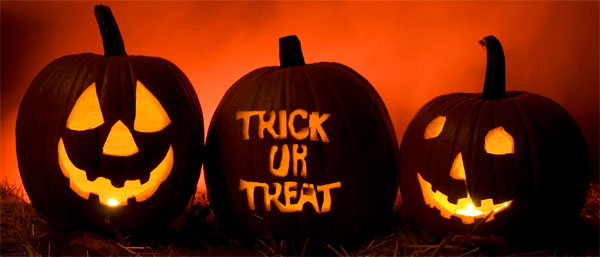
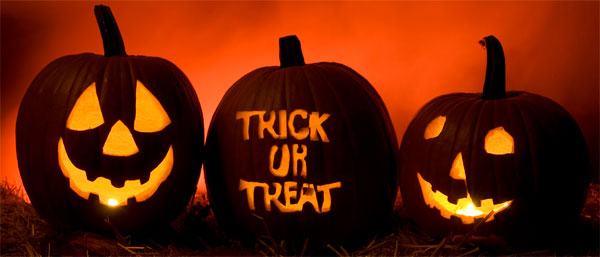
A Pagan Celebration … All Hallow’s Eve (Eve as in evening) ….AKA Hallowmas. Holloween is the night before the Christian holiday of “All Saints Day.” Switched from May 13 to November 1 to honor the Celtic pagan holiday of Samhain. The dressing in costumes signifies the dead walking around and getting their revenge on their enemies, the day before All Saints Day, before moving out of this world into the next life. The Halloween pumpkin and lanterns are representations of the souls in purgatory. The trick or treat custom came from Scotland and Ireland a custom called guising.
In ancient Britain, the festival known as Samhain was celebrated on October 31st. It was supposedly a day when dead souls would revisit their old homes.
According to the History Channel, Samhain was also the day when the Druids “gathered to burn crops and animals as sacrifices to the Celtic deities”.
According to Wiccans, Halloween is the time when the veil between the living and the dead is considered to be the thinnest. They believe that on this day their god “dies” and is reborn every year on the Winter Solstice. This year the winter solstice falls on December 22nd.
In ancient times, the resurrection of the sun god required human and animal sacrifice. Druids worshiped the sun god, called by names like Bel (Ba’al?) or Chrom. On October 31, they believed that he died and went into the kingdom of the dead, Anwynn. The purpose of Samhain was to insure his return. Even witches admit this involved human sacrifice.
Both animal and human blood were believed to be needed to resurrect Bel on Samhain. Human blood was believed to open the gates of Anwynn and released the spirits for a night. Thus, October 31 came to be associated with ghosts. This is not just history. Samhain is still celebrated by Pagans and is the most solemn ceremony on their “religious calendar”.
To this day, animal torture and sacrifice is still practiced on Halloween by occultists. Many animal shelters will not adopt out black cats during the month of October for this very reason.
In the early seventh century, a Catholic Pope known as Gregory the First decided that the best approach to ensure the continued spread of Catholicism was to “christianize” existing pagan holidays and practices…
As a result of their efforts to wipe out “pagan” holidays, such as Samhain, the Christians succeeded in effecting major transformations in it. In 601 A.D. Pope Gregory the First issued a now famous edict to his missionaries concerning the native beliefs and customs of the peoples he hoped to convert. Rather than try to obliterate native peoples’ customs and beliefs, the pope instructed his missionaries to use them: if a group of people worshipped a tree, rather than cut it down, he advised them to consecrate it to Christ and allow its continued worship.
The tradition of “trick-or-treating” was one of the existing pagan traditions that was later “Christianized”…
The idea of trick-or-treating is further related to the ghosts of the dead in pagan, and even Catholic, history. For example, among the ancient Druids, “The ghosts that were thought to throng about the houses of the living were greeted with a banquet-laden table. At the end of the feast, masked and costumed villagers representing the souls of the dead paraded to the outskirts of town leading the ghosts away.”
As already noted, Halloween was thought to be a night when mischievous and evil spirits roamed freely. As in modern poltergeist lore, mischievous spirits could play tricks on the living—so it was advantageous to “hide” from them by wearing costumes. Masks and costumes were worn to either scare away the ghosts or to keep from being recognized by them
The tradition of carving out a “Jack-O-Lantern” also comes from paganism. The following comes from wicca.com…
Turnips were hollowed out and carved to look like protective spirits, for this was a night of magic and chaos. The Wee Folke became very active, pulling pranks on unsuspecting humans. Traveling after dark was not advised.
Pumpkins eventually replaced turnips, but the meaning remained the same…
Here it’s a pumpkin, but in Europe it was often a turnip, or a skull with a candle in it. This serves two symbols, 1) the lord of the Dead, a “god” just like a Buddha – in short, an idol. 2) The fearsome face represented the god, Samhain, who would drive off less powerful demons that night. The lights in the Jack-o-Lantern symbolize the “faery fires” or “Will’o the Wisps” which were believed to be the lost souls flitting through the night. They also hearken back to the huge Samhain “balefires” which were lit to help conjure back the god from the darkness.
On all Satanic holy days, there are children that get ritually abused. This has been documented repeatedly, and yet most people (including most Christians) don’t want to hear about it.
For Satanists, Halloween is one of the most important celebrations of the year. On page 96 of the Satanic Bible, Anton LaVey wrote the following…
“After one’s own birthday, the two major Satanic holidays are Walpurgisnacht (May 1st) and Halloween.”
The Scriptures are very clear about this sort of thing. Deuteronomy 18:9-13 says the following: “When you enter the land the Lord your God is giving you, do not learn to imitate the detestable ways of the nations there. Let no one be found among you who sacrifices his son or daughter in the fire, who practices divination or sorcery, interprets omens, engages in witchcraft, or casts spells, or who is a medium or spiritist or who consults with the dead. Anyone who does these things is detestable to the Lord”.
In the early seventh century, a Catholic Pope known as Gregory the First decided that the best approach to ensure the continued spread of Catholicism was to “christianize” existing pagan holidays and practices…
As a result of their efforts to wipe out “pagan” holidays, such as Samhain, the Christians succeeded in effecting major transformations in it. In 601 A.D. Pope Gregory the First issued a now famous edict to his missionaries concerning the native beliefs and customs of the peoples he hoped to convert. Rather than try to obliterate native peoples’ customs and beliefs, the pope instructed his missionaries to use them: if a group of people worshipped a tree, rather than cut it down, he advised them to consecrate it to Christ and allow its continued worship.
All Saints Day, November 1, is a Holy day of Obligation that all Catholics are required to attend church services, mass, on that day.
Today Santeria is a combination of catholic practices and voodoo … same in Africa….they combine Christianity and pagan practices. Halloween is also one of their special holidays.


For Wiccans, the festival known as “Samhain” is the time when the veil between the living and the dead is the thinnest, and so communication with the other side is the easiest. And as you will see below, it is also the time “when the god dies, to be reborn again on the Winter Solstice”. Many Americans are still very unfamiliar with Wicca, but the truth is that it is rapidly growing in popularity. In fact, it has been projected that Wicca will soon become the third largest “religion” in America after Christianity and Islam. According to the American Religious Identification Survey, the number of self-identified Wiccans in the United States grew from 8,000 in 1990 to 134,000 in 2001 to 342,000 in 2008. The New York Post recently ran an article which stated that some experts have estimated that the number of witches in the U.S. is doubling every 30 months, and that there may now be “8 million undeclared practitioners” of “the craft” in this country
October 31st is the midway point between the Autumn Equinox and the Winter Solstice. As such it is considered the end of the harvest time, when everything has stopped growing and the earth goes back to sleep. On the Wiccan calendar, known as the “wheel of the year” it is also the day when the god dies, to be reborn again on the Winter Solstice. Samhain is therefore the day when the veil between the living and the dead is considered thinnest, and is a time to remember people in our lives who have passed away.
On page 96 of the Satanic Bible, Anton LaVey wrote the following…
“After one’s own birthday, the two major Satanic holidays are Walpurgisnacht (May 1st) and Halloween.”
Approximately 70 percent of all Americans will participate in Halloween festivities once again this year, and they will spend somewhere in the neighborhood of 6 billion dollars celebrating the holiday,
Halloween is where some people say spirits can wander the earth freely, and others say their children can wander the neighborhood unattended, trick-or-treating or causing havoc.
Celts believed Samhain was a time when the wall between our world and the paranormal world was porous and spirits could get through. Because of this belief, it was common for the Celts to wear costumes and masks during the festival to ward off or befuddle any evil spirits.
Hallowmas is a three-day Catholic holiday where saints are honored and people pray for the recently deceased. At the start of the 11th century, it was decreed by the pope that it would last from Oct. 31 (All Hallow’s Eve) until Nov. 2, most likely because that was when Samhain was celebrated and the church was trying to convert the pagans.
“All Hallow’s Eve” then evolved into “All Hallow’s Even,” and by the 18th century it was commonly referred to as “Hallowe’en.”
Halloween originates from a Celtic tradition called Samhain, a festival that marked the end of the Celtic calendar year in Ireland, Scotland, and the Isle of Man. They believed it was a time that spirits or fairies could enter our world, and the Celts would put out treats and food to placate the spirits — sometimes, a place at the table was even set for the souls of the dead.
Wiccans still celebrate Samhain as a New Year celebration today.
The origin of Jack-O-Lanterns comes from a Celtic folk tale of a stingy farmer named Jack who would constantly play tricks on the devil. The devil responded by forcing him to wander purgatory with only a burning lump of coal from hell. Jack took the coal and made a lantern from a turnip, using it to guide his lost soul.
The myth was brought over by Irish families fleeing the potato famine in the 1800s, and since turnips were hard to come by in the U.S., America’s pumpkins were used as a substitute to guide lost souls and keep evil spirits like “Jack of the Lantern” away.
Black cats, spiders, and bats are all Halloween symbols because of their spooky history and ties to Wiccans. All three were thought to be the familiars of witches in the middle ages, and are often associated with bad luck.
Bats are even further connected to Halloween by the ancient Samhain ritual of building a bonfire,
Though a common trope in horror movies and Halloween decorations with witches flying across the full moon, the next full moon on Halloween won’t occur until 2020.
The most recent Halloween full moon was back in 2001, and before that it was in 1955.
Versions of trick-or-treating have existed since medieval times. In the past, it was known as “guising” where children and poor adults went around in costumes during Hallowmas begging for food and money in exchange for songs or prayers. It was also called “souling.”
There’s a $1,000 fine for using or selling Silly String in Hollywood on Halloween.
The prank product has been banned in Hollywood since 2004 after thousands of bored people would buy it on the streets of Hollywood from illegal vendors and “vandalize” the streets. The city ordinance calls for a maximum $1,000 fine and/or six months in jail for “use, possession, sale or distribution of Silly String in Hollywood from 12:01 AM on October 31 to 12:00 PM on November 1.”
Trick-or-treating was brought to America by the Irish and became popular during the early 20th century, but died out during WWII when sugar was rationed. After the rationing ended in 1947, children’s magazine “Jack and Jill,” radio program “The Adventures of Ozzie and Harriet,” and the “Peanuts” comic strip all helped to re-popularize the traditionof dressing up in costumes and asking for candy from door-to-door.
Candy makers supposedly lobbied to extend daylight savings time into the beginning of November to get an extra hour of daylight so children could collect even more candy (thus forcing people to purchase more candy to meet the demand).
They wanted it so badly that during the 1985 hearings on Daylight Savings they put candy pumpkins on the seat of every senator, according to NPR. (The candy industry disputes this account, according to The New York Times.)
By 1952, trick-or-treating became hugely popular again.
Halloween is the second-most commercial American holiday of the year.
A Pagan Celebration of the Past ……The custom of celebrating it, AKITU FESTIVAL, has remained essentially unchanged for 4,000 years! It began in ancient Babylonia in Mesopotamia. It was a pagan custom of ancient sun-worship.
In 46 B.C.E. Roman Emperor Julius Cesar establish January 1 and New Years day. Why that day? Janus was the God of doors and gates. God Janus had two faces; one looking forward and one looking back. Cesar felt that a month named Janus would be the appropriate door for a new year. The first January one celebration was a celebration to the God Janus. Cesar ordered the violent routing of revolutionary Jewish forces in Galilee. Witnesses said the streets literally flowed with blood. Years later Roman pagans celebrated January one by partaking in drunken orgies symbolizing a personal reenactment of the chaotic world before the cosmos was ordered by the Gods. Today the celebrations are pretty much the same. The New York Police Dept was formed in response to these January first celebrations.

As Christianity spread the pagan holidays were incorporated into the Church calendar or were abandoned entirely. Most of Europe during the medieval period regarded Annunciation day, March 25, as the beginning of the new year. Annunciation day is the day the angel Gabriel told Mary that she had been impregnated by God and she was to have God’s son called Jesus. The pagans celebrated January first as the New Year but the Christians were definitely opposed to the pagan start of the year and celebrated Annunciation day and the first day of the year.

When William the Conqueror, AKA William the Bastard, became King of England on December 25, 1066, He decreed that the English would return to the first of the year date established by the pagans. He wanted to assure that the date of Jesus’ birthday would align with his coronation. And the date of the circumcision of Jesus, January first would be the day to start the New Year off. This change was eventually rejected when he died, and all of Christianity abandoned January first as the start of the year and went back to Annunciation day and the first day of the year, March 25.

Then 500 years later, in recent history, in 1582, Ugo Boncompagni, AKA Pope Gregory 13th, abandoned the Julius calendar because the solar year was represented as 365 and 1/4 days which is not correct. It introduced a day every four years to maintain a correspondence with the lunar and solar cycles. The Jewish Talmud knew the correct days in a year 2000 years before. There are 365 days five hours forty-eight minutes and 46 seconds. The Julian calendar would slip behind one day a century. Pope Gregory based his calendar on the date based on the date of the Council of Nicaea (March 21 325 C.E.). This made Pope Gregory’s calendar off by 14 day in his year time period. He based his reform calendar on the vernal equinox, March 11, the date they had 1,357 years earlier. The change in the calendar was made the day after October 4, 1582. The following day was changed and established as October 15, 1582.
The Gregorian calendar (as in Pope Gregory) differs from the Julian calendar in 3 ways.
First no century year is a leap year unless it is exactly divisible by 400.
Second, years divisible by 4,000 are common, not leap years.
Third, starting with Pope Gregory in the year 1582, the New Year would again begin on January first.
In the Roman Catholic Church, January 1 is an Attendance Obligation Holy Day honoring “the Holy Blessed Virgin Mary, Mother of God.”

Today the Israeli government decided it was not right to celebrate a Gregorian New Years. New Year celebrations in Israel are discouraged. Because the whole world is celebrating, instead of New Year parties the people have Sylvester parties. No, it doesn’t have anything to do with Disneyland.
Sylvester was a great Christian theologian, who later the Catholic Church beatified him as a saint, Saint Sylvester. Sylvester was the Pope reigning at the time of the Council of Nicaea. The Year before the Council of Nicaea, Sylvester convinced Constantine to prohibit Jews from living anywhere in the region of Jerusalem. There were many Jews in the area and most refused to leave. It was their homeland. At Sylvester’s urging Constantine went and slaughtered the Jews that refused to leave. At the Council of Nicaea Sylvester arraigned for a large number of decrees that were totally anti-Semitic. All Catholic Saints are given a special day by the Catholic Church in which the saint is to be celebrated. Saint Sylvester’s day is December 31. Hence the celebrations in Israel on the night of December 31st are dedicated to Saint Sylvester’s memory.
Spring is in the air! Flowers and bunnies decorate the home. Father helps the children paint beautiful designs on eggs dyed in various colors. These eggs, which will later be hidden and searched for, are placed into lovely, seasonal baskets. The wonderful aroma of the hot cross buns mother is baking in the oven waft through the house. Forty days of abstaining from special foods (Lent) will finally end the next day. The whole family picks out their Sunday best to wear to the next morning’s sunrise worship service to celebrate the savior’s resurrection and the renewal of life. Everyone looks forward to a succulent ham with all the trimmings. After all, it is one of the most important religious holidays of the year.
This is a description of an ancient Babylonian family—2,000 years before Christ—honoring the resurrection of their god, Tammuz, who was brought back from the underworld by his mother/wife, Ishtar (after whom the festival Easter was named). As Ishtar was actually pronounced “Easter” in most Semitic dialects, it could be said that the family event portrayed above is one of the other many culturral festivals. The occasion could easily have been a Phrygian family honoring Attis and Cybele, or perhaps a Phoenician family worshiping Adonis and Astarte. Also fitting the description well would be a heretic Israelite family honoring the Canaanite Baal and Ashtoreth. Or this depiction could just as easily represent any number of other immoral, pagan fertility celebrations of death and resurrection—including the modern Easter celebration as it has come to us through the Anglo-Saxon fertility rites of the goddess Eostre or Ostara.

For the first two hundred years of European life in North America, only a few states, mostly in the South, paid attention to Easter.” Not until after the Civil War did Americans begin celebrating this holiday: “Easter first became an American tradition in the 1870s”
The original 13 colonies of America began as a “Christian” nation, with the cry of “No king but King Jesus!” The nation did not observe any Easter festival for an entire century after its founding.
Christian tradition is that Jesus died on March 25. This is the exact day that the resurrection of the God Attis was celebrated in Rome. However the Church father Lactantitus places the death of Jesus on March 23 and his resurrection on March 25. Doesn’t seem to be three days. However it is the exact dates of the death and resurrection of the pagan God Attis.


Lactantius.
Lucius Caecilius Firmianus Lactantius (c. 250 – c. 325) was an early Christian author who became an adviser to the first Christian Roman emperor, Constantine I.
New testament states no year for Jesus birth. The Christmas date was a mistake according to a Scythian monk. Dionesius Exegus. Someone from the Catholic church added a wrong number; born 3 BCE.
Jarome Biblical Commentary has essay by Cardinal Fitsmier, one of the most influential writes for the pope. He says the birth definitely did not occur in AD 1. The error introduced 533 by Dionesius
243 CE birth date written in north Africa. The document Pasta Computus (Catholic church document) states the birthday of Jesus was March 28.
Clemens (Bishop of Alexandria) who died 215 CE wrote that Christ was put death on Nov 18.
Today Catholic writer Fitzmier says both wrong, and that Jesus was born September 11, 3 BCE
Claims of Catholic church today are that Jesus was not born December 25. No Catholic or Protestant theologians believe this date was the birth date of Christ.
In Pagan Roman times, pre-Christian, there was a festival from December 17 to December 25, lasting 8 days. The Roman Courts shut down. The rule was anything goes. If you damaged property or murdered someone you were not held responsible. Each community would appoint one person to be the enemy of the roman people. They would name that person the “Lord of Misrule.” On the eighth day of the festival they would murder this person in a horrific fashion. The manner was a slow death with not much left of his body in the end. The festival was called the Festival of Saturnalia.
When Rome fell the festival of Saturnalia survived. The Greek historian Luchian, described how the Greeks celebrated in his writing “Saturnalia” saying, “In addition to the human sacrifice, there was wide intoxication, people going house to house singing (caroling) in street naked, consuming human shaped biscuits (the ginger bread man).”
The early Christian Catholic Church was trying to convert pagans and would accept pagan practices if the pagans would believe in Jesus. The Church Decided to bring in the Saturnalia cult. With bringing in this cult also came the eight day festival of uncontrolled wildness. Steve Nissibaum from University of Massachusetts describes, “By agreeing to the date December 25, the Catholic Church agreed to keep the celebration as it had been practiced. Kept was the sexual indulgence, the singing in street, etc. The Puritan leading theologian who was responsible for settling America, Increase Mather, wrote in Boston in 1687, “The early Christians that first observed the nativity on December 25 did not do so thinking Christ was born in that month, but because the heathen’s Saturnalia was at that time kept in Rome and they were willing to have those pagan holidays that metamorphosed into Christian ones.”
Puritans were totally opposed to Christmas, and between the years 1659 to 1681 anyone caught celebrating Christmas was thrown into jail. It was illegal to keep Christmas in puritan America. It was considered heresy. There are groups in Europe that do not celebrate Jesus birthday.
In 1466, Pope Paul for amusement of Roman citizens arraigned the festival of Saturnalia, December 25, to include the Jews running naked through the streets of the city. Eye witness wrote, “Before the run the Jews, they were amply fed making their run much more difficult and more amusing for the spectators. Shrieks and pales of laughter. The Holy Father stool upon a richly decorated balcony and laughed heartily.”
These celebrations continued on regularly through the eighteenth and nineteenth century. During this period the Rabbis of ghetto in Rome were forced to wear clownish outfits and march through the streets to the jeers of crowd and were pelted by objects thrown. The Jewish community of Rome sent a petition. It was presented in 1836 to Pope Gregory 16th pleading for him to stop the festival of Saturnalia.
The Pope’s response was, “It is not opportune to make any innovation right now.” The festival of Saturnalia was left in place. On December 25 1881, Christian leaders along with polish masses worked up into an anti-Semitic frenzy which led to riots across the country. In Warsaw 12 Jews were murdered, hundreds of Jews who were maimed or wounded and dozens of Jewish women were raped. Two million rubles of property was destroyed. That was a classic example of the Christmas celebration.

Catholics attempting to attract the Ashaera cult. Worshiped trees. Would bring trees into their homes and decorate and put candles on them and worship the tree. Christian Catholics said worship Jesus, but cult said we worship trees. Catholics said no problem just bring the tree into your house on December 25. They were accepted with their tree worshiping practices in order to bring them under the Churches influence.

Mistletoe is a highly poisonous plant. So toxic that you need to be careful when you handle it. You hang this on your front door by itself or in a wreath. The Nordic mythology was that the God Balder was killed from a mistletoe soaked arrow by his rival, Hoder, while fighting for the female, Nana. Druid rituals used to use mistletoe in their sacrifices. And they sacrificed children. They would poison children with mistletoe when they sacrificed them. The today custom of kissing under the mistletoe came as a morph of the Druid mythology and the permissible practice on December 25 of a man in the street grabbing a woman and doing whatever he wanted with her. If she was out of her house on December 25 she was fair game. There was no repercussions from this act because of the customs of Saturnalia.


Roman emperors insisted that the Jewish community bring offerings on December 25. Jews were forced to give these gifts on threat of death. This insistence was expanded by the emperors to include other people by threat of death. It evolved to gift giving in general because people gave presents to each other also during this time.
Nicholas was born in Parara, Turkey in 270 CE and later became Bishop of Myra. He died in 345 CE on December 6th. He was wasn’t named a saint until the Catholic festival of Christmas was well established. The Catholic Church declared him a saint and gave him a day, December 6, in which he was to be honored. However, he didn’t become a saint until the 19th century, about 1,600 years after his death. I guess it took people a long time to realize that he was a saint.
Nicholas was among the most senior bishops who convened the Council of Nicaea in 325 CE and created the New Testament. The text they produced portrayed Jews as “the children of the devil” (the terrorists) who sentenced Jesus to death. They figured the people were stupid and would believe that the Jews told the Romans what to do (they were right about the stupid part). They didn’t put any fault on the Romans who, as the story goes, gruesomely killed their son of god, along with thousands of other innocent people. These actions paved the way for the Holocaust.
In 1087, a group of sailors who idolized Nicholas so much that they moved his bones from Turkey to a sanctuary in Bari, Italy. There at the new shrine location, a female gift giving deity named Pasqua Epiphania was removed and Nicholas was put there. This former occupant of the shrine, deity Pasqua, was more commonly known as “The Grandmother”, who used to fill the children’s stockings with her gifts. Since the Grandmother was ousted from her shrine at Bari, the location remained the center of the Grandmother cult. Saint Nicholas replace the Grandmother. Members of this group gave each other gifts during a pageant they conducted annually on the anniversary of Nicholas’ death, December 6.
The Nicholas cult spread north until it was adopted by German and Celtic pagans. These groups worshipped a pantheon led by Woden AKA Oden, their chief God. Woden was the father of Thor, Baldr, Vioarr and Vali. Woden had a long, white beard and rode a horse through the heavens on one evening each Autumn. Nicholas merged with Woden by the pagans. He shed his Mediterranean appearance, grew a white beard, mounted a flying horse, rescheduled his flight in the heavens to December, and donned heavy winter clothing. Nicolas lived in the near east and dressed in a t-shirt and shorts. When he was adopted in the cold northern areas he was clothed differently with warm heavy winter clothing and now had this long white beard.


The Catholic Church pressed the Nicholas/Woeden cult to become Christians. They said they could bring their custom of worshiping Nicholas/Woeden with them just celebrate the day on December 25 instead of December 6.
In a bid for pagan adherents in Northern Europe, the Catholic Church adopted the Nicholas cult and taught that he distributed gifts on December 25th instead of December 6th (and they should do likewise). Open the Catholic New Testament Book and look at the Saint days that are celebrated and Saint Nicholas is listed as December 6.

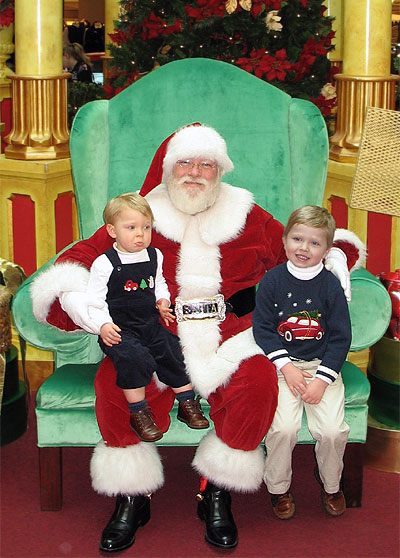
In 1809 Washington Irving, a famous writer (Rip Van Winkle, Legend of Sleepy Hollow), wrote a much less known satire about Dutch history called Nicker Barker History. Several times he refers to Saint Nickcholas by his Dutch name Santa Clause. A Christian theologian named Clement More, a writer, in 1822 wrote a poem “Twas the night before Christmas …” the poem addressed main character as Santa Clause, who had 8 reindeer and it had a Santa Clause who descended through chimneys. Santa still looked like a horror figure with long white beard and gruesome long black coat. He was short and bent over and carrying a cane. He looked frightening. This depiction was from the myth that he was known to punish children (you better not pout you better not cry). Santa Clause will beat you with a stick if you are not happy.


Harpers Weekly, a then popular magazine, had a great illustrator by the name of Thomas Nast. From 1862 to 1896 he produced 2,200 cartoons of Santa Clause. Nast depicted Santa Clause differently. He depicted him as a jolly fellow that lived at the North Pole and he had helper Elves. This has nothing to do with Saint Nicholas who lived in hot dry Turkey. Nast created the mythology of Santa making toys for all the children at the north pole with his helper elves and was a jolly good fellow. Illustrator Thomas Nast created the Santa Clause we know today.

But Santa was still dressed in black up until the early 1900s. In 1931 the Coca-Cola Corp was in financial straits. Why??? Because they were forced to remove cocaine from the soda drink. Sales were slumping, going down. They tried putting in caffeine but it wasn’t the same Coca-Cola.
They needed a huge advertising campaign to pull them out of the downward slump. They hired the famous Swedish commercial artist illustrator by the name of Haddon Hubbard “Sunny” Sundblom. His job was to create a coke drinking Santa.
He modeled Santa Clause based on his friend Lou Prentis, who was overweight cheerful and had a chubby rosy red face. The corporation like it all but the outfit. They insisted that his fur trimmed suit Santa wore had to be Coca-Cola red.
All Santas today are based on the Coca-Cola Santa. Parts of Europe still have Santa in the scary black suit.
Our Santa Clause is a blend of Christian crusader, pagan god, and commercial idol.


1 Christmas is a holiday celebrated carelessly based on the origin of civil decadence when the Roman courts were shut down.
2 Christmas was brought into Christian religion thoughtlessly. People never asked what connection does this have with Christianity. They simply said it’s fun so let’s do it.
3 Christmas day celebrates today a God who came to earth to do away with Judaism. The Jesus God is the reason the “old” testament is null and void. Commandments are no longer needed to be kept. Jews are to be abandoned because they are evil sinful people. There now is a new good people – the Christians with a “new” testament. The Jewish religion is a dead religion now.
4 Christmas is a lie. Jesus was not born on December 25. even the Catholic authority that writes for the Pope agrees to this.
Historically December 25 a day when Jews have been shamed and tortured … and murdered.
Christmas customs of Christmas trees, mistletoe, Christmas presents, and Santa Clause are just modern acceptance of the most depraved pagan rituals ever practiced (like child sacrifices).
Why not celebrate April 20 instead. This day is celebrated by a large German Austrian Polish population. What is the celebration day. It’s Hitler day. The day in which Hitler was born. Celebrated by Neo-Nazis and their friends. They have a big party and invite everybody. They dress up in German dress with swastikas and wear mustaches. In three or four generations the grandsons and granddaughters won’t know what they are celebrating just like the Christians. They will just know it’s a day to have a big party and drink beer and have lots of fun.
Christmas, December 25, was historically always celebrated as a violent mass murderous day.
In 1941 A Christmas card sent to the entire German people. It was published in very popular newspaper called Desturmer. Was written by the paper’s editor Julius Strifer. He encouraged Germans to return to the former style of December 25 celebrations. His Christmas card said,
“If one really wants to put an end to the continued prospering of this curse from heaven that is the Jewish blood there is only one way to do it. To eradicate this people, this Satan’s sun, root, and branch.
Have a merry Christmas.”
In the 5th century the Catholic church ordered the feast of Jesus’s birth to be celebrated on the day of the Mithraic rites of the birth of the sun (right after the winter equinox), and at the close of the Roman festival of Saturnalia, December 25.
The Western Church fixed two birthday dates to Jesus, December 25 for his physical birth, and March 25 for his spiritual birth or resurrection also known as Easter. The same dual birthdays can be found in Egyptian mythology. Horus was born a babe on December 25 and reborn a man March 25, the same date also that Savior Adonis was resurrected on.
They celebrate their Christmas, the birth of Jesus, on January 6. Osiris-Aion as said to be born of a virgin Isis on January 6.
What a coincidence!