The Crusades were military campaigns sanctioned by the Latin Roman Catholic Church during the High Middle Ages and Late Middle Ages. In 1095, Pope Urban II proclaimed the First Crusade with the stated goal of restoring Christian access to holy places in and near Jerusalem.
Knights Templar
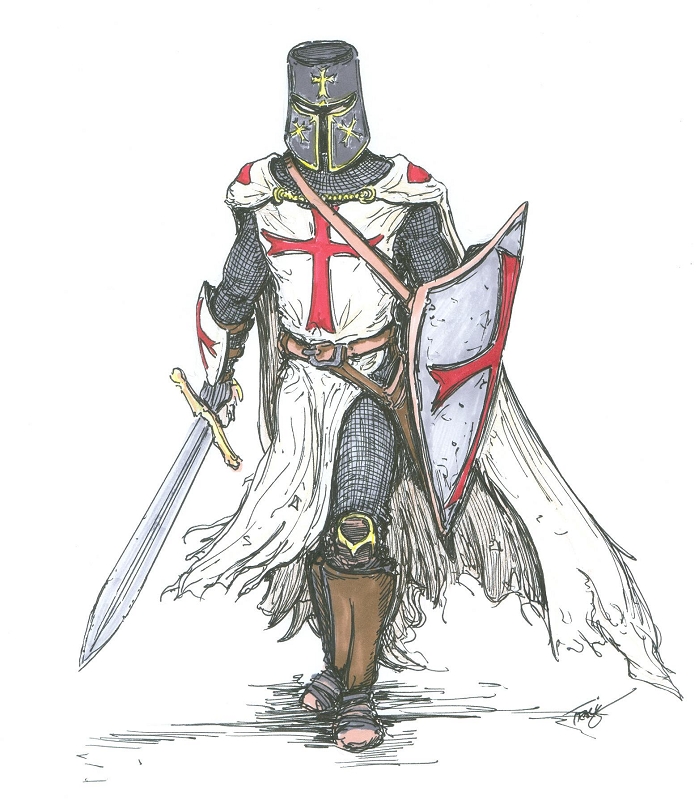
The Knights Templar trace their origin back to shortly after the First Crusade. Around 1119, a French nobleman from the Champagne region, Hugues de Payens, collected eight of his knighted relatives including Godfrey de Saint-Omer, and began the Order, their stated mission to protect pilgrims on their journey to visit the Holy Places.
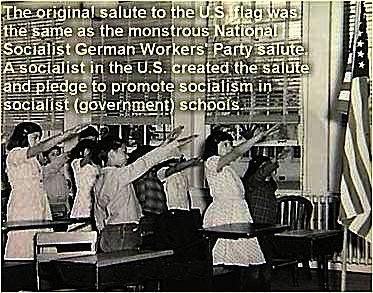
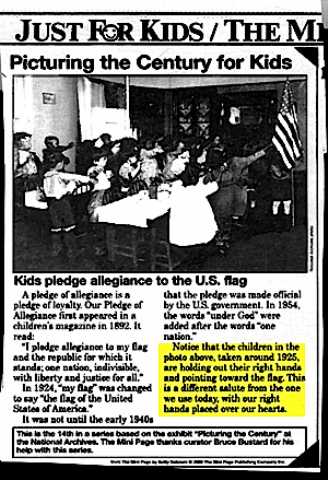
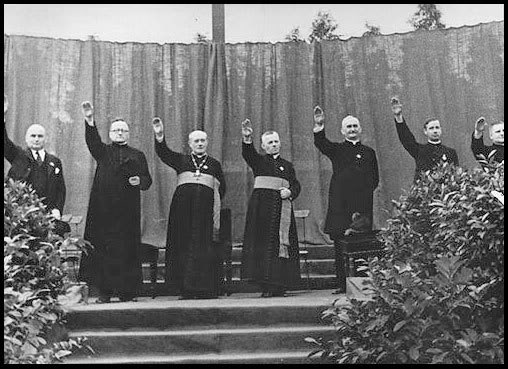
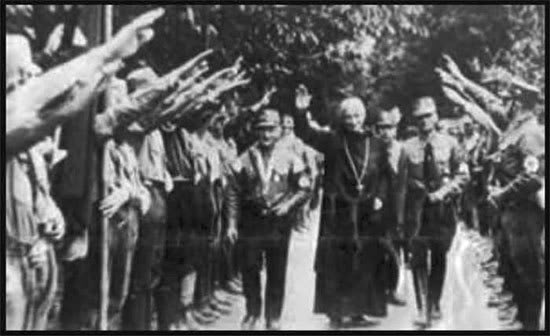
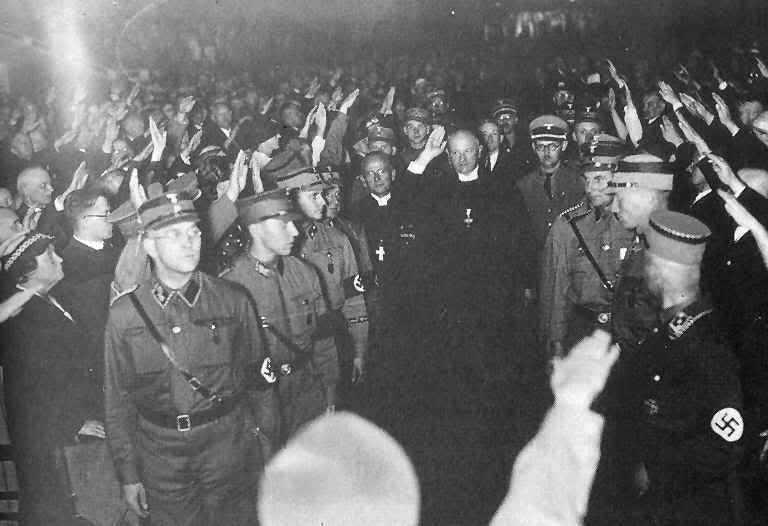
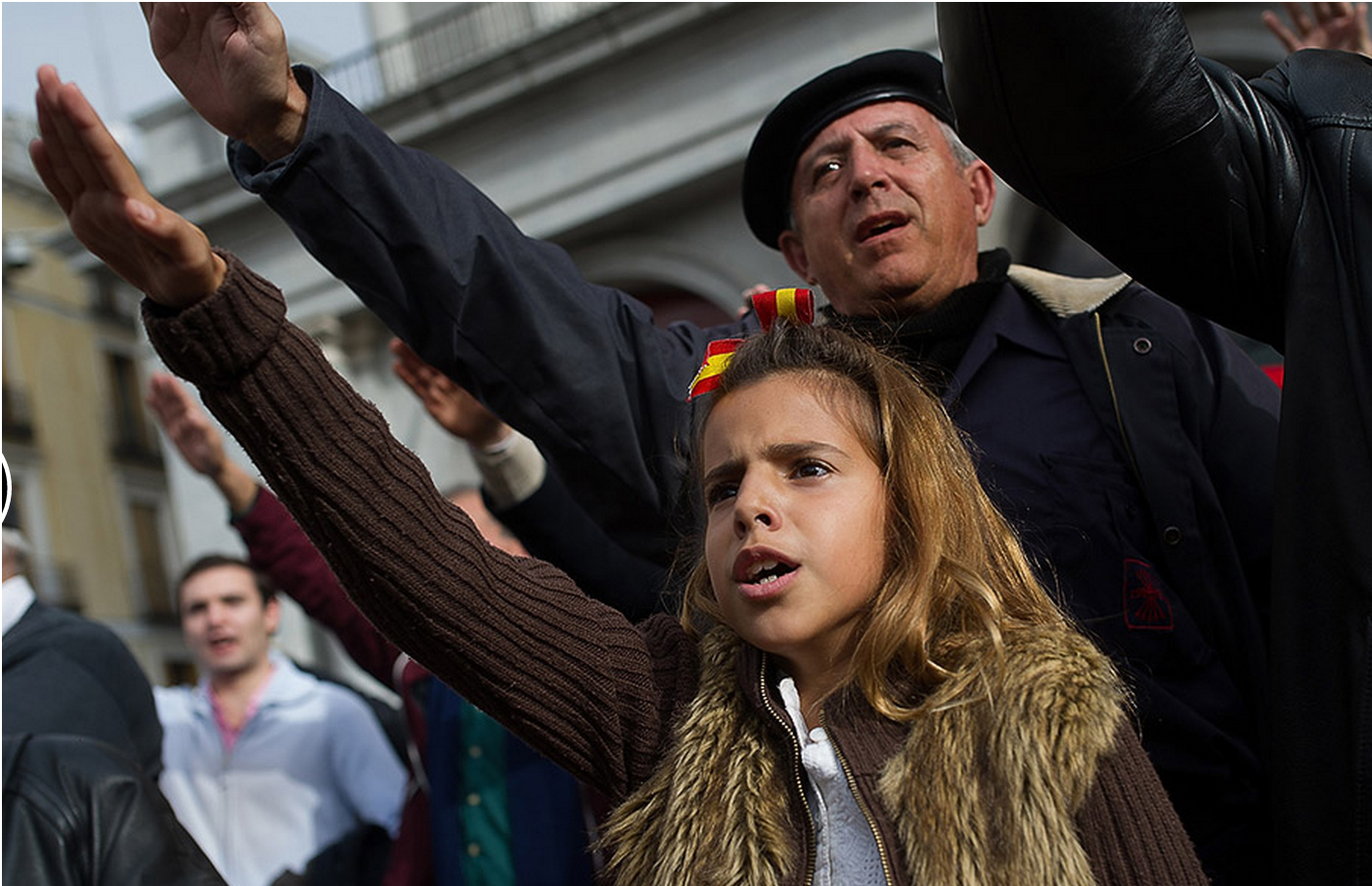
Jacques-Louis David’s painting Oath of the Horatii (1784) seems to be the starting point for the gesture that became known as the Roman salute. The gesture and its identification with ancient Rome was advanced in other French neoclassic art. This was further elaborated upon in popular culture during the late 19th and early 20th centuries in plays and films that portrayed the salute as an ancient Roman custom. – Winkler (2009) p. 2
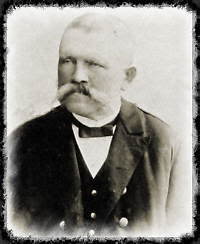
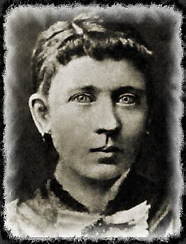
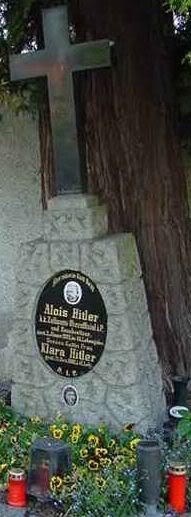
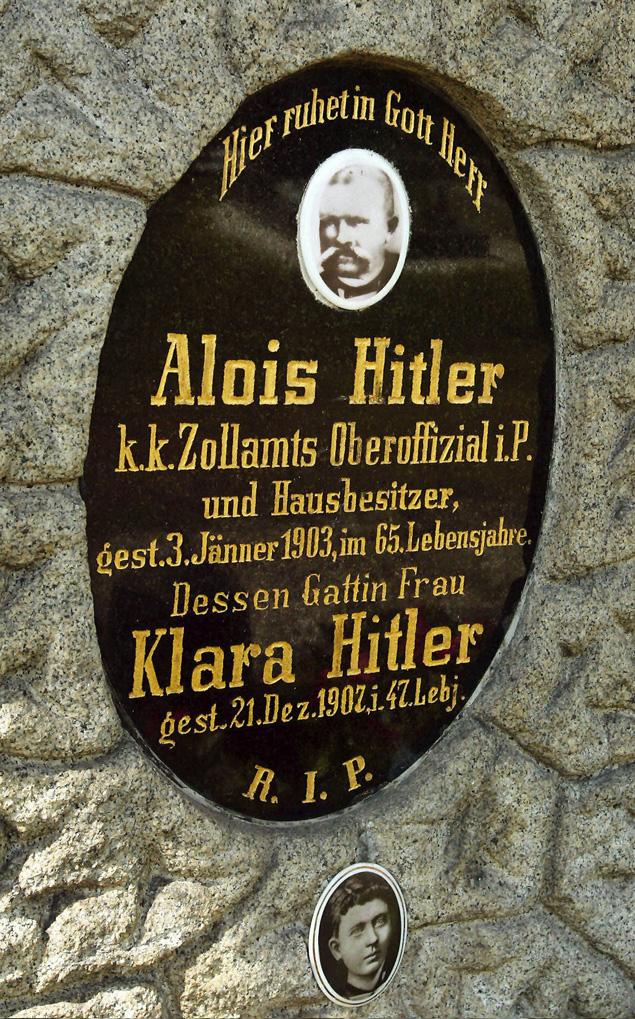
Hitler’s father Alois Hitler (born Aloys Schicklgruber June 7, 1837 – January 3, 1903) & Hitler’s mother Klara Hitler, born Klara Pölzl (August 12, 1860 – December 21, 1907) She was a devout Roman Catholic and went to church regularly.
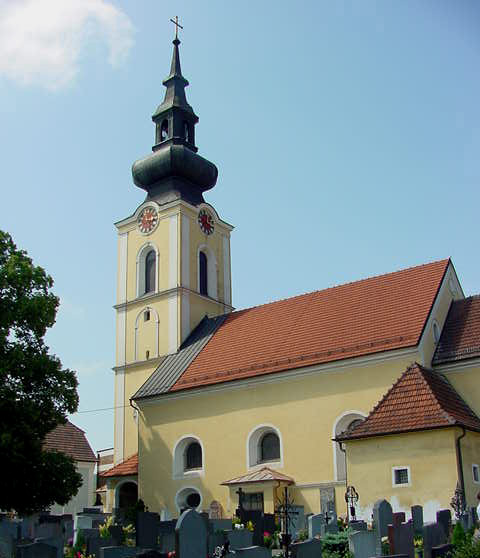
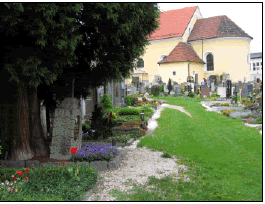
Both are buried at Austrian village Leonding.
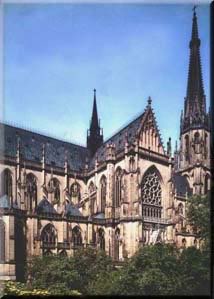
May 22, 1904: Fifteen year old Adolf Hitler has his Catholic confirmation ceremony at Linz Cathedral.
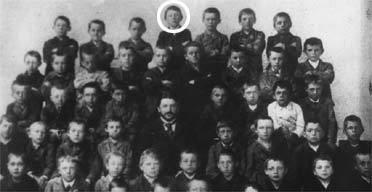
Hitler in photo of monastery choir where he went to Catholic school. He would later say,
”Since in my free time I received singing lessons in the cloister at Lambach, I had excellent opportunity to intoxicate myself with the solemn splendor of the brilliant church festivals. It seemed to me perfectly natural to regard the abbot as the highest and most desirable ideal, just as my father regarded the village priest as his ideal.”
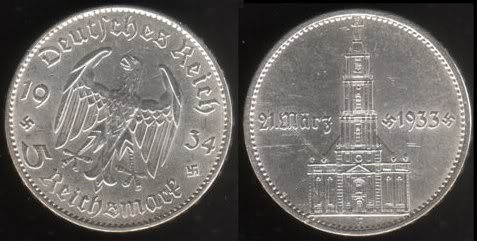
HITLER ISSUED COIN WITH CATHOLIC CHURCH ON ONE SIDE.
Actually, the Catholic Church owned the monetary system.
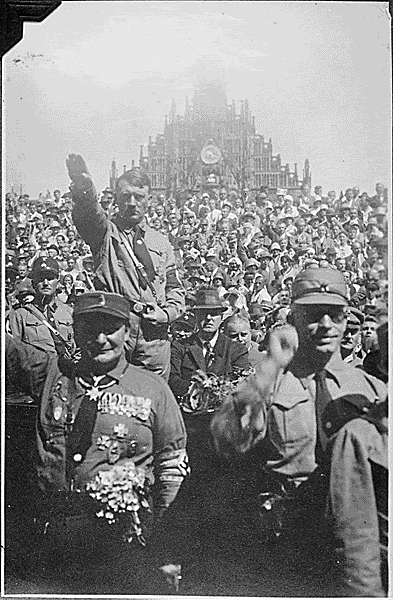
PROPAGANDA PHOTO WITH OUR LADY CATHOLIC CHURCH IN BACKGROUND.
According to historian John Toland, Hitler had the Nazi law defining Jewishness written to exclude Jesus Christ and himself.
In 1933, the London Daily Mirror published a picture of a gravestone in a Jewish cemetery in Bucharest inscribed with some Hebrew characters and the name Adolf Hitler.
Hitler’s former lawyer, Hans Frank, claimed that Adolf told him in 1930 that one of his relatives was trying to blackmail him by threatening to reveal his alleged Jewish ancestry. Hitler asked Frank to find out the facts. Frank says he determined that at the time Maria Schicklgruber gave birth to Alois, she was working as a household cook in the town of Graz. Her employers were a Jewish family named Frankenberger, who had a 19-year-old son. The son, according to Frank, was Alois’s father and Hitler’s grandfather — which would make the man who inspired the Holocaust one-quarter Jewish.
A study had been conducted in which saliva samples were collected from 39 of Hitler’s known relatives to test their DNA origins and found, though inconclusively, that Hitler may have Jewish origins. The paper reported: “A chromosome called Haplogroup E1b1b1 which showed up in [the Hitler] samples is rare in Western Europe and is most commonly found in the Berbers of Morocco, Algeria and Tunisia, as well as among Ashkenazi and Sephardic Jews … Haplogroup E1b1b1, which accounts for approximately 18 to 20 per cent of Ashkenazi and 8.6 per cent to 30 per cent of Sephardic Y-chromosomes, appears to be one of the major founding lineages of the Jewish population.”
Jewish population.”
Hitler praying
Hitler said:
“It is of no matter whether or not the individual Jew is decent. He possesses certain characteristics given to him by nature, and he can never rid himself of those characteristics. The Jew is harmful to us … My feeling as a Christian leads me to be a fighter for my Lord and Savior. It leads me to the man who, at one time lonely and with only a few followers, recognized the Jews for what they were, and called on men to fight against them … As a Christian, I owe something to my own people.” Walker, WEMS, 474
He also remarked to one of his generals:
“I am now as before a Catholic and will always remain so.”
Hitler quashed thousands of lawsuits against the Catholic Church, exchanged multi-millions in various currencies with the Church, and established, with the full cooperation of the Church, a “rat line” via Switzerland and Italy where thousand of Nazi officers were given safe passage to a new life in North America and South America.
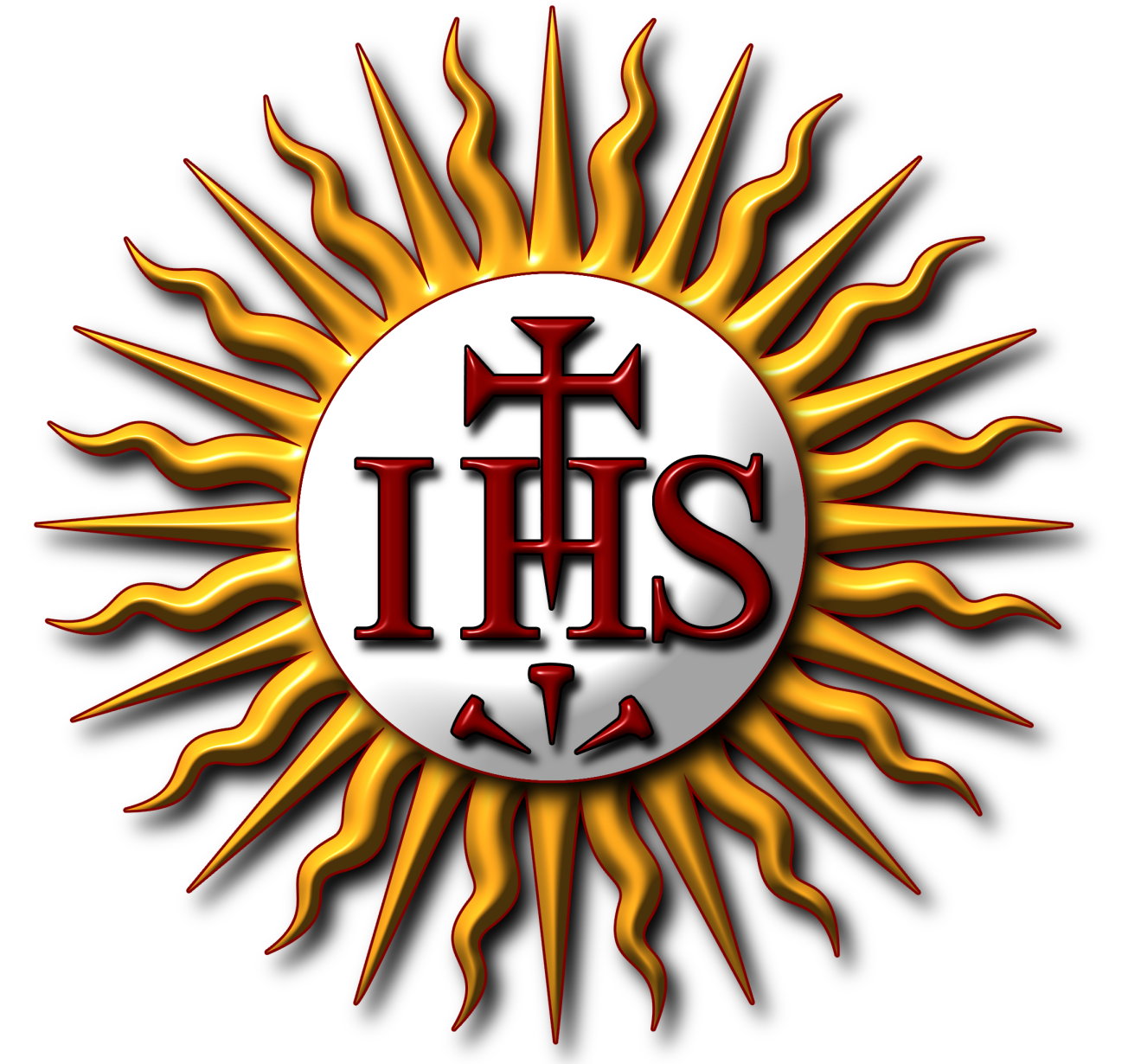
RE: Jesuits
"I learned much from the Order of the Jesuits", said Hitler... "Until now, there has never been anything more grandiose, on the earth, than the hierarchical organization of the Catholic Church. I transferred much of this organization into my own party... I am going to let you in on a secret... I am founding an Order... In my "Burgs" of the Order, we will raise up a youth which will make the world tremble... Hitler then stopped, saying that he couldn't say any more.."
All were Catholic, except 2, and those two also took orders from the Vatican
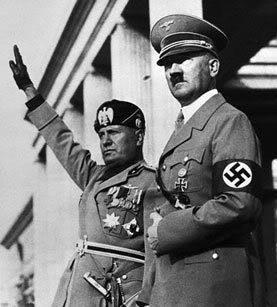
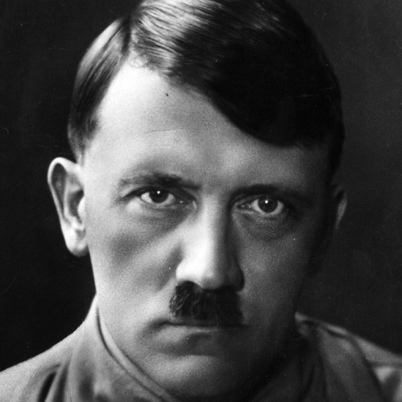
Adolf Hitler – Nazi Fuehrer
Benito Mussolini – Italian Duce
Francisco Franco – Spanish Caudillo
Antonio Salazar – Portuguese Dictator
Henri P. Petain – vichy chief of State
Pierre Laval – Vichy Chief of State
Joseph Tiso – Slovakian Chief of State
Vidkun Quisling – Premier of Occupied Norway = Protestant
Anton A Mussert – “Quisling” of Occupied Holland = Protestant
Emil Hacha – Nazi President of Bohemia-Moravia
Konrad Henlein – “Quisling” of Sudetenland
Leon M. Degrelle – Belgian Rexist Leader
Ante Pavelich – Croatian Poglavar (Leader)
THYSSEN’S BOOK, I PAID HITLER, USA 1941
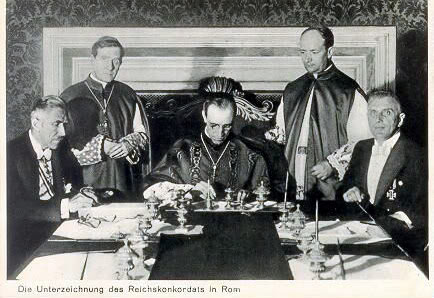
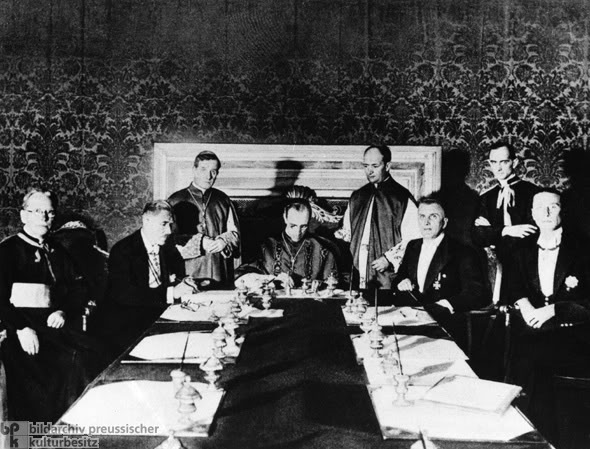
Concordat Between the Holy See and the German Reich
July 20, 1933
His Holiness Pope Pius XI and the President of the German Reich, moved by a common desire to consolidate and enhance the friendly relations existing between the Holy See and the German Reich, wish to regulate the relations between the Catholic Church and the State for the whole territory of the German Reich in a permanent manner and on a basis acceptable to both parties. They have decided to conclude a solemn agreement, which will supplement the Concordats already concluded with certain individual German states, and will ensure for the remaining States fundamentally uniform treatment of their respective problems.
For this purpose:
His Holiness Pope Pius XI has appointed as his Plenipotentiary His Eminence the Most Reverend Lord Cardinal Eugenio Pacelli, his Secretary of State.
The President of the German Reich has appointed as Plenipotentiary the Vice-Chancellor of the German Reich, Herr Franz von Papen.
Who, having exchanged their respective credentials and found them to be in due and proper form, have agreed to the following articles:
Article 1
The German Reich guarantees freedom of profession and public practice of the Catholic religion.
It acknowledges the right of the Catholic Church, within the limit of those laws which are applicable to all, to manage and regulate her own affairs independently, and, within the framework of her own competence, to publish laws and ordinances binding on her members.
Article 2
The Concordats concluded with Bavaria (1924), Prussia (1929) and Baden (1932) remain in force, and the rights and privileges of the Catholic Church recognized therein are secured unchanged within the territories of the States concerned. For the remaining States the agreements entered into in the present Concordat come into force in their entirety. These last are also binding for those States named above in so far as they affect matters not regulated by the regional Concordats or are complementary to the settlement already made.
In the future, regional Concordats with States of the German Reich will be concluded only with the agreement of the Reich Government.
Article 3
In order to foster good relations between the Holy See and the German Reich, an Apostolic Nuncio will reside in the capital of the German Reich and an Ambassador of the German Reich at the Holy See, as heretofore.
Article 4
In its relations and correspondence with the bishops, clergy and other members of the Catholic Church in Germany, the Holy See enjoys full freedom. The same applies to the bishops and other diocesan officials in their dealings with the faithful in all matters belonging to their pastoral office.
Instructions, ordinances, Pastoral Letters, official diocesan gazettes, and other enactments regarding the spiritual direction of the faithful issued by the ecclesiastical authorities within the framework of their competence (Art. 1, Sect. 2) may be published without hindrance and brought to the notice of the faithful in the form hitherto usual.
Article 5
In the exercise of their spiritual activities the clergy enjoy the protection of the State in the same way as State officials. The State will take proceedings in accordance with the general provisions of State law against any outrage offered to the clergy personally or directed against their ecclesiastical character, or any interference with the duties of their office, and in case of need will provide official protection.
Article 6
Clerics and Religious are freed from any obligation to undertake official offices and such obligations as, according to the provisions of Canon Law, are incompatible with the clerical or religious state. This applies particularly to the office of magistrate, juryman, member of Taxation Committee or member of the Fiscal Tribunal.
Article 7
The acceptance of an appointment or office in the State, or in any publicly constituted corporation dependent on the State, requires, in the case of the clergy, the nihil obstat of the Diocesan Ordinary of the individual concerned, as well as that of the Ordinary of the place in which the publicly constituted corporation is situated. The nihil obstat may be withdrawn at any time for grave reasons affecting ecclesiastical interests.
Article 8
The official income of the clergy is immune from distraint to the same extent as is the official salary of officials of the Reich and State.
Article 9
The clergy may not be required by judicial and other officials to give information concerning matters which have been entrusted to them while exercising the care of souls, and which therefore come within the obligation of pastoral secrecy.
Article 10
The wearing of clerical dress or of a religious habit on the part of lay folk, or of clerics or religious who have been forbidden to wear them by a final and valid injunction made by the competent ecclesiastical authority and officially communicated to the State authority, is liable to the same penalty on the part of the State as the misuse of military uniform.
Article 11
The present organization and demarcation of dioceses of the Catholic Church in the German Reich remains in force. Such rearrangements of a bishopric or of an ecclesiastical province or of other diocesan demarcations as shall seem advisable in the future, so far as they involve changes within the boundaries of a German State, remain subject to the agreement of the Government of the State concerned.
Rearrangements and alterations which extend beyond the boundaries of a German State require the agreement of the Reich Government, to whom it shall be left to secure the consent of the regional Government in question. The same applies to rearrangements or alterations of ecclesiastical Provinces involving several German States. The foregoing conditions do not apply to such ecclesiastical boundaries as are laid down merely in the interests of local pastoral care.
In the case of any territorial reorganization within the German Reich, the Reich Government will communicate with the Holy See with a view to rearrangement of the organization and demarcation of dioceses.
Article 12
Without prejudice to the provisions of Article 11, ecclesiastical offices may be freely constituted and changed, unless the expenditure of State funds is involved. The creation and alteration of parishes shall be carried out according to principles with which the diocesan bishops are agreed, and for which the Reich Government will endeavor to secure uniform treatment as far as possible from the State Governments.
Article 13
Catholic parishes, parish and diocesan societies, episcopal sees, bishoprics and chapters, religious Orders and Congregations, as well as institutions, foundations and property which are under the administration of ecclesiastical authority, shall retain or acquire respectively legal competence in the civil domain according to the general prescriptions of civil law. They shall remain publicly recognized corporations in so far as they have been such hitherto; similar rights may be granted to the remainder in accordance with those provisions of the law which apply to all.
Article 14.
As a matter of principle the Church retains the right to appoint freely to all Church offices and benefices without the co-operation of the State or of civil communities, in so far as other provisions have not been made in previous Concordats mentioned in Article 2. The regulation made for appointment to the Metropolitan see of Freiburg (the Ecclesiastical Province of the Upper Rhine) is to be duly applied to the two suffragan bishoprics of Rottenburg and Mainz, as well as to the bishopric of Meissen. With regard to Rottenburg and Mainz the same regulation holds for appointments to the Cathedral Chapter, and for the administration of the right of patronage. Furthermore, there is accord on the following points:
Catholic clerics who hold an ecclesiastical office in Germany or who exercise pastoral or educational functions must: (a) Be German citizens. (b) Have matriculated from a German secondary school. (c) Have studied philosophy and theology for at least three years at a German State University, a German ecclesiastical college, or a papal college in Rome.
The Bull nominating Archbishops, Coadjutors “cum jure successionis”, or appointing a “Praelatus nullius”, will not be issued until the name of the appointee has been submitted to the representative of the National Government in the territory concerned, and until it has been ascertained that no objections of a general political nature exist.
By agreement between Church and State, Paragraph 1, sections (a) (b) and (c) may be disregarded or set aside.
Article 15
Religious Orders and Congregations are not subject to any special restrictions on the part of the State, either as regards their foundation, the erection of their various establishments, their number, the selection of members (save for the special provisions of paragraph 2 of this article), pastoral activity, education, care of the sick and charitable work, or as regards the management of their affairs and the administration of their property.
Religious Superiors whose headquarters are within Germany must be German citizens. Provincials and other Superiors of Orders, whose headquarters lie outside Germany, have the right of visitation of those of their establishments which lie within Germany.
The Holy See will endeavor to ensure that the provincial organization of conventual establishments within the German Reich shall be such that, as far as possible, German establishments do not fall under the jurisdiction of foreign provincials. Agreements may be made with the Reich Government in cases where the small number of houses makes a special German province impracticable, or where special grounds exist for the retention of a provincial organization which is firmly established and has acquired an historic nature.
Article 16
Before bishops take possession of their dioceses they are to take an oath of fealty either to the Reich Representative of the State concerned, or to the President of the Reich, according to the following formula: “Before God and on the Holy Gospels I swear and promise as becomes a bishop, loyalty to the German Reich and to the State of . . . I swear and promise to honor the legally constituted Government and to cause the clergy of my diocese to honor it. In the performance of my spiritual office and in my solicitude for the welfare and the interests of the German Reich, I will endeavor to avoid all detrimental acts which might endanger it.”
Article 17
The property and other rights of public corporation, institutions, foundations and associations of the Catholic Church regarding their vested interests, are guaranteed according to the common law of the land.
No building dedicated to public worship may be destroyed for any reason whatsoever without the previous consent of ecclesiastical authorities concerned.
Article 18
Should it become necessary to abrogate the performance of obligations undertaken by the State towards the Church, whether based on law, agreement or special charter, the Holy See and the Reich will elaborate in amicable agreement the principles according to which the abrogation is to be carried out.
Legitimate traditional rights are to be considered as titles in law.
Such abrogation of obligations must be compensated by an equivalent in favor of the claimant.
Article 19
Catholic Theological Faculties in State Universities are to be maintained. Their relation to ecclesiastical authorities will be governed by the respective Concordats and by special Protocols attached to the same, and with due regard to the laws of the Church in their regard. The Reich Government will endeavor to secure for all these Catholic Faculties in Germany a uniformity of practical administration corresponding to the general spirit and tenor of the various agreements concerned.
Article 20
Where other agreements do not exist, the Church has the right to establish theological and philosophical colleges for the training of its clergy, which institutions are to be wholly dependent on the ecclesiastical authorities if no State subsidies are sought.
The establishment, management and administration if theological seminaries and hostels for clerical students, within the limits of the law applicable to all, is exclusively the prerogative of the ecclesiastical authorities.
Article 21
Catholic religious instruction in elementary, senior, secondary and vocational schools constitutes a regular portion of the curriculum, and is to be taught in accordance with the principles of the Catholic Church. In religious instruction, special care will be taken to inculcate patriotic, civic and social consciousness and sense of duty in the spirit of the Christian Faith and the moral code, precisely as in the case of other subjects. The syllabus and the selection of textbooks for religious instruction will be arranged by consultative agreement with the ecclesiastical authorities, and these latter have the right to investigate whether pupils are receiving religious instruction in accordance with the teachings and requirements of the Church. Opportunities for such investigation will be agreed upon with the school authorities.
Article 22
With regard to the appointment of Catholic religious instructors, agreement will be arrived at as a result of mutual consultation on the part of the bishop unfit for the further exercise of their teaching functions, either on pedagogical grounds or by reason of their moral conduct, may not be employed for religious instruction so long as the obstacle remains.
Article 23
The retention of Catholic denomination schools and the establishment of new ones, is guaranteed. In all parishes in which parents or guardians request it, Catholic elementary schools will be established, provided that the number of pupils available appears to be sufficient for a school managed and administered in accordance with the standards prescribed by the State, due regard being had to the local conditions of school organizations.
Article 24
In all Catholic elementary schools only such teachers are to be employed as are members of the Catholic Church, and who guarantee to fulfill the special requirements of a Catholic school.
Within the frame-work of the general professional training of teachers, arrangements will be made which will secure the formation and training of Catholic teachers in accordance with the special requirements of Catholic denominational schools.
Article 25
Religious Orders and Congregations are entitled to establish and conduct private schools, subject to the general laws and ordinances governing education. In so far as these schools follow the curriculum prescribed for State schools, those attending them acquire the same qualifications as those attending State schools. The admission of members of religious Orders or Congregations to the teaching office, and their appointment to elementary, secondary or senior schools, are subject to the general conditions applicable to all.
Article 26
With certain reservations pending a later comprehensive regulation of the marriage laws, it is understood that, apart from cases of critical illness of one member of an engaged couple which does not permit of a postponement, and in cases of great moral emergency (the presence of which must be confirmed by the proper ecclesiastical authority), the ecclesiastical marriage ceremony should precede the civil ceremony. In such cases the pastor is in duty bound to notify the matter immediately at the Registrar’s office.
Article 27
The Church will accord provision to the German army for the spiritual guidance of its Catholic officers, personnel and other officials, as well as for the families of the same.
The administration of such pastoral care for the army is to be vested in the army bishop. The latter’s ecclesiastical appointment is to be made by the Holy See after contact has been made with the Reich Government in order to select a suitable candidate who is agreeable to both parties.
The ecclesiastical appointment of military chaplains and other military clergy will be made after previous consultations with the appropriate authorities of the Reich by the army bishop. The army bishop may appoint only such chaplains as receive permission from their diocesan bishop to engage on military pastoral work, together with a certificate of suitability. Military chaplains have the rights of parish priests with regard to the troops and other army personnel assigned to them.
Detailed regulations for the organization of pastoral work by chaplains will be supplied by an Apostolic Brief. Regulations for official aspects of the same work will be drawn up by the Reich Government.
Article 28
In hospitals, prisons, and similar public institutions the Church is to retain the right of visitation and of holding divine service, subject to the rules of the said institutions. If regular pastoral care is provided for such institutions, and if pastors be appointed as State or other public officials, such appointments will be made by agreement with the ecclesiastical authorities.
Article 29
Catholic members of a non-German minority living within the Reich, in matters concerning the use of their mother tongue in church services [sermons], religious instruction and the conduct of church societies, will be accorded no less favorable treatment than that which is actually and in accordance with law permitted to individuals of German origin and speech living within the boundaries of the corresponding foreign States.
Article 30
On Sundays and Holy days, special prayers, conforming to the Liturgy, will be offered during the principal Mass for the welfare of the German Reich and its people in all episcopal, parish and conventual churches and chapels of the German Reich.
Article 31
Those Catholic organizations and societies which pursue exclusively charitable, cultural or religious ends, and, as such, are placed under the ecclesiastical authorities, will be protected in their institutions and activities.
Those Catholic organizations which to their religious, cultural and charitable pursuits add others, such as social or professional interests, even though they may be brought into national organizations, are to enjoy the protection of Article 31, Section I, provided they guarantee to develop their activities outside all political parties.
It is reserved to the central Government and the German episcopate, in joint agreement, to determine which organizations and associations come within the scope of this article.
In so far as the Reich and its constituent States take charge of sport and other youth organizations, care will be taken that it shall be possible for the members of the same regularly to practice their religious duties on Sundays and feast days, and that they shall not be required to do anything not in harmony with their religious and moral convictions and obligations.
Article 32
In view of the special situation existing in Germany, and in view of the guarantee provided through this Concordat of legislation directed to safeguard the rights and privileges of the Roman Catholic Church in the Reich and its component States, the Holy See will prescribe regulations for the exclusion of clergy and members of religious Orders from membership of political parties, and from engaging in work on their behalf.
Article 33
All matters relating to clerical persons or ecclesiastical affairs, which have not been treated of in the foregoing articles, will be regulated for the ecclesiastical sphere according to current Canon Law.
Should differences of opinion arise regarding the interpretation or execution of any of the articles of this Concordat, the Holy See and the German Reich will reach a friendly solution by mutual agreement.
Article 34
This Concordat, whose German and Italian texts shall have equal binding force, shall be ratified, and the certificates of ratification shall be exchanged, as soon as possible. It will be in force from the day of such exchange.
In witness hereof, the plenipotentiaries have signed this Concordat. Signed in two original exemplars, in the Vatican City, July 20th, 1933.
(Signed) Eugenio, Cardinal Pacelli
(Signed) Franz von Papen
APPENDIX: THE SUPPLEMENTARY PROTOCOL
At the signing of the Concordat concluded today between the Holy See and the German Reich, the undersigned, being regularly thereto empowered, have adjoined the following explanations which form an integral part of the Concordat itself.
In re: Article 3. The Apostolic Nuncio to the German Reich, in accordance with the exchange of notes between the Apostolic Nunciature in Berlin and the Reich Foreign Office on the 11th and the 27th of March respectively, shall be the Doyen of the Diplomatic Corps thereto accredited.
Article 13. It is understood that the Church retains the right to levy Church taxes.
Article 14, Par. 2. It is understood that when objections of a general political nature exist, they shall be presented within the shortest possible time. If after twenty days such representations have not been made, the Holy See may be justified in assuming that no objections exist to the candidate in question. The names of the persons concerned will be kept confidential until the announcement of the appointment. No right of the State to assert a veto is to be derived from this article.
Article 17. In so far as public buildings or properties are devoted to ecclesiastical purposes, these are to be retained as before, subject to existing agreements.
Article 19, Par 2. This clause is based, at the time of signature of this Concordat, especially on the Apostolic Constitution, “Deus Scientiarum Dominus’ of May 24th, 1931, and the Instruction of July 7th, 1932.
Article 20. Hostels which are administered by the Church in connection with certain Universities and secondary schools, will be recognized, from the point of view of taxation, as essentially ecclesiastical institutions in the proper sense of the word, and as integral parts of diocesan organization.
Article 24. In so far as private institutions are able to meet the requirements of the new educational code with regard to the training of teachers, all existing establishments of religious Orders and Congregations will be given due consideration in the accordance or recognition.
Article 26. A severe moral emergency is taken to exist when there are insuperable or disproportionately difficult and costly obstacles impeding the procuring of documents necessary for the marriage at the proper time.
Article 27, Par. 1. Catholic officers, officials and personnel, their families included, do not belong to local parishes, and are not to contribute to their maintenance.
Article 27, Par 4. The publication of the Apostolic Brief will take place after consultation with the Reich Government.
Article 28. In cases of urgency entry of the clergy is guaranteed at all times.
Article 29. Since the Reich Government has seen its way to come to an agreement regarding non-German minorities, the Holy See declares — in accordance with the principles it has constantly maintained regarding the right to employ the vernacular in Church services [sermons], religious instruction and the conduct of Church societies — that it will bear in mind similar clauses protective of German minorities when establishing Concordats with other countries.
Article 31, Par. 4. The principles laid down in Article 31, Sect. 4 hold good also for the Labor Service.
Article 32. It is understood that similar provisions regarding activity in Party politics will be introduced by the Reich Government for members of non-catholic denominations. The conduct, which has been made obligatory for the clergy and members of religious Orders in Germany in virtue of Article 32, does not involve any sort of limitation of official and prescribed preaching and interpretation of the dogmatic and moral teachings and principles of the Church.
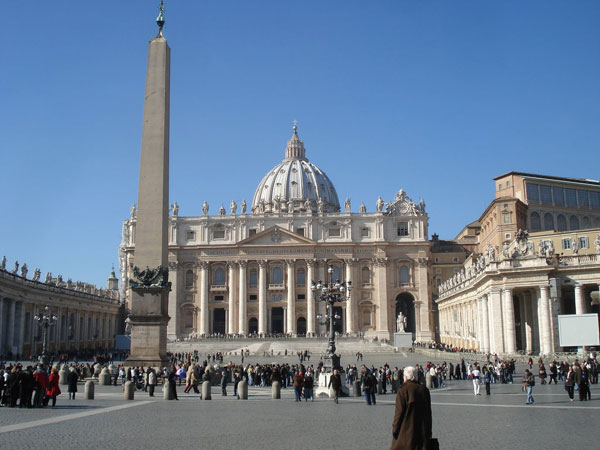
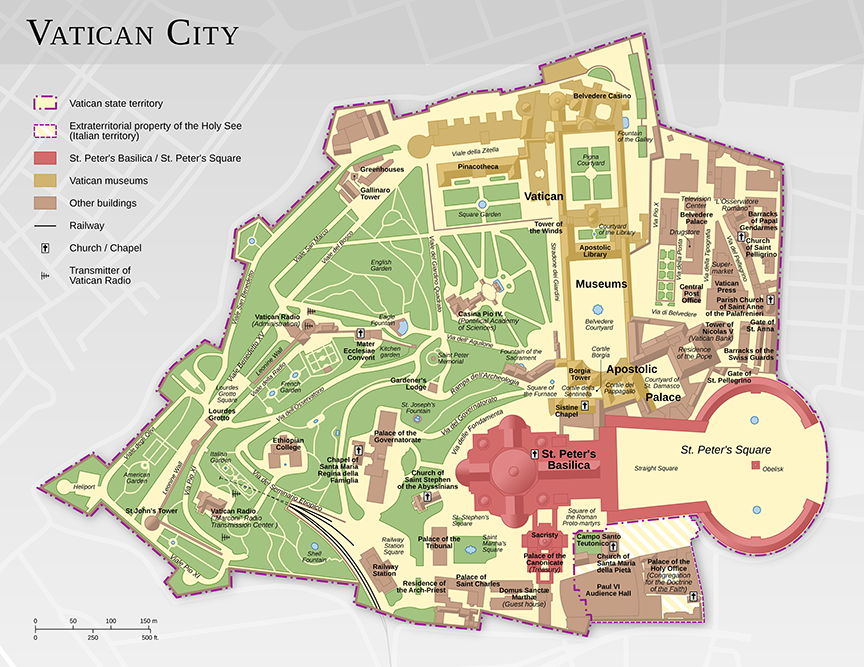
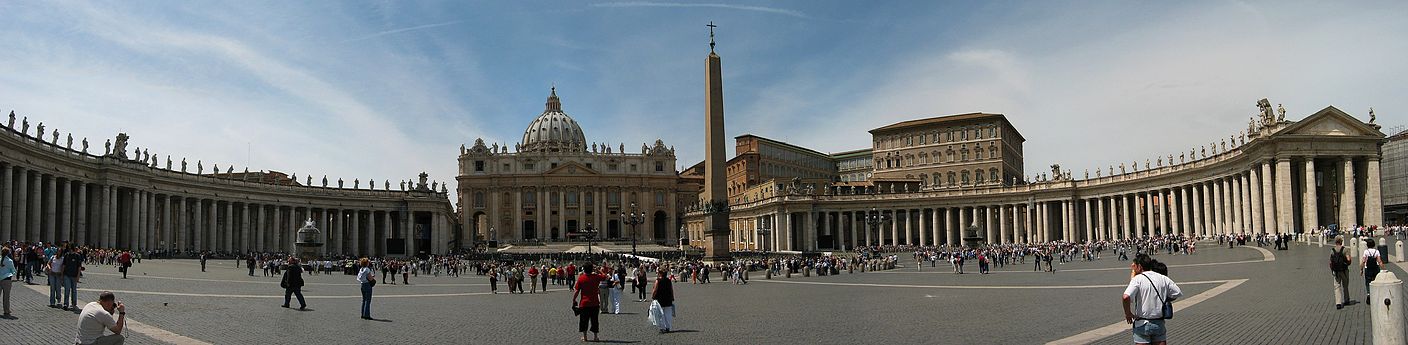
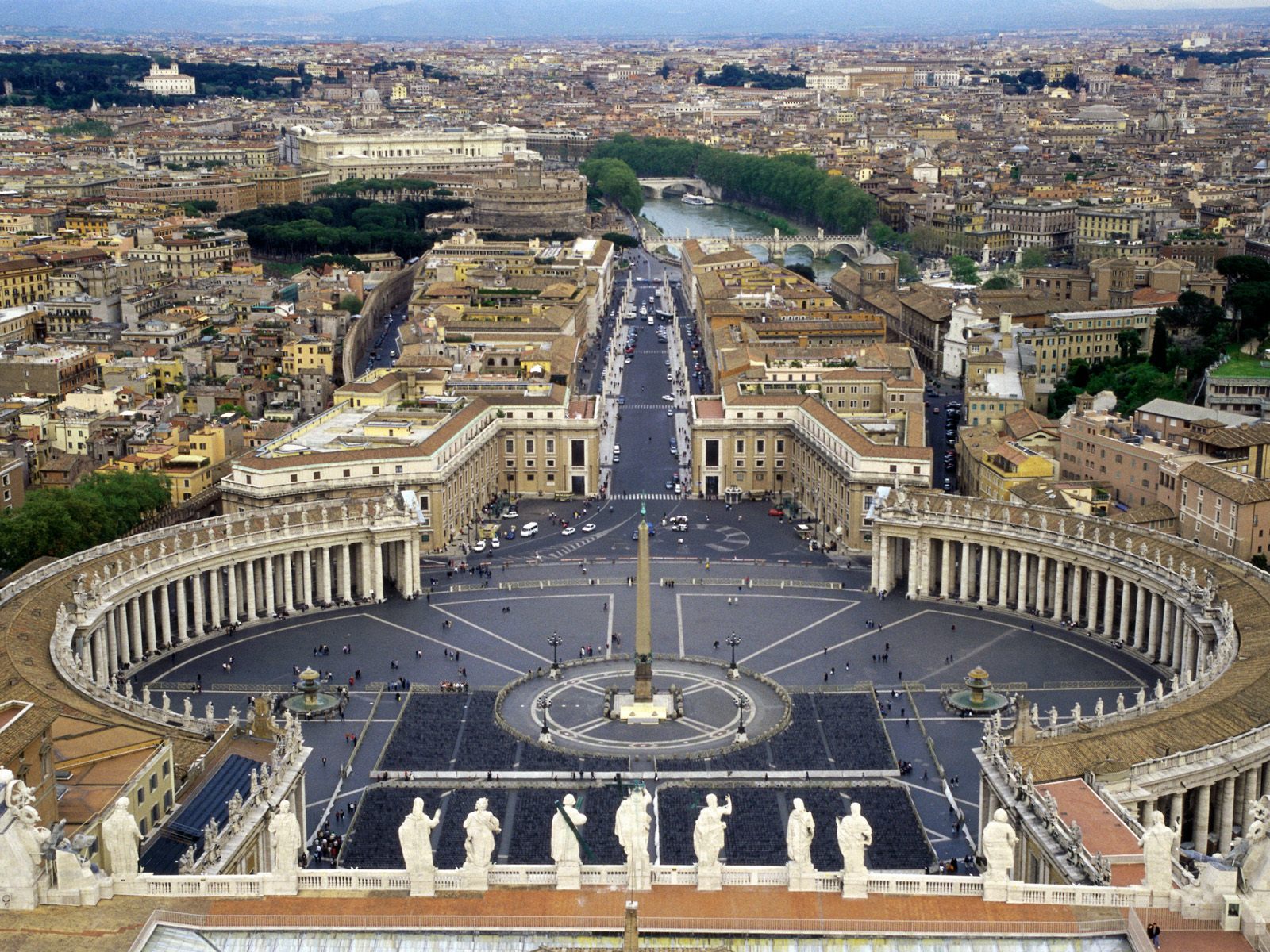
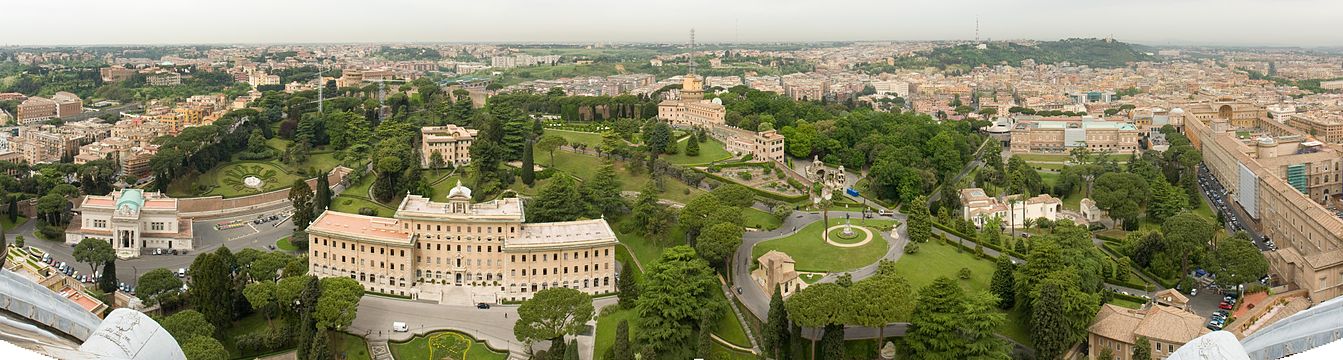
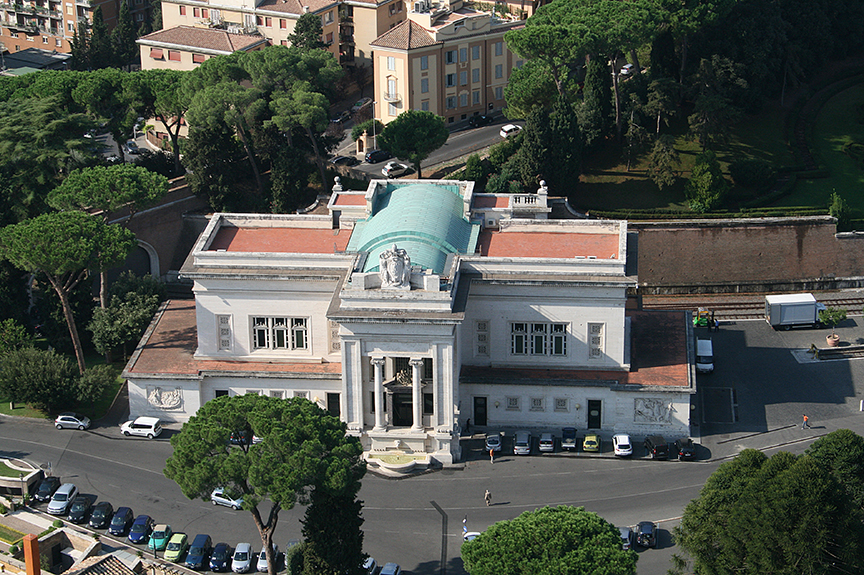
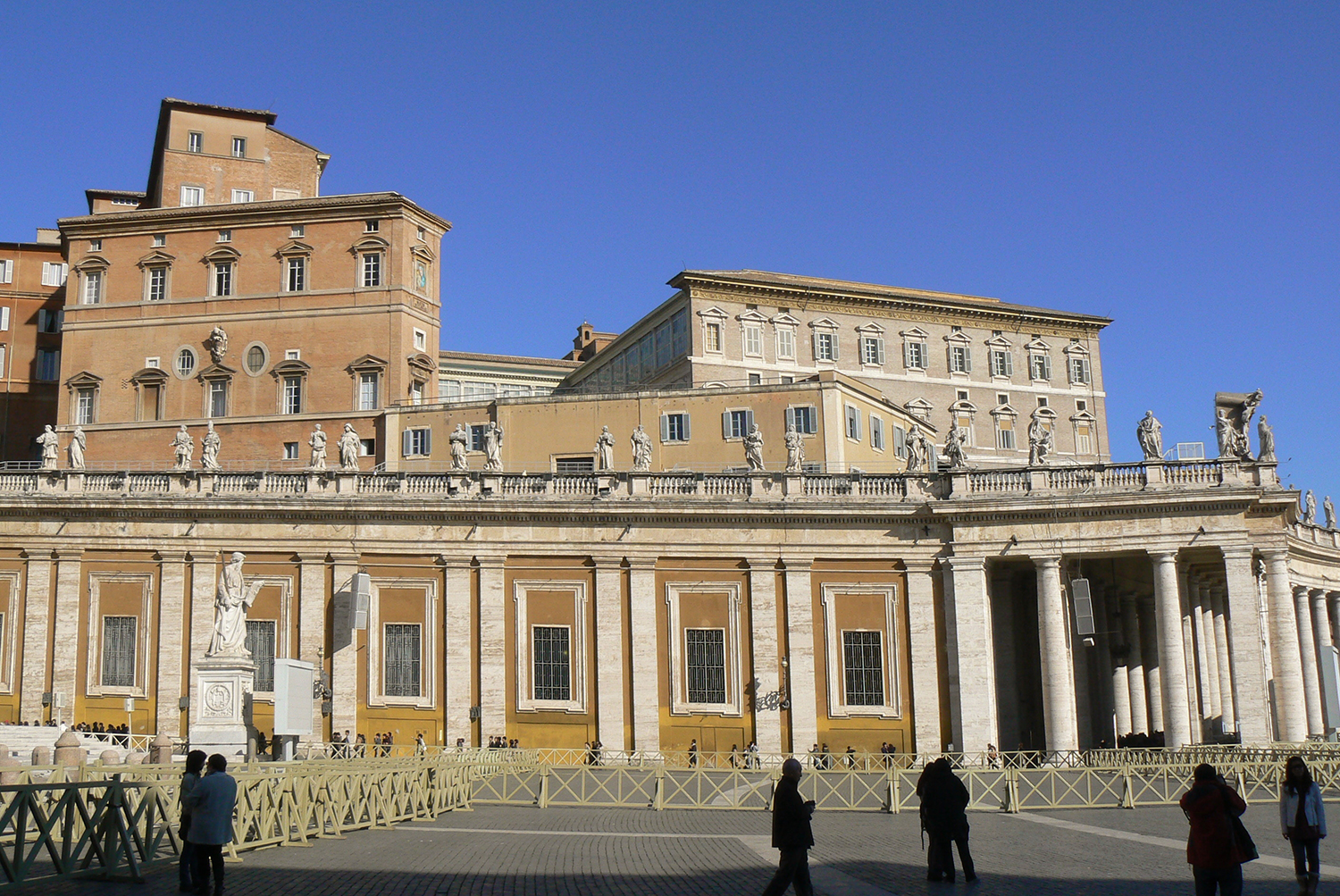
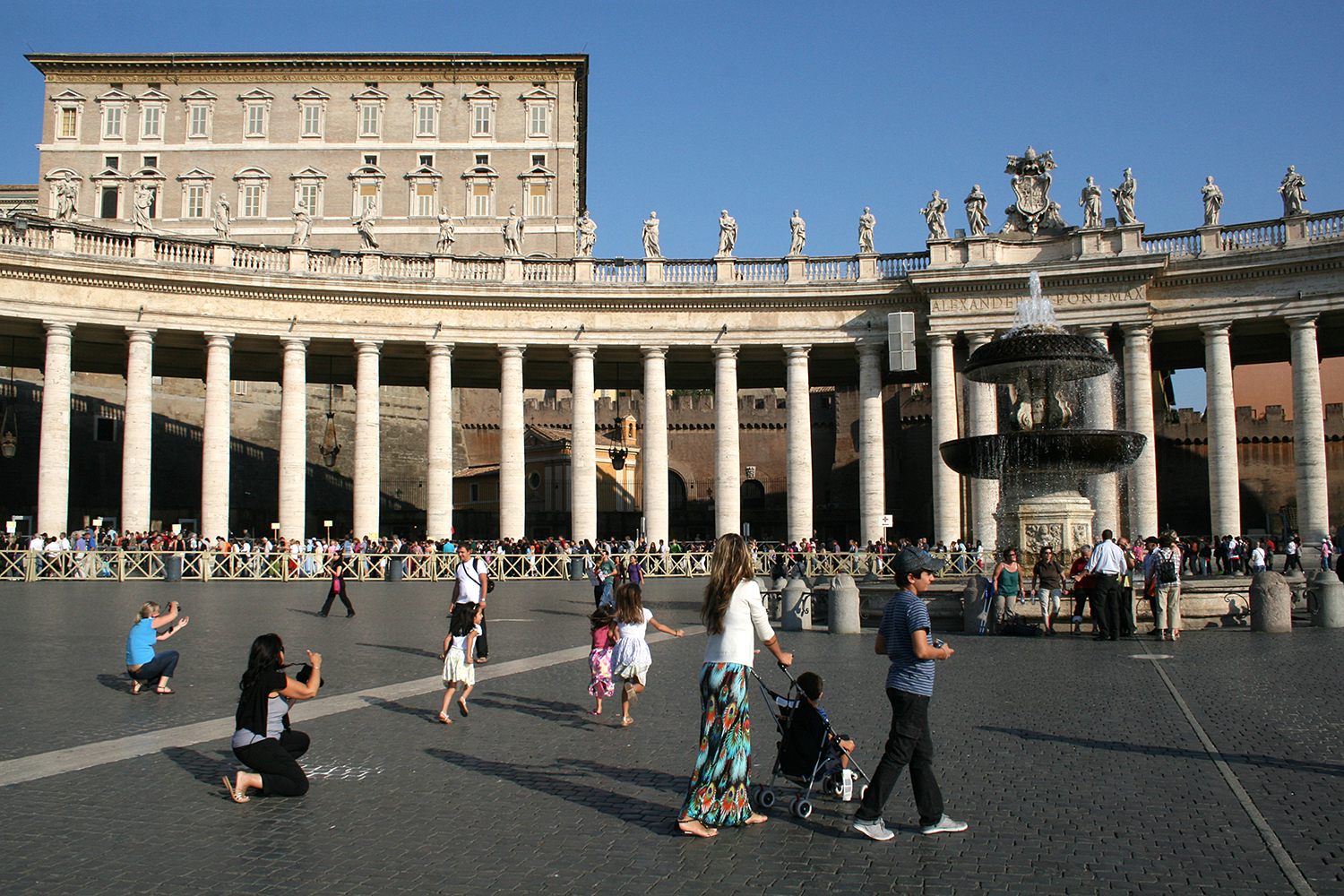
Vatican city is a sovereign state within the city of Rome. It became a state in 1929. Its size is only 110 acres, the smallest country in world. It’s the size of a typical small residential ranch in Texas.
And I tell you, you are Peter and on this rock I will build my church and the gates of Hades will not prevail against it. Matthew 16:18
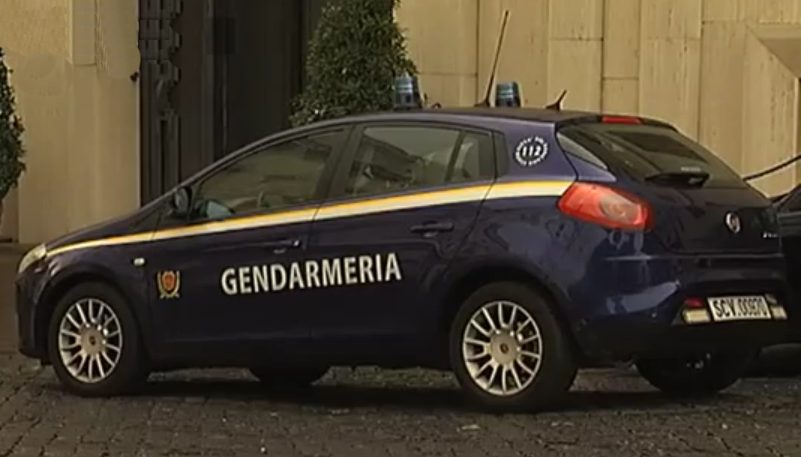
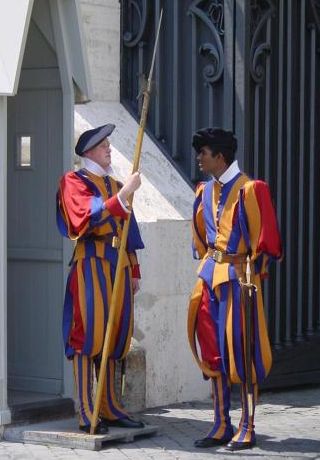
There are two security forces that protect the Vatican City State;
The Corps of Gendarmerie of Vatican City handles border control and criminal investigations.
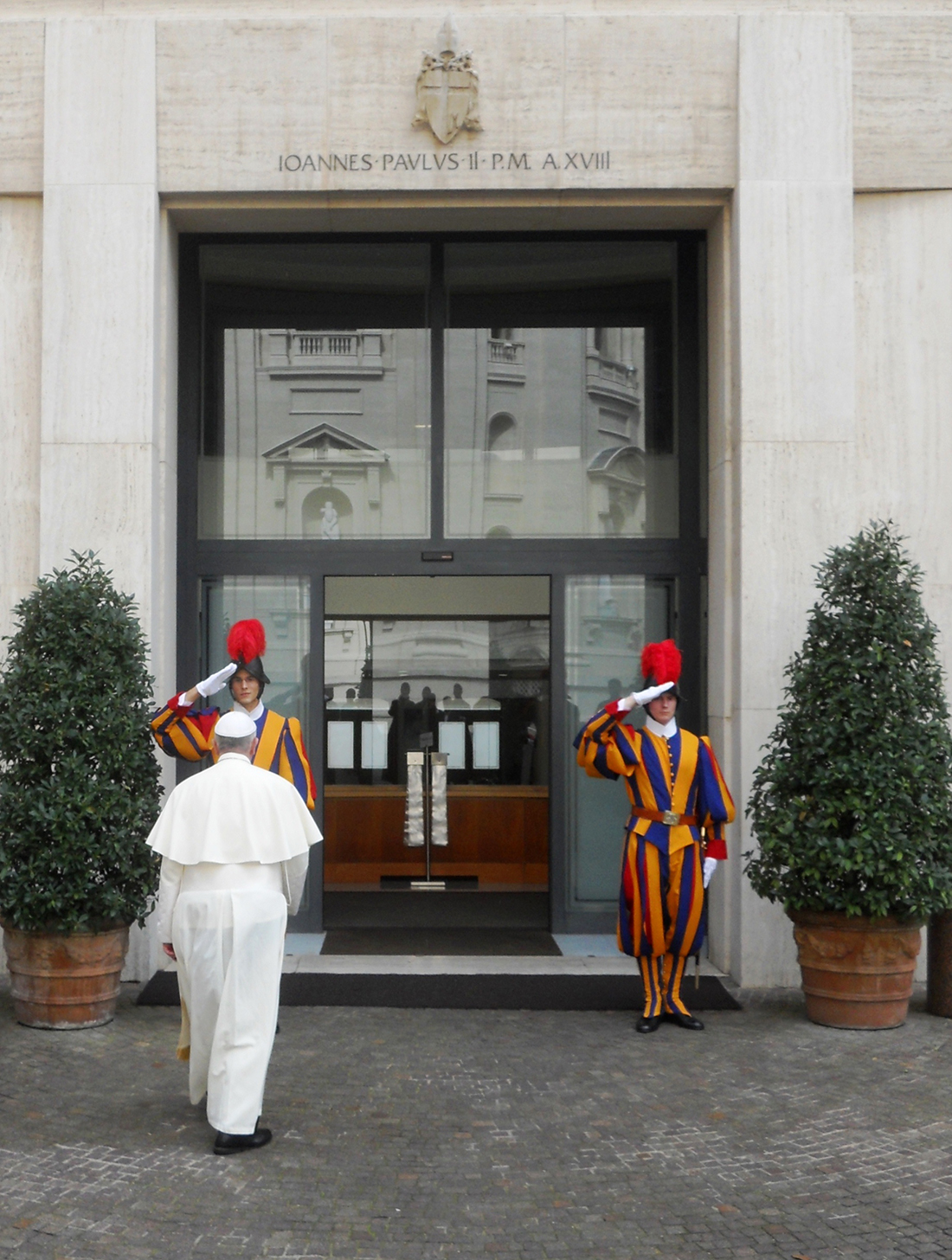
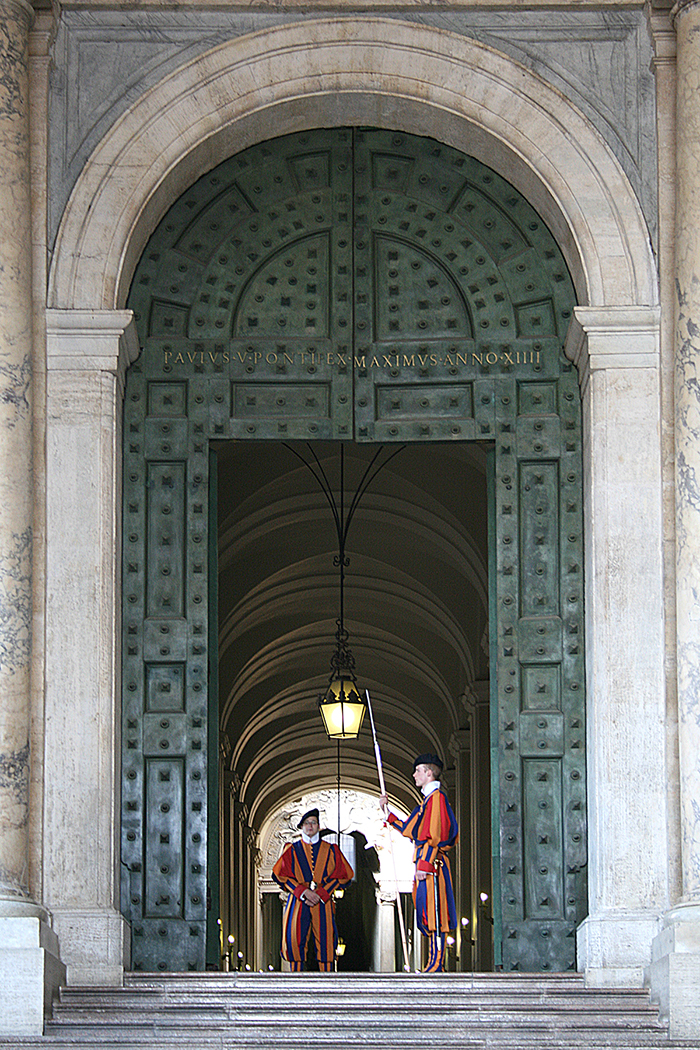
And the Swiss Guard, trained in Switzerland, is the personal security force of the Pope. The Vatican’s gold and wealth is in Switzerland.
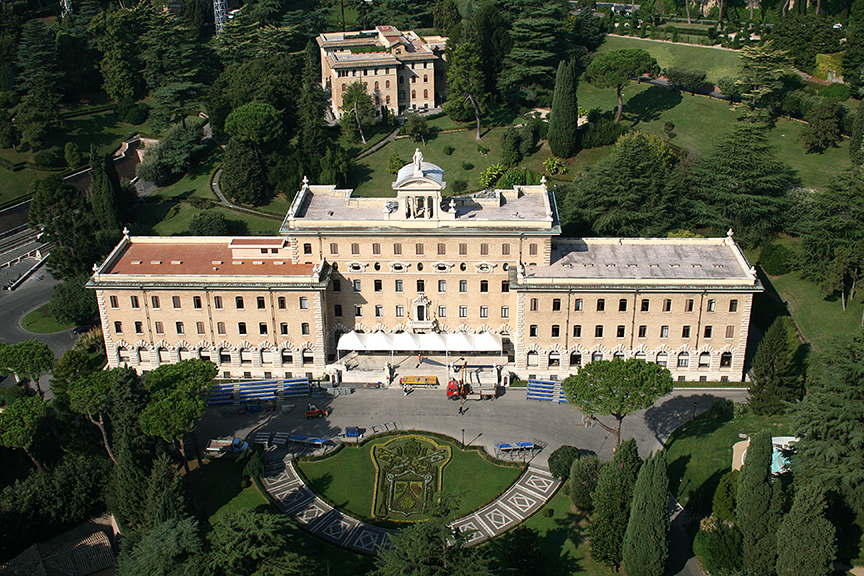
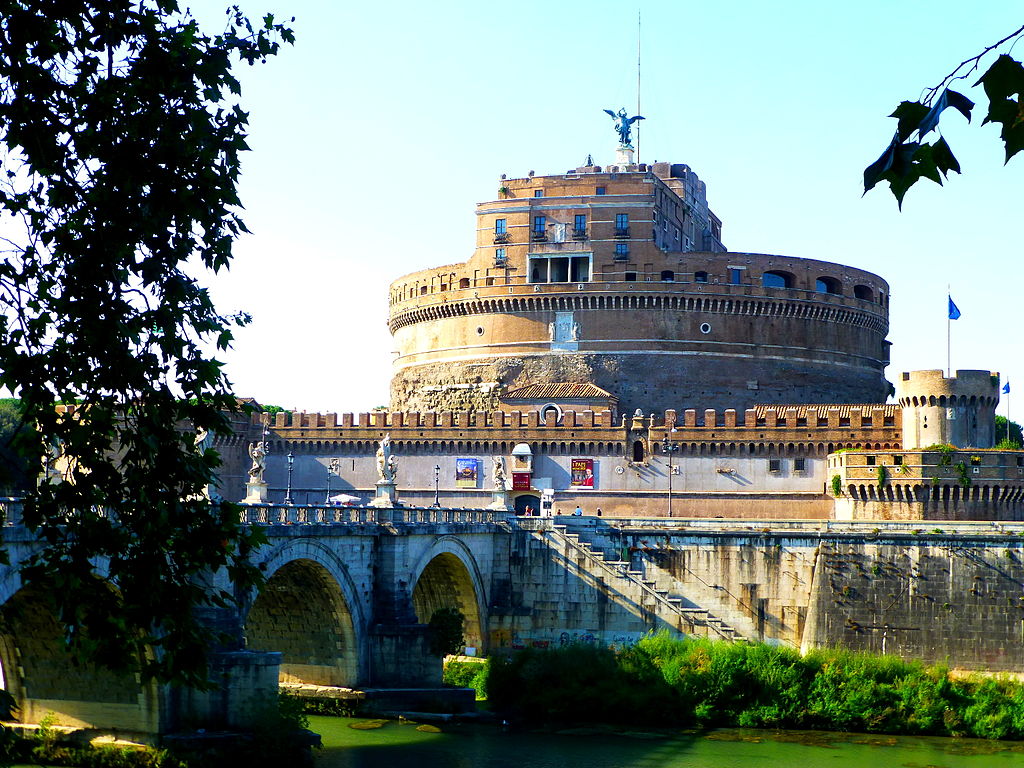
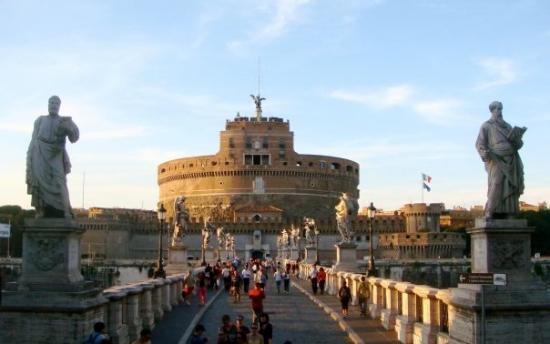
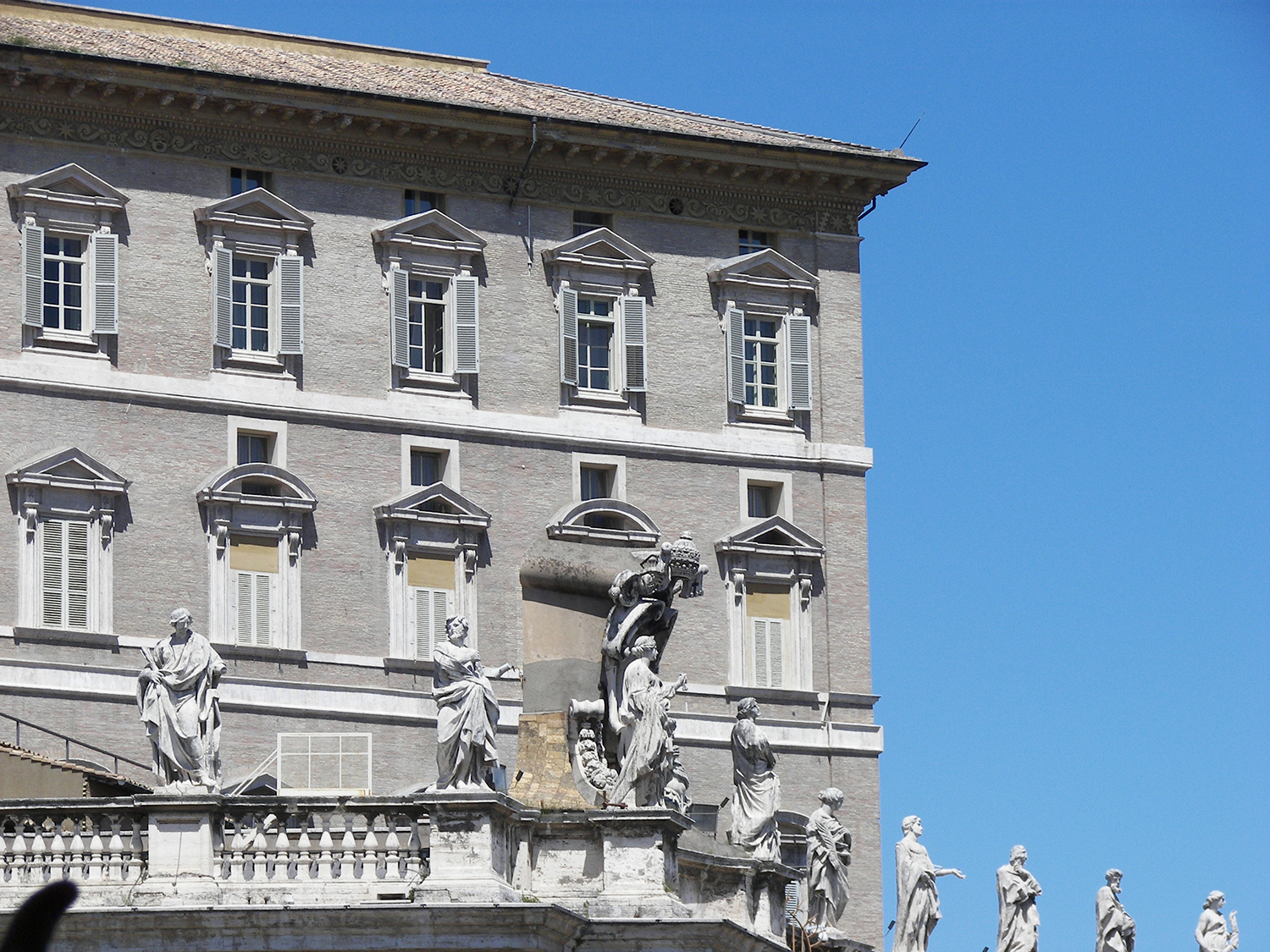
Governing PalaceFort Saint AngeloFort Saint Angelo
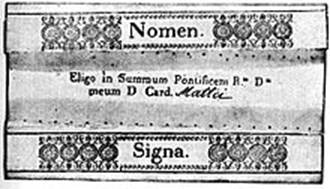
Cardinals formerly used these intricate ballot papers, one of which is shown folded above. Currently, theballots are simple cards, folded once (like a note card), with the words “I elect as Supreme Pontiff …..” printed on them.
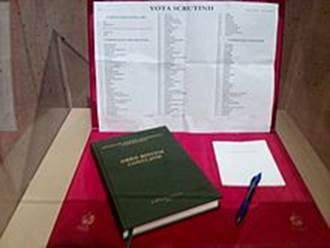
Cardinal electors receive copies of ballot cards, scrutiny ballots, and a copy of Ordo Rituum Conclavis (Order for Rites in a Conclave). Shown above are the ballot papers of Cardinal RogerMahony used in the 2013 conclave.
On the afternoon of the first day, one ballot may be held. If a ballot takes place on the afternoon of the first day and no-one is elected, or no ballot had taken place, four ballots are held on each successive day: two in each morning and two in each afternoon. Before voting in the morning and again before voting in the afternoon, the electors take an oath to obey the rules of the conclave. If no result is obtained after three vote days of balloting, the process is suspended for a maximum of one day for prayer and an address by the senior Cardinal Deacon. After seven further ballots, the process may again be similarly suspended, with the address now being delivered by the senior Cardinal Priest. If, after another seven ballots, no result is achieved, voting is suspended once more, the address being delivered by the senior Cardinal Bishop. After a further seven ballots, there shall be a day of prayer, reflection and dialogue. In the following ballots, only the two names who received the most votes in the last ballot shall be eligible in a runoff election. However, the two people who are being voted on, if Cardinal electors, shall not themselves have the right to vote.[8]
The process of voting comprises three phases: the “pre-scrutiny”, the “scrutiny”, and the “post-scrutiny.”
Pre-scrutiny
During the pre-scrutiny, the Masters of the Ceremonies prepare ballot papers bearing the words Eligo in Summum Pontificem (“I elect as Supreme Pontiff”) and provide at least two to each cardinal elector. As the cardinals begin to write down their votes, the Secretary of the College of Cardinals, the Master of Papal Liturgical Celebrations and the Masters of Ceremonies exit; the junior Cardinal Deacon then closes the door. The junior Cardinal Deacon then draws by lot nine names; the first three become Scrutineers, the second three Infirmarii and the last three Revisers. New Scrutineers, Infirmarii and Revisers are not selected again after the first scrutiny; the same nine cardinals perform the same task for the second scrutiny. After lunch, the election resumes with the oath to obey the rules of the conclave taken anew when the cardinals again assemble in the Sistine Chapel. Nine names are chosen for new scrutineers, infirmarii, and revisers. The third scrutiny then commences, and if necessary, a fourth immediately follows.[78] No changes in these rules were made by Benedict XVI in 2007. These rules were followed, so far as is known, given the secrecy of a conclave, in electing Pope Francis in March 2013.
Scrutiny
The scrutiny phase of the election is as follows: The cardinal electors proceed, in order of precedence, to take their completed ballots (which bear only the name of the individual voted for) to the altar, where the Scrutineers stand. Before casting the ballot, each cardinal elector takes a Latin oath, which translates to: “I call as my witness Christ the Lord who will be myjudge, that my vote is given to the one who before God I think should be elected.” If any cardinal elector is in the Chapel, but cannot proceed to the altar due to infirmity, the lastScrutineer may go to him and take his ballot after the oath is recited. If any cardinal elector is by reason of infirmity confined to his room, the Infirmarii go to their rooms with ballot papers and a box. Any such sick cardinals take the oath and then complete the ballot papers. When the Infirmarii return to the Chapel, the ballots are counted to ensure that their number matches with the number of ill cardinals; thereafter, they are deposited in the appropriate receptacle. This oath is taken by all cardinals as they cast their ballots. If no one is chosen on the first scrutiny, then a second scrutiny immediately follows. A total of four scrutinies are taken each day, two in the morning and two in the afternoon.
The oath when casting one’s vote is therefore anonymous, since the name of the elector is no longer signed on the ballot with that of the candidate. (Previously, the ballot was also signed by the elector and then folded over to cover the signature of the elector and then sealed to result in a semi-secret ballot. See example above.) This was the procedure prior to 1945. Above is a copy of the old three section semi-secret ballot, which was last used in the conclave of 1939. There was no oath taken when actually casting ballots, prior to 1621.[79] Completely secret ballots (at the option of the cardinals present and voting) were sometimes used prior to 1621, but these secret ballots had no oath taken when the vote was actually cast. At some conclaves prior to 1621, the cardinals verbally voted and sometimes stood in groups to facilitate counting the votes cast. The signature of the elector covered by a folded-over part of the ballot paper was added by Gregory XV in 1621, to prevent anyone from casting the deciding vote for himself. Cardinal Pole of England refused to cast the deciding vote for himself in 1549 (and was not elected), but in 1492 Cardinal Borgia (Pope Alexander VI) did cast the deciding vote for himself.[80] Faced by the mortal challenge to the papacy emanating from Protestantism, and fearing schism due to several stormy conclaves in the late 16th and early 17th centuries, Gregory XV established this procedure to prevent any cardinal from casting the deciding vote for himself.[81] Since 1945, a cardinal can again cast the deciding vote for himself, though the 2/3 majority rule has always been continued, except when John Paul II had modified that rule in 1996 (after 33 ballots, a simple majority was sufficient), with the 2/3 majority rule restored in 2007 by Benedict XVI.[82]
Prior to 1621, the only oath taken was that of obedience to the rules of the conclave in force at that time, when the cardinals entered the conclave and the doors were locked, and each morning and afternoon as they entered the Sistine Chapel to vote. Gregory XV added the additional oath, taken when each cardinal casts his ballot, to prevent cardinals wasting time in casting “courtesy votes” and instead narrowing the number of realistic candidates for the papal throne to perhaps only two or three. Speed in electing a pope was important, and that meant using an oath so as to get the cardinals down to the serious business of electing a new pope and narrowing the number of potentially electable candidates. The reforms of Gregory XV in 1621 and reaffirmed in 1622 created the written detailed step-by-step procedure used in choosing a pope; a procedure that was essentially the same as that which was used in 2013 to elect Pope Francis. The biggest change since 1621 was the elimination of the rule that required the electors to sign their ballots resulting in the detailed voting procedure of scrutiny making use of anonymous oaths. This was perhaps the most significant change in the modern era. It was a significant change to the step-by-step voting procedure, since that detailed voting procedure was first created in 1621. It was Pius XII who made this change in 1945.[83][84]
Once all votes have been cast, the first Scrutineer chosen shakes the container, and the last Scrutineer removes and counts the ballots. If the number of ballots does not correspond to the number of cardinal electors present, the ballots are burnt, unread, and the vote is repeated. If, however, no irregularities are observed, the ballots may be opened and the votes counted. Each ballot is unfolded by the first Scrutineer; all three Scrutineers separately write down the name indicated on the ballot. The last of the Scrutineers reads the name aloud.
Once all of the ballots have been opened, the final post-scrutiny phase begins.
Post-scrutiny
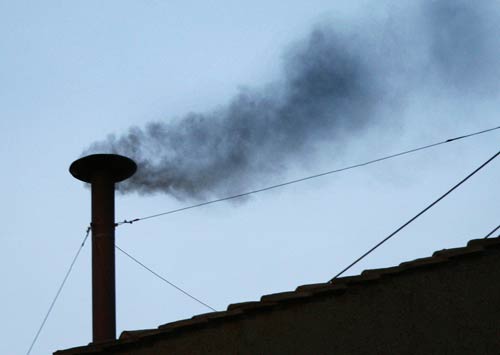
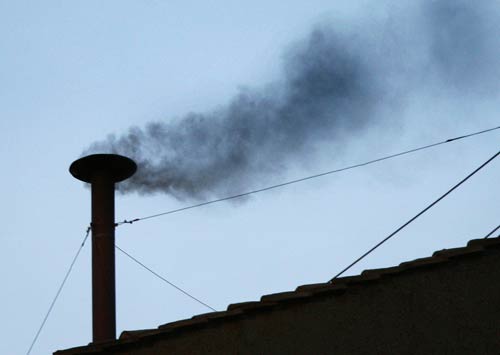
Fumata nera in the Sistine Chapel, indicating that there was not a two-thirds majority in the papal election at the Conclave.[85]
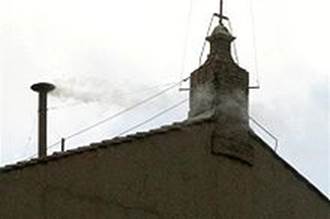
Fumata bianca in Sistine Chapel, indicating that a pope has been elected by the College of Cardinals.[85]
The Scrutineers add up all of the votes, and the Revisers check the ballots and the names on the Scrutineers’ lists to ensure that no error was made. The ballots are then all burned by the Scrutineers with the assistance of the Secretary of the College and the Masters of Ceremonies. If the first scrutiny held in any given morning or afternoon does not result in an election, the cardinals proceed to the next scrutiny immediately. The papers from both scrutinies are then burned together at the end of the second scrutiny.
Fumata nera and fumata bianca
The color of the smoke indicates the results to the people assembled in St Peter’s Square. Dark smoke (fumata nera) indicates that the ballot did not result in an election, while white smoke (fumata bianca) announces that a new pope was chosen.[85] Originally, in the event a pope was not elected, damp straw was added to the fire to create dark smoke. In the event a new pope was elected, the ballots were burned alone, creating white smoke.
Prior to 1945 (when Pius XII changed the form of ballot to use anonymous oaths, first carried out in 1958), the sealing wax on the complex type ballots illustrated above had the effect of making the smoke from burning the ballots either black or white, depending on whether or not damp straw was added. This explains the confusion over the color of the smoke in the 1958 Papal conclave, caused by the lack of sealing wax on the ballots. The Siri Thesis was based on the confusion over the smoke color on the first day of that conclave.
Since 1963, chemicals have been added to the burning process, and beginning in 2005, bells ring after a successful election to augment the white smoke.[86]
During the 2013 conclave, the Vatican disclosed the chemicals used to color the smoke:[87][88][89]
Once the election concludes, the Cardinal Dean summons the Secretary of the College of Cardinals and the Master of Papal Liturgical Celebrations into the hall. The Cardinal Dean then asks the pope-elect if he assents to the election, saying in Latin: “Acceptasne electionem de te canonice factam in Summum Pontificem? (Do you accept your canonical election as Supreme Pontiff?)” There is no requirement that the pope-elect do so and he is free to respond “Non accepto” (I don’t accept).
In practise, any cardinal who intends not to accept will explicitly state this before he receives a sufficient number of votes to become pope, asGiovanni Colombo did in October 1978.[90]
If he accepts, and is already a bishop, he immediately takes office. If he is not a bishop, however, he must be first consecrated as one before he can assume office. If a priest is elected, the Cardinal Dean consecrates him bishop; if a layman is elected, then the Cardinal Dean first ordains him deacon, then priest, and only then consecrates him as bishop. Only after becoming a bishop does the pope-elect take office. These functions of the Dean are assumed, if necessary, by the sub-Dean, and if the sub-Dean is also impeded, they are assumed by the senior cardinal-bishop in attendance. In 2005 the Dean himself—Joseph Cardinal Ratzinger—was elected pope. In 2013, the Dean and sub-Dean were not in attendance (over the age limit), and these functions were assumed by Cardinal Giovanni Battista Re.
Since 533,[citation needed] the new pope has also decided on his regnal name. Pope John II was the first to adopt a new papal name; he felt that his original name, Mercurius, was inappropriate, as it was also the name of a Roman god. In most cases, even if such considerations are absent, popes tend to choose papal names different from their baptismal names; the last pope to reign under his baptismal name was Pope Marcellus II (1555). After the newly elected pope accepts his election, the Cardinal Dean asks him about his papal name, saying in Latin: “Quo nomine vis vocari? (By what name do you wish to be called?)” After the papal name is chosen, the officials are readmitted to the conclave, and the Master of Pontifical Liturgical Ceremonies writes a document recording the acceptance and the new name of the pope.
In the past, when the cardinals were voting during the conclave, they sat on canopied thrones symbolizing the cardinals’ collective governance of the church during the period of sedevacante.[91] Upon the acceptance by the new pope of his election, all other cardinals in attendance would each pull a cord and lower the canopies above their respective thrones signifying an end to the period of collective governance and only the newly elected pope’s canopy remained unlowered.[91] The last time canopied thrones were used was during the 1963 conclave.[92] Beginning with the 1978 August conclave canopied thrones were no longer used due to the lack of space resulting from the large increase in the number of cardinal electors.
At the end of the conclave, the new pope if he so chose, would give his cardinalitial zucchetto or skull cap to the secretary of the conclave, indicating the secretary would be made cardinal at the next consistory to create cardinals. Prior to the 2013 conclave, this tradition was last followed at the 1958 conclave by the newly elected Pope John XXIII, who bestowed his cardinal’s skull cap on Alberto di Jorio and created him a cardinal at the consistory on December of that year. In 2013 the Portuguese section of Vatican Radio reported that at the conclusion of the 2013 conclave, the newly elected Pope Francis bestowed his cardinalitial zucchetto on Archbishop Lorenzo Baldisseri the secretary of that conclave[93] and on February 22, 2014 at Pope Francis’ first consistory, Baldisseri was formally made a cardinal with the title of Cardinal-Deacon of Sant’Anselmo all’Aventino.[94]
Later, the new pope goes to the “Room of Tears”, a small red room next to the Sistine Chapel; the room has the nickname because of the strong emotions experienced by the new pope. The new pope dresses by himself, choosing a set of pontifical choir robes—consisting of a white cassock,rochet, and red mozzetta—from three sizes provided. He then wears a gold corded pectoral cross, a red and gold embroidered stole, and then dons the white papal zucchetto on his head. In 2013, Pope Francis dispensed with the red mozzetta, rochet, and gold pectoral cross, wearing only the white cassock and his own pectoral cross when he appeared on the central balcony. He also did not emerge wearing the stole, vesting in it only to impart the Apostolic Blessing and removing it shortly after.
Next, the Cardinal Protodeacon (the senior Cardinal Deacon) appears at the loggia of the Basilica to proclaim the new pope. He usually proceeds with the traditional Latin formula (assuming the new Pope was a cardinal):
Annuntio vobis gaudium magnum: Habemus Papam! Eminentissimum ac Reverendissimum Dominum, Dominum [forename], Sanctae Romanae Ecclesiae Cardinalem [surname], qui sibi nomen imposuit [papal name].
(“I announce to you a great joy: We have a Pope! The Most Eminent and Most Reverend Lord, Lord [forename], Cardinal of the Holy Roman Church [surname], who takes to himself the name [papal name].”)
During the announcement for Pope Benedict XVI’s election, the cardinal protodeacon Jorge Arturo Medina Estévez greeted the crowds first in several different languages “Dear brothers and sisters” before proceeding to the Latin announcement. This was not done when Pope Francis was elected.
It has happened in the past that the Cardinal Protodeacon has himself been the person elected pope. In such an event, the announcement is made by the next senior Deacon, who has thus succeeded as Protodeacon. The last time the cardinal protodeacon was elected was in 1513 when Giovanni de Medici was elected as Pope Leo X and the next senior cardinal deacon Alessandro Farnese (the future Pope Paul III) made the announcement. During the election of Pope Leo XIII in 1878 Protodeacon Prospero Caterini appeared and started to make the announcement but was physically incapable of completing it, so another made it for him.[a]
Following the announcement, the senior Cardinal Deacon retreats, and papal aides unfurl a large, maroon banner that out of practicality often bears the late pope’s arms in the centre, draping it onto the railing of the Basilica’s loggia. During Pope Francis’ announcement, there was no image of his predecessor’s arms (indicating that the previous pope was still alive), and during Pope Pius XI‘s first appearance following his election at the 1922 conclave, the banner showed the arms of Pope Pius IX instead of the arms of his immediate predecessor Pope Benedict XV.[95] The new pope then emerges onto the balcony to the adulation of the crowd, while a brass band in the forecourt below plays the Pontifical Anthem. He then imparts theUrbi et Orbi blessing. The Pope may on this occasion choose to give the shorter episcopal blessing as his first Apostolic Blessing instead of the traditional Urbi et Orbi blessing, this happened most recently with Pope Paul VI after his election at the 1963 conclave[96] Beginning with Pope John Paul II, the last three popes elected including Pope Francis, have chosen to address the crowds first before imparting the Urbi et Orbi blessing. Also, at Pope Francis’ first appearance, he led the faithful first in prayers for his predecessor and asked them for prayers for himself before imparting the Urbi et Orbi blessing.
Formerly, the pope would later be crowned by the triregnum or Triple Tiara at the Papal Coronation. All popes since John Paul I have refused an elaborate coronation, choosing instead to have a simpler papal inauguration ceremony.[97]
Historical voting patterns
The newly elected pope often contrasts dramatically with his predecessor, a tendency expressed by the Italian saying “After a fat pope, a lean pope”. Past cardinals have often voted for someone radically different from the pope who appointed them. The controversial one-time populist-turned-conservative, long-lived Pope Pius IX (1846–1878) was succeeded by the aristocratic and diplomatic Pope Leo XIII (1878–1903). He in turn was succeeded by the lower-class, bluntly outspoken Pope Pius X (1903–1914). Pius X’s rugged ultra-conservatism contrasted with the low-key moderatism of Pope Benedict XV (1914–1922), which again contrasted with the former librarian and mountain climber Pope Pius XI (1922–1939), who led Roman Catholicism with an authoritarianism more akin to Pius X, who also shared his temperament.
Pius XI was succeeded in 1939 by his Secretary of State, the aristocratic ultra-insider CurialistPope Pius XII (1939–1958). Pius XII was seen as one of the great thinkers to assume the papacy in the 20th century and was also the ultimate insider; his grandfather, father, cousin and brother have been Vatican high-ranking officials. Pius was succeeded by the lower-class, elderly, popular, and informal Pope John XXIII (1958–1963). The contrast between the diffident, intellectual and distant Pius XII and the humble—in his own words “ordinary”—”Good Pope John” was dramatic, with none more surprised at the election than Pope John himself. He reportedly already had his return rail ticket in his pocket when he was elected.
John proved to be a radical break with the two previous popes, and indeed with most of the popes of the 20th century. After a short but dramatic pontificate during which he convoked the Second Vatican Council, John XXIII was replaced by the widely-expected Giovanni Batista Montini, who many believed would have been elected in 1958 had he been a cardinal then. Pope Paul VI (1963–1978) was a curialist like Pius XII, whom he had worked with in the curia during the 1930s and 1940s. Paul VI himself was briefly succeeded by non-curialist Pope John Paul I (1978), who in turn was succeeded by Karol Wojtyła as Pope John Paul II (1978–2005). Wojtyła, the first non-Italian since 1523, spoke many languages and was originally from the Eastern Bloc, an important consideration given contemporary Cold War politics and the Church’s repression there. After a relatively long reign, he was succeeded in 2005 by the German Prefect of the Congregation for the Doctrine of the Faith and Cardinal Dean, Joseph Ratzinger, as Pope Benedict XVI. A more reserved and conservative pontiff than his predecessor, he reigned until his resignation in 2013, when he was succeeded by the simpler and less formal Argentinian Cardinal Archbishop of Buenos Aires Jorge Bergoglio as Pope Francis.[98]
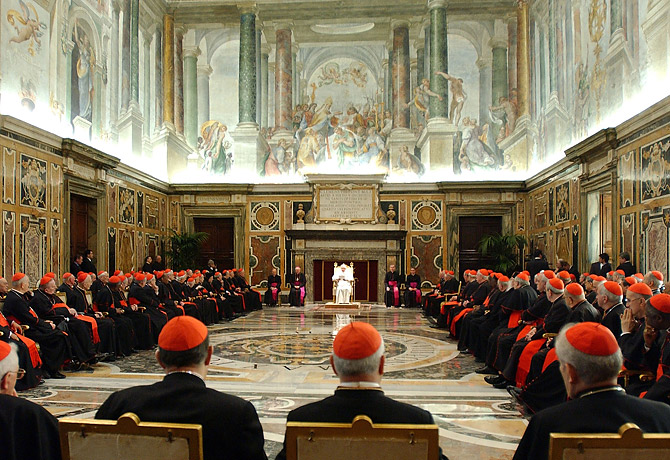
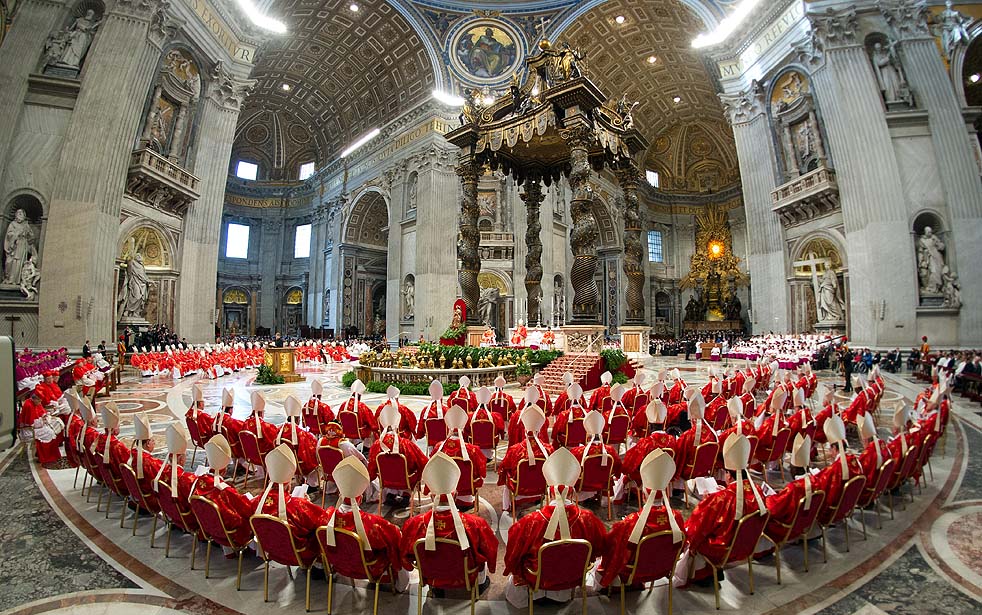
This handout picture released by the Vatican Press Office on March 12, 2013 shows cardinals following a grand mass at the St Peter’s basilica before the start of a papal election conclave on March 12, 2013 at the Vatican. Cardinals moved into the Vatican today as the suspense mounted ahead of a secret papal election with no clear frontrunner to steer the Catholic world through troubled waters after Benedict XVI’s historic resignation.
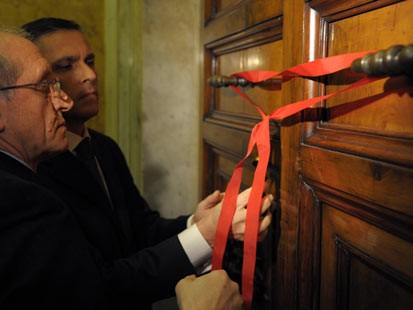
Before the sealing of the Sistine Chapel
The cardinals hear two sermons before the election: one before actually entering the conclave, and one once they are settled in the Sistine Chapel. In both cases, the sermons are meant to lay out the current state of the Church, and to suggest the qualities necessary for a pope to possess in that specific time. The first preacher in the 2005 conclave was Fr. Raniero Cantalamessa, the preacher of the papal household and a member of the Capuchin Franciscan order, who spoke at one of the meetings of the cardinals held before the actual day when the conclave began. CardinalTomáš Špidlík, a former professor at the Pontifical Oriental Institute and a non-voting member (due to age) of the College of Cardinals, spoke just before the doors were finally closed for the conclave.
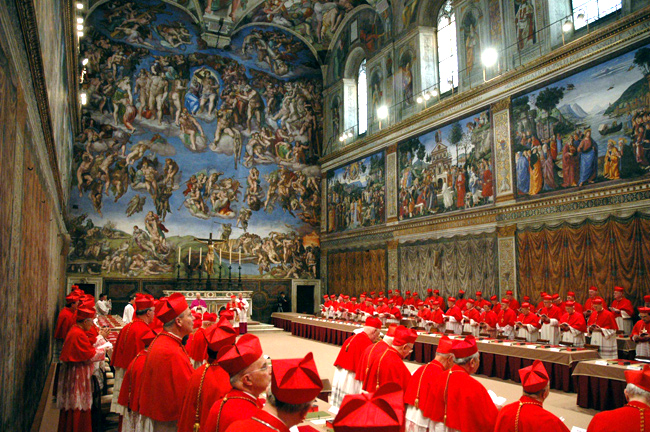
On the morning of the day designated by the Congregations of Cardinals, the cardinal electors assemble in St Peter’s Basilica to celebrate theEucharist. Then, they gather in the afternoon in the Pauline Chapel of the Palace of the Vatican, proceeding to the Sistine Chapel while singing theLitany of the Saints. The Cardinals will also sing the Veni CreatorSpiritus[70] then take an oath to observe the procedures set down by the apostolic constitutions; to, if elected, defend the liberty of the Holy See; to maintain secrecy; and to disregard the instructions of secular authorities on voting. The Cardinal Dean reads the oath aloud in full; in order of precedence (where their rank is the same, their birthdate is taken as precedence), the other cardinal electors repeat the oath, while touching the Gospels. The oath is as follows:
Et ego, (first name), Cardinalis (surname), spondeo, voveo, ac iuro. Sic me Deus adiuvet et haec Sancta Dei Evangelia, quae manu mea tango.
(And I, (name) Cardinal, (name), promise, vow and swear. Thus, may God help me and these Holy Gospels which I touch with my hand.) [71][72]
Domus Sancta Martha
Expelling the outsiders
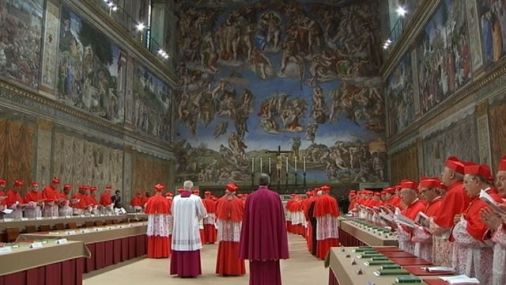
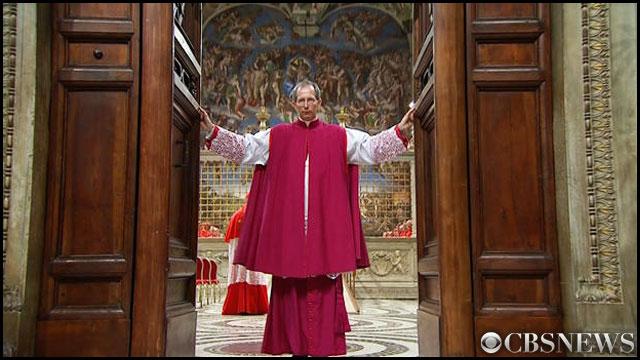
After all the cardinals present have taken the oath, the Master of the Papal Liturgical Celebrations orders all individuals other than the cardinals electors and conclave participants to leave the Chapel. Traditionally, he stands at the door of the Sistine Chapel and calls out: “Extra omnes!” (Latin for, roughly, “Everybody else, out!”) He then closes the door.[73] In modern practice, the Master of the Papal Liturgical Celebrations does not have to stand at the door of the Sistine Chapel—during the 2013 conclave, the Master Guido Marini stood in front of the altar and gave the command and only went to the chapel doors to close them after the outsiders had left.[74]
The Master himself may remain, as may one ecclesiastic designated by the Congregations prior to the commencement of the election. The ecclesiastic makes a speech concerning the problems facing the Church and on the qualities the new pope needs to have. After the speech concludes, the ecclesiastic leaves. Following the recitation of prayers, the Cardinal Dean asks if any doubts relating to procedure remain. After the clarification of the doubts, the election may commence. Cardinals who arrive after the conclave has begun are admitted nevertheless. An ill cardinal may leave the conclave and later be readmitted; a cardinal who leaves for any reason other than illness may not return to the conclave.[75]
Although in the past cardinal electors could be accompanied by attendants (“conclavists“), now only a nurse may accompany a cardinal who for reasons of ill-health, as confirmed by the Congregation of Cardinals, needs such assistance.[4] The Secretary of the College of Cardinals, the Master of Papal Liturgical Celebrations, two Masters of Ceremonies, two officers of the Papal Sacristy and an ecclesiastic assisting the Dean of the College of Cardinals are also admitted to the conclave. Priests are available to hear confessions in different languages; two doctors are also admitted. Finally, a strictly limited number of servant staff are permitted for housekeeping and the preparing and serving of meals.
Secrecy is maintained during the conclave; the cardinals as well as the conclavists and staff are forbidden to disclose any information relating to the election. Cardinal electors may not correspond or converse with anyone outside the conclave, by post, radio, telephone, internet and social media, or otherwise and eavesdropping is an offense punishable by excommunication latae sententiae. Only three cardinals electors are permitted to communicate with the outside world under grave circumstances, prior to approval of the College, to fulfil their duties: the Major Penitentiary, theCardinal Vicar for the Diocese of Rome, and the Vicar General for the Vatican City State.[4]
Before the conclave that elected Pope Francis, the Sistine Chapel was “swept” using the latest electronic devices to detect any hidden “bugs” or surveillance devices (there were no reports that any were found, but in previous conclaves press reporters who had disguised themselves as conclave servants were discovered). Universi Dominici gregis specifically prohibits media such as newspapers, the radio, and television.[76]Wi-Fiaccess is blocked in Vatican City and wireless signal jammers are deployed at the Sistine Chapel to prevent any form of electronic communications to or from the Cardinal electors.[77]
Electorate
As the Christian communities became established they started to elect bishops, chosen by the clergy and laity of the community with the assistance of the bishops of neighbouring dioceses. St. Cyprian says that Pope Cornelius was chosen Bishop of Rome “by the decree of God and of His Church, by the testimony of nearly all the clergy, by the college of aged bishops [sacerdotum], and of good men.” As was true for bishops of other dioceses, the clergy of the Diocese of Rome was the electoral body for the Bishop of Rome. Instead of casting votes, the bishop was selected by general consensus or by acclamation. The candidate would then be submitted to the people for their general approval or disapproval. This lack of precision in the election procedures occasionally gave rise to rival popes or antipopes.
The right of the laity to refuse the person elected was abolished by a Synod held in the Lateran in 769, but restored to Roman noblemen by Pope Nicholas I during a Synod of Rome in 862. The pope was also subjected to oaths of loyalty to the Holy Roman Emperor, whose task it was to provide security and public peace in Rome. A major change was introduced in 1059, when Pope Nicholas II decreed in In Nomine Domini that the cardinals were to elect a candidate, who would take office after receiving the assent of the clergy and laity. The cardinal bishops were to meet first and discuss the candidates before summoning the cardinal priests and cardinal deacons for the actual vote. The Second Council of the Lateran in 1139 removed the requirement that the assent of the lower clergy and the laity be obtained, while the Third Council of the Lateran in 1179 gave equal rights to the entire College of Cardinals when electing a new pope.
Through much of the Middle Ages and Renaissance there were a small number of cardinals, down to as few as seven under either Pope Alexander IV[15] or Pope John XXI.[16][17] Difficult travel further reduced the number arriving at the conclave. With a small electorate an individual vote was significant, and was not easily shaken from familial or political lines. Conclaves could last months and even years. In addition to the decree in 1274 that the electors should be locked in seclusion, Gregory X also limited each cardinal elector to two servants, and rationed their food progressively on the fourth and ninth days should they fail to elect a new pope.[12] The strict rules of the conclave were disliked by the cardinals and temporarily suspended by Pope Adrian V in 1276 before being formally revoked by John XXI’s Licet felicis recordationis later that same year, both of whom had intended to promulgate new constitution governing papal election but died before doing so.[16][18] Lengthy elections resumed and continued to be the norm until 1294, when a Benedictinehermit was elected Pope Celestine V. Celestine reinstated the strict conclave, but soon resigned the papacy.[19]Long interregna occurred after the reinstatement of the conclave: in 1314–1316 during the Avignon Papacy, where the original conclave were dispersed by besieging mercenaries and not reconvened until almost two years had passed;[20] and in 1415–1417, as a result of the Western Schism.
In 1587, Pope Sixtus V limited the maximum number of cardinals to 70, following the precedent of Moses who was assisted by 70 elders in governing the Children of Israel: six cardinal bishops, 50 cardinal priests, and 14 cardinal deacons.[15] Beginning with Pope John XXIII‘s attempts to broaden the representation of nations in the College of Cardinals, that number has increased. In 1970, Paul VI decreed that cardinals upon reaching the age of eighty before a conclave start were ineligible to vote in the conclave, and also increased the limit of active cardinal electors to 120.[21][22] Though this remains the theoretical limit, John Paul II exceeded this for short periods of time with knowledge of impending retirements. John Paul II also specified that cardinals who are under eighty before the day the Holy See becomes vacant would still be entitled to vote even if they had turned eighty by the time the conclave starts.[4]
Choice of electors
Originally, lay status did not bar election to the Bishop of Rome. Bishops of dioceses were sometimes elected while still catechumens, such as the case of St. Ambrose.[23] In the wake of the violent dispute over the election of Antipope Constantine II, Pope Stephen III held the synod of 769 which decreed that only a cardinal priest or cardinal deacon could be elected specifically excluding those that are already bishops.[11][24] This was however deviated from as early as 817 and fully ignored from 882 with the election of Pope Marinus I, the Bishop of Caere.[25] Nicholas II, in the synod of 1059, formally codified existing practise by decreeing that preference were to be given to the clergy of Rome, but leaving the cardinal bishops free to select a cleric from elsewhere if they so decided.[26] These restrictions on eligibility were rescinded by the Council of 1179.[14]
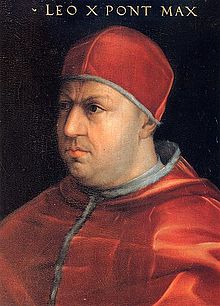
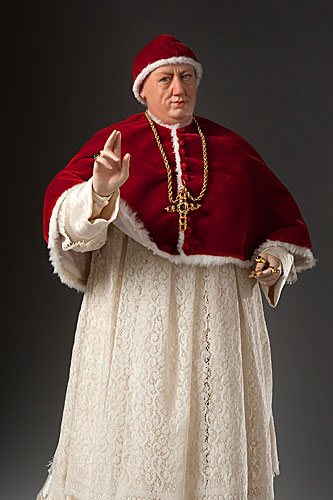
Pope Urban VI in 1378 was the last pope elected from outside the College of Cardinals. The last person elected as pope who was not already an ordained priest or monk was Pope Leo X in 1513, who was also the youngest pope ever elected.[citation needed] His successor, Pope Adrian VI, was the last to be elected in absentia.[27] In more recent history it is reported that Archbishop Giovanni Montini of Milan received several votes in the 1958 conclave despite not being a cardinal.[26] The newly elected John XXIII elevated Montini to the cardinalate almost immediately,[28] and would be succeeded by him as Paul VI in 1963. As the Catholic Church holds that women cannot be validly ordained, women are not eligible for the papacy.[29] Claims that there was a female pope, including the legendary Pope Joan, are fictitious.[30][31] This tale began as a satire on the deplorable state of corruption in the College of Cardinals; things were so bad, even a woman could be elected Pope. Though the pope is the Bishop of Rome, he need not be of Italian background. The current pope, Francis, is an Argentinian while his predecessor, Benedict XVI, is a German and before him was John Paul II, a Pole.
A simple majority vote sufficed for election until 1179, when the Third Council of the Lateran increased the required majority to two-thirds.[14][32] As cardinals were not allowed to vote for themselves (after 1621), an elaborate procedure was adopted to ensure secrecy while at the same time preventing self voting.[33] In 1945, Pope Pius XII removed the prohibition on a cardinal voting for himself by increasing the requisite majority to two-thirds plus one at all times.[34] This change was immediately overturned by his successor John XXIII who reinstated the two-thirds majority if the number of cardinal electors voting is divisible by three, with a rounding up to two-thirds plus one otherwise.[35] Pius XII’s rule was reinstated by Paul VI thirteen years later,[22] but overturned again by John Paul II. In 1996, John Paul II’s constitution allowed election by absolute majority if deadlockprevailed after thirty three or thirty four ballots.[4][36] In 2007 Benedict XVI rescinded John Paul II’s change, which had been criticised as effectively abolishing the two-thirds majority requirement, as any majority would suffice to block the election until a simple majority was enough to elect the next pope, reaffirming the requirement of a two-thirds majority.[8][9]
Electors formerly made choices by accessus, acclamation (per inspirationem), adoration, compromise (per compromissum) or scrutiny (per scrutinium).[10] With acclamation, the cardinals would unanimously declare the new pope quasi afflati Spiritu Sancto (as if inspired by the Holy Spirit).[34] If this took place before any formal ballot has taken place, the method was called adoration,[37] but this method was excluded in 1621 byPope Gregory XV.[38][39] To elect by compromise, a deadlocked College would unanimously delegate the election to a committee of cardinals whose choice they all agree to abide by.[34] Scrutiny is election via the casting of secret ballots. Accessus was a method for cardinals to change their most recent vote to accede to another candidate in an attempt to reach the requsite two-thirds majority and end the conclave. This method was first disallowed by the Cardinal Dean at the 1903 conclave.[10] The last election by compromise is considered to be that of Pope John XXII in 1316, and the last election by acclamation that of Pope Innocent XI in the 1676 conclave.[40] The long unused methods of acclamation and compromise were formally abolished in Universi Dominici gregis. Scrutiny is now the only approved method for the election of a new pope.[4]
Secular influence
For a significant part of its history, the Church was influenced in the choice of its leaders by powerful monarchs and governments. For example, theRoman emperors once held considerable sway in the elections of popes. In 418, Honorius settled a controversial election, upholding Pope Boniface Iover the challenger Antipope Eulalius. On the request of Boniface I, Honorius ordered that in future cases, any disputed election would be settled by a fresh election.[41] After the demise of the Western Roman Empire, influence passed to the OstrogothicKings of Italy and in 533, Pope John IIformally recognised the right of the Ostrogothic monarchs to ratify elections. By 537, the Ostrogothic monarchy had been overthrown, and power passed to the Byzantine emperors. A procedure was adopted whereby officials were required to notify the Exarch of Ravenna upon the death of a pope before proceeding with the election.[42] Once the electors arrived at a choice, they were required to send a delegation to Constantinoplerequesting the emperor’s consent, which was necessary before the individual elected could take office. Lengthy delays were caused by the journey to and from Constantinople.[43] When Pope Benedict II complained about them, Emperor Constantine IV acquiesced, ending the requirement that elections be confirmed by emperors. Thereafter, the Emperor was only required to be notified.[44] The last pope to notify the Byzantine emperors wasPope Zachary in 741.[45]
In the 9th century, the Holy Roman Empire came to exert control over the elections of popes. While Charlemagne and Louis the Pious did not interfere with the Church, LothairI claimed that an election could only be conducted in the presence of imperial ambassadors.[46] In 898, riots forcedPope John IX to recognise the superintendence of the Holy Roman Emperor.[47][48] At the same time, the Roman nobility also continued to exert a great influence, especially during the tenth century period known as saeculum obscurum (Latin for “the dark age”).[49]
In 1059, the same papal bull that restricted suffrage to the cardinals also recognised the authority of the Holy Roman Emperor, at the time Henry IV, but only as a concession made by the pope, declaring that the Holy Roman Emperor had no authority to intervene in elections except where permitted to do so by papal agreements.[26]Pope Gregory VII was the last to submit to the interference of the Holy Roman Emperors. The breach between him and the Holy Roman Empire caused by the Investiture Controversy led to the abolition of the Emperor’s role.[50] In 1122, the Holy Roman Empire acceded to the Concordat of Worms, accepting the papal decision.[51]
From about 1600, certain Catholic monarchs claimed a jus exclusivae (right of exclusion), i.e. a veto over papal elections, exercised through a crown-cardinal. By an informal convention, each state claiming the veto was allowed to exercise the right once per conclave. Therefore, a crown-cardinal did not announce the veto until the very last moment when the candidate in question seemed likely to get elected. This was however not strictly enforced, as Francis II through František de Paula Hrzán z Harasova is known to have exercised the veto twice at the 1799–1800 conclave.[52] No vetoes could be employed after an election. After the Holy Roman Empire was dissolved in 1806, its veto power devolved upon the Austrian Empire. The last exercise of the veto was in 1903, when Prince Jan Puzyna de Kosielsko informed the College of Cardinals that Austria opposed the election of MarianoRampolla. Consequently, the College elected Giuseppe Sarto as Pope Pius X, who issued the papal bull Commissum nobis six months later declaring that any cardinal who communicated his government’s veto in the future would suffer excommunicationlatae sententiae.[53][54]
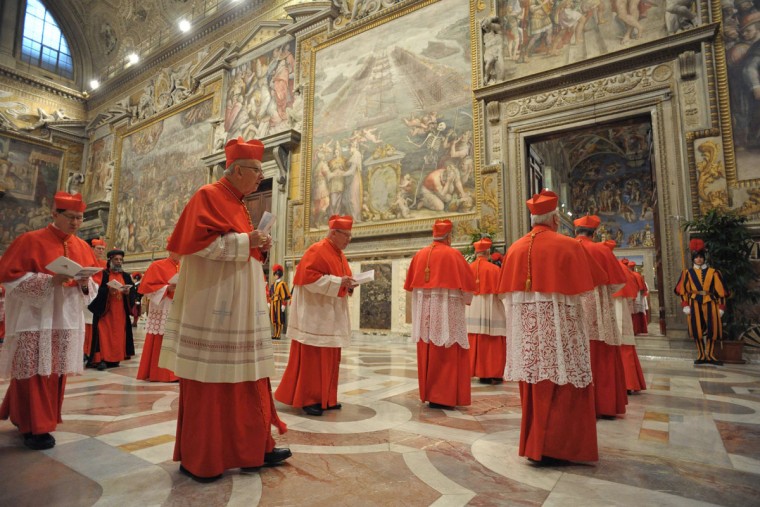
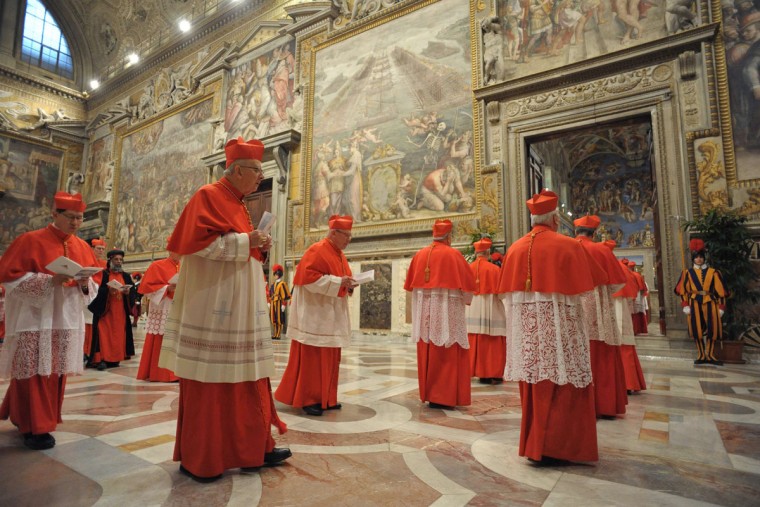
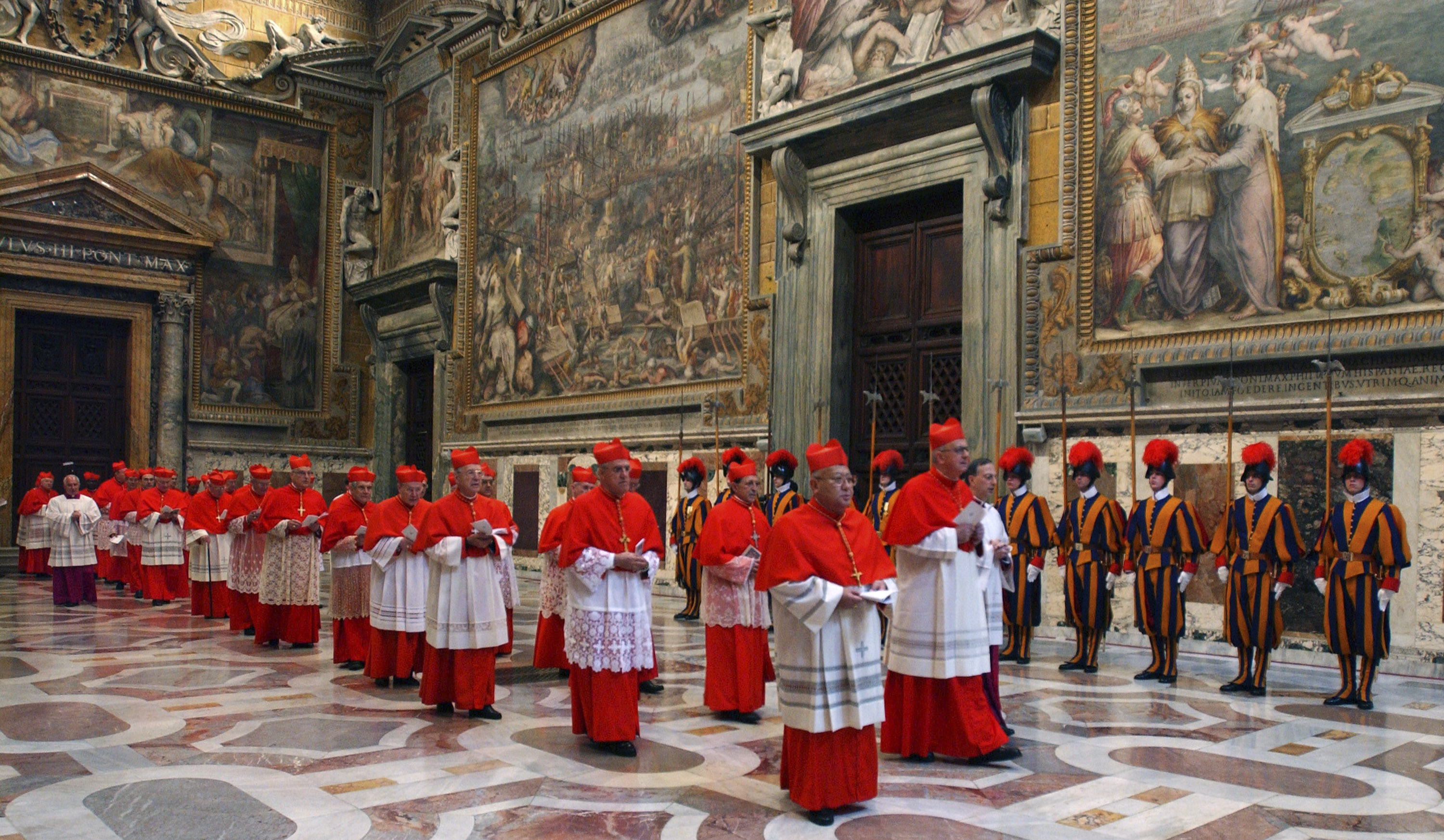
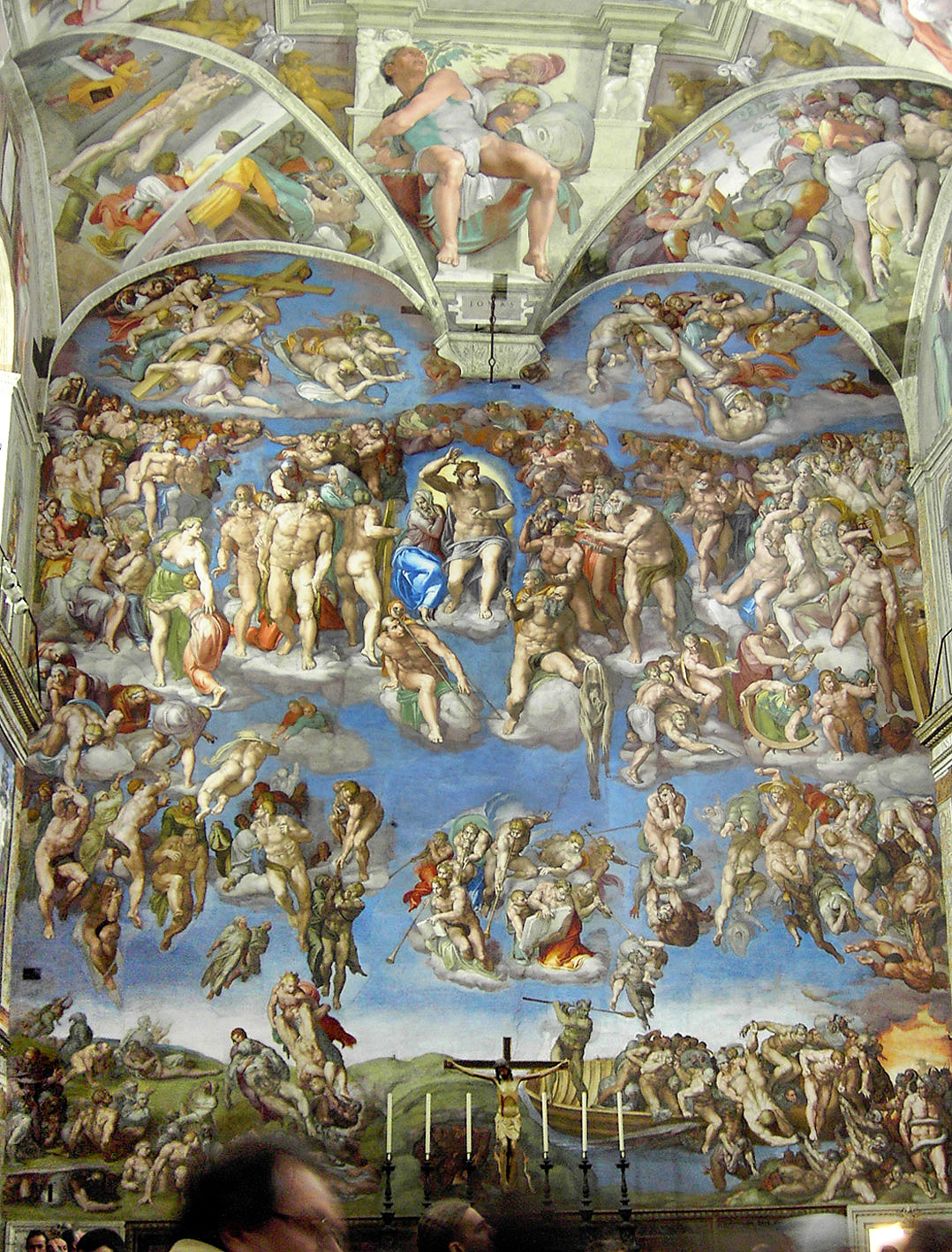
FILE — In this photo from files taken on April 18, 2005 and released by the Vatican paper L’Osservatore Romano, Cardinals walk in procession to the Sistine Chapel at the Vatican, at the beginning of the conclave. Next month’s conclave to elect the 266th leader of the world’s 1.2 billion Catholics will have all the trappings of papal elections past, with the added twist that the this time around the current pope is still very much alive. The conclave begins with the cardinals in their red cassocks processing into the Sistine Chapel, chanting the hypnotic Litany of Saints or Veni Creator imploring the intervention of the Holy Spirit as they take their places before Michelangelo’s “Last Judgment.” (AP Photo/Osservatore Romano, ho)
Death of the Pope
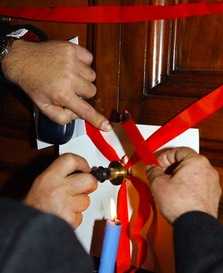
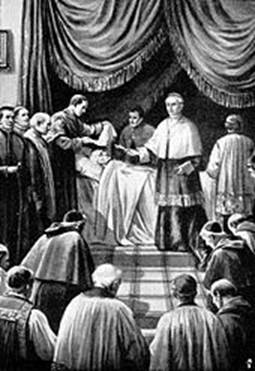
The Cardinal Camerlengo proclaims a papal death
The death of the pope is verified by the Cardinal Camerlengo, or Chamberlain, who traditionally performed the task by gently striking the pope’s head with a small silver hammer and calling out his Christian (not papal) name three times. During the twentieth century the use of the hammer in this ritual has been abandoned; under Universi Dominici gregis, theCamerlengo must merely declare the pope’s death in the presence of the Master of Papal Liturgical Celebrations, and of the Cleric Prelates, Secretary and Chancellor of the Apostolic Camera.
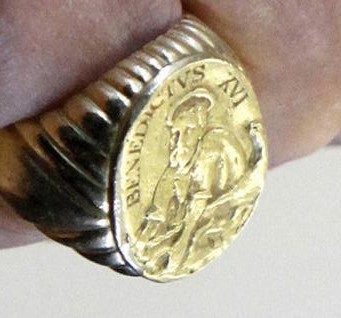
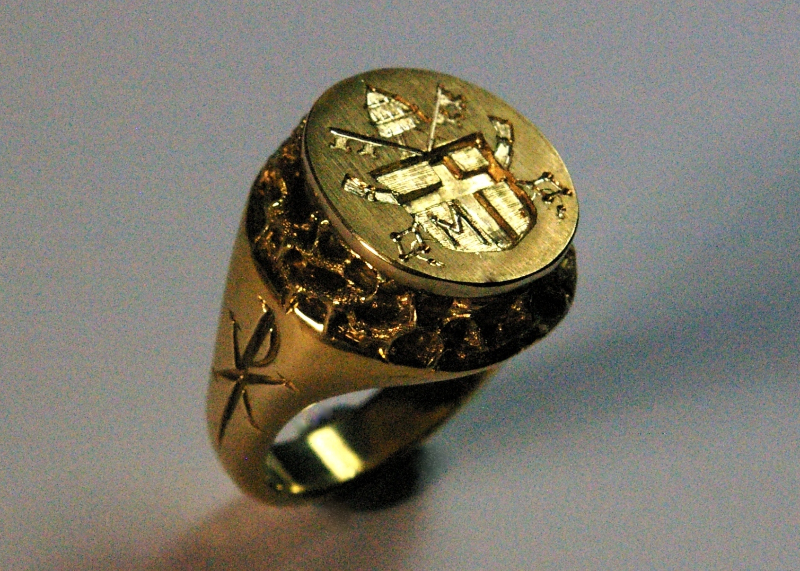
The Cardinal Camerlengo takes possession of the Ring of the Fisherman worn by the pope. The Fisherman’s Ring is a signet used until 1842 to seal official documents signed by the Pope. The ring, along with the papal seal, is later destroyed before the College of Cardinals. The tradition originated to avoid forgery of documents, but today merely is a symbol of the end of the pope’s reign.
During the sede vacante, as the papal vacancy is known, certain limited powers pass to the College of Cardinals, which is convoked by the Dean of the College of Cardinals. All cardinals are obliged to attend the General Congregation of Cardinals, except those whose health does not permit, or who are over eighty (but those cardinals may choose to attend if they please). The Particular Congregation, which deals with the day-to-day matters of the Church, includes the Cardinal Camerlengo and the three Cardinal Assistants—one Cardinal-Bishop, one Cardinal-Priest and one Cardinal-Deacon—chosen by lot. Every three days, new Cardinal Assistants are chosen by lot. The Cardinal Camerlengo and Cardinal Assistants are responsible, among other things, for maintaining the election’s secrecy.
The Congregations must make certain arrangements in respect of the pope’s burial, which by tradition takes place within four to six days of the pope’s death, leaving time for pilgrims to see the dead pontiff, and is to be followed by a nine-day period of mourning (this is known as thenovemdiales, Latin for “nine days”). The Congregations also fix the date and time of the commencement of the conclave. The conclave normally takes place fifteen days after the death of the pope, but the Congregations may extend the period to a maximum of twenty days in order to permit other cardinals to arrive in the Vatican City.
Resignation of a pope
A vacancy in the papal office may also result from a papal resignation. Until the resignation of Benedict XVI on 28 February 2013, no pope had abdicated since Gregory XII in 1415. In his book The Light of the World Benedict XVI had espoused the idea of abdication on health grounds which already had some theological respectability.
Papal Conclave Elects a Pope
A papal conclave is a meeting of the College of Cardinals convened to elect a new Bishop of Rome, also known as the Pope. The pope is considered by Roman Catholics to be the apostolic successor ofSaint Peter and earthly head of the Roman Catholic Church. The conclave has been the procedure for choosing the pope for more than half of the time the church has been in existence, and is the oldest ongoing method for choosing the leader of an institution.
A history of political interference in papal selection and consequently long vacancies between popes, culminating in the interregnum of 1268–1271, the longest election of a pope because of infighting between the cardinals.
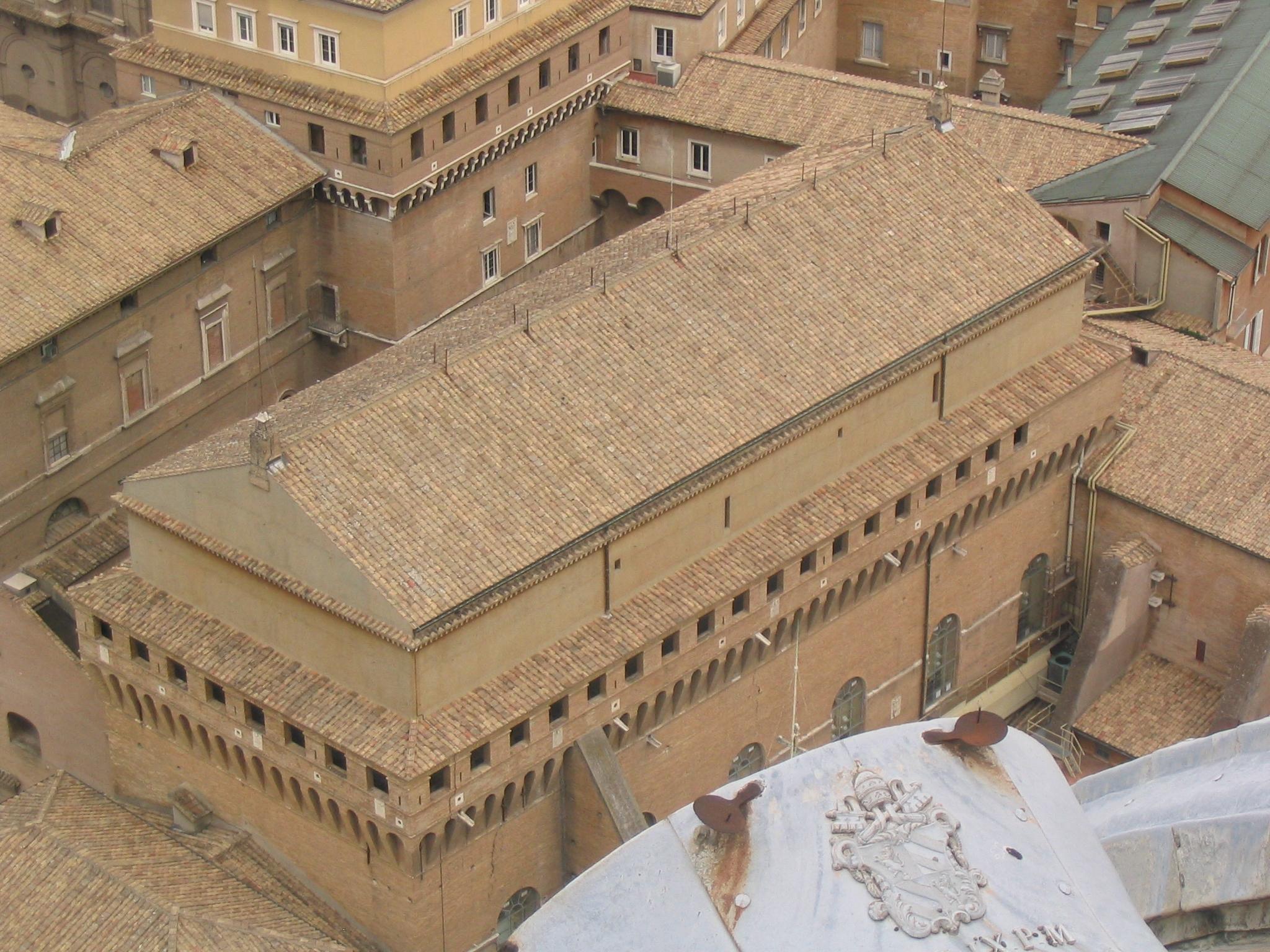
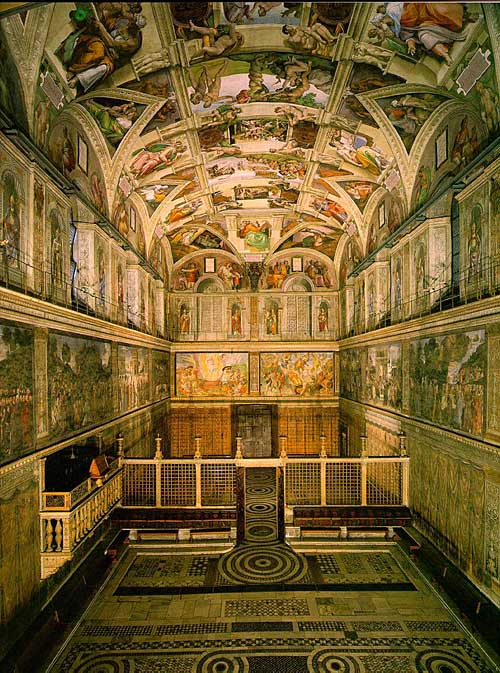
Pope Gregory X decreed during the Second Council of Lyons in 1274 that the cardinal electors should be locked in seclusion cum clave (Latin for “with a key”) and not permitted to leave until a new Bishop of Rome had been elected. Conclaves are now held in the Sistine Chapel of the Apostolic Palace.
Since the Apostolic Age, the Bishop of Rome, like other bishops, was chosen by the consensus of theclergy and laity of the diocese. The body of electors was more precisely defined when, in 1059, the College of Cardinals was designated the sole body of electors. Since then, other details of the process have developed. In 1970, Pope Paul VI limited the electors to cardinals under 80 years of age.
The procedures relating to the election of the pope have undergone almost two millennia of development. Procedures similar to the present system were introduced in 1274 with the promulgation of Ubi periculum by Gregory X, based on the action of the magistrates of Viterbo during the interregnum of 1268–1271.
Conclaves
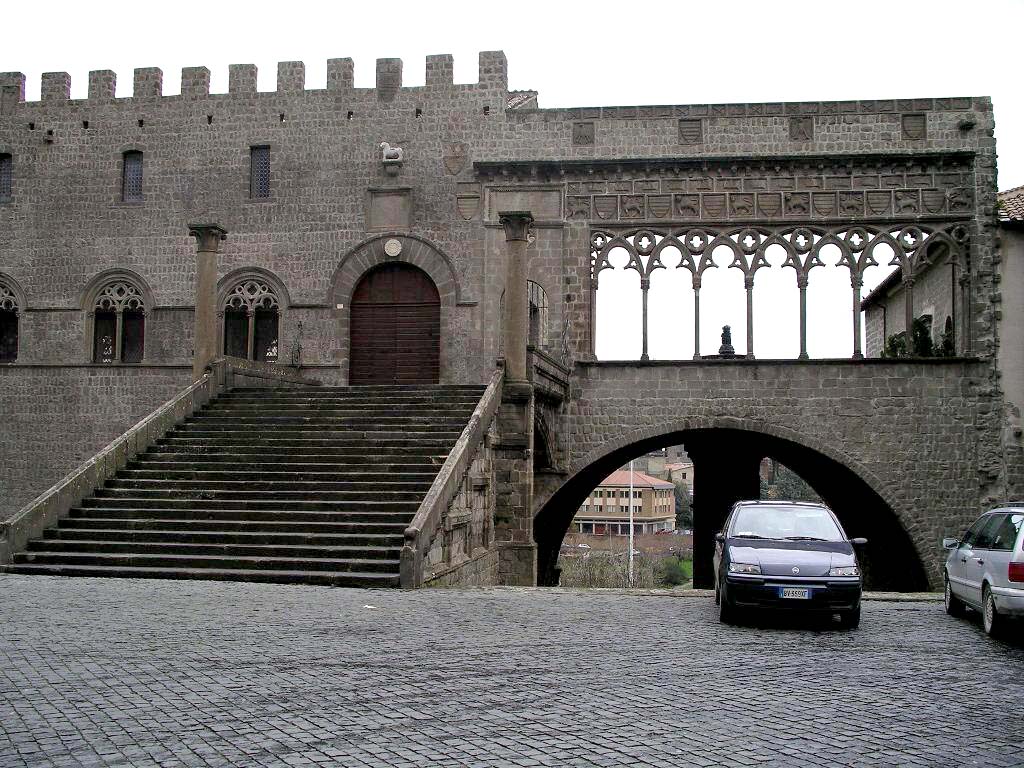
To resolve prolonged deadlocks in the earlier years of papal elections, local authorities often resorted to the forced seclusion of the cardinal electors, such as that first adopted by the city of Rome in 1241, and possibly before that by Perugia in 1216.[55] In 1269, when the forced seclusion of the cardinals alone failed to produce a pope, the city of Viterbo refused to send in any materials except bread and water. When even this failed to produce a result, the townspeople removed the roof of the Palazzo dei Papi in their attempt to speed up the election.[56]
In an attempt to avoid future lengthy elections, Gregory X introduced stringent rules with the promulgation of Ubi periculum. Cardinals were to be secluded in a closed area and not accorded individual rooms. No cardinal was allowed, unless ill, to be attended by more than two servants. Food was supplied through a window to avoid outside contact.[57] After three days of the conclave, the cardinals were to receive only one dish a day; after another five days, they were to receive just bread and water. During the conclave, no cardinal was to receive any ecclesiastical revenue.[12][58]
Gregory X’s strict regulations were abolished in 1276 by Adrian V, but Celestine V, elected in 1294 following a two-year vacancy, restored them. In 1562, Pius IV issued a papal bull that introduced regulations relating to the enclosure of the conclave and other procedures. Gregory XV issued two bulls that covered the most minute of details relating to the election; the first, in 1621, concerned electoral processes, while the other, in 1622, fixed the ceremonies to be observed. In 1904, Pope Pius X issued a constitution consolidating almost all the previous rules, making some changes. Several reforms were also instituted by John Paul II in 1996.[10]
The location of the conclaves was not fixed until the fourteenth century. Since the Western Schism, however, elections have always been held in Rome (except in 1800, when French troops occupying Rome forced the election to be held in Venice), and normally in what, since the Lateran Treaties of 1929, has become the independent Vatican City State. Since 1846, when the Quirinal Palace was used, the Sistine Chapel in the Vatican has always served as the location of the election. Popes have often fine-tuned the rules for the election of their successors: Pope Pius XII‘s Vacantis Apostolicae Sedis of 1945 governed the conclave of 1958, Pope John XXIII‘s Summi Pontificis Electio of 1962 that of 1963, Pope Paul VI‘s Romano Pontifici Eligendo of 1975 those of 1978, and John Paul II‘s Universi Dominici gregis of 1996 that of 2005.[59]
Modern practice
In 1996, John Paul II promulgated a new Apostolic Constitution, called Universi Dominici gregis, which with a slight modification by Pope Benedict XVI now governs the election of the pope, abolishing all previous constitutions on the matter, but preserving many procedures that date to much earlier times.
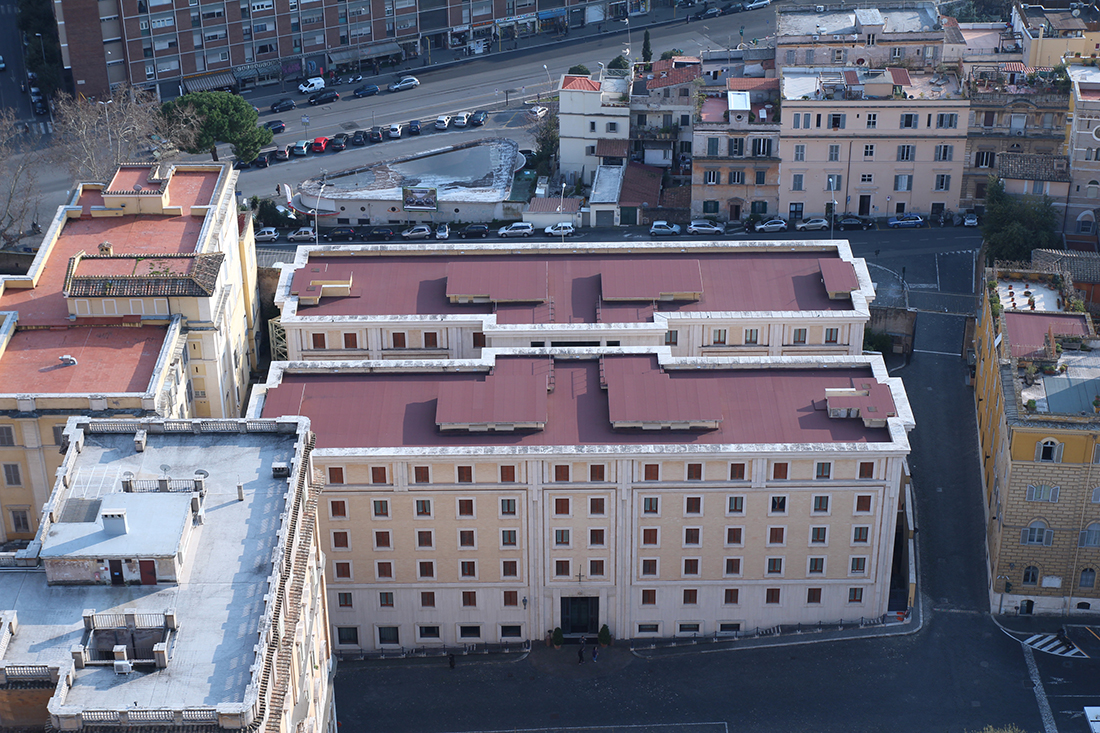
Under Universi Dominici gregis, the cardinals are to be lodged in a purpose-built edifice, the Domus Sanctae Marthae, but are to continue to vote in the Sistine Chapel.
Domus Sancta Martha
Domus Sancta Martha
Several duties are performed by the Dean of the College of Cardinals, who is always a Cardinal Bishop. If the Dean is not entitled to participate in the conclave owing to age, his place is taken by the Sub-Dean, who is also always a Cardinal Bishop. If the Sub-Dean also cannot participate, the senior Cardinal Bishop participating performs the functions.[61]
Since the College of Cardinals is a small body, there have been proposals that the electorate should be expanded. Proposed reforms include a plan to replace the College of Cardinals as the electoral body with the Synod of Bishops, which includes many more members. Under present procedure, however, the Synod may only meet when called by the pope. Universi Dominici gregis explicitly provides that even if a synod or an ecumenical council is in session at the time of a pope’s death, it may not perform the election. Upon the pope’s death, either body’s proceedings are suspended, to be resumed only upon the order of the new pope.[62]It is considered poor form to campaign for the position of pope. However, there is inevitably always much speculation about which Cardinals have serious prospects of being elected. Speculation tends to mount when a pope is ill or aged and shortlists of potential candidates appear in the media. A Cardinal who is considered to be a prospect for the papacy is described informally as a papabile (an adjective used substantively: the plural form ispapabili), a term coined by Italian-speaking Vatican watchers in the mid-twentieth century, literally meaning “pope-able”.
“What profit has not that fable of Christ brought us!”
Pope Leo X.
“For thou art the shepherd, thou art the physician, thou art the director, thou art the husbandman, finally thou art another God on earth.” Labbe and Cossart’s “History of the Councils.” Vol. XIV, col. 109
The title “Lord God the Pope” is found within a gloss of Extravagantes of Pope John XXII, title 14, chapter 4
In an Antwerp edition of the Extravagantes, the words, “Dominum Deum Nostrum Papam” (Our Lord God the Pope) can be found in column 153. In a Paris edition, they are found in column 140.
Pope Bonifatius 8th
POPE BONIFACE VIII
The Bull Unam Sanctam… Issued by POPE BONIFACE VIII reads as follows: “The Roman Pontiff judges all men, but is judged by no one. We declare, assert, define and pronounce: to be subject to the Roman Pontiff is to every human creature necessary for salvation that which was spoken of Christ ‘thou has subdued all things under his feet’ may well seem verified in me… I have the authority of the King of Kings. I am all in all and above all, so that God himself and I, the vicar of God, have but one consistory, and I am able to do all that God can do.”
“The Saviour Himself is the door of the sheepfold: ‘I am the door of the sheep.’ Into this fold of Jesus Christ, no man may enter unless he be led by the Sovereign Pontiff; and only if they be united to him can men be saved, for the Roman Pontiff is the Vicar of Christ and His personal representative on earth.” (Pope John XXIII in his homily to the Bishops and faithful assisting at his coronation on November 4, 1958).
Pope John XXIII
Sunday is verification that the people recognize the Pope as SUPERIOR TO GOD.
The Vatican refuses even to call it Israel. Instead the Vatican says Palestine when talking about Israel.
The Los Angeles Times, December 12,1984, quoted Pope John Paul II as saying, “Don’t go to God for forgiveness of sins, come to me.”
Mark 2:7, states, “Why doth this man thus speak blasphemies? who can forgive sins but God only?”
Vicarius Filii Dei (vicar of the son of god)
“all the names which are attributed to Christ in Scripture, implying His supremacy over the church, are also attributed to the Pope. Bellamin, “on the Authority of Councils.” book Chapter 17
In catholic cannon law, Pope Innocent III declares that the Roman pontiff is “the vicegerent upon earth, not of a mere man, but of very God.’
27 propostitions of “Dictates of Hildebrand” under the name Pope Cregory VII
2 that the Roman pontiff alone is justly styled universal.
6 That no person .. May live under the same roof with one excommunicated by the Pope.
9 that all princes should kidd his feet only.
19 that he can be judged by on one.
22 that the Toman Church never erred, nor will it, according to the scripture, ever err.
27 That he can absolve subjects from their allegiance to unrighteous rulers.”
Pontifex
This title was transferred to Roman Catholic Popes prior to the “fall” of Rome, transforming Rome into a RELIGIOUS POWER, diverse from the 1st three.
In fact, the title Pontifex Maximus has been a world superpower title for almost 2300 years.
Pontifex Maximus Constantine
The first kingdom to support Pontifex Maximus Christianity was Rome itself.
The second World Superpower to support Pontifex Maximus Christianity was Portugal.
The third World Superpower to support Pontifex Maximus Christianity was Spain.
The fourth World Superpower to support Pontifex Maximus Christianity was France.
The fifth World Superpower to support Pontifex Maximus Christianity was England.
The sixth world superpower to observe the Pontifex Maximus’s SUBSTITUTE day of Sunday is…. The United States.