Teaser Image
name jesus

The Name "Jesus"

The Name Jesus

  • choosing name jesus

    Jesus


Constantine Created the Name "Jesus"

Hail Zeus.  Constantine created the “universal” or “Catholic” religion to stop religious factions from waring against each other.  In doing this he made an amalgamation name from the names from all the religious factions.  That amalgamation name was “Jesus Christ.”

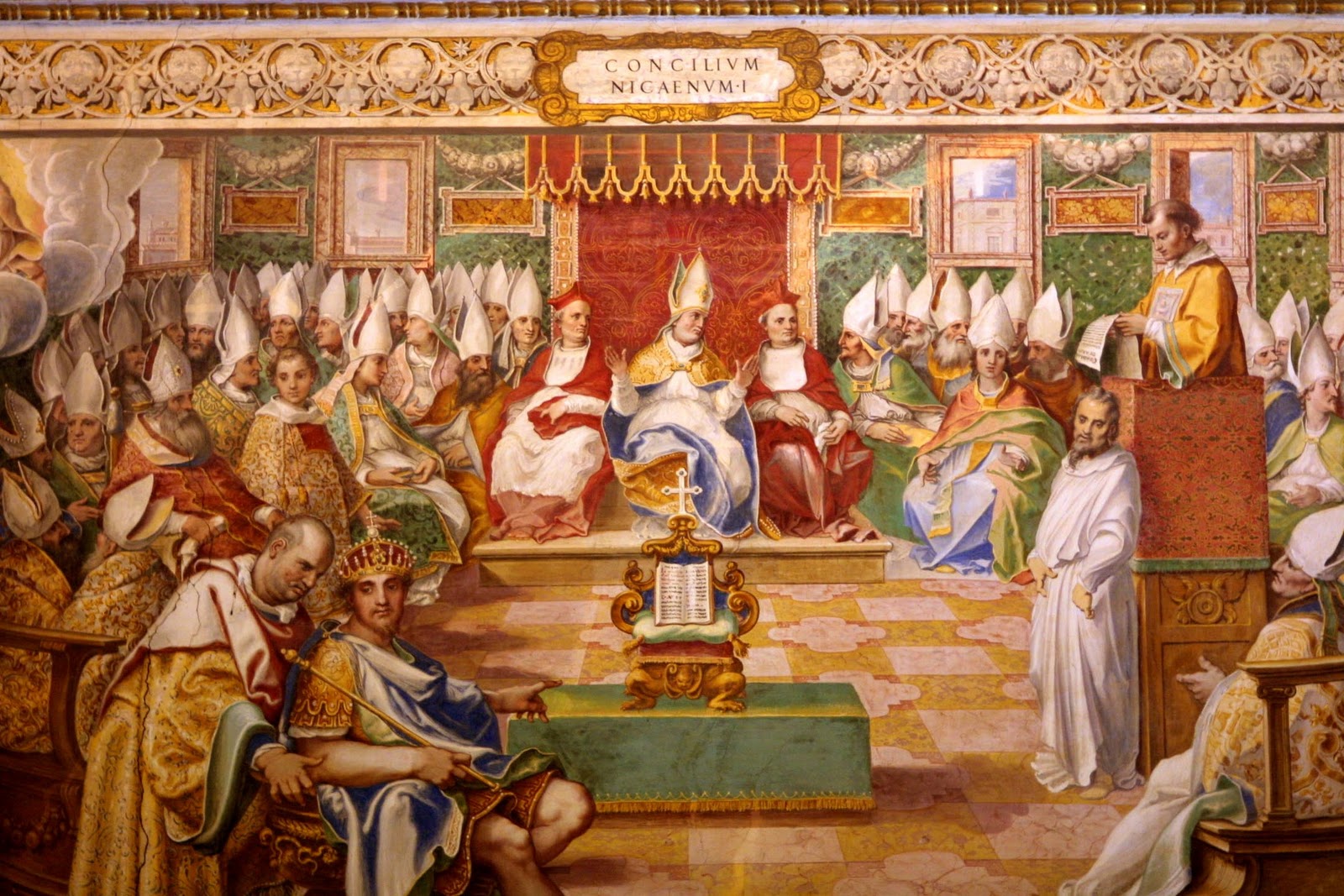
council of NiceaCouncil of Nicea

The Making of “The Name” at Nicaea

The name Jesus is not a Hebrew name. The name “Jesus Christ” or “Christ Jesus” was a name created at the Council of Nicaea.  The name united two of the major religious factions at that time.  It was an amalgamation of names.

The name “Jesus” was derived from the name Hesus of the Druids, Joshua of the Israelites, Horus / Iusa of the of the Egyptians, IES / Iesios of the Dionysians / Samothracians, Zeus of the Greeks……

…..and the word “Christ” derived from Krishna/Christos of India, the Anointed Jews (Christ means anointed), and KRST of Egypt.

***No "Jesus" Name on Original Manuscripts***

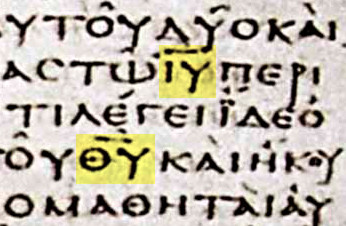
The name “Jesus Christ” did not appear in any Greek or Latin writings before the Council of Nicaea.  They called it a "sacred abbreviation" ... It was two letters of the Greek alphabet .... similarly looking like an "I E" in English.

Later manuscripts had different sacred abbreviations.

sacred abreviation

IY=man-God OY= God

English Meaning?

Greek Word?

Nominative (Subject)

Genitive (Possessive)

God

Θεός

ΘΣ

ΘΥ

Lord

Κύριος

ΚΣ

ΚΥ

Jesus

Ἰησοῦς

ΙΣ

ΙΥ

Christ/Messiah

Χριστός

ΧΣ

ΧΥ

Son

Υἱός

ΥΣ

ΥΥ

The name Yi-Zeus

Constantine worshiped the Sun. “Yio-Zeus” in Greek means “Dawn of Zeus.” Zeus was the king of the gods. Is this name a close resemblance to the sound of the name “Jesus”? [People don’t like pronouncing double vowels and drop the second vowel].   Coincidence?

Zeus is the Greek form of sanskrit Dyhaus pitar, “Father Heaven.”  The name is linked with Babylonian myths of Zu the storm bird, a thrower of thunderbolts.  The Romans called him Jupiter or Jove;  The European Christians substituted the word Jesus for Zeus.

The name ie-Zeus

It is written that the word ie was a common shout by the people meaning “hail.”  This word would be followed by the emperor’s name, as in ie-Cesar.  In this case it would be “Hail Zeus.”   This is a natural sound of human expression the dictionary defines as; Used as an exclamation of pleasure, approval, elation, or victory; the word “Yay.”

ie ZeusJe-Zeus

Jesus was a Common Greek Name.

The name Jesus appears to have been fairly common at the time of Christ’s life.  (Josephus, “Ant.”, XV, ix, 2; XVII, xiii, 1; XX, ix, 1; “Bel. Jud.”, III, ix, 7; IV, iii, 9; VI, v, 5; “Vit.”, 22)

Was the name Jesus was imposed by God’s express order???

Therefore God exalted him to the highest place and gave him the name that is above every name,   Philippians 2:9

And behold, thou shalt conceive in thy womb and bring forth a Son, and shalt call His name Jesus.  Luke 1:31

And she shall bring forth a Son, and thou shalt call His name Jesus, for He shall save His people from their sins.” Matthew 1:21

Hesus, of the Keltic Druids 834 BCE

Hesus is the God of the Druids having been crucified with a lamb on one side and an elephant on the other side. A representation of this can be seen on the fire-tower of Brechin. The symbolism of the Elephant is that it is the largest animal in the world and represents all the sins of the world. The symbolism of the lamb is one of innocence and represents the victim. Christian use this same symbolism by saying “the lamb of God who takes away the sins of the world.” This infers that Jesus was the victim and takes away the sins of the world. This legend is found among the Canutes of Gaul.

IES / Iesios of the Dionysians/Samothracians

In Greek the name stated to be the translation of Jesus is spelled iesous.  Adding up the gematria assigned to each Greek letter of the name the total comes to 888.

I   E   S   O   U   S

10 + 8 + 200 + 70 + 400 + 200  =  888

Each of the 24 letters of the Greek alphabet when all are added up, the total of their assigned gematria number equivalent totals 888.  888 is considered a luck number.

In Pythagoreans teachings 888 is the string ratio of a whole tone (666 is the string ratio of a perfect fifth). Pythagoras worked out the frequency ratios (or string length ratios with equal tension) and found that they had a particular mathematical relationship.

The octave was found to be a 1:2 ratio and what we today call a fifth to be a 2:3 ratio. Pythagoras concluded that all the notes could be produced by these two ratios as (3/2)*(3/2)*(1/2) gave 9/8 which is a second and so on.

Numerology was very popular during the timeframe assigned to the life of Jesus Christ.

Horus AKA Iusa of the Egyptians

Iusa was represented as both the ass and the ox, or the short horned bullock in the cult of Atum-Ra.  The ox and the ass along with worshipers of an infant child found in the catacombs of Rome are representative of Iusa and not Jesus.

The story of Jesus riding on two asses in one version, and on an ass and the foal of an ass in another version, was in the triumphal procession to Jerusalem.  This is another example of Jesus doing the same thing Iusa did.  Iusa was the Egyptian Jesus story of the Kamite mythos 2500 B.C.  The youthful son-god rode upon an ass as Isua or as “Horus with the royal countenance.”

Krishna AKA Christos of India

Krishna disciples also gave him the title of “Jezeus” or “Jeseus” which means pure essence.  Krsna in Sanskrit.  This god’s worship can be traced back to the 400 B.C.E.

In present day, Krishna is one of the most widely revered and most popular of all Indian divinities.

KRST of Egypt

Horus is read as KRST.

Walk on water? KRST (Horus) did it! Jesus restored sight to the blind?  Horus did that a few thousand years before.  Crucified in a very dramatic trial next to two thieves?  Yes KRST (Horus) did that also.

Christians Say Yashua

Today a large number of Christians admit that the name Jesus is “mis-translation” and the real name is Yashua.  Yashua sounds like a different name.  There is no “eee” sound in the name that so dominates the word Jesus.    The “ah” sound found twice in the name Yashua is non-existent in the name Jesus. The “oo” sound in Yashua is not found in the name Jesus.  The “uh” sound in Jesus is not found in the name Yashua.

Messiah Name

Based on Psalm 72:17 many Jewish sages believe that the actual name of the Messiah will be Ianun.

What does the "Word of God" say his name is?

It's a secret. No one knows his name.

His eyes were as a flame of fire, and on his head were many crowns; and he had a name written, that no man knew, but he himself.       Revelation 19:12

Jesus

The angel of the LORD appeared unto him in a dream, saying, Joseph, thou son of David, fear not to take unto thee Mary thy wife: for that which is conceived in her is of the Holy Ghost. And she shall bring forth a son, and thou shalt call his name JESUS.       Matthew 1:21

Emmanuel

A virgin shall be with child, and shall bring forth a son, and they shall call his name Emmanuel. Matthew 1:23

Alpha and Omega

I am Alpha and Omega.       Revelation 1:8

The Lion of the tribe of Juda, the Root of David

Behold, the Lion of the tribe of Juda, the Root of David, hath prevailed to open the book, and to loose the seven seals thereof.      Revelation 5:5

Faithful and True

I saw heaven opened, and behold a white horse; and he that sat upon him was called Faithful and True, and in righteousness he doth judge and make war.      Revelation 19:11

The Word of God

He was clothed with a vesture dipped in blood: and his name is called The Word of God.     Revelation 19:13

King of Kings and Lord of Lords

He hath on his vesture and on his thigh a name written, KING OF KINGS, AND LORD OF LORDS.     Revelation 19:16

The bright and morning star

I am the root and the offspring of David, and the bright and morning star.       Revelation 22:16

Since Christians (wrongly) believe that the words of Isaiah 9:6 refer to Jesus, I guess I should add the names in this verse to the list.
[Ever heard anyone (other than the Book of Mormon) call Jesus "the everlasting Father"?]

Wonderful, Counsellor, The mighty God, The everlasting Father, the Prince of Peace

For unto us a child is born, unto us a son is given: and the government shall be upon his shoulder: and his name shall be called Wonderful, Counsellor, The mighty God, The everlasting Father, The Prince of Peace.      Isaiah 9:6

Teaser Image
jesus historical

Jesus Historical

Jesus Historical?


Everyone loves a story.  They don’t even care if it’s false, as long as it is entertaining.  If someone says it’s a true story, they will believe it because it was such a good story.

The SUPER HERO story

The ultimate story for the everyday man is the “idol worship HERO” story.

This story has been told since the dawn of history.   It involves a hero that is God like, half man half God.  There is an imenent severe problem where everyone will be hurt, and only he can rescue the day.  He overcomes the challenge and everyone respects him and he can get the girl of his choice.

Then there is the Ultimate HERO story.  It personifies God as the Hero.  It involves a human that had a divine birth that was special.  It involves a predicted birth and a supernatural conception.  As a child of age 13 this individual was exceedingly wise compared to the smartest adults of the time.  He escapes a mean ruthless ruler that want to kill him because the sooth sayers have predicted he will be just and overthrow the ruler.  He has a divine calling and fights demons.  He becomes popular and is hailed as a king.  Then the tide turns and he is betrayed and is not popular, and then he is executed.  This execution is often on a hilltop.  Then our hero is vindicated and taken to heaven where he reins there.

This story has been going on forever and is seen in the characters of Hercules, Apollonius of Tyana, Padma Sambhava, Gautama Buddha, Krishna, just to name a few.  There are many variants of this story but the drama is always the same.

The Jesus story fits this God HERO story almost perfectly.  Which makes it suspect as to it’s authenticity.  Man’s desire to idol worship is so great.  Both temples were destroyed because of idol worship.  This idol worship includes the desire for everyone to idol worship even the story teller, themselves, by revering them as knowing the answer to life.  So verification of the historical events of an idol worship story is so important.

Known Historians:

APOLLONIUS … APPIAN … APPION OF ALEXANDRIA … ARRIAN … AULUS GELLIUS … COLUMELLA … DAMIS … DIO CHRYSOSTOM … DION PRUSEUS … EPICETUS … FAVORINUS … FLORUS LUCIUS … HERMOGONES SILUS ITALICUS … JOSEPHUS … JUSTUS OF TIBERIUS … JUVENAL … LUCANUS … LUCIAN … LYSIAS… MARTIAL … PATERCULUS … PAUSANIAS … PERSUIS … PETRONIUS … PHAEDRUS … PHILO-JUDAEUS … PHLEGON … PLINY THE ELDER … PLINY THE YOUNGER … PLUTARCH … POMPONIUS MELA … PTOLEMY … QUINTILIAN … QUINTIUS CURTIUS … SENECA … STATIUS … SUETONIUS … TACITUS … THEON OF SMYRNA … VALERIUS FLACCUS … AND VALERIUS MAXIMUS.

History——————————————–

FORTY-ONE known and respected Historians of the time period have written NOTHING about Jesus !!!  There were also THREE HUNDRED known writers that wrote about life in those times.  Not one mentioned Jesus or any of the fantastic stories that allegedly occurred in the New Testament.

1. Being born of a virgin mother;

2. Three Magi following the brightest star forever to see the demigod;

3. The slaying of the innocent babies [Infanticide];

4. Raising the dead, healing the blind and lame;

4. Having the sky turn to blackness when Jesus died;

5. Earthquakes in the region;

6. The zombie saints coming out of their graves going to Jerusalem; and

7. The Resurrection [Risen How?]

At least one of these world headline news events would have at least a small mention by at least one of the foregoing historians and prolific writers.   But, NO…NO … they are totally silent!

Nothing about the miracles, nothing about the dead Saints BODIES rising to life from the their graves after the crucifixion and walking around the city and appeared to people, as is depicted in the New Testament.

52 The bodies of many holy people who had died were raised to life.

53 They came out of the tombs after Jesus’ resurrection and went into the holy city and appeared to many people.      Matthew 27:52

Nothing was written about the fantastical story of mass infanticide throughout the region.  Herod’s wickedness was documented but he was not stupid enough to do something that would make the whole population riot.

When Herod saw that the wise men had tricked him, he was furious. So he gave an order to kill all the baby boys in Bethlehem and in the surrounding area who were two years old or younger. This was in keeping with the time he learned from the wise men.      Matthew 2:16

The quote of Jeremiah 3:14 in Matthew 2:18 is taken out of context to try and get credibility by alledging the event (killing of baby boys) happened and was prophesied.

18 “A voice is heard in Ramah,
weeping and great mourning,
Rachel weeping for her children
and refusing to be comforted,
because they are no more.”      Matthew 2:18

The weeping is about the offspring of Rachael being killed in war (grown men in battle).  Here is the full text of Jeremiah chapter 3 ==>  Jeremiah Chapter 3.

What about the walking on water???  how about the feeding 5,000 people with five loaves of bread and two fishes???

Nothing about the huge amount … 470 Roman soldiers … that were sent to rescue …. Paul (???)…from the crowds, and the Romans kept good records.

23 Then he called two of his centurions and ordered them, “Get ready a detachment of two hundred soldiers, seventy horsemen and two hundred spearmen to go to Caesarea at nine tonight.

24 Provide horses for Paul so that he may be taken safely to Governor Felix.”   Matthew 23:23

It seems these historians didn’t write anything because they had already passed away in the first part of the first century.  So the third century (325 B.C.) story writing of the New Testament was completed then.  And there would be no witnesses for several centuries to refute the story telling.

Josephus who wrote in 93 C.E. with a vague reference …. however there are two versions.  Someone added to the original.

The first version made a reference to “James, the brother of Jesus. with the translator at his own whim adding to his translation a phrase that he thought should have been written.  The added phrase was  “known as the Christ.”  This phrase was added.

The second version is much longer and is known to have been added by someone who altered the original text.  It was a statement to bolster Christianity.

Two Yeishus

There were two Yeishus from the areas around Jerusalem that were special and were written about in the Jewish Talmud.

YEISHU BEN PANDIRA

This Yeishu was stoned to death and hung on a tree.  His crimes were treason and sorcery.  He died on the eve of Passover in Jerusalem.  This happened during the reign of Alexander Jannaeus (106 to 79 BCE).  This occurred 100 years before the alleged birth of the Christian Jesus-God.

This Yeishu had five disciples whose names were; Mattai, Naqi, Neitzer, Buni, and Todah. The disciple name Mattai is a close name to Matthew and could be where the name Matthew came from.

YEISHU BEN STADA

This Yeishu lived 100 years after the Jesus-God’s alleged birth.  He was also stoned and hanged for treason and sorcery on the eve of Passover.  But his death occurred in Lydda not Jerusalem.  It is said that he brought spells from Egypt in a cut in his flesh.  He was called a madman.  He was caught by hidden witnesses.

Note:

Neither was crucified on a cross.  Both were 100 years apart from the alledged birth date of the Jesus-God.

Teaser Image
rejected gospels

Rejected Gospels

Rejected Gospels

rejected gospels

links-- 

These books are only included in the Catholic Bible Edition

TOBIAS

JUDITH

THE WISDOM OF SOLOMON

BARUCH

MACCABEES

Books Mentioned in the New Testament but not included:

Epistle of Paul to the Corinthians (1 Cor 5:9)

Epistle to the Church at Laodicea (Col 4:16)

Book of Enoch (Jude 1:14)

more to come ….

  1. The book of Jubilees
  2. Epistle of Barnabas
  3. Shepherd of Hermas
  4. Paul’s Epistle to the Laodiceans
  5. 1 Clement
  6. 2 Clement
  7. Preaching of Peter
  8. Apocalypse of Peter
  9. Gospel According to the Egyptians
  10. Gospel According to the Hebrews
Teaser Image
former new testament

Former New Testament

Former New Testament

former new testament

In 160 C.E. the Bishop of Melito of Sardis went to Judea to find the legendary Christian Church.  What he found was that there was NO DECENDANTS of any of the aledged apostles.  (Ludemann,G 1995, 31).  He found a small group of Gnostics who called themselves Ebonites (poor men).  They had their own sacred texts;

links--

PISTIS SOPHIA,

Gospel of the Ebonites,

GOSPEL OF THE HEBREWS,

Gospel of the Twelve Apostles,

GOSPEL OF THE NAZIRENES.

These texts varied significantly from the New Testament of today. Irenaeus leaves no doubt that Ebonites were Gnostics (Ludemann 247, note 111).  Epiphanius stated the Ebonites were vegitarians, a fact that is universally accepted as being Gnostic.

When the infamous church propagandist Eusebius addressed this fact he stated that everyone in the Judean church had become heretics.

Irenaeus.  –  also referred to as Saint Irenaeus, was Bishop of Lugdunum in Gaul, then a part of the Roman Empire. He was an early Church Father and apologist, and his writings were formative in the early development of Christian theology.

Eusebius of Caesarea.  –  also known as Eusebius Pamphili, was a Roman historian, exegete, and Christian polemicist of Greek descent. He became the bishop of Caesarea Maritima about 314.

The evidence is that the first century church had always been made up exclusively of different sects of Gnostics.  These Gnostics went by a different “New Testament” than the current Catholic decreed version.

Teaser Image
cut and paste

The Writings

The Writings

The Writings

The history of Jesus comes to us exclusively from the 4 gospels.  This fact alone makes the story suspect.  Such a huge super-hero story and no one person wrote about any of the super events!
The 27 books of the NT are attributed to 8 authors that contain over 200 admitted forgeries.
These gospels were allegedly written somewhere around the end of the second century, around 200 years after the supposed birth of the super-hero Jesus (200 yrs is a very very long time).  Coincidentally it was the same time period of the establishing of the orthodoxy and supremacy of the Roman Church.

These books were not translations of Jewish apostles written in Hebrew or Aramaic texts as one would expect, but were originally penned by someone in Greekwhose native language was Greek.  In over 100 places the very Greek word “Petros” appears as being said by Hebrew speaking Jews in dialogue.  The Greek texts are very cultivated and contain many rhetorical devices that would only be used by someone whose native language was Greek.

There were over 100 different versions of the gospels in circulation at the time of canonization by the Roman Church.  This fixing of the final text was done by the Church father, the Bishop of Lyons, Irenaeus (died around 200 CE) who chose the gospel books to be only 4 based on “the 4 corners of the world.”   This comment clearly show it comes from Masonic tradition – the four books of magic of the Egyptian Ritual.

All the gospels appear to have been written from a common source;  from the “Gospel of the Lord” published in Rome written by the Gnostic-Christian Marcion.  It resembles Luke but much shorter.  There was just one gospel and an “Apostolicon” which contained ten of Paul’s epistles; Galatians, 1st and 2nd Corinthians, Romans, (less 15 & 16 chapters), 1st and 2nd Thessalonians, Ephesians Colossians, Philemon, Philippians.  The two chapters of Romans that were added were historicizing where there is no historicizing in the other epistles. The gospel that Paul referred to in these added chapters was termed the Gospel of Paul.  Marcion claimed he found it in Antioch and brought it to Rome to be translated to Latin and Greek.

cut and paste

Gospel of the Lord

This text clearly predated the church gospels.  Written in the Syro-Chaldee or Samaritan language, was not historical and did not make Jesus a Jew.   He was not born in Bethlehem and was not from Nazareth (did not exist at that time).  Jesus was not born but “came down in Capernaum” and incarnated a century earlier.  Since there was no historicizing and no Judaizing Marcion was called a heretic, and accused of removing text instead of the accusing church adding to his text.

The Gospel of Luke

Written around the time of the other gospels, 180CE, as the Catholic Encyclopedia states, “Luke was not written til nearly 200 years after the event of Jesus’s departure.  The proof offered is that the Theophilus to whom Luke addressed it was bishop of Antioch from 169-177 A.D.”
Luke is a compilation of earlier manuscripts, 33 by one count, mainly from the Gospel of the Lord.  Phrases were added to sentences to historicize and to Judaize Jesus
An example follows

Marcion:

Saying, the Son of Man must suffer many things, and be put to death, and after three days rise again.

Luke 9:22:

Saying, “The Son of man must suffer many things, and be rejected by the elders and the chief priests and scribes, and be killed, and on the third day be raised.”

Also the mourning over Jerusalem (Luke 8:29-35) is taken verbatim from the 2nd Esdras (I. 28-33) and the speaking by the “Almighty Lord” is changed to Jesus being the speaker.

The Gospel of Mark

After the total destruction of Jerusalem by Romans in 135 CE the city was closed to the Jewish race occupied by Gentiles.  After the bishops of Circumcision, the first to be put in charge was Mark according to Eusebius, 108.  This could not be the Mark of the New Testament but could be the Gnostic Mark known as Marcion.  Upon comparison, Matthew, Mark, and Luke used Marcion text as one of their sources.
It is clear that the Book of Mark was tampered with since the resurrection, apparition, asscention was added to the end (Mark 16:9-20).
Other texts were added.  In Mark 1:16 it says;

“And passing along by the sea of Galilee he saw Simon and Andrew ..”

All commentaries agree the words “by the sea of Galilee were added as they are quite ungrammatically placed for the Greek syntax.  It was an attempt to reference a place to historicize.
Mark was clearly not a Palestine Jew or lived in the area as Mark 7:31 shows his ignorance of Palestine geography.

31 Then Jesus left the vicinity of Tyre and went through Sidon, down to the Sea of Galilee and into the region of the Decapolis.

The Gospel of John

The tone of this gospel is anti-Jewish as the author talked about Jews as if they were separate and apart from himself.
And he had no idea of the geography of Palestine.

Gospel of John speaks of Aenon near to Salim in Judea; also Bethany, beyond Jordan; and a “city of Samaria called Sychar; these names were totally unknown to any writer anywhere.  Expert Dr. Bretschneider1 points out  gross errors through out the book in geography, chronology, history and statistics of Judea that anyone who resided in that country, or had been a Jew by birth would never have made.

John states Bethsaida was in Galilee. No such town ever was.  John states Bethsaida was on the east side of the sea of Tiberias when Talilee was on the west side.  John was born at Bethsaida so he would certainly know the geography of his birth area.
John depicts events where he is not shown to have appeared at.  And John does not record events at which he is supposed to be present.
This is the only gospel that records the raising of Lasarus from the dead, which is an Egyptian myth.
The gospel seems to be a refutation of the Gnostics.

1 treatise on the Gospel of John, entitled Probabilia de evangelii et epistolarum Ioannis Apostoli indole et origine cruditorum,

The Gospel of Matthew

This gospel was originally written in Greek.  It did not appear until after the second century.  It is a compellation of several manuscripts based mostly from the Oracles of Christ.  The main point of the book is that it leads people to believe in the authority of the Roman church.   Jesus said to Peter On this rock I will build my church and it will have the keys to heaven.  By canonizing this book it guaranteed the success of the Catholic Church since the “word of God” gave authorization to the church.

18 And I tell you that you are Peter, and on this rock I will build my church, and the gates of Hades will not overcome it.
19 I will give you the keys of the kingdom of heaven; whatever you bind on earth will be bound in heaven, and whatever you loose on earth will be loosed in heaven.”       Matt 16:17-19

do not copy

Epistles - Paul was dead when He Wrote them

Never any historical reference.   Nothing of Pilate, Romans, Caiaphas, Sanhdrin,  Herod, Judas, the holy women of the Gospels, or any person in the New Testament.

They never quote any of the great sayings by Jesus.  They never mention any of his fabulous miracles, or divine splendor.  Not a peep about Jesus casting out devils, or feed a mass of people with a few loafs of bread and a couple of fish. Or curing leprosy in an instant.  Never came close to any mention contained in the sermons or teachings of Jesus.

The Lords Prayer is clearly written out and was composed by Jesus himself.  Yet Paul in his epistles expresses that he does not know how to pray.

Paul was said to have died during  the persecution by Nero in 64C.E.  Yet the Church dates the epistles as written much later.  In the First Epistle of Paul to Timothy it warns against the Marcionist work know as the Antithesis.  Marcion was expelled from the church in 144 C.E.  Yet the this Epistle refers to the book he wrote that caused his expulsion.  The Epistle had to have been written after the book was written, and thus after the death of Paul.  Proof of a forgery.

The First Epistle of Paul to Timothy, the Second Epistle of Paul to Timothy, and the Epistle of Paul to Titus are called “pastoral” Epistles.  Pastoral means that these letters were written by Paul himself.  The other epistles, or non-pastoral epistles, were written with his friends such as Sosthenes, Timothy, Silas, etc.

The dates attributed to the writing of the Epistles are based on what is contained in the writing and not on any carbon 14 dates of any document.  Carbon dating of alleged authentic written pieces of the gospels and epistles have come back with an approximate date of 325 C.E.

Epistles Don’t Have

Epistles were the earliest Christian documents.  They were written allegedly 20 to 70 years after the death of Jesus, according to the Church.  Jesus is said to have died between 28 to 36 C.E.  The Epistles never mention a Gospel.  The Gospels it is said were written after the Epistles.

The Epistles talk of a divine Christ but never mention Jesus as a human.

The Epistles never say anything about the history or the time.

The Epistles never say anything about the sayings of Jesus.

The Epistles never say anything about the parables of Jesus.

The Epistles never say anything about the miracles of Jesus.

The Epistles never say anything about the last supper.

The Epistles never say anything about any historical events happening then regarding the death of Jesus.

The Epistles never say anything about the crucifixion of Jesus.

The Epistles never say anything about the empty tomb of Jesus.

The Epistles never say anything about Jesus rising from the tomb.

The Epistles never say anything about the events Jesus did around Jerusalem.

Encyclopedia Bilblica Quote

” With respect to the connonical Pauline Epistles, … there are none of them by Paul; neither fourteen, nor thirteen, nor nine or eight, nor yet even the four so long “universally” regarded as unassailable.  They are all, without distinction, pseudographia (false-writings, forgeries) …”

Teaser Image
Cannon of bible

Con Creates "Gods Word"

Con's Creating "God's Word"

Cannon

Con Creating “God’s Word”

At the time of the formation of Christianity there were about thirty Gospels, and over 200 other books which were considered.  The writings chosen by the Catholics at the Council of Nicea were, according to Christian scholars, alledgedly written 40 to 70 years after the death of Jesus.  Secular scholars say much later, around 200 years after the death of Jesus.  All eye witnesses would have been dead by the time of any writings.

The first writing of the story surrounding the life of Jesus was the Book of Mark. Mark does not claim to be an eyewitness of the events nor a disciple of Jesus,  Mark was allegedly a disciple of Peter.

Matthew copied about 90% of the Book of Mark (600 verses out of 660).  If he was an eye witness he would not have copied the whole Book of Mark.

Luke also copied the Book of Mark, about 50% of the Book. Luke does not claim to be eye witnesses nor to be a disciple of Jesus.  Luke was allegedly a disciple of Paul.

The Christian “Word of God” is mostly copied,

and then what is written is by people who were not disciples of Jesus,

and then these writings the very earliest possible according to the Christian scholars were written 40 to 70 years after the death of Jesus.

Altered

Many scholars believe that the Gospels were originally independent works written in Greek by unknown authors.  And they were repeatedly altered over time.

 Christians altered the original text three or four times, or even more, with the intention of thus being able to destroy the arguments of their critics.

Celsus, last half of 2nd century

 It is an obvious fact today that there is much diversity among the [Gospel] manuscripts, due either to the carelessness of the scribes, or the perverse audacity of some people in correcting the text, or again to the fact that there are those who add or delete as they please, setting themselves up as correctors.

Christian Theologian Origen, 3rd century

 Not long after [Jesus] ascension into heaven several histories of his life and doctrines, full of pious frauds and fabulous wonders, were composed by persons whose intentions perhaps were not bad, but whose writings discovered the greatest superstition and ignorance.   Nor was this all; productions appeared which were imposed upon the world by fraudulent men, as the writings of the holy apostles.

Ecclesiastical History, Von Mosheim 1810

 It is certain that the New Testament was not written by [Jesus] himself, nor by his apostles, but a long while after them, by some unknown persons, who lest they should not be credited when they wrote of affairs they were little acquainted with, affixed to their works the name of the apostles, or of such as were supposed to have been their companions, asserting that what they had written themselves was written according to these persons to whom they ascribed it.

The Digenesis,  Robert Taylor  1873

 Although he was dealing with fewer manuscripts [New Testament] than we have today, Philip Shaff in Comparison to the Greek Testament and the English Version concluded that only 400 or the 150,000 variant readings [New Testament] caused doubt about the textual meaning, and only 50 of these were of great significance.

Josh McDowel, Evidence that Demands a Verdict, 1979

What? 50 variants with major doubts as to the material meanings of the verses?

How about the 400 manuscripts that caused doubt as to their meanings?

And didn’t he say 150,000 Variant readings of the New Testament?

And this is offered as evidence to the authenticity of these manuscripts being the “word of God?”

Cannon copies

Make 50 Copies

Constantine controlled the copying and distribution of the New Testament Bible. He commissioned the writing of fifty Bibles (331 C.E. overseen by Eusebius of Caesarea).  They all were the Catholic's chosen "New Testament" books.  There were no Old Testament books copied and included.  This was a large undertaking in those days. These copies were master copies from which all other New Testament Bibles were to be copied from.

As late as 450 CE, Theodore of Cyrrhus said that there were at least 200 different gospels circulating in his own diocese. Even the Catholic Encylopedia now admits that the “idea of a complete and clear-cut canon of the New Testament existing from the beginning  … has no foundation in history.”  The Roman philosopher Celsus, witness to the falsification of Christian writings already in the second century, said the same of the revisionists,

Some of them, as it were in a drunken state producing self-induced visions, remodel their Gospel from its first written form, and reform it so that they may be able to refute the objections brought against it.   ....   Celsus

The Catholic Encylcopedia concedes that;

“In all the departments forgery and interpolation as well as ignorance had wrought mischief on a grand scale.””

Multiple copying RE Matthew, Mark, Luke

Matthew copied about 90% of the Book of Mark (600 verses out of 660).  

Luke copied about 50% of the Book of Mark.

Teaser Image
Constantines Mother

Cons Mother

Cons Mother

Constantines mother

Constantines mother

Constantine’s Mother

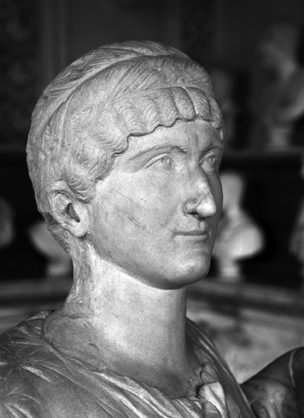
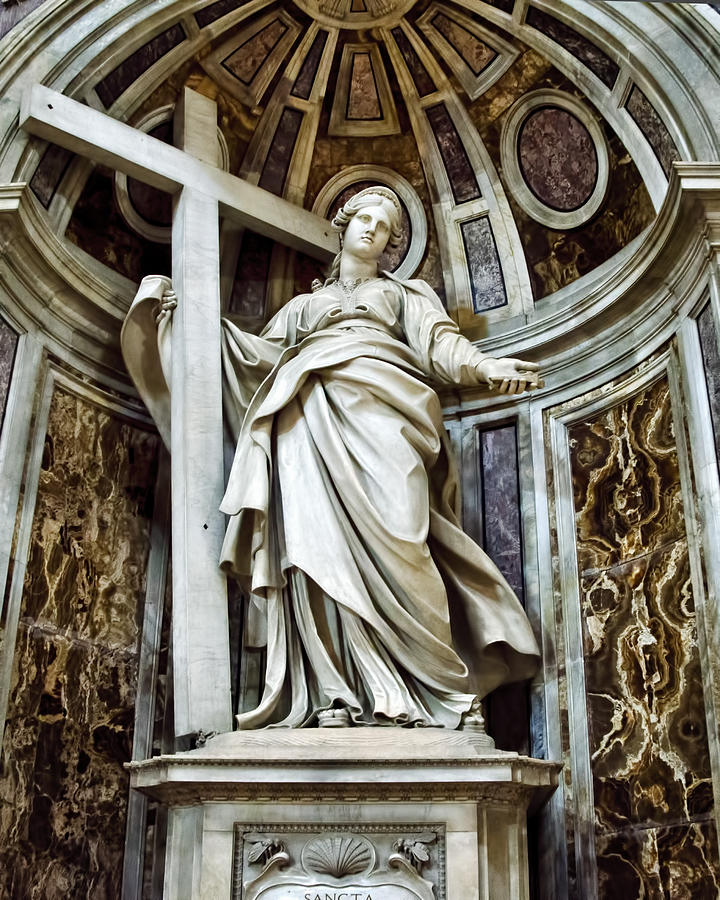
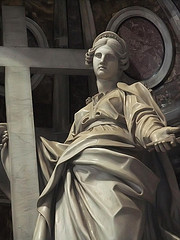
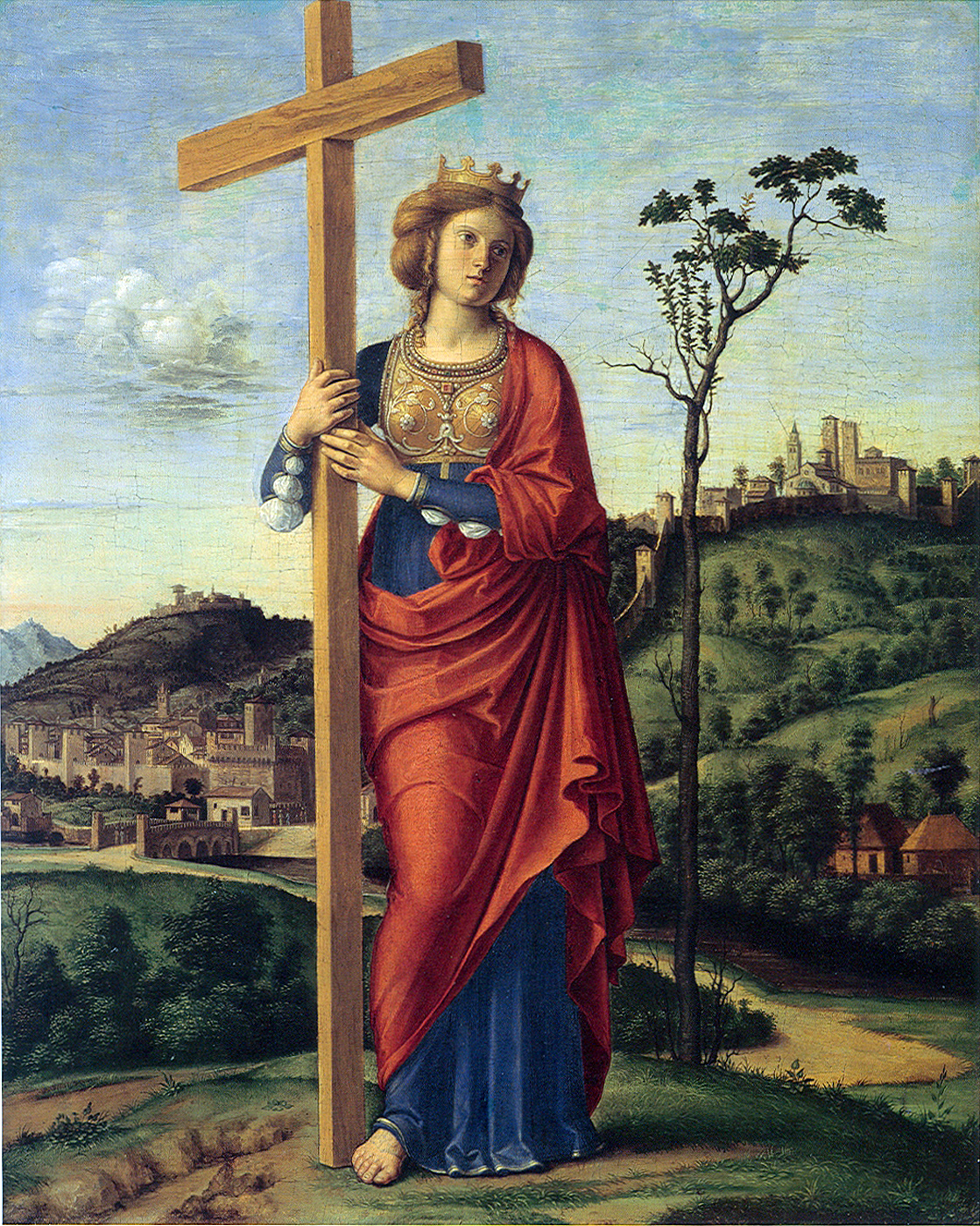
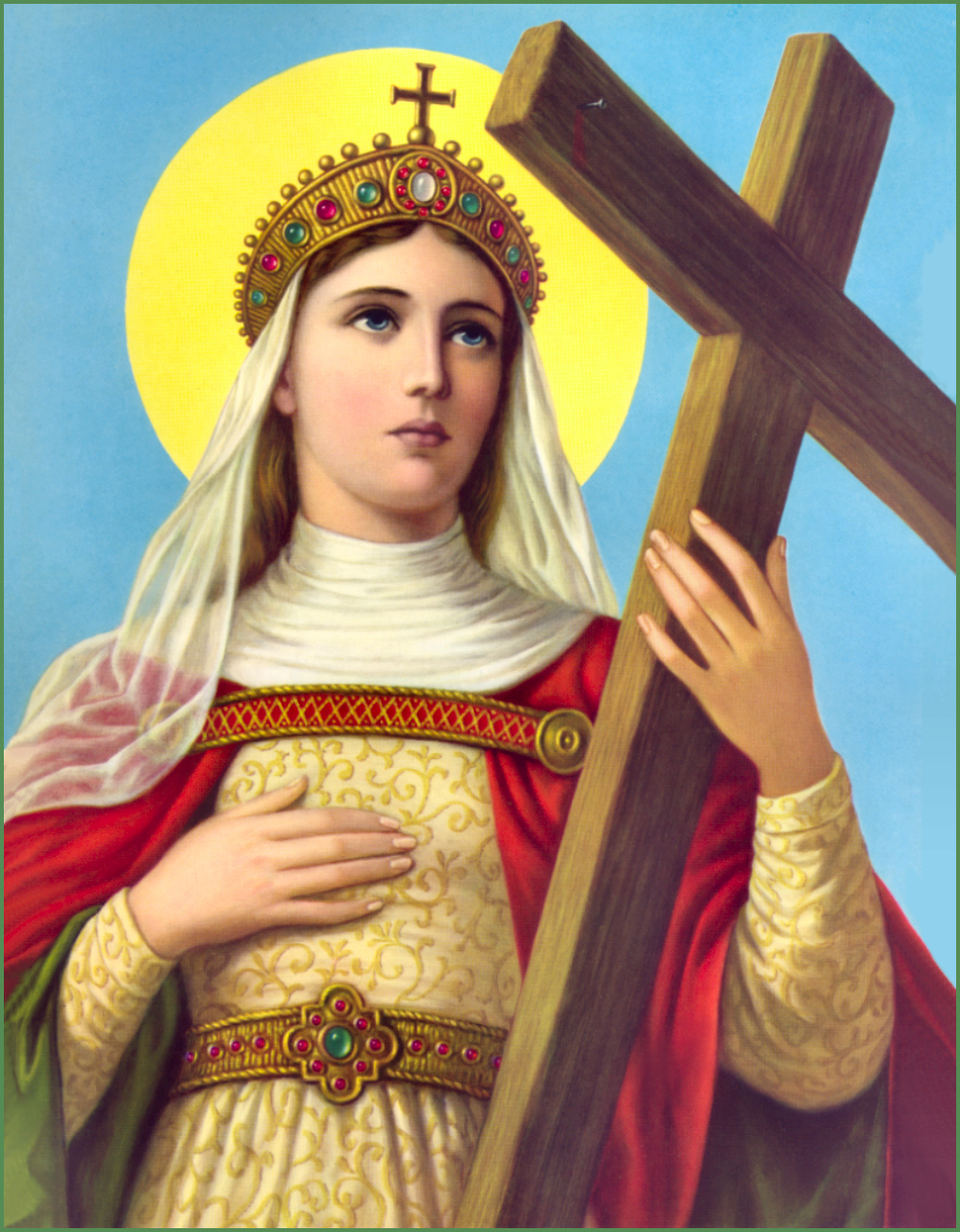
Part of his influence in decreeing the Catholic religion as the state religion came from his mother, Helena, who had converted to Christ sometime before.  She was implicated in the murder of Constantine’s step mother and was forced to flee and live in exile.  She went on a pilgrimage to the holy land.  There, by a miracle, she found the tomb of Jesus.  She also, by a miracle found the birth place of Jesus.  She also, by a miracle, found the remains of the three crosses that were used to crucify Jesus and the other two thieves.   This discovery was truly miraculous since Rome had crucified thousands of Jews in the 300 years since the death of Jesus to the time of her discovery.

When Constantine heard of his mother’s discoveries, he had churches built on the sites and to this day people go to these places for reverence.  His mother sent pieces of the crosses all across the Empire and are still seen in churches today.  The Catholic Church was so impressed by her that they made her a Saint and labeled her “Saint Helena, Discoverer of the True Cross.”

St Helena

Saint Helena

St Helena


Teaser Image
Constantine

The Con Man

Constantine

Con Man

Constantine

Constantine

Constantine

Flavius Valerius Aurelius Constantinus Augustus

Constantine

The Greatest Con Man ever, Constantine

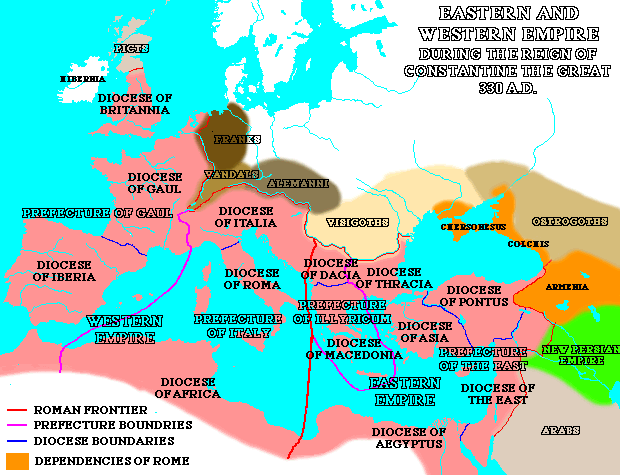
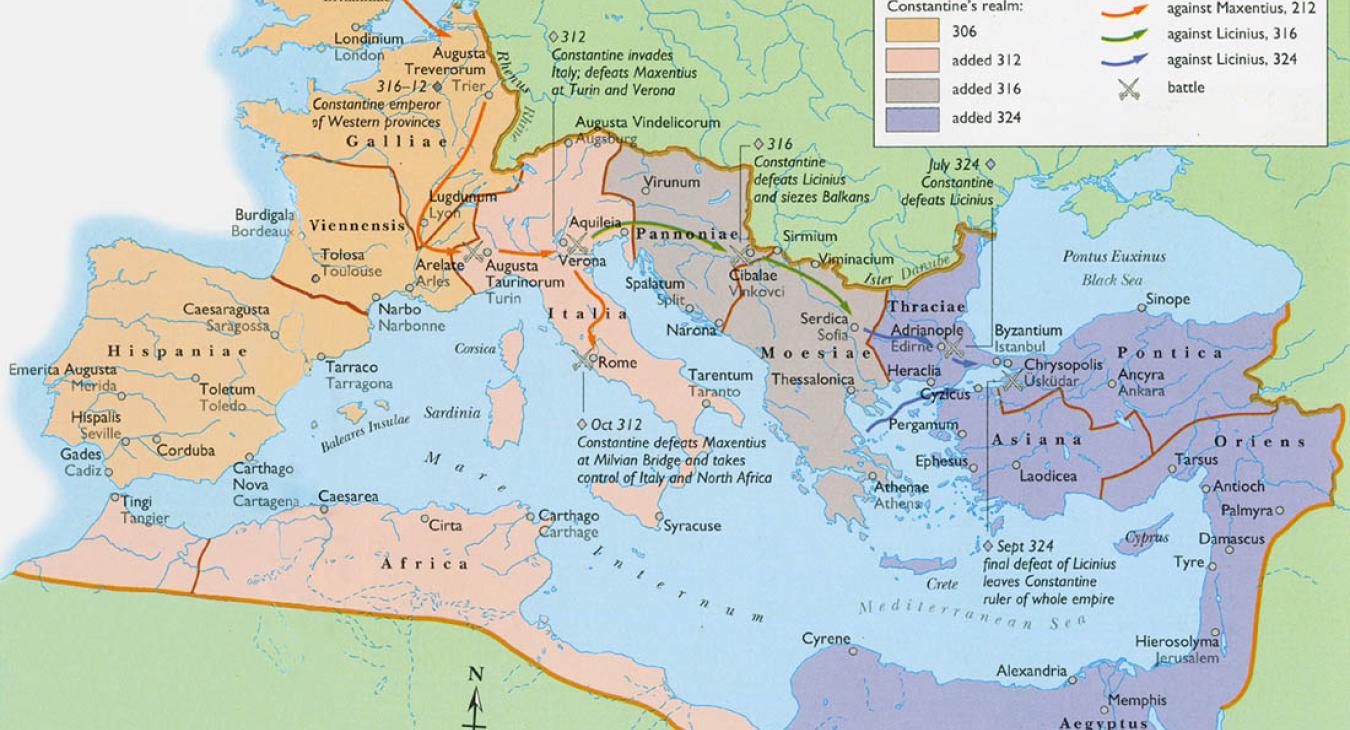
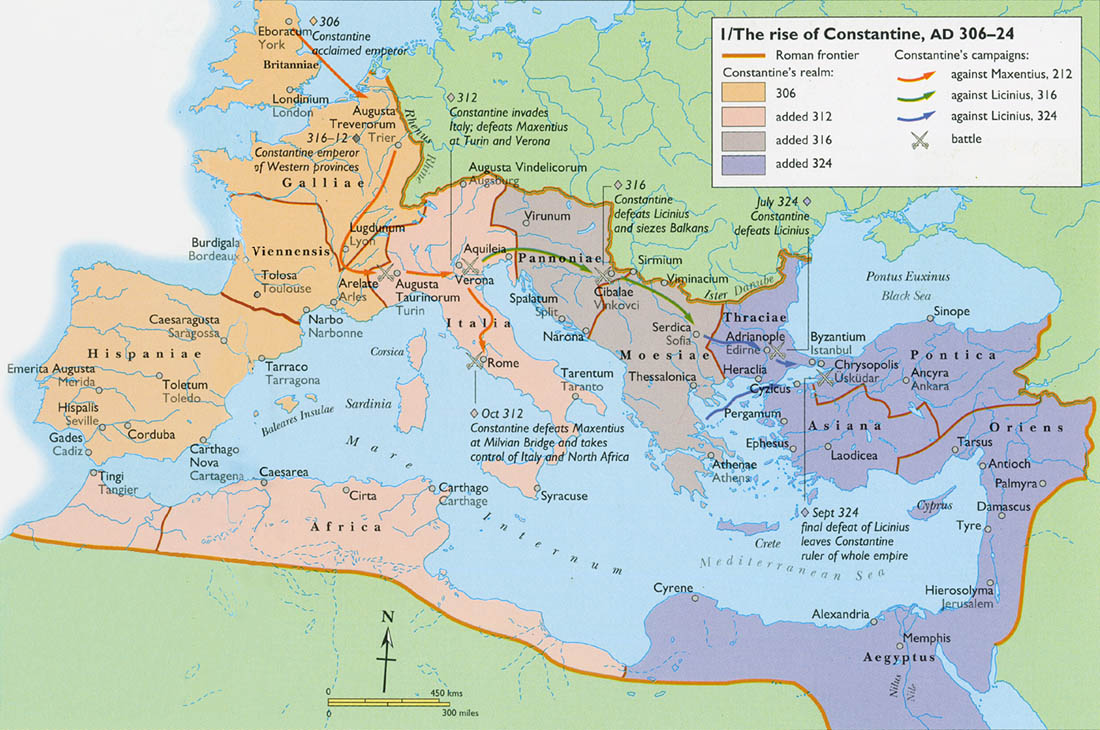
Constantine was uniting his kingdom by establishing a high-bred religion at Constantine’s Council of Nicaea in A.D. 325. He did this to prevent his kingdom from disintegrating.  He called the religion the Universal religion, or Catholic religion.

Constantine decreed the day of worship to be Sunday not Saturday (against one of the Ten Commandments) in order to honor a pagan god of the Sun.  After one of his council meetings the Christian doctrine changed, and the new doctrine became “Jesus was God in the flesh.” The quotations of sayings by Jesus in the New Testament have never even hinted that he was God.

Constantine controlled the copying and distribution of the Catholic Bible. He commissioned the writing of fifty Bibles, only the New Testament, a large undertaking in those days. These copies were master copies from which all other New Testament Bibles were to be copied from.

Prior to Catholic

Rome had the Jewish holy land as their enemy so much so that they leveled the whole country, more specifically the holy city of Jerusalem in 70 C.E.  The order for destroying the sacred Temple was that there not to be one stone on top of another.  Yet the same united Roman state under Constantine decreed Christianity as the state religion, a religion whose origin was Judea and Jerusalem and it’s savior was a Jewish prophet (or God) who was executed by a Roman governor.  At the same time Rome made a concerted effort to eliminate the then pagan religious cults that competed against the Constantine declared state religion.

In 305 C.E. , just 17 years prior to the Christianity state religion decree, Rome had declared the state religion to be the Persian savior Mithras.  This savior was declared “Protector of the Empire.”  This also was irregular since Persia was one of Rome’s main enemies.  Mithras was born on December 25 (just like Jesus) and it was common for this cult to celebrate with a symbolic meal of bread and wine.  Mithras is the root of the word Myth.

Mithraism started to spread around the Roman Empire around the first century and by the third century it had spread “from the banks of the Black Sea to the mountain of Scotland, and to the borders of the great Sahara Desert.”  Slaves would often rise to the top ranks in the religion.  Right before the third century a Roman named Commodus was initiated into the mysteries of Mithra which lead to a swell in popularity among the people of the Empire.  Emperors after Commodus, as well as other prior Emperors, tried to establish Mithraism as the religion of the Empire, and as was stated earlier, in 305 C.E. it was declared the religion of the Roman Empire.

The Decree

Before the decree of Christianity as the state religion by Constantine, there were many religions in the city of Rome alone as shown by the preferences of the Roman leaders.  Mark Anthony worshiped Dionysus.  Claudius worshiped Attis.  Vespasian worshiped Serapis.  Domitian worshiped Osiris.  Elgabalus worshiped Helios.

Because of the many religions there developed many major conflicts between leaders as well as with large groups of people in the Empire.  One unifying religion was needed to quell the violence that would develop because of the conflicts of religion.  A “catholic” or universal religion was established.  It was to be an amalgamation of all the religions.

Of the many religious cults at that time all were led by a cult leader who opposed the leaders of the Empire and had a need to tell the state what they should do.  The Christ religion demanded blind faith not only for the initiate to believe in their doctrine, but also blind faith in following the state leaders and accept their authority.  Also the Christ religion had no inner mysteries.  It was transparent.

Catholic

In 321, Constantine fashioned his religion from an amalgamation of the cults, and declared it to be the official religion to be practiced throughout the Empire in the “Edict of Toleration”.  This was specifically a political decision by him and there is evidence that there was no personal spiritual motivation behind it.  Constantine created the name of the hero of this catholic religion.  The name was a mixture of all the names used by the major religions at that time.  The name was Jesus Christ.  See this link for a further explanation => THE NAME JESUS.

Many years after the decree, Constantine claimed an alleged conversion by a vision he had that appeared in the sky.  He had seen a sign similar to the cross but different.  Inscribed on it was “by the Emperor.” This symbol is the chi-ro symbol seen still today in the Vatican.   Not only he, but “all the troops had also seen it.”  Constantine went to bed in wonderment of what the symbol meant.  Then in a dream he was visited by Christ who was wearing the same symbol.  In this dream Christ told him to put this symbol on his troops to conquer his enemy he was to fight the next day.  And this vision was seen the eve before a major battle.  Constantine emblazoned this symbol on the shields of the troops before the battle.  How they did this so quickly before the battle is a question not answered.

chi rho

chi rho tattoo

After he won the fierce battle he honored the battle by building a monstrous monument.  Surely he made reference to Christ who gave him the symbol and that gave him instructions that helped him win the battle. No. No. He made the statue depict himself alongside the Sun God Helios in the forum of Rome.  He also depicted his soldiers receiving assistance from various pagan Gods.

arch of Constantine

Constantine Coin to further His Created Religion

Constantine the Great [c. 280 - 337 C.E.] really started the use of Christian symbols on coins in A.D.312 by showing on the reverse of his coins the labarum, the imperial standard, with a chrismon, and the inscription In hoc signo vinces--"By this sign thou shalt conquer"-

Constantine coin

labarum of Constantine
 

The First Pope

In Rome at the site of the alleged grave of Peter, Constantine constructed a huge basilica which today is at St. Peters Square in the country of the Vatican.

Constantine went by the title “Pontifex Maxius” which is the title for the high priest in the pagan worship world.  This title was continued by all Emperors of Rome until 382 C.E. when it was passed to the Pope of the Catholic Church.  Constantine was truly the first Pope.

Like all the Emperors Constantine lived up to the utterly vicious and cruel acts.  During his wars in Gaul (306 to 312) it was written; “Even heathen feeling was shocked when he gave barbarian kings to the beasts, along with their followers by the thousands at a time.”

Baptism of Constantine

Constantine Baptized

Constantine was never baptized into the Catholic Religion until his death bed.  It is said that he deliberately waited until the end of his life because the baptism (according to the Catholics) would erase all his previous atrocious sins he had committed.  He thus could go to heaven.  He probably said yes only because he was on his death bed and some Catholic priest was insisting that he must and he wanted this priest who was taking care of him to have a positive attitude towards him and to stop the nagging.

I guess Christ (“the Prince of Peace”) who took on a warous role and gave Constantine that warous “military victory symbol” had not won him over after the victory.  A Catholic priest remarked concerning his conversion and his baptism, “We will not be able to know his true sincerity.  Only Christ will know.”

He was buried in the Church of the Apostles in Constantinople, the city he chose to be the capitol of his empire.  His capitol and his created religion are both truly east meets west.

Constantine churchConstantine church

  • Constantine