Baptism

BAPTISM

BAPTISM

BY WATER

Water is a symbol of regeneration as when it rains the vegetation is regenerated. By being
baptized a holy quality of spirit enters into the person making them more spiritually powerful.
Baptism is a very old rite practiced by the Hindus, Egyptians, Zoroaster, Romans, and other
nations. This was typically done by immersing the candidate in water three times while the
priest would say something like;

O Lord, this man is impure, like the mud of this stream. But do thou cleanse and deliver his
soul from sin as the water cleanses his body.

The ancient Mexicans, Persians, Hindus, and Jews before Christ had a custom of baptizing
their newborn shortly after their birth. The water represented regeneration. Paul exemplifies
the “washing of regeneration” in this verse;

He saved us not by works of righteousness which we had done, but according to His mercy,
by the washing of regeneration, and by the renewing of the Holy Ghost, Titus 3:5

The mothers of these infants by touching their infant before baptism were considered impure
and had to be presented to the priest for purity. This was done (Romans) on the eighth day
for a female and the ninth day for a male. The child’s name was announced at that time.

Jesus answered, “Verily, verily I say unto thee, unless a man be born of water and of the
Spirit, he cannot enter into the Kingdom of God. John 3:5

Every religion has their baptizing “holy” river. For the Hindus it was the Holy Granges and the
holy Sahar. For the Egyptians it was the Holy Nile. For the Chaldeans and the Persians it was
the Holy Euphrates. For the Greeks it was the Holy Lustral waters. For the Italians it was the
Holy river Po. For the Christians it was the Holy river Jordan. Elisha and Naaman used the
Jordan to wash seven times even though the Damascus river was closer and more easily
accessible. Christians also had their Holy Pool of Bethesda.

And they were baptized by him in the Jordan, confessing their sins. Matthew 3:6

DOVE DESCENDING

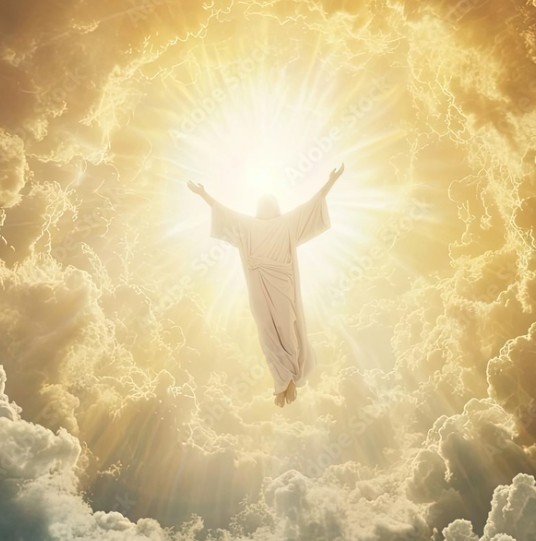
Ancient religions had the legend of a shape of a dove descending at baptism.

and the Holy Ghost descended in a bodily shape like a dove upon Him, and a voice came from
Heaven, which said, “Thou Art My Beloved Son; In Thee I Am Well Pleased.” Luke 3:22

The Hindus, Mexicans, Greeks, Romans, Persians, and Babylonians believed that all souls
were capable of assuming the form of a dove. At the deaths of Polycarp, Semiramis, Caesar
and others, a bodily shape of a dove was seen ascending to heaven.

The dove represented the third person of the Trinity among the ancient orientalists. The dove
is considered to be the regenerating spirit that enters into the person who is “born again,”
born into a new and holier life.

BY SPRINKLING

In areas of scarce water ways and where the rivers have fast currents and there was a fear of
immersing infants into the swift currents of the river, an alternate method of Baptism was
devised of sprinkling water on the initiate.

Blood was often substituted for water as it was deemed more symbolic producing the desired
effect. The blood was considered as the life of the soul as portrayed in the Bible. The Greeks
kept a “holy” vessel containing blood called a Facina. The Romans used a brush for applying
the blood. The Hindus and Persians used a branch for the sprinkling.

BY FIRE

This baptism was thought to impart a higher spiritual purification. This process was done by
running through flames of fire, sometimes very painfully. This practice prevailed in India,
Chaldea, Syria and throughout eastern Asia. The belief taught was that sins not expunged by
fire in this life will be punished by fire in the life to come after death.

If any man’s work shall be burned, he shall suffer loss; but he himself shall be saved, yet so
as fire. 1 Corinthians 3:15

I indeed baptize you with water unto repentance, but He that cometh after me is mightier than
I, whose shoes I am not worthy to bear. He shall baptize you with the Holy Ghost and with
fire. Matthew 3:11

BY HOLY GHOST

Here, a Priest of a high spiritual state, breathes onto or even into orifices of the person
imparting to him or her the baptism of the “Spirit of God.”

Christ practiced this when meeting with his disciples after his resurrection from the dead;
And when He had said this, He breathed on them and said unto them, “Receive ye the Holy
Ghost. John 20:22

The terms breath, air, wind, spirit, and ghost are synonymous terms that bestow the Spirit of
God as was written about the first man Adam;

And the Lord God formed man of the dust of the ground, and breathed into his nostrils the
breath of life; and man became a living soul. Genesis 2:7

FOR THE DEAD

It is customary among the Hindus as well as the Christians to postpone baptism to right
before death of the person as was done with Constantine. The reason for this is that in the
Christian faith baptism absolves one of all his or her prior sins and misdeeds no matter how
terrible those deeds were.

The problem with this is that a person might die unexpectedly before this baptism could be
performed. A method was devised to overcome this obstacle by baptizing the dead
body. This seemed not to be enough so the more common practice was devised by Saint
Chrysostom which involved a living person. The living person would go under the bed on sit
on a couch with the deceased. The priest would then ask the dead person if he would like to
be baptized. The living person would respond for the dead person. The dead corpse would
then be baptized. Paul and early Christians regarded this as an important rite.

Else, what shall they do who are baptized for the dead, if the dead rise not at all? Why are
they then baptized for the dead? 1 Corinthians 15:29

Here Paul clearly states that this practice is valid if the doctrine of the resurrection is true,
otherwise it is a senseless and superstitious practice.

RENEWING BAPTISMAL VOWS

The God Parents at the Baptism of a child answers for the child when these questions are
asked by the Priest. Later when the child is about 7 years old at the Sacrament of
Confirmation the child as an individual personally answers these questions.
Bishop:

Dear brethren, through the Paschal Mystery we have been buried with Christ in Baptism, that
we may walk with him in newness of life. And so, let us renew the promises of Holy Baptism,
which we once renounced Satan and his works and promised to serve God in the holy Catholic
Church.

And so I ask you:

Bishop: Do you renounce Satan, and all his works, and all his empty show?

God Parents: I do.


Bishop: Do you believe in God, the Father almighty, Creator of heaven and earth?

God Parents: I do

Bishop: Do you believe in Jesus Christ, his only Son, our Lord, who was born of the Virgin Mary, suffered death and was buried, rose again from the dead and is seated at the right hand of the Father?

God Parents: I do

Bishop: Do you believe in the Holy Spirit, the Lord, the giver of life, who came upon the Apostles at Pentecost and today is given to you sacramentally in Confirmation?

God Parents: I do

Bishop: Do you believe in the holy Catholic Church the communion of saints, the forgiveness of sins
the resurrection of the body, and life everlasting?

God Parents: I do

The Bishop accepts their Profession of Faith by proclaiming the faith of the Church:
This is our faith. This is the faith of the Church.
We are proud to profess it in Christ Jesus the Lord.
The whole congregation replies:

Amen.

RITUALS

Christian Rituals Intro

XIAN RITUALS INTRO


Christians are told to forget about logic, forget about questioning the merits of what is being said.  They are told to just believe.  They will then receive so much such as enlightenment, love, acceptance, etc., etc.  People would never do that with a business transaction.  But after all, it’s just a fun fantasy that they are accepting and it doesn’t involve their money.

——-

You are a sinner     = I know I’ve done a lot of stupid things.

Jesus will forgive you your sins and your soul will be wiped clean.  You will be pure.    =   Oh I would love that.

Jesus died for you.  He gave the ultimate for you, his life.  He couldn’t give any more.    =   Wow that was so nice of him to do that for me.  He didn’t have to go that far.

This is the Word of God,  God inspired the men to write this book      = I’ll believe you that God wrote it (because I’m gullible). There certainly won’t be any uncertainty in that book (NOT).

The word of God will give you eternal life      = I want to live forever.  I’m afraid of death.  What happens at death.  I don’t want to die.

You will be saved IF you just believe        = I want to be saved.  I don’t want to be discarded.

You will go to hell IF you don’t believe      = I don’t want to go there, for sure.

Hell is for an eternity.  A lake of fire where you burn and suffer for an eternity.  You can’t change back      =   I don’t want that. NO WAY.

If anyone contradicts what I say they are of the devil      =  I won’t listen to them.  I’ll only believe you.

We are smarter than you because we know God’s word      =   I want to be smart also.

You will also be smart if you just accept     = If I accept I will be smart like you?

We will accept you unconditionally     = I want to be accepted.  I like to be loved.  You will like me if I accept then, right?

You will be blessed with gifts.      =  Great!!!  I love gifts.

Altar Boys

ALTAR BOYS


Alter Boys are young males typically 8 to 12 years of age who assist the priest during the Mass ceremony.  They escort the priest onto the the altar platform and also when he leaves.  They ring bells and get the vessels of water and wine that the priest pours into his chalice.  Sometimes they carry a cross at a procession in the church.

Deacons

DEACONS


A Deacon is a congregational member that wants to be close to the priest and help out during religious ceremonies.  He feels he is very pious and gets great satisfaction being a part of the Mass ceremony.  They help by leading the congregation in prayers and chants.

Nuns

NUNS


nun is a member of a religious community of women, typically living under solemn vows of poverty, chastity, and obedience and lives in the enclosure of a monastery or convent.  They live a life of prayer and contemplation.

sister takes simple vows and live an active vocation of prayer and charitable works in areas such as education and healthcare.


POSTULANT NUNS

A prospective nuns first undergoes a period of testing the life for six months to two years called a postulancy.  She wears a white habit, or veil,  and undertakes the novitiate, a period (that lasts one to two years) of living the life of the religious institute without yet taking vows.  She then takes temporary vows which last for a period of one to three years.  After this she takes her “perpetual profession”  of permanent solemn vows.

CLOISTERED NUNS

Live with a wall separating them from the public although they may accept visitors.  They rarely leave their convent.

the number of nuns in the U.S. peaked in 1965 at 180,000 then plunged down to 56,000 in 2010.

Monks

MONKS


Monks in Jerusalem

Orthodox monastics separate themselves from the world in order to pray unceasingly for the world. They do not, in general, have as their primary purpose the running of social services, but instead are concerned with attaining theosis, or union with God.

A monk is a person who practices religious asceticism by monastic living, either alone or with any number of other monks. A monk may be a person who decides to dedicate his life to serving all other living beings, or more commonly to be an ascetic who voluntarily chooses to leave mainstream society and live his or her life in prayer and contemplation.

A monk’s daily life is usually divided into three parts: (a) communal worship in the catholicon (the monastery’s main church); (b) hard manual labour; and (c) private prayer, spiritual study, and rest.

Monks

Priests

PRIESTS


Only men are allowed to be Priests (and no transgenders allowed).  They take a vow of celibacy.  A priest participates in priesthood after the Sacrament of Holy Orders, he acts in persona Christi Capitis, representing the person of Christ.  Only Priests can perform the ceremony of the Eucharist, which derives from the story of the Last Supper,

As of December 31, 2014, there were 415,792 Catholic priests worldwide, decreased 5,000 since 1970.  The worldwide Catholic population has nearly doubled, growing from 653.6 million in 1970 to 1.229 billion in 2012.

ORDINATION CEREMONY

The candidates lie prostrate before the altar, while the assembled faithful kneel and pray for the help of all the saints in the singing of the Litany of the Saints. The essential part of the rite is when the bishop silently lays his hands upon each candidate (followed by all priests present), before offering the consecratory prayer, addressed to God the Father, invoking the power of the Holy Spirit upon those being ordained.

The Priest’s Collar     (similar to a dog collar)

Monsignors

MONSIGNORS


Monsignor is a honorific title that is requested by a bishop to the pope and given to a priest.  It is given for dedicated valuable service or holds a special position of governance by a priest.

In March 2013, Pope Francis suspended the granting of the honorific title of Monsignor except to members of the Holy See’s diplomatic service.

Bishops

BISHOPS


Arch Bishop

This is simply an ordained priest that has been given authority to oversee the flock.  This authority is typically a geographic area called a diocese.

There are different levels of bishops. A Metropolitan bishop is in charge of a group of diocese.  The Archbishop is in charge of a major metropolitan area and is more of an honorary title or importance.

This mitre hat designates a Bishop that has authority.

Cardinals

CARDINALS


A Cardinal is a senior ecclesiastical leader, considered a Prince of the Church, and usually an ordained bishop of the Catholic Church. The cardinals of the Church are collectively known as the College of Cardinals. The duties of the cardinals include attending the meetings of the College and making themselves available individually or in groups to the pope as requested. Most have additional duties, such as leading a diocese or archdiocese or managing a department of the Roman Curia.

Only Cardinals can become pope.  Their major duty is electing a new pope when there is a Papal vacancy.