discover how our capabilities can improve your business
Teaser Image
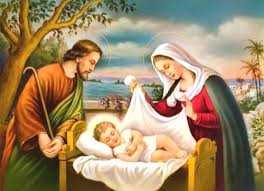
Jesus birth place

Jesus Birth Place

The Birth Place of Jesus

Jesus Birth Place

The writer of that portion of the Gospel according to Matthew which treats of the place in which Jesus was born, implies, as we stated in our last chapter, that he was born in a house. His words are these:
"Now when Jesus was born in Bethlehem of Judea in the days of Herod the king, behold, there came wise men from the east" to worship him. "And when they were come into the house, they saw the young child with Mary his mother."

The writer of the Luke version implies that he was born in a stable, as the following statement will show:

"The days being accomplished that she (Mary) should be delivered . . . she brought forth her first-born son, and wrapped him in swaddling clothes, and laid him in a manger, there being no room for him in the inn."

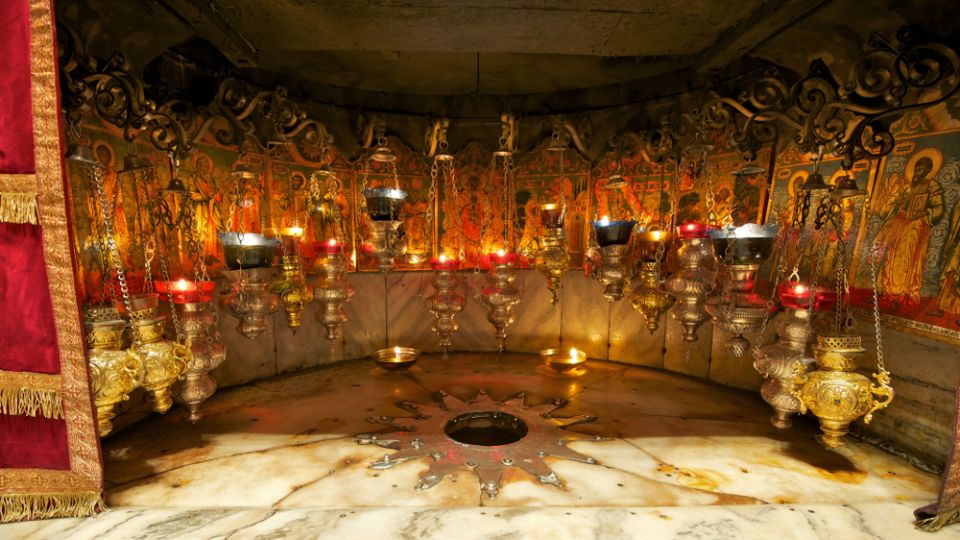
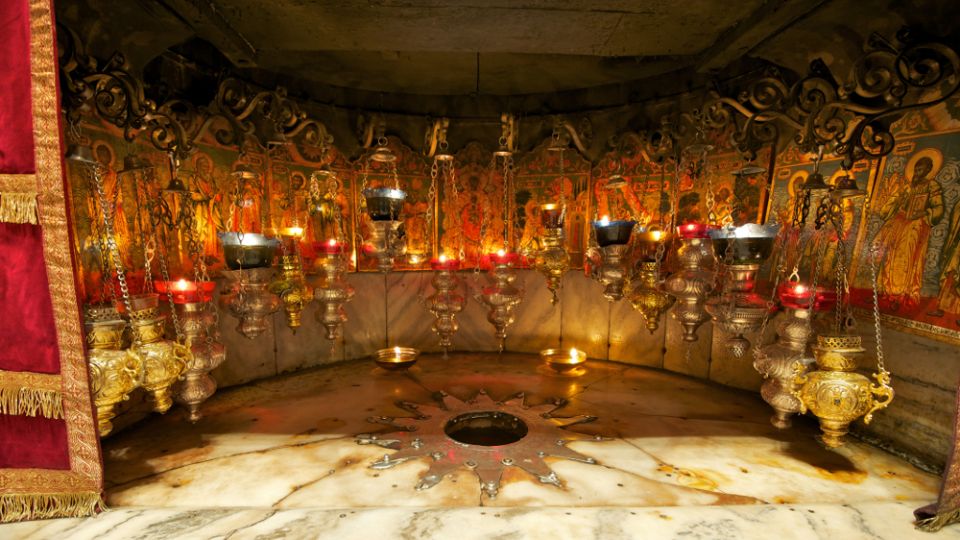
If these accounts were contained in these Gospels in the time of Eusebius, the first ecclesiastical historian, who flourished during the Council of Nice (A. D. 327), it is very strange that, in speaking of the birth of Jesus, he should have omitted even mentioning them, and should have given an altogether different version. He tells us that Jesus was neither born in a house, nor in a stable, but in a cave, and that at the time of Constantine a magnificent temple was erected on the spot, so that the Christians might worship in the place where their Saviour's feet had stood.

In the apocryphal Gospel called "Protevangelion," attributed to James, the brother of Jesus, we are informed that Mary and her husband, being away from their home in Nazareth, and when within three miles of Bethlehem, to which city they were going, Mary said to Joseph:

"Take me down from the ass, for that which is in me presses to come forth."

Joseph, replying, said:

"Whither shall I take thee, for the place is desert?"

Then said Mary again to Joseph:

"Take me down, for that which is within me mightily presses me."

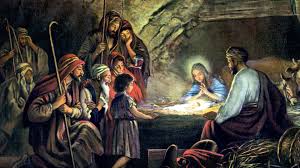
Joseph then took her down from off the ass, and he found there a cave and put her into it.  Joseph then left Mary in the cave, and started toward Bethlehem for a midwife, whom he found and brought back with him. When they neared the spot a bright cloud overshadowed the cave.

"But on a sudden the cloud became a great light in the cave, so their eyes could not bear it. But the light gradually decreased, until the infant appeared and sucked the breast of his mother."

Tertullian (A. D. 200), Jerome (A. D. 375) and other Fathers of the Church, also state that Jesus was born in a cave, and that the heathen celebrated, in their day, the birth and Mysteries of their Lord and Saviour Adonis in this very cave near Bethlehem.

Canon Farrar says:

"That the actual place of Christ's birth was a cave, is a very ancient tradition, and this cave used to be shown as the scene of the event even so early as the time of Justin Martyr (A. D. 150)."

Mr. King says:

"The place yet shown as the scene of their (the Magi's) adoration at Bethlehem is a cave."

The Christian ceremonies in the Church of the Nativity at Bethlehem are celebrated to this day in a cave,  and are undoubtedly nearly the same as were celebrated, in the same place, in honor of Adonis, in the time of Tertullian and Jerome; and as are yet celebrated in Rome every Christmasday, very early in the morning.

We see, then, that there are three different accounts concerning the place in which Jesus was born. The first, and evidently true one, was that which is recorded by the Matthew narrator, namely, that he was born in a house. The stories about his being born in a stable or in a cave  were later inventions, caused from the desire to place him in as humble a position as possible in his infancy, and from the fact that the virgin-born Saviours who had preceded him had almost all been born in a position the most humiliating —such as a cave, a cow-shed, a sheep-fold, &c.—or had been placed there after birth. This was a part of the universal mythos. As illustrations we may mention the following:

Crishna, the Hindoo virgin-born Saviour, was born in a cave, fostered by an honest herdsman,  and, it is said, placed in a sheep-fold shortly after his birth.

How-Tseih, the Chinese "Son of Heaven," when an infant, was left unprotected by his mother, but the sheep and oxen protected him with loving care.

Abraham, the Father of Patriarchs, is said to have been born in a cave.

Bacchus, who was the son of God by the virgin Semele, is said to have been born in a cave, or placed in one shortly after his birth.

Philostratus, the Greek sophist and rhetorician, says, "the inhabitants of India had a tradition that Bacchus was born at Nisa, and was brought up in a cave on Mount Meros."

Æsculapius, who was the son of God by the virgin Coronis, was left exposed, when an infant, on a mountain, where he was found and cared for by a goatherd.

Romulus, who was the son of God by the virgin Rhea-Sylvia, was left exposed, when an infant, on the banks of the river Tiber, where he was found and cared for by a shepherd.

Adonis, the "Lord" and "Saviour," was placed in a cave shortly after his birth.

Apollo (Phoibos), son of the Almighty Zeus, was born in a cave at early dawn.

Mithras, the Persian Saviour, was born in a cave or grotto, at early dawn.

Hermes, the son of God by the mortal Maia, was born early in the morning, in a cave or grotto of the Kyllemian hill.

Attys, the god of the Phrygians,  was born in a cave or grotto.

The object is the same in all of these stories, however they may differ in detail, which is to place the heaven-born infant in the most humiliating position in infancy.
We have seen it is recorded that, at the time of the birth of Jesus "there was a great light in the cave, so that the eyes of Joseph and the midwife could not bear it." This feature is also represented in early Christian art. "Early Christian painters have represented the infant Jesus as welcoming three Kings of the East, and shining as brilliantly as if covered with phosphuretted oil."

In all pictures of the Nativity, the light is made to arise from the body of the infant, and the father and mother are often depicted with glories round their heads. This too was a part of the old mythos, as we shall now see. The moment Crishna was born, his mother became beautiful, and her form brilliant. The whole cave was splendidly illuminated, being filled with a heavenly light, and the countenances of his father and his mother emitted rays of glory.

So likewise, it is recorded that, at the time of the birth of Buddha, "the Saviour of the World," which, according to one account, took place in an inn, "a divine light diffused around his person," so that "the Blessed One" was "heralded into the world by a supernatural light."

When Bacchus was born, a bright light shone round him,  so that, "there was a brilliant light in the cave."

When Apollo was born, a halo of serene light encircled his cradle, the nymphs of heaven attended, and bathed him in pure water, and girded a broad golden band around his form.

When the Saviour Æsculapius was born, his countenance shone like the sun, and he was surrounded by a fiery ray.

In the life of Zoroaster the common mythos is apparent. He was born in innocence of an immaculate conception of a Ray of the Divine Reason. As soon as he was born, the glory arising from his body enlightened the whole room, and he laughed at his mother.

It is stated in the legends of the Hebrew Patriarchs that, at the birth of Moses, a bright light appeared and shone around.

There is still another feature which we must notice in these narratives, that is, the contradictory statements concerning the time when Jesus was born. As we shall treat of this subject more fully in the chapter on "The Birthday of Christ Jesus," we shall allude to it here simply as far as necessary.

The Matthew narrator informs us that Jesus was born in the days of Herod the King, and the Luke narrator says he was born when Cyrenius was Governor of Syria, or later. This is a very awkward and unfortunate statement, as Cyrenius was not Governor of Syria until some ten years after the time of Herod.

The cause of this dilemma is owing to the fact that the Luke narrator, after having interwoven into his story, of the birth of Jesus, the old myth of the tax or tribute, which is said to have taken place at the time of the birth of some previous virgin-born Saviours, looked among the records to see if a taxing had ever taken place in Judea, so that he might refer to it in support of his statement. He found the account of the taxing, referred to above, and without stopping to consider when this taxing took place, or whether or not it would conflict with the statement that Jesus was born in the days of Herod, he added to his narrative the words: "And this taxing was first made when
Cyrenius was governor of Syria."

We will now show the ancient myth of the taxing. According to the Vishnu Purana, when the infant Saviour Crishna was born, his foster father, Nanda, had come to the city to pay his tax or yearly tribute to the king. It distinctly speaks of Nanda, and other cowherds, "bringing tribute or tax to Kansa" the reigning monarch.

It also describes a scene which took place after the taxes had been paid. Vasudeva, an acquaintance of Nanda's, "went to the wagon of Nanda, and found Nanda there, rejoicing that a son (Crishna) had been born to him. "Vasudeva spoke to him kindly, and congratulated him on having a son in his old age.

"'Thy yearly tribute,' he added, 'has been paid to the king . . . why do you delay, now that your affairs are settled? Up, Nanda, quickly, and set off to your own pastures.' . . . Accordingly Nanda and the other cowherds returned to their village."

Now, in regard to Buddha, the same myth is found. Among the thirty-two signs which were to be fulfilled by the mother of the expected Messiah (Buddha), the fifth sign was recorded to be, "that she would be on a journey at the time of her child's birth." Therefore, "that it might be fulfilled which was spoken by the prophets," the virgin Maya, in the tenth month after her heavenly conception, was on a journey to her father, when lo, the birth of the Messiah took place under a tree. One account says that "she had alighted at an inn when Buddha was born."

The mother of Lao-tsze, the Virgin-born Chinese sage, was away from home when her child was born. She stopped to rest under a tree, and there, like the virgin Maya, gave birth to her son.

Pythagoras (B. C. 570), whose real father was the Holy Ghost, was also born at a time when his mother was away from home on a journey. She was travelling with her husband, who was about his mercantile concerns, from Samos to Sidon.

Apollo was born when his mother was away from home. The Ionian legend tells the simple tale that Leto, the mother of the unborn Apollo, could find no place to receive her in her hour of travail until she came to Delos. The child was born like Buddha and Lao-tsze—under a tree. The mother knew that he was destined to be a being of mighty power, ruling among the undying gods and mortal men.

Thus we see that the stories, one after another, relating to the birth and infancy of Jesus, are simply old myths, and are therefore not historical.
 

Teaser Image
Alexandria library

Alexandria Library

Alexandria Library

Alexandria library scrolls


Alexandria library

Alexandria library

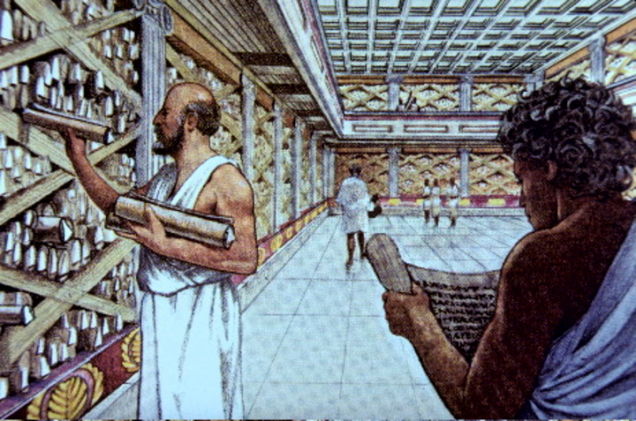
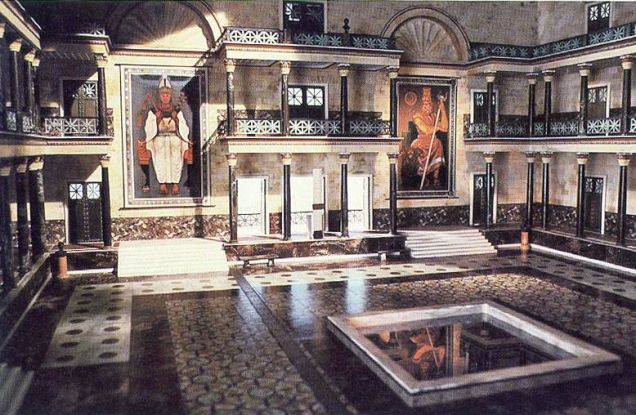
The home of the world’s great conqueror Alexander the Great, in 331 BCE, was at one period of time the great focal center for religious speculation and propagandism, the great emporium for religious dogmas throughout the East, and a place of resort for the disciples of nearly every system of religious faith existing at that time.  Nearly all existing religions in the world today were transformed and remodeled in Alexandria.

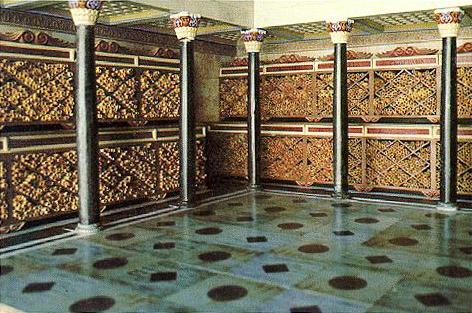
This capital city of Egypt had five hundred thousand inhabitants which was a huge city for those times.  It had a very voluminous library.  Every faith and religious order had theological schools throughout the city.  It was the custom of the people to discuss religious ideas and to improve and remodel their religious systems and even change their long accepted creeds.

At the time of the Babylonian captivity the Essenian Jews fled to Egypt.  The Essenes were Jews that mixed their faith with the Pythagorean and Egyptian oriental theology, or Buddhism.  The doctrine of Pythagoras is intensely Buddhistic.  This is the beginnings of the Christian religion.  Their Jewish sect religion was totally changed by the intermixture of heathen doctrines.

The leading doctrines of the Essenes are the same that comprise the Christian doctrines of today exception the doctrine of divine incarnation.  The “God manifest in the flesh” was a doctrine well know from the Ganges to the Yellow Sea to the Ilissus.  It is the fundamental principle of the Indian Buddhists, the basis of Zoroasterism, and is pure Platonism.  This incarnation theology merged with the Essenes theology in Alexandria.  Christianity originated nothing.  It has no new doctrines or precepts.  It is incontrovertible that Christian theology grew out of Buddhism and Essenian theology.

Then Barnabas went to Tarsus to look for Saul, 26 and when he found him, he brought him to Antioch. So for a whole year Barnabas and Saul met with the church and taught great numbers of people. The disciples were called Christians first at Antioch.       Acts 11:25

The Essenian sect went out of history right around that time.  The Essenian sect must have changed their name to Christians.


Teaser Image
Jesus birth

Jesus Birth

Jesus' Birth

jesus birth

Uncertainty

1  THE “WORD OF GOD” IS UNCERTAIN AS TO WHAT YEAR JESUS WAS BORN.

A   4 B.C.E. or before.  

   (born during reign of King Herod who died 4 B.C.E.).  (Wikipedia: Herod the Great)

2 After Jesus was born in Bethlehem in Judea, during the time of King Herod,      Matthew 2:1

There was in the days of Herod, the king of Judaea, a certain priest named Zacharias, of the course of Abia: and his wife was of the daughters of Aaron, and her name was Elisabeth. ... After those days his wife Elisabeth conceived. ... And in the sixth month the angel Gabriel was sent from God unto a city of Galilee, named Nazareth, To a virgin espoused to a man whose name was Joseph, of the house of David; and the virgin's name was Mary. And the angel came in unto her, and said ... thou shalt conceive in thy womb, and bring forth a son, and shalt call his name JESUS.     Luke 1:5-31

B   After 6 C.E.  

   (year of the Roman Census – Antiquities 18:1:1,  Jewish Wars 7:8:1) Josephus  The Census of Quirinus occurred in 6 C.E.  according to Historian Josephus.

1 In those days Caesar Augustus issued a decree that a census should be taken of the entire Roman world.

2 (This was the first census that took place while Quirinius was governor of Syria.)    Luke 2:1-2

The Herod that is referred to here is Herod the Great, as is made clear in Luke 2:22, which refers to Herod’s son, Archalaus. Since Herod the Great died in 4 BCE, this dates Jesus’s birth to no later than that year. But the gospel of Luke (2:2) says that Cyrenius (Quirinius) was governor of Syria when Mary was pregnant with Jesus.  Quirinius was appointed governor in 6 CE.

We know then that Jesus was born sometime before 4 BCE and sometime after 6 CE – which makes his birth a truly miraculous event.

22 But when he heard that Archelaus was reigning in Judea in place of his father Herod, he was afraid to go there. Having been warned in a dream, he withdrew to the district of Galilee,     Luke 2:22

Quirinius (Cyrenius) became governer of Syria in 6 CE, nine years after king Herod's death.
(Wikipedia: Quirinius)

And it came to pass in those days, that there went out a decree from Caesar Augustus that all the world should be taxed. (And this taxing was first made when Cyrenius was governor of Syria.) ... Joseph also went up from Galilee, out of the city of Nazareth, in Judea ... To be taxed with Mary his espoused wife, being great with child. Luke 2:1-4

The Matthew narrator informs us that Jesus was born in the days of Herod the King, and the Luke narrator says he was born when Cyrenius was Governor of Syria, or later. This is an error in the "Word of God" as Cyrenius was not Governor of Syria until some ten years after the time of Herod

2  THE “WORD OF GOD” IS UNCERTAIN AS TO WHO AN ANGEL APPEARED TO WITH THE ANNOUNCEMENT OF THE BIRTH OF JESUS.

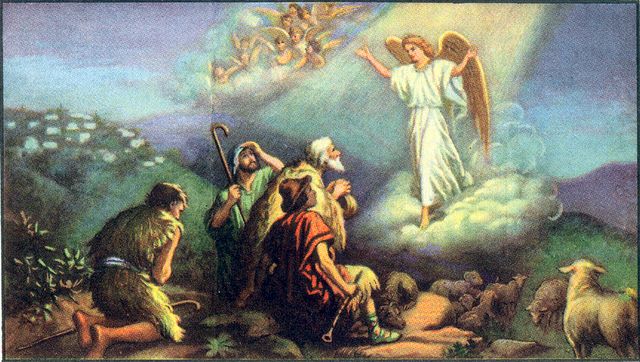
A   To shepherds in the flesh.

15 When the angels had left them and gone into heaven, the shepherds said to one another, “Let’s go to Bethlehem and see this thing that has happened, which the Lord has told us about.”     Luke 2:15

B   To Joseph in a dream.

13 When they had gone, an angel of the Lord appeared to Joseph in a dream. “Get up,” he said, “take the child and his mother and escape to Egypt. Stay there until I tell you, for Herod is going to search for the child to kill him.”     Matthew 2:13

3 THE “WORD OF GOD” IS UNCERTAIN AS TO JESUS BEING BORN IN A HOUSE OR IN A MANGER

Manger

7 And she brought forth her firstborn son, and wrapped him in swaddling clothes, and laid him in a manger; because there was no room for them in the inn.     Luke 2:7

16 So they hurried off and found Mary and Joseph, and the baby, who was lying in the manger.    Luke 2:16

House

11 And when they were come into the house, they saw the young child with Mary his mother, and fell down, and worshipped him: and when they had opened their treasures, they presented unto him gifts; gold, and frankincense and myrrh.     Matthew 2:11

Cave

Eusebius, the first ecclesiastical historian, who flourished during the Council of Nice (A. D. 327), it is very strange that, in speaking of the birth of Jesus, he should have omitted even mentioning them, and should have given an altogether different version. He tells us that Jesus was neither born in a house, nor in a stable, but in a cave, and that at the time of Constantine a magnificent temple was erected on the spot, so that the Christians might worship in the place where their Saviour's feet had stood.

In the apocryphal Gospel called "Protevangelion," attributed to James, the brother of Jesus, we are informed that Mary and her husband, being away from their home in Nazareth, and when within three miles of Bethlehem, to which city they were going, Mary said to Joseph: "Take me down from the ass, for that which is in me presses to come forth." Joseph, replying, said: "Whither shall I take thee, for the place is desert?"

."Then said Mary again to Joseph: "Take me down, for that which is within me mightily presses me." Joseph then took her down from off the ass, and he found there a cave and put her into it. Joseph then left Mary in the cave, and started toward Bethlehem for a midwife, whom he found and brought back with him. When they neared the spot a bright cloud overshadowed the cave.

"But on a sudden the cloud became a great light in the cave, so their eyes could not bear it. But the light gradually decreased, until the infant appeared and sucked the breast of his mother." 

Tertullian (A. D. 200), Jerome (A. D. 375) and other Fathers of the Church, also state that Jesus was born in a cave, and that the heathen celebrated, in their day, the birth and Mysteries of their Lord and Saviour Adonis in this very cave near Bethlehem.  

Canon Farrar says: "That the actual place of Christ's birth was a cave, is a very ancient tradition, and this cave used to be shown as the scene of the event even so early as the time of Justin Martyr (A. D. 150)   "The place yet shown as the scene of their (the Magi's) adoration at Bethlehem is a cave."

The Christian ceremonies in the Church of the Nativity at Bethlehem are celebrated to this day in a cave,

Celebrated, in the same cave is the honoring of Adonis, in the time of Tertullian and Jerome; and as are still celebrated in Rome every Christmasday, very early in the morning.

The virgin-born Saviours wheom preceded Jesus almost all been born in a place of the most humble possible —such as a cave, a cow-shed, a sheep-fold, &c.—or had been placed there after birth. This was a part of the universal mythos.

Crishna, the Hindoo virgin-born Saviour, was born in a cave

How-Tseih, the Chinese "Son of Heaven," when an infant, was left unprotected by his mother, but the sheep and oxen protected him.

Abraham, the Jewish Patriarch, is said to have been born in a cave.

Bacchus, who was the son of God by the virgin Semele, is said to have been born in a cave,  The inhabitants of India had a tradition that Bacchus was born at Nisa, and was brought up in a cave.

Æsculapius, who was the son of God by the virgin Coronis, was left exposed, when an infant, on a mountain.

Romulus, who was the son of God by the virgin Rhea-Sylvia, was left exposed, when an infant, on the banks of the river Tiber.

Adonis, the "Lord" and "Saviour," was placed in a cave shortly after his birth.

Apollo (Phoibos), son of the Almighty Zeus, was born in a cave at early dawn. [

Mithras, the Persian Saviour, was born in a cave or grotto.

Hermes, the son of God by the mortal Maia, was born early in the morning, in a cave or grotto.

Attys, the god of the Phrygians, was born in a cave or grotto.

Light

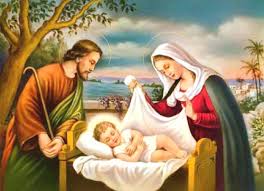
"There was a great light in the cave, so that the eyes of Joseph and the midwife could not bear it."  In all early Christian painters of the Nativity, the light is made to arise from the body of the infant, and the father and mother are often depicted with glories round their heads.

The moment Crishna was born, his mother became beautiful, and her form brilliant. The whole cave was splendidly illuminated, being filled with a heavenly light, and the countenances of his father and his mother emitted rays of glory

At the birth of Buddha, "the Saviour of the World," which, according to one account, took place in an inn, "a divine light diffused around his person,"  He was "heralded into the world by a supernatural light."

When Bacchus was born, a bright light shone round him, "there was a brilliant light in the cave."

When Apollo was born, a halo of serene light encircled his cradle,and girded a broad golden band around his form. 

When Saviour Æsculapius was born, his countenance shone like the sun, and he was surrounded by a fiery ray.

When Moses was born, a bright light appeared and shone around.

4  THE “WORD OF GOD” IS UNCERTAIN AS TO WHAT CITY MARY AND JOSEPH WERE LIVING BEFORE JESUS WAS BORN.

A   Nazareth.

26 In the sixth month of Elizabeth’s pregnancy, God sent the angel Gabriel to Nazareth, a town in Galilee, 27 to a virgin pledged to be married to a man named Joseph, a descendant of David.      Luke 1:26

4 So Joseph also went up from the town of Nazareth in Galilee to Judea, to Bethlehem the town of David, because he belonged to the house and line of David.     Luke 2:4

B  Bethlehem

2 Now when Jesus was born in Bethlehem of Judaea in the days of Herod the king, behold, there came wise men from the east to Jerusalem,     Matthew 2:1

16 Then Herod, when he saw that he was mocked of the wise men, was exceeding wroth, and sent forth, and slew all the children that were in Bethlehem, and in all the coasts thereof, from two years old and under, according to the time which he had diligently inquired of the wise men.    Matthew 2:16

anouncing Jesus birth


5  THE “WORD OF GOD” IS UNCERTAIN AS TO IF A ROMAN CENSUS AFFECTED JOSEPH AND MARY.

A   Yes. 

   Had to leave their home in Nazareth and go to Bethlehem.

2 (This was the first census that took place while Quirinius was governor of Syria.)

4 So Joseph also went up from the town of Nazareth in Galilee to Judea, to Bethlehem the town of David, because he belonged to the house and line of David.     Luke 2:2-4

B   No.  

   Already living in Bethlehem.  The wise men came to Bethlehem (the “star” led them).

2 Now when Jesus was born in Bethlehem of Judaea in the days of Herod the king, behold, there came wise men from the east to Jerusalem,      Matthew 2:1

Yet Matthew also says “he shall be a Nazarene.” Matthew 2:23.


56 THE “WORD OF GOD” IS UNCERTAIN AS TO HOW LONG MARY & JOSEPH LIVED IN BETHLEHEM.

A   Two years. 

   Herod gave orders to kill all boys in Bethlehem under the age of two because of what he had learned from the Magi.  They had to flee to Egypt.

16 When Herod realized that he had been outwitted by the Magi, he was furious, and he gave orders to kill all the boys in Bethlehem and its vicinity who were two years old and under, in accordance with the time he had learned from the Magi.     Matthew 2:16

B   Forty days. 

   Mary & Joseph were living in Nazareth and went to Bethlehem for the Roman census.

So when they had performed all things according to the law of the Lord, they returned to Galilee, their own city, Nazareth.   Luke 2:39

7  THE “WORD OF GOD” IS UNCERTAIN AS TO WHETHER MARY WAS REQUIRED TO TRAVEL TO JERUSALEM TO REGISTER FOR THE ROMAN CENSUS.

A   Yes.

4 So Joseph also went up from the town of Nazareth in Galilee to Judea, to Bethlehem the town of David, because he belonged to the house and line of David.

5 He went there to register with Mary, who was pledged to be married to him and was expecting a child.      Luke 2:4-5

B   No.

According to Roman Law. Joachem Heremias, Jerusalem in the Time of Jesus, pg 87

The deaf, insane, minors, neuters, hemaphrodites, women, slaves, the lame, the blind, the sick, the very old, and those who cannot walk up to the Temple Mount with their own feet, were exempt from the Roman census.


8  THE “WORD OF GOD” IS UNCERTAIN AS TO WHETHER JOSEPH WAS REQUIRED TO REGISTER FOR THE ROMAN CENSUS.

A   Yes.

1 In those days Caesar Augustus issued a decree that a census should be taken of the entire Roman world.

2 (This was the first census that took place while Quirinius was governor of Syria.) 3 And everyone went to their own town to register.     Luke 2:1-3

B   No.

According to Roman Law, the Roman census only applied to Roman provinces.  Nazareth was not in a Roman province.  It was a kingdom ruled by King Herod.  Further Roman censuses only applied to those who owned property.  Mary and Joseph had to stay in a manger.

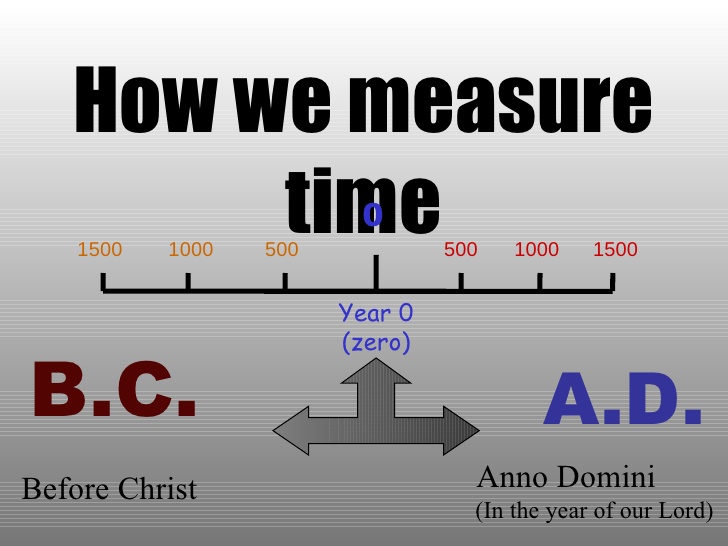
BC AD timeline


9  THE “WORD OF GOD” IS UNCERTAIN AS TO JESUS WHETHER JESUS WENT TO EGYPT OR NOT.

A  Yes.

When he arose he took the young child and his mother by night and departed into Egypt, and was there until the death of Herod. . . .

But when Herod was dead, . . . he took the young child and his mother and came . . . and dwelt in a city called Nazareth. (Matt. 2:14, 15, 19, 21, 23.)

B  No.

And when the days of her purification, according to the law of Moses, were accomplished, they brought him to Jerusalem, to present him to the Lord. . . . And when they had performed all things, according to the law of the Lord they returned . . . to their own city, Nazareth. (Luke 2:22, 39.)

Teaser Image
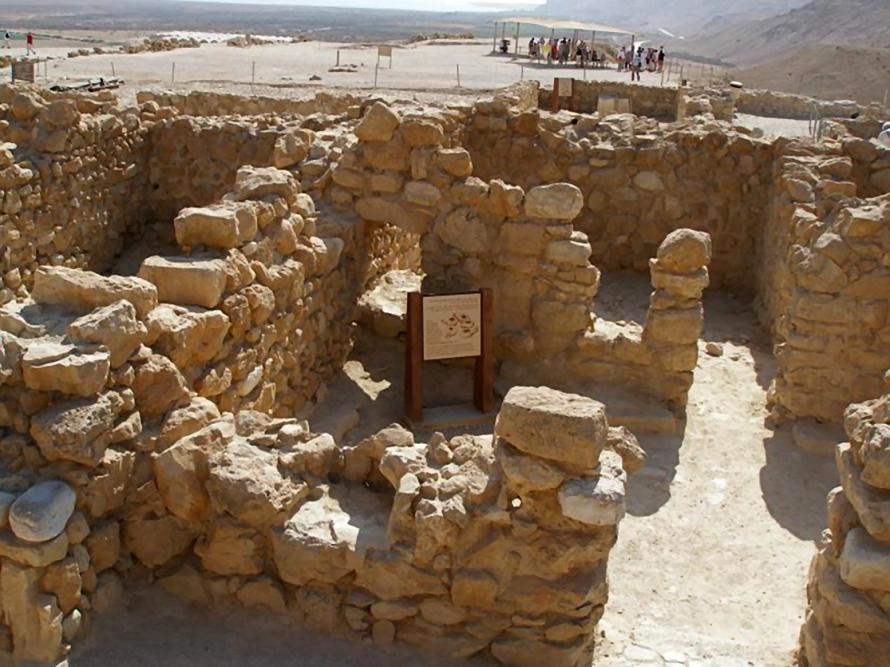
essenes

Essenes

Essenes


There was an ancient system known as Essenism – a religion whose origin has never been discovered, though it is known that the Essenes existed in the days of Jonathan Maccabeus, B.C.E. 1, and that they were of Jewish origin, and constituted one of the three Jewish sects (the other two being Pharisees and Sadducees). We have but fragments of their history as furnished by Philo, Josephus, Pliny, and their copyists, Eusebius, Dr. Ginsburg, and others, on whose authority show that Alexandrian and Judean Essenism was identically the same system in spirit and essence as its successor Judean Christianity; in other words, Judean Christianity teaches the same doctrines and moral precepts which had been previously inculcated by the disciples of the Essenian religion .

60 PARALLEL EXHIBITIONS OF THE PRECEPTS AND PRACTICAL LIVES OF CHRIST AND THE ESSENES.

From the writings of Philo, Josephus, and other authors.


1. Philo says, “It is our first duty to seek the kingdom of God and his righteousness;” so the Essenes believed and taught.

Scripture parallel.   “Seek first the kingdom of God, and his righteousness, and all else shall be added (Matt. 6:33: Luke 12:31.)


2. Philo says, “They abjured all amusements, all elegancies, and all pleasures of the senses.”

Scripture parallel.   “Forsake the world and the things thereof.”


3. The Essenes say, “Lay up nothing on earth, but fix your mind solely on heaven.”

Scripture parallel.   “Lay not up treasures on earth,” &c.


4. “The Essenes, having laid aside all the anxieties of life,” says Philo, “and leaving society, they make their residence in solitary wilds and in gardens.”

Scripture parallel.   “They wandered in deserts, and in mountains, and in dens, and in Caves of the earth.” (Heb. 11:38.)


5. Josephus says, “They neither buy nor sell among themselves, but give of what they have to him that wanteth.”

Scripture parallel.   “And parted them (their goods) to all men as every man had need.” (Acts 2:45.)


6. Eusebius says, “Even as it is related in the Acts of the Apostles, all (the Essenes) … were wont to sell their possessions and their substance, and divide among all according as any one had need, so that there was not one among them in want.”

Scripture parallel.   “Neither was there any among them that lacked, for as many as were possessors of lands or houses sold them, and brought the price of the things  that were sold, &c. (Acts 4:34.)


7· Eusebius says, “For whoever, of Christ’s disciples, were owners of estates or houses, sold them, and brought the price thereof, and laid them at the apostles’ feet, and distribution was made as every one had need. So Philo relates things exactly similar of the Essenes.”

Scripture parallel.   (The text above quoted.)


8. “Philo tells us (says Eusebius) that the Essenes forsook father, mother, brothers and sisters, houses and lands, for their religion.”

Scripture parallel.   “Whosoever forsaketh not father and mother, houses and lands, &c. cannot be my disciples.’’


9· “Their being sometimes called monks was owing to their abstraction from the world,” says Eusebius.

Scripture parallel.   “They are not of the world, even as I am not of the world.” (John 17:16.)


10. “And the name Ascetics was applied to them on account of their rigid discipline, their prayers, fasting, self mortification. &c., as they made themselves eunuchs.”

Scripture parallel.   “There be eunuchs which have made themselves eunuchs for the kingdom of heaven’s sake.”


11. “They maintained a perfect community of goods, and an equality of external rank.” (Mich. vol. iv. p. 83.)

Scripture parallel.   “Whosoever will be chief among you, let him be your servant.” (Matt. 20:27.)


12. “The Essenes had all things in common, and appointed one of their number to manage the common bag.” (Dr. Ginsburg.)

Scripture parallel.   “And had all things in common.” (Acts 2:44; see also Acts 4:32.)


13. “All ornamental dress they (Essenes) detested.” (Mich. vol. iv. p. 83.)

Scripture parallel.   “Whose adorning let it not be that outward adorning of plaiting the hair, and of wearing of gold, and putting on of apparel.” ( 1 Peter 3:3)


14. “They would call no man master.” (Mich.)

Scripture parallel.   “Be not called Rabbi, for one is your Master.” (Matt. 23:8.)


15. “They said the Creator made all mankind equal.” (Mich.)

Scripture parallel.   “God hath made of one blood all them that dwell upon the earth.”


16. “They renounced oaths, saying, He who cannot be believed without swearing is condemned already.” (Mich.)

Scripture parallel.   “Swear not at all.”


17. “They would not eat anything which had blood in it, or meat which had been offered to idols. Their food was hyssop, and bread., and salt ; and water their only drink.” (Mich.)

Scripture parallel.   “That ye abstain from meat offered to idols, and from blood.” (Acts 15:29.)


18. “Take nothing with them, neither meat or drink, nor anything necessary for the wants of the body.”

Scripture parallel.   “Take nothing for your journey; neither staves nor script; neither bread, neither money, neither have two coats apiece.”


19. “They expounded the literal sense of the Holy Scriptures by allegory.” .

Scripture parallel.   “Which things are an allegory.” (Gal. 4:24.)


20. “They abjured the pleasures of the body, not desiring mortal offspring, and they renounced marriage, believing it to be detrimental to a holy life.” (Mich.)

Scripture parallel.   It will be recollected that neither Jesus nor Paul ever married, and that they discouraged the marriage relation.

Christ says, “They that shall be counted worthy of that world and the resurrection neither marry nor are given in marriage.” And Paul says, “The unmarried careth for the things of the Lord.” (1 Cor. 7:32.)


21. “They strove to disengage their minds entirely from the world.”

Scripture parallel.   “If any man love the world, the love of the Father is not in him.”


22. “Devoting themselves to the Lord, they provide not for future subsistence.”

Scripture parallel.   “Take no thought for the morrow what ye shalt eat and drink,” &c.


23. “Regarding the body as a prison, they were ashamed to give it sustenance.” (c. ii. 71.)

Scripture parallel.   “Who shall change our vile bodies?” (Phil. 3:21.)


24. ‘’They spent nearly all their time in silent meditation and inward prayer.” (c. ii. 71.)

Scripture parallel.   “Men ought always to pray.” (Luke 18:1.) “Pray without ceasing.” (1 Thess. 5:17.)


25. “Believing the poor were the Lord’s favorites they vowed perpetual chastity and poverty.” (c. ii. 71.)

Scripture parallel.   “Blessed be ye poor.” (Luke 6:20.) “Hath not God chosen the poor?” (James 2:5)


26. “They devoted themselves entirely to contemplation in divine things.” (c. ii. 71.)

Scripture parallel.   “Mediate upon these (divine) things; give thyself wholly to them.” (I Tim. 4:15)


27. ‘’They fasted often, sometimes tasting food but once in three or even six days.”

Scripture parallel.   Christ’s disciples were “in fastings often.” (2 Cor. 11:27; see also 5:34)


28. “They offered no sacrifices, believing that a serious and devout soul was most acceptable.” (c. ii. 71.)

Scripture parallel.   “There is no more offering for sin.” (Heb. 10:18)


29. “They believed in and practiced baptizing the dead.” (c. ii. 7 1.)

Scripture parallel.   “Else what shall they do which are baptized for the dead.” (I Cor. 15:29)


30. “They gave a mystical sense to the Scriptures, disregarding the letter:”

Scripture parallel.   “The letter killeth, but the spirit maketh alive.” (1 Cor. 3:6.).


31. “They taught by metaphors, symbols, and parables.”

Scripture parallel.   “Without a parable spake be not unto them.” (Matt. 13:34.)


32. “They had many mysteries in their religion which they were sworn to keep secret.”

Scripture parallel.   “To you it is given to know the mysteries of the kingdom; to them it is not given.” (Matt. 13:11.) “Great is the mystery of godliness.”


33. “They had in their churches, bishops, elders, deacons, and priests.’;

Scripture parallel.   “Ordained elders in every church.” (Acts 14:23.) For ”deacons,” see 1 Tim. 3:1.


34. “When assembled together they would often sing psalms.”

Scripture parallel.   .. Teaching and admonishing one another in psalms.” (Col. 3:16.)


35. “They healed and cured the minds and bodies of those who joined them.”

Scripture parallel.   “Healing· all manner of sickness,” &c. (Matt. 4:23.)


36. “They practiced certain ceremonial purifications by water.”

Scripture parallel.   “The accompishment of the days of purification.” (Acts 21:26.)


37· “They assembled at the Sabbath festivals clothed in white garments.”

Scripture parallel.    “ Shall ‘be clothed in white garments.” (Rev. 3:4.)


38. “They disbelieved in the resurrection of the external body.”

Scripture parallel.   “It is sown a natural body, it is raised a spiritual body.” (I Cor. 15:44.)


39. Pliny says,·” They were the only sort of men who lived without money and without women.”

Scripture parallel.   “ The love of money is the root of all evil.” ( 1 Tim. 6:10.)  Christ’s disciples .travelled without money and without scrip, and “eschew the lusts of the flesh.”


40. “They practiced the extremest charity to the poor.” (c. ii. 71,)

Scripture parallel.   “Bestow all thy goods to feed the poor.” · (1 Cor. 13:3)


41. “They were skillful’ in interpreting dreams, and in foretelling future events.”

Scripture parallel.   “Your sons and daughters shall prophesy, and your old men shall dream dreams.” (Acts 2:17.)


42. cc They believed in a paradise, … and in a place of never-ending lamentations.”

Scripture parallel.   “Life everlasting.” (Gal. 8:8.) “Weeping, wailing, and gnashing of teeth.” (Matt. 8:42.)


43. “They affirmed,” says . Josephus, “that God fore· ordained all the events of human life.”

Scripture parallel.   “Foreordained before the foundation of the world.” (1 Peter.)


44. They believed in Mediators between God and the souls of men.”

Scripture parallel.   “ One Mediator between God and men.” (1 Tim. 2:5.)


45. “They practiced the pantomimic representation of the death, burial, and resurrection of God “- Christ the Spirit.

Scripture parallel.   With respect to the death, burial, and resurrection of Christ, see 1 Cor. 15:4·


46. “They inculcated the forgiveness of injuries.”

Scripture parallel.   “Father, forgive them; for they know not what they do.” (Luke 23:34.)


47· “They totally disapproved of all war.”

Scripture parallel.   “ If my kingdom were of this world, then would my servants fight.” (John 18:36.)


48. “ They inculcated obedience to magistrates, and to the civil authorities.”

Scripture parallel.   “Obey them which have the rule over you.” (Heb. 8:17; 26:65.)


49. ”They retired within themselves to receive interior revelations of divine truth.” (c. ii. 71.)

Scripture parallel.    “Every one of you hath a revelation.” (1 Cor. 14:26.)


50. “They were scrupulous in speaking the truth.”

Scripture parallel.   “Speaking all things in truth.” (2 Cor. 7: 14.)


51. “They perform many wonderful miracles.”

Scripture parallel.   Many texts teach us that Christ and his apostles did the same.


52. “Essenism put all its members upon the same level, forbidding the exercise of authority of one over another.” (Dr. Ginsburg.)

Scripture parallel.    Christ did the same. For proof, see Matt. 20:2s; Mark 9:35·


53. “ Essenism laid the greatest stress on being meek and lowly in spirit.” (Dr. Ginsburg.)

Scripture parallel.    See Matt. 5:5; 9:28.


54. “The Essenes commended the poor in spirit,· those who hunger and thirst after righteousness, and the merciful, and the pure in heart.” (Dr Ginsburg.)

Scripture parallel.    For proof that Christ did the same, see Matt.


55· 11 The Essenes commended the peacemakers.” (Dr. Ginsburg.)

Scripture parallel.    “Blessed are the peacemakers.”


56. “The Essenes declared their disciples must cast out evil spirits, and perform miraculous cures, as signs and proof of their faith.” (Dr. Ginsburg.)

Scripture parallel.    Christ’s disciples were to cast out devils, heal the sick, and raise the dead, &c., as signs and proof of their faith. (Mark 16:17.)


57. “They sacrificed the lusts of the flesh to gain spiritual happiness.”

Scripture parallel.    “You abstain from fleshly lusts.” (1 Peter 2:11.)


58. “The breaking of bread was a veritable ordinance among the Essenes.”

Scripture parallel.    “He (Jesus) took bread, .and gave thanks, and brake it.” (Luke 22:19.)


59. 11 The Essenes enjoined the loving of enemies.’’ (Philo.)

Scripture parallel.    So did Christ say, “Love your enemies,” &c.


60. The Essenes enjoined, “Doing unto others as you would have them do unto you.”

Scripture parallel.    So did Christ say,

Teaser Image
alt

Holy Ghost

Holy Ghost

Holy Ghost

Holy Ghost’s Many Varied Characteristics

The Holy Ghost,  the third member of the tri-union God,  appears to be anything anyone wants it to be.

1. In John 14:26, the Holy Ghost is spoken of as a person or personal God.

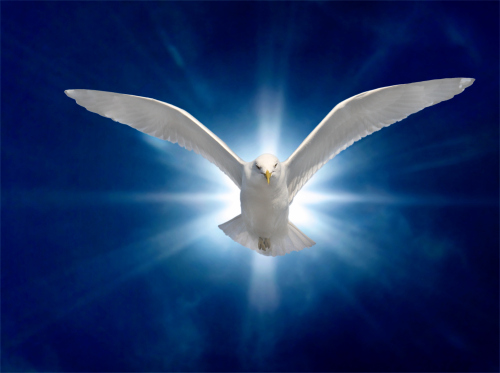
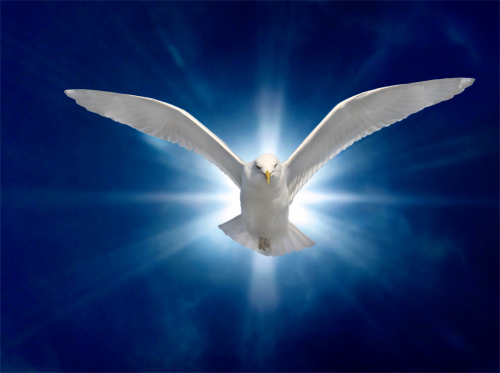
2. In Luke 3:22, the Holy Ghost changes, and assumes the form of a dove.

3. In Matt. 8:16, the Holy Ghost becomes a spirit.

4. In John 1:32, the Holy Ghost is presented as an inanimate, senseless object.

5. In John 5:7, the Holy Ghost becomes a God – the third member of the Trinity.

6. In Acts 2:1, the Holy Ghost is averred to be “a mighty, rushing wind.”

7· In Acts 10:38, the Holy Ghost, we infer, from its mode of application, is an ointment.

8. In John 20:22, the Holy Ghost is the breath, as we legitimately infer ‘by its being breathed into the mouth of the recipient after the ancient oriental custom.

9. In Acts 2:3, we learn the Holy Ghost “sat upon each of them,” probably in the form of a bird, as at Jesus’ baptism.

10. In Acts 2:1, the Holy Ghost appears as “cloven tongues of fire.”

11. In Luke 2:26, the Holy Ghost is the author of a revelation or inspiration.

12. In ACts 8:17, the Holy Ghost is a magnetic aura imparted by the “laying on of hands.”

13. In Mark 1:8, the Holy Ghost is a medium or element for baptism.

14. In Acts 28:25, the Holy Ghost appears with vocal organs, and speaks.

15. In Heb. 6:4, the Holy Ghost is dealt out or imparted by measure.

16. In Luke 3:22, the Holy Ghost appears with a tangible body.

17. In Luke 1:5, and many other texts, we are taught people are filled with the Holy Ghost.

18. In Matt. 6:15, the Holy Ghost falls upon the people as a ponderable substance.

19. In Luke 4:1, the Holy Ghost is a God within a God -”Jesus being full of the Holy Ghost.” ‘

20. In Acts 21:1 I, the Holy Ghost is a being of the masculine or feminine gender-·’ Thus saith the Holy Ghost,” etc.

21. In John 1:32, the Holy Ghost is of the neuter gender – ”It (the Holy Ghost) abode upon him.”

22. In Matt. 1:18, the Holy Ghost becomes a vicarious agent in the procreation of another God, that is, this third member of the Trinity aids the first member (the Father) in the creation or generation of the second member of the triad of bachelor Gods-the Lord, or Savior, or Son of God.

The Ghost Teaches & Reminds

But the Counselor, the Holy Spirit, whom the Father will send in my name, will teach you all things and will remind you of everything I have said to you. (NIV)    John 14:26

The Ghost Testifies of Christ:

When the Counselor comes, whom I will send to you from the Father, the Spirit of truth who goes out from the Father, he will testify about me. (NIV)   John 15:26

The Ghost Convicts:

When he comes, he will convict the world of guilt [Or will expose the guilt of the world] in regard to sin and righteousness and judgment: (NIV)   John 16:8

The Ghost Leads:

Because those who are led by the Spirit of God are sons of God. (NIV)     Romans 8:14

The Ghost  Reveals Truth:

But when he, the Spirit of truth, comes, he will guide you into all truth. He will not speak on his own; he will speak only what he hears, and he will tell you what is yet to come. (NIV)    John 16:13

The Ghost  Strengthens and Encourages:

Then the church throughout Judea, Galilee and Samaria enjoyed a time of peace. It was strengthened; and encouraged by the Holy Spirit, it grew in numbers, living in the fear of the Lord. (NIV)    Acts 9:31

The Ghost Comforts:

And I will pray the Father, and he shall give you another Comforter, that he may abide with you for ever; (KJV)    John 14:16

The Ghost Helps Us in our Weakness:

In the same way, the Spirit helps us in our weakness. We do not know what we ought to pray for, but the Spirit himself intercedes for us with groans that words cannot express. (NIV)    Romans 8:26

The Ghost Intercedes:

In the same way, the Spirit helps us in our weakness. We do not know what we ought to pray for, but the Spirit himself intercedes for us with groans that words cannot express. (NIV)   Romans 8:26

The Ghost Searches the Deep Things of God:

The Spirit searches all things, even the deep things of God. For who among men knows the thoughts of a man except the man’s spirit within him? In the same way no one knows the thoughts of God except the Spirit of God. (NIV)   1 Corinthians 2:11

The Ghost Sanctifies:

To be a minister of Christ Jesus to the Gentiles with the priestly duty of proclaiming the gospel of God, so that the Gentiles might become an offering acceptable to God, sanctified by the Holy Spirit. (NIV)    Romans 15:16

The Ghost Bears Witness or Testifies:

The Spirit itself beareth witness with our spirit, that we are the children of God: (KJV)    Romans 8:16

The Ghost Forbids:

Paul and his companions traveled throughout the region of Phrygia and Galatia, having been kept by the Holy Spirit from preaching the word in the province of Asia. When they came to the border of Mysia, they tried to enter Bithynia, but the Spirit of Jesus would not allow them to. (NIV)    Acts 16:6-7

The Ghost Can be Lied to:

Then Peter said, “Ananias, how is it that Satan has so filled your heart that you have lied to the Holy Spirit and have kept for yourself some of the money you received for the land? (NIV)    Acts 5:3

The Ghost Can be Resisted:

“You stiff-necked people, with uncircumcised hearts and ears! You are just like your fathers: You always resist the Holy Spirit!” (NIV)    Acts 7:51

The Ghost Can be Blasphemed:

And so I tell you, every sin and blasphemy will be forgiven men, but the blasphemy against the Spirit will not be forgiven. Anyone who speaks a word against the Son of Man will be forgiven, but anyone who speaks against the Holy Spirit will not be forgiven, either in this age or in the age to come. (NIV)   Matthew 12:31-32

The Ghost Can be Quenched:

1 Thessalonians 5:19

The Holy Spirit has a Mind:

And he who searches our hearts knows the mind of the Spirit, because the Spirit intercedes for the saints in accordance with God’s will. (NIV)   Romans 8:27

The Holy Spirit has a Will:

But one and the same Spirit works all these things, distributing to each one individually just as He wills. (NASB)   1 Corinthians 12:11

The Holy Spirit has Emotions:

The Holy Spirit grieves:

Yet they rebelled and grieved his Holy Spirit. So he turned and became their enemy and he himself fought against them. (NIV)   Isaiah 63:10

The Holy Ghost gives Joy:

At that time Jesus, full of joy through the Holy Spirit, said, “I praise you, Father, Lord of heaven and earth, because you have hidden these things from the wise and learned, and revealed them to little children. Yes, Father, for this was your good pleasure.” (NIV)    Luke 10: 21


You became imitators of us and of the Lord; in spite of severe suffering, you welcomed the message with the joy given by the Holy Spirit.    1 Thessalonians 1:6

Holt GhostHoly Ghost Smoke

The Dove

1. The Holy Ghost in the shape of a bird, a dove or a pigeon. This is proven to be a very ancient pagan tradition, as it is found incorporated in several of the oriental religious systems. In ancient India, whose prolific spiritual fancies constitute the primary parentage of nearly all the doctrines, dogmas and superstitions found incorporated in the Christian Scriptures, a dove was uniformly the emblem of the Holy Spirit, or Spirit of God. Confirmatory of this statement, we find the declaration in the Anacalypsis, that a “dove stood for or represented a third member of the Trinity, and was the regenerator or regeneratory power.”

This meets the Christian idea of “ regeneration and renewing of the Holy Ghost” (Titus 3:5).  A person being baptized under the Brahminical theocracy was said to be regenerated and “born again,” or, as the above-quoted writer expresses it, “They were born into the spirit, or the spirit into them” — that is, the “dove into or upon them,” as is the case of the Christian’s “Holy Ghost descending in bodily shape like a dove,” and alighting on Christ’s head at baptism, as related in Luke 3:22.  In ancient Rome a dove or pigeon was the emblem of the female procreative energy, and frequently a legendary spirit, the accompaniment of Venus.  And hence, as a writer remarks, “It is very appropriately represented as descending at baptism in the character of the third member of the Trinity.”  The same writer tells us, “The dove fills the Grecian oracles with their spirit and power.”  We find the dove, also, in the romantic eclogues of ancient Syria.  In the time-chiseled Syrian temple of Hierapolis, Semiramis is represented with a dove on her head, thus constituting the prototype of the dove on the head of the Christian Savior at baptism.

And a dove was in more than one of the ancient religious systems- “ The Spirit of God (Holy Ghost) moving on the face of the waters” at creation, as implied in Gen. 1:2, though a pigeon, was often indiscriminately substituted.  In Howe’s “Ancient Mysteries” it is related that “in St. Paul’s Cathedral, at the feast of Whitesuntide, the descent of the Holy Ghost was performed by a white pigeon being let fly out of a hole in the midst of the roof of the great aisle.”  The dove and the pigeon, being but slight variations of the same species of the feathered tribe, were used indiscriminately.

holy spirit dove

Dove

Among birds the dove was specially sacred to her [Ishtar (ISTAR): Mesopotamian. "Goddess of fertility and war. " Known period of worship = 2500 B.C.E.  to  200 C.E.


 It is figured with her on seals.

The Third Person

2. The Holy Ghost was the third member of the Trinity in several of the oriental systems.  Father, Son and Holy Ghost, or Father, Word and Holy Ghost (1 John 5:7), are familiar Christian terms to express the divine triad, which shows the Holy Ghost to be the acknowledged third member of the Christian Trinity.

And, as already suggested, the same is· true of the more ancient systems.  “The Holy Spirit and the Evil Spirit were, each in their turn (says Mr. Higgins), third member of the Trinity.”  In these triads (says Mr. Hillell) the third member was not of equal rank with the other two.”  And hence, in the Theban Trinity, Khonso was inferior to Arion and Mant.  In the Hindoo triad, Siva was subordinate to Brahma and Vishnu.  And a score of similar examples might be adduced from the fancy-constructed trinities of other and older oriental religious systems (but for the inflexible rule of brevity which forbids their presentation here), with all of which the more modern Holy Ghost conception of the Christian world is an exact correspondence, as this imaginary, fabulous being is less conspicuous than and has always stood third in rank with the Father and second to the Son, AKA as the Word, and is now seldom addressed in practical Christian devotion ; and thus the analogy is complete. Mr. Maurice says, “This notion of a third person in the Deity (the Holy Ghost) was diffused among all the nations of the earth.” See Ind. Antiq. vol. iv. p. 750.) And Mr. Worseley, in his “Voyage” (vol. i. p. 259), avers this doctrine to be “of very great antiquity, and generally received by all the Gothic and Celtic nations.”

The Holy Breath

3· The Holy Ghost was the Holy Breath which, in· the Hindoo traditions, moved on the face of the waters at creation, and imparted life and vitality into everything created. A similar conception is recognized in .the Christian Scriptures. In Psalms 33:6, we read, “By the Word of the Lord were the heavens made, and all the host of them by the breath of his mouth.” Here is the Brahminical conception of the act of creation by the Divine Breath, which is the Holy Ghost, the same, also, which was breathed into Adam, by which be became “a living soul.”  M. Dubois observes,  The Prana, or principle of life, of the Hindoos is the breath of life by which “the Creator (Brahma) animates the clay, and man became a living soul.” (Page 293.)

The Holy Wind

4· Holy Ghost, Holy Breath and Holy Wind appear to have been synonymous and convertible terms for the living vocal emanations from the mouth of the Supreme God, as memorialized in’ several of the pagan traditions. The last term (Holy Wind) is suggested by” the mighty rushing wind from heaven” which filled the house, or church, on the day of Pentecost (See Acts 2:2).  Several of the old religious systems recognize “ the Holy Wind “ as a term for the Holy Ghost. The doxology (reported by a missionary) in the religious service of the Syrian worship runs thus:

“ Praise to the Holy Spiritual Wind, which is the Holy Ghost; Praise to the three persons which are one true God.”

Some writers maintain that the Hebrew Ruah Elohim translated “Spirit of God” (Gen. 1:2) in our version, should read, “Wind of the Gods.” And we find that the word pneuma, of our Greek New Testament, is sometimes translated “Ghost “ and sometimes “Wind,” as best suited the fancy of the translators. In John 3:5, we find the word Spirit, and . in verse eight both Wind and Spirit are found; and in Luke 1:35, we observe the term Holy Ghost -all translated from the same word.  Let it be specially noted that in the Greek Testament the word pneuma is used in all these cases, thus proving that Spirit, Holy Ghost and Wind are used in the Christian Scriptures as synonymous terms; and proving, also, that an unwarranted license has been assumed by translators in rendering the same word three different ways.  M. Auvaroff, in his “Essays on the Eleusinian Mysteries,” speaks of “the torch being ignited at the command of Hermes of Egypt, the spiritual agent in the workshop of creation; ”relative to which statement a writer remarks, cc Hermes appears in this instance as a personification of Wind or Spirit, as in the bible (meaning the Christian bible), God, Wind and Spirit are often interchangeable terms, and the Word appears to be from the same windy source.”

The Holy Tongue

5· The Holy Ghost as “a tongue of fire, which sat upon each of them” (the apostles)(See Acts. 2:3).  Even this conception is an orientalism. Mr. Higgins tells us that” Budha, an incarnate God of the Hindoos (three thousand years ago), is often seen with a glory or tongue of fire upon his head.” And the tradition of the visible manifestation of the Holy Ghost by fire was prevalent among the ancient Budhisls, Celts, Druids and Etrurians. In fact, as our author truly remarks, “The Holy Ghost, or Holy Spirit, when visible, was always in the form of fire (or a bird), and was always accompanied with wisdom and power.”

Hence, is disclosed the origin of the ancient custom amongst the Hindoos, Persians and Chaldeans of making offerings to the solar fire, emblem of the Holy Ghost or Holy Spirit.

The Holy Inspiration

6. Inspiration by the Holy Ghost. (Luke 2:26.) “Holy men of God,” including some of the prophets, are claimed to have been inspired by the Holy Ghost. (See 2 Peter 1:21; Acts 28:25). In like manner, as we are informed by Mr. Cleland in his “Specimens” the ancient Celts were not only “moved by the Holy Ghost” in their divine decrees and prophetic utterances, but they claimed that their Salic laws (seventy-two in number) were inspired by the ”Salo Ghost” (Holy Ghost), known also as “the Wisdom of the Spirit, or the Voice of the Spirit.”

This author several times alludes to the fact, and exhibits the proof, that the doctrine of the Holy Ghost was known to this ancient people.

The Laying on of Hands

7. The Holy Ghost imparted by “the laying on of hands.’’  This, too, is an ancient oriental custom. “And by the imposition of hands’ on the head of the candidate,” says Mr. Cleland, speaking of the Celts, “the Holy Ghost, or Holy Spirit, was conveyed.” And thus was the Holy Spirit, Ghost, Gas, Wind, Electrical Fire or Spirit of Authority imparted to the hierophant or gospel novitiate. “ And their public assemblies,” continues our author, “were always opened by an invocation to the Holy Ghost.”

The Ghost Baptism

8. Baptism by or into the Holy Ghost accompanied with fire (Matt. 3:11).  This rite, too, is traceable to a very ancient period, and was practiced by several of the old symbolical and mythological systems. The Tuscans, or Etrurians, baptized with fire, wind (ghost) and water. Baptism into the first member of the Trinity (the Father) was with fire; baptism into the second member of the Trinity (the Word) was with water; while baptism into the third member of the Trinity (the Holy Ghost, or Holy Spirit) consisted of the initiatory spiritual or symbolical application of gas, gust, ghost, wind, or spirit. It appears from “ Herbert’s Travels,” that, in “ancient countries, the child was taken to the priest, who named him (christened him) before the sacred fire:” after which ceremony he was sprinkled with “holy water” from a vessel made of the Sacred tree known as ”The Holme.’’

The Breathing

9. The Holy Ghost imparted by breathing (John 20:22).  “Sometimes,” says scholar writer Mr. Higgins, relative to this custom among the ancient heathen, “the priest blew his breath upon the child, which was then considered baptized by air, spiritus sanctus, or holy ghost -i.e., baptism by the Holy Ghost!’

In case of baptism, a portion of the Holy Ghost was supposed to be transferred from the priest to the candidate. “The practice of breathing in or upon,” says Higgins, “was quite common among the ancient heathen.”

The Holy Conception

10. The Holy Ghost as the agent in divine conception, or  the procreation of other Gods.  Jesus is said to have been conceived by the Holy Ghost (see Matt. 1:18); and we find similar claims instituted still more anciently for other incarnate demigods.  In the Mexican Trinity, Y, Zona was the father, Bacal the Word, and Echvah the Holy Ghost, by the last of whom Chimalman conceived and brought forth the in the flesh God Quexalcote. (Mex. Ant., vol. vi. pg 165o.)  In the Hindoo mythos, Sakia was conceived by the Holy Ghost Nara-an.

When was the “Holy Spirit” bestowed???

THE HOLY SPIRIT (GOD):

FIRST APPEARANCE AFTER RESURRECTION

God said in his word – Jesus gave the Holy Spirit (Holy Spirit-God) to the disciples in his first appearance to them after the resurrection

 And with that he breathed on them and said, “Receive the Holy Spirit.     John 20:22

AFTER JESUS LEFT

God said – It did not come to them until after Jesus left

By this he meant the Spirit, whom those who believed in him were later to receive. Up to that time the Spirit had not been given, since Jesus had not yet been glorified.     John 7:39

But very truly I tell you, it is for your good that I am going away. Unless I go away, the Advocate will not come to you; but if I go, I will send him to you.     John 16:7

After his suffering, he presented himself to them and gave many convincing proofs that he was alive. He appeared to them over a period of forty days and spoke about the kingdom of God. 4 On one occasion, while he was eating with them, he gave them this command: “Do not leave Jerusalem, but wait for the gift my Father promised, which you have heard me speak about. 5 For John baptized with water, but in a few days you will be baptized with the Holy Spirit.”     Acts 1:3-5

When the day of Pentecost came, they were all together in one place.2 Suddenly a sound like the blowing of a violent wind came from heaven and filled the whole house where they were sitting. 3 They saw what seemed to be tongues of fire that separated and came to rest on each of them. 4 All of them were filled with the Holy Spirit and began to speak in other tongues as the Spirit enabled them.     Acts 2:1-4

BEFORE

God said – But some had it before:

John the Baptist

for he will be great in the sight of the Lord. He is never to take wine or other fermented drink, and he will be filled with the Holy Spirit even before he is born.     Luke 1:15

David

For David himself said by the Holy Ghost, The LORD said to my Lord, Sit thou on my right hand, till I make thine enemies thy footstool.     Mark 12:36

… which the Holy Ghost by the mouth of David spake….      Acts 1:16

Elizabeth

When Elizabeth heard Mary’s greeting, the baby leaped in her womb, and Elizabeth was filled with the Holy Spirit.    Luke 1:41

Zechariah

His father Zechariah was filled with the Holy Spirit and prophesied:    Luke 1:67

Simeon

Now there was a man in Jerusalem called Simeon, who was righteous and devout. He was waiting for the consolation of Israel, and the Holy Spirit was on him.     Luke 2:25

Gideon

Then the Spirit of the Lord came on Gideon, and he blew a trumpet,summoning the Abiezrites to follow him.    Judg 6:34

Samson

and the Spirit of the Lord began to stir him while he was in Mahaneh Dan, between Zorah and

Eshtaol

     Judg 13:25

Isaiah

The Spirit of the Sovereign Lord is on me,
because the Lord has anointed me
to proclaim good news to the poor.
He has sent me to bind up the brokenhearted,
to proclaim freedom for the captives
and release from darkness for the prisoners       Isa 61:1

HOW DO YOU ACQUIRE THE HOLY SPIRIT?

WHENEVER YOU ASK IT

God said – It is had for the asking at any time

If you then, though you are evil, know how to give good gifts to your children, how much more will your Father in heaven give the Holy Spirit to those who ask him!”    Luke 11:13

Jesus PrayingJesus-God praying to the Holy Ghost-God

EVERYONE HAS IT

God said – All flesh has it
Repent at my rebuke!
Then I will pour out my thoughts to you,
I will make known to you my teachings.    Prov 1:23

“And afterward,
I will pour out my Spirit on all people.
Your sons and daughters will prophesy,
your old men will dream dreams,
your young men will see visions.Joel 2:28

Unpardonable Sin

28  “I promise you that any of the sinful things you say or do can be forgiven, no matter how terrible those things are.

29  But if you speak against the Holy Spirit, you can never be forgiven. That sin will be held against you forever.”    Mark 3:28-29

“And I tell you, every sin and blasphemy will be forgiven men, but the blasphemy against the Spirit will not be forgiven. Anyone who speaks a word against the Son of Man will be forgiven, but anyone who speaks against the Holy Spirit will not be forgiven, either in this age or in the age to come.”   Matthew 12:31-32.

But then this?

Through him everyone who believes is justified from everything . . .    Acts 13:39

Just speaking “against the Holy Spirit” and your sin will be held against you “forever.”    Seems lacking as to what act constitutes the ultimate sin.  This edict is very vague yet has such a grave and condemned punishment of being unforgiveable.  The Holy Ghost is associated with baptism and a renewal of the person.  To sin against this God is to have no way available to retry.  With the first God the Father and the Second God the Son there is forgiveness available to try again.  But with the third God there is no avenue of forgiveness.  The Holy Ghost is the scaffold that reaches to heaven.  So even if the first and second Gods forgave you and even if you were baptized, because you committed the unpardonable sin the third God would be against you blocking your way to heaven.

I’m sure there are countless Christians who have agonized about this unforgivable sin because it is undefined and unexplained.  This is the ultimate fear tactic to gain control of the followers mind through their vivid imagination of what bad thing will happen to them at their death.