discover how our capabilities can improve your business
Teaser Image
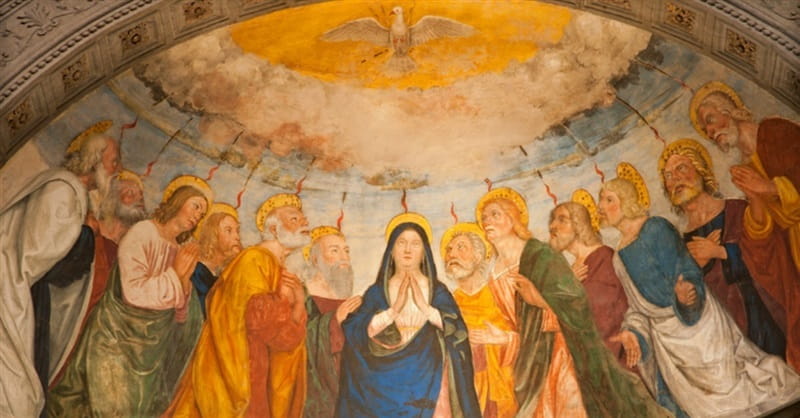
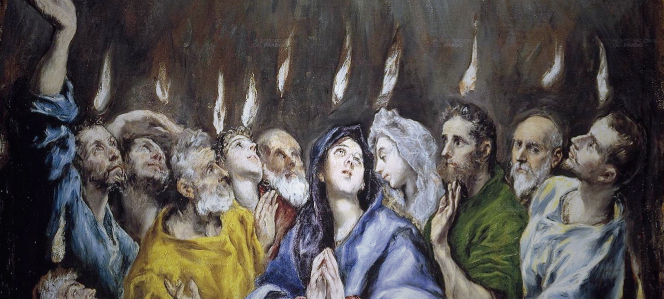
pentecost

Pentecost

Pentecost

pentecost

When was the Holy Ghost given?

After the Pentecost of Jesus

The Holy Ghost was not yet given; because that Jesus was not yet glorified.     John 7:39

 And when he had said this, he breathed on them, and saith unto them, Receive ye the Holy Ghost.     John 20:22

And when the day of Pentecost was fully come, they were all with one accord in one place. And suddenly there came a sound from heaven as of a rushing mighty wind, and it filled all the house where they were sitting. And there appeared unto them cloven tongues like as of fire, and it sat upon each of them. And they were all filled with the Holy Ghost, and began to speak with other tongues, as the Spirit gave them utterance.     Acts 2:1-4

Before resurrection of Jesus

For David himself said by the Holy Ghost, The LORD said to my Lord, Sit thou on my right hand, till I make thine enemies thy footstool.      Mark 12:36

He [John the Baptist] shall be filled with the Holy Ghost, even from his mother's womb.     Luke 1:15

Elisabeth was filled with the Holy Ghost.      Luke 1:41

Zacharias was filled with the Holy Ghost.      Luke 1:67

And, behold, there was a man in Jerusalem, whose name was Simeon; and the same man was just and devout, waiting for the consolation of Israel: and the Holy Ghost was upon him.      Luke 2:25

... which the Holy Ghost by the mouth of David spake....      Acts 1:16

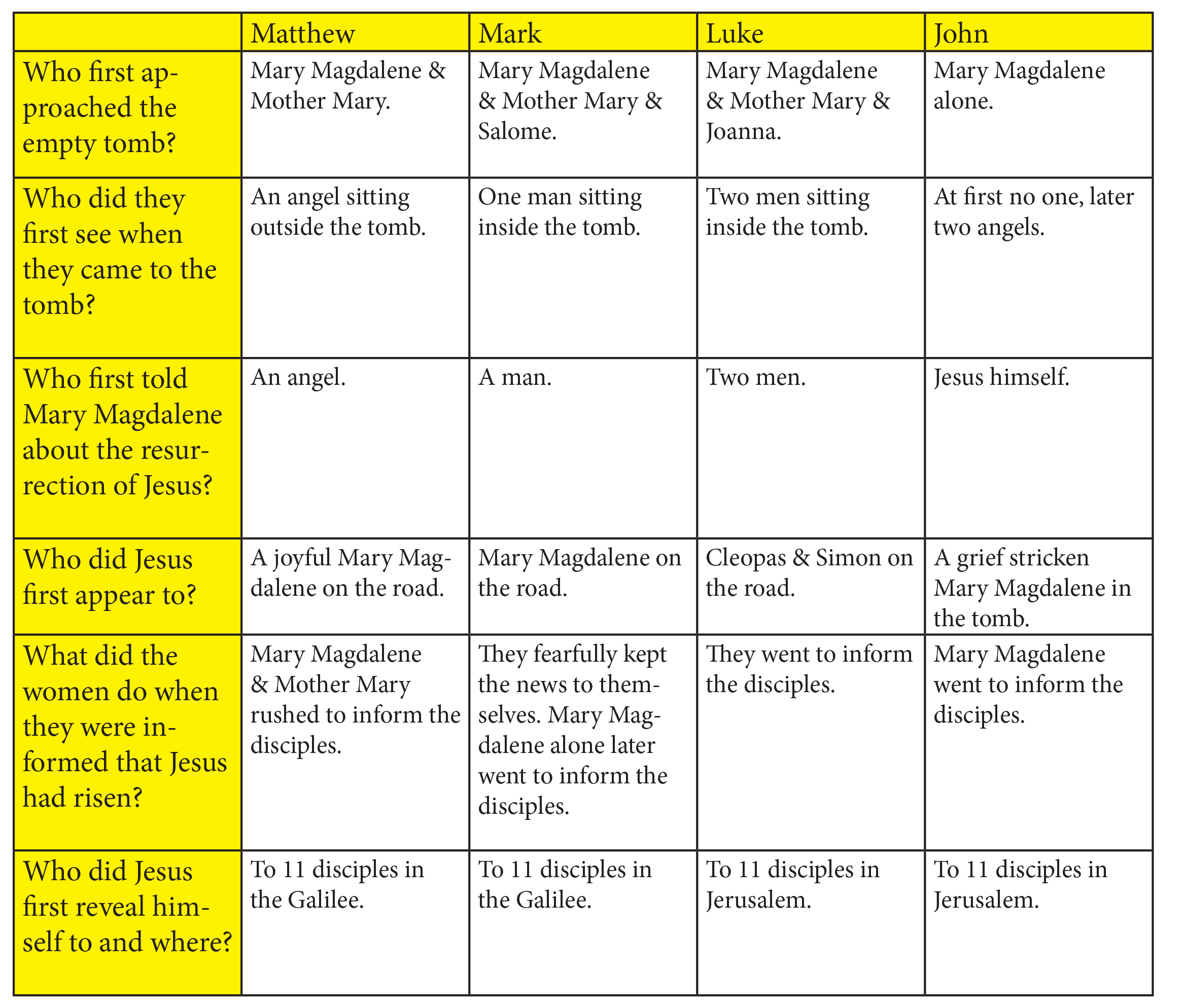
Where did Jesus first appear to the eleven disciples after the resurrection?

On a mountain top in Galilee.

Then the eleven disciples went away into Galilee, into a mountain where Jesus had appointed them. When they saw him, they worshiped him; but some doubted.        Matthew 28:16-17

In a room in Jerusalem.

Afterward he appeared unto the eleven as they sat at meat, and upbraided them with their unbelief and hardness of heart, because they believed not them which had seen him after he was risen.      Mark 16:14

And they rose up the same hour, and returned to Jerusalem, and found the eleven gathered together, and them that were with them, Saying, The Lord is risen indeed, and hath appeared to Simon. And they told what things were done in the way, and how he was known of them in breaking of bread. And as they thus spake, Jesus himself stood in the midst of them, and saith unto them, Peace be unto you.      Luke 24:33-37

Then the same day at evening, being the first day of the week, when the doors were shut where the disciples were assembled for fear of the Jews, came Jesus and stood in the midst, and saith unto them, Peace be unto you.      John 20:19

Were the disciples frightened or glad when they saw Jesus?

 They were frightened when they saw him.

But they were terrified and affrighted, and supposed that they had seen a spirit. Luke 24:37

They were gladdened.

Then were the disciples glad, when they saw the LORD. John 20:20

Did the eleven disciples believe the two men who claimed to see Jesus?

Yes, since he had already appeared to Simon.

And they rose up the same hour, and returned to Jerusalem, and found the eleven gathered together, and them that were with them, Saying, The Lord is risen indeed, and hath appeared to Simon. Luke 24:33-34

No.

After that he appeared in another form unto two of them, as they walked, and went into the country. And they went and told it unto the residue: neither believed they them. Mark 16:12-13

The “Word of God” is uncertain as to when the apostles received the “holy spirit.”

A  on Easter Sunday

And with that he breathed on them and said, “Receive the Holy Spirit.     John 20:22

B  On Pentecost, fifty days later.

For John baptized with[a] water, but in a few days you will be baptized with[b] the Holy Spirit.”     Acts 1:5

But you will receive power when the Holy Spirit comes on you; and you will be my witnesses in Jerusalem, and in all Judea and Samaria, and to the ends of the earth.”     Acts 1:8

When the day of Pentecost came, they were all together in one place.2 Suddenly a sound like the blowing of a violent wind came from heaven and filled the whole house where they were sitting. 3 They saw what seemed to be tongues of fire that separated and came to rest on each of them. 4 All of them were filled with the Holy Spirit and began to speak in other tongues[a] as the Spirit enabled them.     Acts 2:1-4

Christ ascended from Mount Olives or from Bethany???

Mount Olivet

And when he had spoken these things, while they beheld, he was taken up, and a cloud received him out of their sight. . . . Then returned they unto Jerusalem, from the mount called Olivet. (Acts 1:9, 12.)

Bethany

And he led them out as far as to Bethany; and he lifted up his hands and blessed them. And it came to pass that while he blessed them, he was parted from them, and carried up into heaven. (Luke 24:50, 51.)

How many believers were there at the time of the ascension?

There were 120 believers after the ascension.

The number of names together were about an hundred and twenty.       Acts 1:15

There were more than 500 believers before the ascension.

He was seen of above five hundred brethren at once; of whom the greater part remain unto this present, but some are fallen asleep.        1 Corinthians 15:6

When did Jesus ascend into heaven?

On the day of his resurrection.

Now upon the first day of the week, very early in the morning, they came unto the sepulchre, bringing the spices which they had prepared, and certain others with them. And they found the stone rolled away from the sepulchre.
...
And returned from the sepulchre, and told all these things unto the eleven, and to all the rest. ...
And, behold, two of them went that same day to a village called Emmaus....
...
And they rose up the same hour, and returned to Jerusalem, and found the eleven gathered together....
...
And as they thus spake, Jesus himself stood in the midst of them, and saith unto them, Peace be unto you.
...
And it came to pass, while he blessed them, he was parted from them, and carried up into heaven.      Luke 24:1-51Now when Jesus was risen early the first day of the week, he appeared first to Mary Magdalene, out of whom he had cast seven devils.
...
After that he appeared in another form unto two of them, as they walked, and went into the country.
...
Afterward he appeared unto the eleven as they sat at meat, and upbraided them with their unbelief and hardness of heart, because they believed not them which had seen him after he was risen.
...
So then after the Lord had spoken unto them, he was received up into heaven, and sat on the right hand of God.      Mark 16:9-19

At least eight days after his resurrection.

And after eight days again his disciples were within, and Thomas with them: then came Jesus, the doors being shut, and stood in the midst, and said, Peace be unto you.       John 20:26

Many days after his resurrection.

And he was seen many days of them which came up with him from Galilee to Jerusalem, who are his witnesses unto the people.       Acts 13:31

Forty days after his resurrection.

Until the day in which he was taken up ... he shewed himself alive after his passion by many infallible proofs, being seen of them forty days, and speaking of the things pertaining to the kingdom of God:
...
And when he had spoken these things, while they beheld, he was taken up; and a cloud received him out of their sight.       Acts 1:2-3, 9

Will Jesus's second coming be visible to all?

Yes.

Every eye wll seem him coming in the clouds in all his glory.

And then shall appear the sign of the Son of man in heaven: and then shall all the tribes of the earth mourn, and they shall see the Son of man coming in the clouds of heaven with power and great glory.      Matthew 24:30

And then shall they see the Son of man coming in the clouds with great power and glory.      Mark 13:26

And then shall they see the Son of man coming in a cloud with power and great glory.      Luke 21:27

Behold, he cometh with clouds; and every eye shall see him.      Revelation 1:7

No.

Nonbelievers will ever see him again.

Yet a little while, and the world seeth me no more; but ye see me: because I live, ye shall live also.      John 14:19

Teaser Image
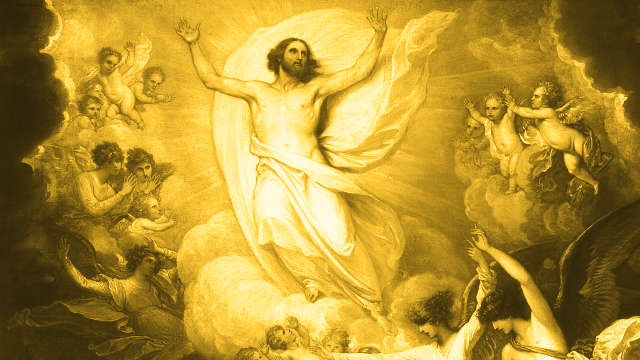
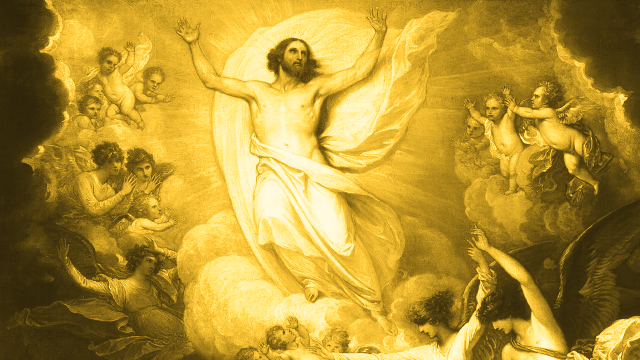
assencion to heaven

Ascension into Heaven

Ascension to Heaven

assencion to heaven

DID JESUS GO TO HEAVEN AFTER HE DIED BUT BEFORE HIS ASCENSION?

YES, JESUS WENT TO HEAVEN ON THE DAY OF HIS DEATH.

And he said unto Jesus, Lord, remember me when thou comest into thy kingdom. And Jesus said unto him, Verily I say unto thee, to day shalt thou be with me in paradise.      Luke 23:42-43

NO, JESUS REMAINED ON EARTH AFTER HIS DEATH UNTIL HIS ASCENSION.

Jesus saith unto her, Touch me not; for I am not yet ascended to my Father: but go to my brethren, and say unto them, I ascend unto my Father, and your Father; and to my God, and your God.       John 20:17

WAS JESUS THE FIRST TO RISE FROM THE DEAD?

JESUS WAS THE FIRST PERSON TO RISE FROM THE DEAD.

That Christ should suffer, and that he should be the first that should rise from the dead.     Acts 26:23

But now is Christ risen from the dead, and become the firstfruits of them that slept.      1 Corinthians 15:20

OTHERS ROSE FROM THE DEAD BEFORE HIM.

A WITCH RAISED SAMUEL FROM THE DEAD.

Then said the woman, Whom shall I bring up unto thee? And he said, Bring me up Samuel .... And he said unto her, What form is he of? And she said, An old man cometh up; and he is covered with a mantle. And Saul perceived that it was Samuel.     1 Samuel 28:11, 14

ELIJAH RAISED A BOY FROM THE DEAD BY STRETCHING HIMSELF UPON THE DEAD BOY THREE TIMES.

He stretched himself upon the child three times, and cried unto the LORD, and said, O LORD my God, I pray thee, let this child's soul come into him again.And the LORD heard the voice of Elijah; and the soul of the child came into him again, and he revived.    1 Kings 17:21-22

ELISHA BROUGHT A DEAD BOY TO LIFE BY LAYING ON TOP OF HIM, PUTTING HIS MOUTH ON THE BOYS MOUTH, ETC. UNTIL THE FLESH OF THE DEAD BOY WAXED WARM.

And when Elisha was come into the house, behold, the child was dead, and laid upon his bed. He went in therefore, and shut the door upon them twain, and prayed unto the LORD. And he went up, and lay upon the child, and put his mouth upon his mouth, and his eyes upon his eyes, and his hands upon his hands: and stretched himself upon the child; and the flesh of the child waxed warm. Then he returned, and walked in the house to and fro; and went up, and stretched himself upon him: and the child sneezed seven times.      2 Kings 4:32-35

A DEAD BODY WAS BROUGHT TO LIFE WHEN IT ACCIDENTALLY TOUCHED THE BONES OF ELISHA.

And it came to pass, as they were burying a man, that, behold, they spied a band of men; and they cast the man into the sepulchre of Elisha: and when the man was let down, and touched the bones of Elisha, he revived, and stood up on his feet.      2 Kings 13:21

MOSES AND ELIJAH HAD A CONVERSATION WITH JESUS AFTER BEING RAISED FROM THE DEAD.

And, behold, there talked with him two men, which were Moses and Elias.      Luke 9:30

JESUS RAISED A FEW PEOPLE FROM THE DEAD.

And when Jesus came into the ruler's house, and saw the minstrels and the people making a noise, He said unto them, Give place: for the maid is not dead, but sleepeth. And they laughed him to scorn. But when the people were put forth, he went in, and took her by the hand, and the maid arose.      Matthew 9:23-25   (see also Mark 5:39-42, Luke 8:49-55)

Now when he came nigh to the gate of the city, behold, there was a dead man carried out, the only son of his mother, and she was a widow: and much people of the city was with her. And when the Lord saw her, he had compassion on her, and said unto her, Weep not. And he came and touched the bier: and they that bare him stood still. And he said, Young man, I say unto thee, Arise. And he that was dead sat up, and began to speak. And he delivered him to his mother.       Luke 7:12-15

And when he thus had spoken, he cried with a loud voice, Lazarus, come forth.      John 11:43

AND DEAD PEOPLE ROSE AND WALKED THE STREETS OF JERUSALEM IMMEDIATELY AFTER JESUS DIED.

Jesus, when he had cried again with a loud voice, yielded up the ghost ... And the graves were opened; and many bodies of the saints which slept arose. And came out of the graves after his resurrection, and went into the holy city, and appeared unto many.       Matthew 9:50-53

 OTHERS BEFORE JESUS WENT TO HEAVEN

19 After the Lord Jesus had spoken to them, he was taken up into heaven and he sat at the right hand of God.    Mark 16:19

51 While he was blessing them, he left them and was taken up into heaven.   Luke 24:51

9 After he said this, he was taken up before their very eyes, and a cloud hid him from their sight.     Acts 1:9

Crishna the crucified Hindoo Saviour, rose from the dead     Higgins: Anacalypsis, vol. ii. pp. 142 and 145.

    and ascended bodily into heaven.     Higgins: Anacalypsis, vol. i. p. 131.

At that time a great light enveloped the earth and illuminated the whole expanse of heaven. Attended by celestial spirits, and luminous as on that night when he was born in the house of Vasudeva.  All men saw him, and exclaimed, "Lo, Crishna's soul ascends its native skies!"    Hist. Hindostan, ii. pp. 466 and 473

Râma—an incarnation of Vishnu—after his manifestations on earth, "at last ascended to heaven," "resuming his divine essence."

Buddha, the son of the Virgin Maya, who, as the God of Love, is named Cam-deo, Cam, and Cama, is of the same character as that of other virgin-born gods. When he died there were tears and lamentations. Heaven and earth are said equally to have lamented the loss of "Divine Love," insomuch that Maha-deo (the supreme god) was moved to pity, and exclaimed, "Rise, holy love!" on which Cama was restored and the lamentations changed into the most enthusiastic joy.   And... just like the Jesus stone of the tomb, "the coverings of the body unrolled themselves, and the lid of his coffin was opened by supernatural powers"

Just like Jesus, Buddha also ascended bodily to the celestial regions when his mission on earth was fulfilled.  By prayers in his name his followers expect to receive the rewards of paradise, and finally to become one with him when they die.

Lao-Kiun, the virgin-born, he who had existed from all eternity, when his mission of benevolence was completed on earth, ascended bodily into the paradise above.  There have been splendid temples erected to his memory. 

Zoroaster, of ancient Persian, who was considered "a divine messenger sent to redeem men from their evil ways," ascended to heaven at the end of his earthly life.

Æsculapius, the Son of God, the Saviour, after being put to death, rose from the dead. 

The Saviour Adonis or Tammuz, after being put to death, rose from the dead. "Trust ye in God, for out of pains, Salvation is come unto us."

Adonis of the Syrians is celebrated, in the early spring, this ceremony in honor of the resurrection of Adonis.

The festival in honor of the resurrection of Adonis was observed in Alexandria in Egypt—the cradle of Christianity—in the time of St. Cyril, Bishop of Alexandria (A. D. 412), and at Antioch—the ancient capital of the Greek Kings of Syria—even as late as the time of the Emperor Julian (A. D. 361-363), whose arrival there, during the solemnity of the festival, was taken as an ill omen.

Eusebius, the celebrated Christian ecclesiastical historian wrote that prior gods ascribed to Jesus;

"Listen to thine own gods, to thy oracular deities themselves, who have borne witness, and ascribed to our Saviour (Jesus Christ) not imposture, but piety and wisdom, and ascent into heaven."

The celebration in honor of the resurrection of Adonis had become to be known as a Christian festival, which has not been abolished even unto this day. The ceremonies held in Roman Catholic countries on Good Friday and on Easter Sunday, are nothing more than the festival of the death and resurrection of Adonis.

Under the designation of Tammuz, this god was worshiped, and had his altar even in the Temple of the Lord which was at Jerusalem. Several of the Psalms of David were parts of the liturgical service employed in his worship; the 110th, in particular, is an account of a friendly alliance between the two gods, Jehovah and Adonis, in which Jehovah adorns Adonis for his priest, as sitting at his right hand, and promises to fight for him against his enemies.

The Lord says to my lord:  “Sit at my right hand until I make your enemies a footstool for your feet.”     Psalm 110

women of Israel would weep for their god in the Temple;

14 Then he brought me to the entrance of the north gate of the house of the Lord, and I saw women sitting there, mourning the god Tammuz.    Ezekiel 8:14

Adonis, is almost (less the s) the very Hebrew word 'Our Lord,' a well-known title of Christ;  "Adoni" .

Tammuz as well as Hercules (Greek and Roman god), are that class of idols which represent the promised Saviour - the desire of all nations (similar to desire of Jesus).  Catholic Priests represent that the prior gods were just a work of the devil, an imitation of the real god, their god, Jesus. This has been written by Eusebius, Tertullian and St. Justin.

Osirus annually was celebrated by the ancient Egyptians his resurrection and ascension.  His image was carried in a procession, covered—as were those in the temples—with black veils. On the 25th of March his resurrection from the dead was celebrated with great festivity.  Osirus exemplifies self-sacrifice—in giving his life for others.  He stood for truth and gooness.  After being dead, he was restored to life.

Known ancient writers Athanasius, Augustin, Theophilus, Athenagoras, Minucius Felix, Lactantius, Firmicius, all draw comparisons of Osirus to Christ.  5000 years ago Osirus was people's savior who died and was resurrected.  . At the end of three days, or forty according to some, he arose again.

Horus, son of the virgin Isis, is written descriptions of the grief which was manifested at his death, and of the rejoicings at his resurrection.

Atys, the Phrygian Saviour, was put to death, and rose again from the dead. 

Mithras, the Persian Saviour, and mediator between God and man, was believed by the inhabitants of Persia, Asia Minor and Armenia, to have been put to death, and to have risen again from the dead.  There is an ancient coin like medalion found that has the inscription to their god Mithras, —ORTVS SALVAT, "The Rising of the Saviour".

Bacchus, the Saviour, son of the virgin Semele, after being put to death, also arose from the dead. 25th of March his resurrection from the dead was celebrated with great rejoicings.  After his resurrection he ascended into heaven. 

Hercules, the Saviour, the son of Zeus by a mortal mother, was put to death, but arose from the funeral pile, and ascended into heaven in a cloud, amid loud thunderings.

Memnon is put to death, but rises again to life and immortality.  Thanks to his mother who weaped incesantly (like Mary for Jesus) and that brought him back to life (like tammuz, Adonis, and Jesus).  

Amphiaraus—one of their most celebrated prophets and demi-gods of the Greeks—rose from the dead.  They even point to the spot of his ressurection.

Baldur, the Scandinavian Lord and Saviour, is put to death, but does not rest in his grave. He too rises again to life and immortality. When "Baldur the Good," the beneficent god, descended into hell, Hela (Death) said to Hermod (who mourned for Baldur): "If all things in the world, both living and lifeless, weep for him, then shall he return to the Æsir (the gods)." Upon hearing this, messengers were dispatched throughout the world to beg everything to weep in order that Baldur might be delivered from hell. All things everywhere willingly complied with this request, both men and every other living being, so that wailing was heard in all quarters.

Frey, was put to death, and rose again from the dead, was worshiped by ancient Scandinavians as a god.

Quetzalcoatle, the Mexican crucified Saviour, after being put to death, rose from the dead.  Thius is represented in hieroglyphics and the Codex Borgianus.

Jews, celebrate Passover on the same day the pagans celebrated the resurrection of their gods.

Catholics.  They would celebrate a mass called Gloria Patri where a young man would lay on a stand in front of the altar.  The altar was draped in black.  The priens and others would be dressed in all black.  The Church would be dark.  This was also called the "Agonie," the "Miserere," the "Good Friday" mass.  On Easter all the black motif would be gone and the church would be illuminated and bright.  The Easter hymns would say "Rejoice, Oh sacred Initiated, your God is risen. His death, his pains, his sufferings, have worked our salvation."

The early Catholic Church did not celebrate the resurrection but would celebrate Pass-Over at the same time the Jews celebrated it, the 14th of Nisan.  Then the Christians changed their tune and claimed before Jesus'  death he had not eaten the Passover meal, but had died on the very day of the Passover, thus substituting himself for the Paschal Lamb.  So they changed the celebration to the first Sun-Day after the passover, the pagan holiday.  On this day was honored the Saxon goddess Ostrt or Eostre of the Germans, whence our modern holiday name Easter.  It was an active day with sports and the like and was called "carne-vale."  It's main rite was giving out colored dyed eggs.  At that time the Jews used eggs as part of the Passover ritual and still do to this day.

Epistles.  "We have epistles from Peter, James, John, and Jude—all of whom are said to have seen Jesus after he rose from the dead, and in none of epistles is the fact of the resurrection even stated, much less that Jesus was seen by the writers after his resurrection." 


Teaser Image
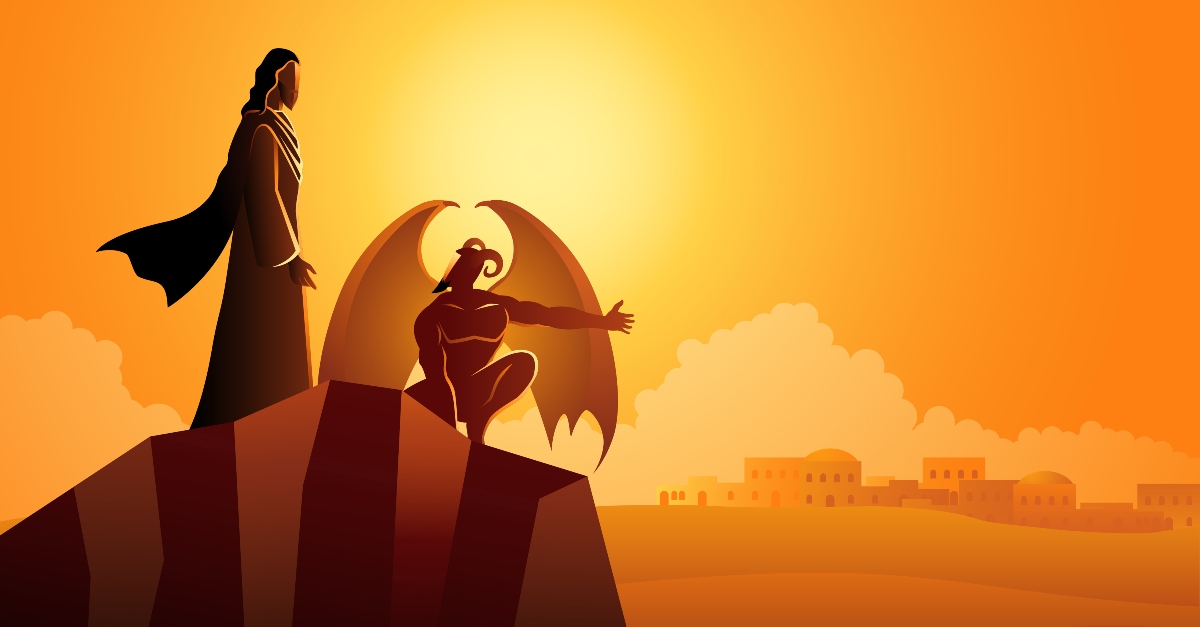
temptation of Jesus

Temptation of Jesus

Temptation and 40 Day Fast


Jesus fasted then was tempted in the desert

4 Then Jesus was led by the Spirit into the wilderness to be tempted[a] by the devil. 2 After fasting forty days and forty nights, he was hungry. 3 The tempter came to him and said, “If you are the Son of God, tell these stones to become bread.”

4 Jesus answered, “It is written: ‘Man shall not live on bread alone, but on every word that comes from the mouth of God.’[b]”

5 Then the devil took him to the holy city and had him stand on the highest point of the temple. 6 “If you are the Son of God,” he said, “throw yourself down. For it is written:

“‘He will command his angels concerning you,
    and they will lift you up in their hands,
    so that you will not strike your foot against a stone.’[c]”

7 Jesus answered him, “It is also written: ‘Do not put the Lord your God to the test.’[d]”

8 Again, the devil took him to a very high mountain and showed him all the kingdoms of the world and their splendor. 9 “All this I will give you,” he said, “if you will bow down and worship me.”

10 Jesus said to him, “Away from me, Satan! For it is written: ‘Worship the Lord your God, and serve him only.’[e]”

11 Then the devil left him, and angels came and attended him.       Matthew 4:1-11

Buddha was tempted and fasted

Buddha could resist the powers of the prince of evil. This Angelic-Buddha-Messiah was tempted by the devil, and he fasted for forty-seven days and nights, without taking an atom of food.  This story taken from "Siamese Life of Buddha," by Moncure D. Conway, also found in the Fo-pen-hing, and other works on Buddha and Buddhism.

"The Grand Being (Buddha) applied himself to practice asceticism of the extremest nature. He ceased to eat (that is, he fasted) and held his breath. . . . Then it was that the royal Mara (the Prince of Evil) sought occasion to tempt him. Pretending compassion, he said: 'Beware, O Grand Being, your state is pitiable to look on; you are attenuated beyond measure, . . . you are practicing this mortification in vain; I can see that you will not live through it. . . . Lord, that art capable of such vast endurance, go not forth to adopt a religious life, but return to thy kingdom, and in seven days thou shalt become the Emperor of the World, riding over the four great continents.'"

To this the Grand Being, Buddha, replied: "'Take heed, O Mara; I also know that in seven days I might gain universal empire, but I desire not such possessions. I know that the pursuit of religion is better than the empire of the world. You, thinking only of evil lusts, would force me to leave all beings without guidance into your power. Avaunt! Get thou away from me!' "The Lord (then) rode onwards, intent on his purpose. The skies rained flowers, and delicious odors pervaded the air." 

Jesus about to "begin to preach" when he was tempted by the evil spirit.  Buddha about to go forth "to adopt a religious life," when he was tempted by the evil spirit.  

Jesus fasted, and was he "afterwards an hungered"  So did Buddha "cease to eat," and was "attenuated beyond measure."

With Jesus, The evil spirit took him and showed him "all the kingdoms of the world," which he promised to give him, provided he did not lead the life he contemplated, but follow him, the devil.  With Buddha, the evil spirit said to Buddha: "Go not forth to adopt a religious life, and in seven days thou shalt become an emperor of the world."

With Jesus, he resisted these temptations, and said unto the evil one, "Get thee behind me, Satan"?  With Buddha, he resisted the temptations, and said unto the evil one, "Get thee away from me."

With Jesus, after the evil spirit left him the "angels came and minister unto him".  With Buddha, after the evil one had left him "the skies rained flowers, and delicious odors pervaded the air."

Zoroaster, the founder of the religion of the Persians, was tempted by the devil, who made him magnificent promises, in order to induce him to become his servant.  He did not oblige.

Quetzalcoatle, the virgin-born Mexican Saviour, was also tempted by the devil, and a forty days' fast is among the stories.

40 Days and 40 Nights

Jesus fasted for 40 daysand 40 nights.

 2 After fasting forty days and forty nights, he was hungry    Matthew 4:2

Moses did the same when he stayed on top of the mountain.

  18 Then Moses entered the cloud as he went on up the mountain. And he stayed on the mountain forty days and forty nights.     Exodus 24:18

Elijah also had a long fast, which, of course, was continued for a period of forty days and forty nights. 

8 So he got up and ate and drank. Strengthened by that food, he traveled forty days and forty nights until he reached Horeb, the mountain of God.    1 Kings, 19:8

St. Joachim, father of the "Holy Bessed Virgin Mary, Mother of God" had a long fast, which was also continued for a period of forty days and forty nights. The story is to be found in the apocryphal gospel Protevangelion.

The ancient Persians had a religious festival which they annually celebrated, and which they called the "Salutation of Mithras." During this festival, forty days and fourty nights were set apart for thanksgiving and sacrifice.

"The ancient Mexicans had a forty days' fast, in memory of one of their sacred persons (Quetzalcoatle) who was tempted (and fasted) forty days on a mountain."

"The ancient Mexicans had a forty days' fast, in memory of one of their sacred persons (Quetzalcoatle) who was tempted (and fasted) forty days on a mountain."  Lord Kingsborough says:

The temptation of Quetzalcoatle, and the fast of forty days, . . . are very curious and mysterious."  

The ancient Mexicans were also in the habit of making their prisoners of war fast for a term of forty days before they were put to death.  The Spaniards were surprised to see the Mexicans keep the vernal forty days' fast.

The Tammuz month of Syria was in the spring. The forty days were kept for Proserpine.

The India tribes of the New World, the females of the Orinoco would fast 40 days before marriage.

Among the Carib-Coudave tribe, in the West Indies, "when a child is born the mother goes presently to work, but the father begins to complain, and takes to his hammock, and there he is visited as though he were sick. He then fasts for forty days."

The females belonging to the tribes of the Upper Mississippi, were held unclean for forty days after childbirth.

The prince of the Tezcuca tribes fasted forty days when he wished an heir to his throne, and the Mandanas supposed it required forty days and forty nights to wash clean the earth at the deluge.

At the end of forty daysand fourty nights Noah sent out a raven from the ark. 

6 After forty days Noah opened a window he had made in the ark.   7 and sent out a raven ...   Genesis 8:6-7

Isaac and Esau were each forty years old when they married.

20 and Isaac was forty years old when he married Rebekah daughter of Bethuel the Aramean from Paddan Aram[a] and sister of Laban the Aramean.    Genesis 25:20

34 When Esau was forty years old, he married Judith daughter of Beeri the Hittite, and also Basemath daughter of Elon the Hittite.   Gen 26:34

Forty days were fulfilled for the embalming of Jacob.

3 taking a full forty days, for that was the time required for embalming. And the Egyptians mourned for him seventy days.

The spies were forty days in search of the land of Canaan.

25 At the end of forty days they returned from exploring the land.    Numbers 13:25

The Israelites wandered forty years in the wilderness. 

6 The Israelites had moved about in the wilderness forty years until all the men who were of military age when they left Egypt had died ...   Joshua 5:6

The land "had rest" forty years on three occasions. 

11 So the land had peace for forty years, until Othniel son of Kenaz died.     Judges 3:11

31 ..... Then the land had peace forty years.      Judges 3:31

28 Thus Midian was subdued before the Israelites and did not raise its head again. During Gideon’s lifetime, the land had peace forty years.     Judges 8:28

The land was delivered into the hand of the Philistines forty years.  

13 Again the Israelites did evil in the eyes of the Lord, so the Lord delivered them into the hands of the Philistines for forty years.    Judges 13:1

Eli judged Israel forty years.

18 When he mentioned the ark of God, Eli fell backward off his chair by the side of the gate. His neck was broken and he died, for he was an old man, and he was heavy. He had led Israel forty years.    Samuel 4:18

King David reigned forty years.

11 He had reigned forty years over Israel—seven years in Hebron and thirty-three in Jerusalem.      1 Kings 2:11

King Solomon reigned forty years. 

42 Solomon reigned in Jerusalem over all Israel forty years.    1 Kings 11:42

Goliath presented himself forty days.

16 For forty days the Philistine came forward every morning and evening and took his stand.      1 Samuel 17:16

The rain was upon the earth forty days at the time of the deluge.

12 And rain fell on the earth forty days and forty nights.

Moses was on the mount forty days and forty nights on both occasions.

18 Then Moses entered the cloud as he went on up the mountain. And he stayed on the mountain forty days and forty nights.      Exodus 24:18

28 Moses was there with the Lord forty days and forty nights without eating bread or drinking water. And he wrote on the tablets the words of the covenant—the Ten Commandments.        Exodus 34:28

Pillars

The number forty was used by the ancients in constructing temples. There were forty pillars around the temple of Chilminar, in Persia; the temple at Baalbec had forty pillars; on the frontiers of China, in Tartary, there is to be seen the "Temple of the forty pillars." Forty is one of the most common numbers in the Druidical temples, and in the plan of the temple of Ezekiel, the four oblong buildings in the middle of the courts have each forty pillars.  Most temples of antiquity were imitative—were microcosms of the Celestial Templum—and on this account they were surrounded with pillars recording astronomical ideas.

Teaser Image
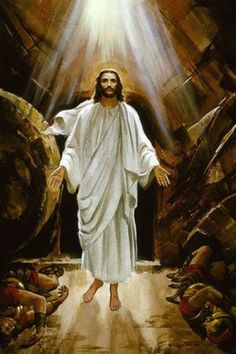
the tomb

The Tomb

The Tomb and After

The “Word of God” is uncertain as to how many days Jesus was in his tomb. Jesus prophesized 3 days and 3 nights.

A  Not two full days and not two full nights.

Early on the first day of the week, while it was still dark, Mary Magdalene went to the tomb and saw that the stone had been removed from the entrance.     John 20:1

B  Not two full days and two nights.

Very early on the first day of the week, just after sunrise, they were on their way to the tomb     Mark 16:2

On the first day of the week, very early in the morning, the women took the spices they had prepared and went to the tomb.     Luke 24:1

After the Sabbath, at dawn on the first day of the week, Mary Magdalene and the other Mary went to look at the tomb.    Matthew 28:1

The “Word of God” is uncertain as to whether Roman soldiers guarded Jesus’ tomb.

A  No.

Early on the first day of the week, while it was still dark, Mary Magdalene went to the tomb and saw that the stone had been removed from the entrance.     John 20:1

B  Yes.

The guards were so afraid of him that they shook and became like dead men.     Matthew 28:4

inconsistencies re tomb

The “Word of God” is uncertain as to whether the stone that covered the tomb of Jesus was removed when the women first arrived.

A  No, not removed.

After the Sabbath, at dawn on the first day of the week, Mary Magdalene and the other Mary went to look at the tomb.  There was a violent earthquake, for an angel of the Lord came down from heaven and, going to the tomb, rolled back the stone and sat on it.     Matthew 28:1-2

B  Yes, removed.

Early on the first day of the week, while it was still dark, Mary Magdalene went to the tomb and saw that the stone had been removed from the entrance.     John 20:1

But when they looked up, they saw that the stone, which was very large, had been rolled away.     Mark 16:4

They found the stone rolled away from the tomb,     Luke 24:2

The “Word of God” is uncertain as to how many people approached the tomb Sunday morning.

A  One.    Mary Magdalene.    

   (Sunday early dawn)

Early on the first day of the week, while it was still dark, Mary Magdalene went to the tomb and saw that the stone had been removed from the entrance.     John 20:1

B  Two.    Mary Magdalene and the “other Mary.” 

   (Sabbath, still dark, before Sunrise)

After the Sabbath, at dawn on the first day of the week, Mary Magdalene and the other Mary went to look at the tomb.     Matthew 28:1

C  Three.   Two Marys and Salome.   

   (at the rising of the Sun)

When the Sabbath was over, Mary Magdalene, Mary the mother of James, and Salome bought spices so that they might go to anoint Jesus’ body.     Mark 16:1

D  Five or more….  Two Marys, Joanna, and the other women.

Now upon the first day of the week, very early in the morning, they came unto the sepulchre, bringing the spices which they had prepared, and certain others with them.     Luke 24:1

It was Mary Magdalene, Joanna, Mary the mother of James, and the others with them who told this to the apostles.     Luke 24:10

When did the women (or woman) arrive at the sepulchre?

While it was still dark.

The first day of the week cometh Mary Magdalene early, when it was yet dark, unto the sepulchre, and seeth the stone taken away from the sepulchre. John 20:1

At sunrise.

As it began to dawn toward the first day of the week, came Mary Magdalene and the other Mary to see the sepulchre. Matthew 28:1

And when the sabbath was past, Mary Magdalene, and Mary the mother of James, and Salome, had bought sweet spices, that they might come and anoint him. And very early in the morning the first day of the week, they came unto the sepulchre at the rising of the sun. Mark 16:1-2

The “Word of God” is uncertain as to whom the women at the tomb greeted and where they greeted them (inside or outside?)

A  By no one at all.

Early on the first day of the week, while it was still dark, Mary Magdalene went to the tomb and saw that the stone had been removed from the entrance. 2 So she came running to Simon Peter and the other disciple, the one Jesus loved, and said, “They have taken the Lord out of the tomb, and we don’t know where they have put him!”     John 20:1-2

B  By one man sitting inside the tomb.

As they entered the tomb, they saw a young man dressed in a white robe sitting on the right side, and they were alarmed.     Mark 16:5

C  By two men standing inside the tomb.

While they were wondering about this, suddenly two men in clothes that gleamed like lightning stood beside them.     Luke 24:4

D  By one angel sitting outside the tomb.

There was a violent earthquake, for an angel of the Lord came down from heaven and, going to the tomb, rolled back the stone and sat on it.     Matthew 28:2,

The angel said to the women, “Do not be afraid, for I know that you are looking for Jesus, who was crucified.     Matthew 28:5

Two angels sitting inside the tomb

And seeth two angels in white sitting, the one at the head, and the other at the feet, where the body of Jesus had lain.        John 20:12

The “Word of God” is uncertain as to how many angels appeared at the tomb.

A  Two.

and saw two angels in white, seated where Jesus’ body had been, one at the head and the other at the foot.     John 20:12

B  One.

There was a violent earthquake, for an angel of the Lord came down from heaven and, going to the tomb, rolled back the stone and sat on it.     Matthew 28:2,

The angel said to the women, “Do not be afraid, for I know that you are looking for Jesus, who was crucified.     Matthew 28:5

The “Word of God” is uncertain as to if the angel or angels told the Marys that Jesus was “risen.”

A    One angel told two Marys.

He is not here; he has risen, just as he said. Come and see the place where he lay.     Matthew 28:6

B   The two angels were not present to tell Mary Magdalene.

So she came running to Simon Peter and the other disciple, the one Jesus loved, and said, “They have taken the Lord out of the tomb, and we don’t know where they have put him!”      John 20:2

The “Word of God” is uncertain as to whether the angels tell Mary that Jesus would appear in Galilee.

A  Yes.  One angel told two Marys.

Then go quickly and tell his disciples: ‘He has risen from the dead and is going ahead of you into Galilee. There you will see him.’ Now I have told you.”      Matthew 28:7

“Don’t be alarmed,” he said. “You are looking for Jesus the Nazarene,who was crucified. He has risen! He is not here. See the place where they laid him.      Mark 16:6

 In their fright the women bowed down with their faces to the ground, but the men said to them, “Why do you look for the living among the dead?      Luke 24:5

B  No  One Mary saw two angels but they didn’t say anything.

and saw two angels in white, seated where Jesus’ body had been, one at the head and the other at the foot.     John 20:12

C  They talked to her.

They asked her, “Woman, why are you crying?”  “They have taken my Lord away,” she said, “and I don’t know where they have put him.”     John 20:13

The “Word of God” is uncertain as to where and to whom did the “risen” Jesus reveal himself.

A  To Mary Magdalene, at the tomb.

Early on the first day of the week, while it was still dark, Mary Magdalene went to the tomb and saw that the stone had been removed from the entrance.     John 20:1

Now Mary stood outside the tomb crying. As she wept, she bent over to look into the tomb 12 and saw two angels in white, seated where Jesus’ body had been, one at the head and the other at the foot.13 They asked her, “Woman, why are you crying?”  “They have taken my Lord away,” she said, “and I don’t know where they have put him.” 14 At this, she turned around and saw Jesus standing there, but she did not realize that it was Jesus.      John 20:11-14

B  To Mary Magdalene on the way to the Galilee.

But go, tell his disciples and Peter, ‘He is going ahead of you into Galilee. There you will see him, just as he told you.’”     Mark 16:7

When Jesus rose early on the first day of the week, he appeared first to Mary Magdalene, out of whom he had driven seven demons.     Mark 16:9

C  To two Marys on the way to Jerusalem.

From then on Judas watched for an opportunity to hand him over.     Matthew 26:16

D  To Cleopas and another, at Emmaus.

And, behold, two of them went that same day to a village called Emmaus.... And the one of them, whose name was Cleopas, answering said unto him, Art thou only a stranger in Jerusalem, and hast not known the things which are come to pass there in these days? ... And it came to pass, as he sat at meat with them, he took bread, and blessed it, and brake, and gave to them. And their eyes were opened, and they knew him; and he vanished out of their sight.    Luke 24:13-31

E.  To Cephas (Peter) at an unknown location.

And that he was buried, and that he rose again the third day according to the scriptures: And that he was seen of Cephas, then of the twelve     1 Cor. 15:4-5

The “Word of God” is uncertain as to who Mary received word from an angel of the resurrection.

A  No.  She was told by Jesus.

Early on the first day of the week, while it was still dark, Mary Magdalene went to the tomb and saw that the stone had been removed from the entrance. 2 So she came running to Simon Peter and the other disciple, the one Jesus loved, and said, “They have taken the Lord out of the tomb, and we don’t know where they have put him!”     John 20:1-2

B  Yes.  She was told by an angel.

He is not here; he has risen, just as he said. Come and see the place where he lay.     Matthew 28:6

The “Word of God” is uncertain as to whether Jesus told Mary he would appear in Galilee.

A  Yes. 

   Both Marys informed the disciples they were to meet in Galilee

When Jesus heard this, he was amazed and said to those following him, “Truly I tell you, I have not found anyone in Israel with such great faith.      Matthew 8:10

B  No.

   Mary saw Jesus but thought he was a gardener.  Jesus identified himself but said nothing of Galilee.

At this, she turned around and saw Jesus standing there, but she did not realize that it was Jesus. 15 He asked her, “Woman, why are you crying? Who is it you are looking for?” Thinking he was the gardener, she said, “Sir, if you have carried him away, tell me where you have put him, and I will get him.” 16 Jesus said to her, “Mary.” She turned toward him and cried out in Aramaic, “Rabboni!” (which means “Teacher”). 17 Jesus said, “Do not hold on to me, for I have not yet ascended to the Father. Go instead to my brothers and tell them, ‘I am ascending to my Father and your Father, to my God and your God.’” 18 Mary Magdalene went to the disciples with the news: “I have seen the Lord!” And she told them that he had said these things to her.    John 20:14-18

The “Word of God” is uncertain as to Mary Magdalene recognizing Jesus after he first appeared to her.

Yes, she recognized him.

And as they went to tell his disciples, behold, Jesus met them, saying, All hail. And they came and held him by the feet, and worshipped him. Matthew 28:9

No, she didn't recognize him.

And when she had thus said, she turned herself back, and saw Jesus standing, and knew not that it was Jesus. John 20:14

Jesus didn't appear to her; she had a vision of angels who told her that he was alive.

And when they found not his body, they came, saying, that they had also seen a vision of angels, which said that he was alive. Luke 24:23

The “Word of God” is uncertain as to Mary Magdalene’s state of mind when Jesus first appeared to her after his death

A  Grief stricken.

Mary [Magdalene] stood without at the sepulchre weeping: and as she wept, she stooped down, and looked into the sepulchre, And seeth two angels in white sitting, the one at the head, and the other at the feet, where the body of Jesus had lain. And they say unto her, Woman, why weepest thou? She saith unto them, Because they have taken away my LORD, and I know not where they have laid him. And when she had thus said, she turned herself back, and saw Jesus standing, and knew not that it was Jesus. Jesus saith unto her, Woman, why weepest thou?      John 20:11-15    

B  Joy filled.

So the women hurried away from the tomb, afraid yet filled with joy, and ran to tell his disciples. 9 Suddenly Jesus met them. “Greetings,” he said. They came to him, clasped his feet and worshiped him.     Matthew 28:8-9

The “Word of God” is uncertain as to if the women immediately told the disciples when they first learned Jesus had “risen.”

A  They fold no one.

Trembling and bewildered, the women went out and fled from the tomb. They said nothing to anyone, because they were afraid.     Mark 16:8

B  They rushed to inform the disciples.

When they came back from the tomb, they told all these things to the Eleven and to all the others.     Luke 24:9

 So the women hurried away from the tomb, afraid yet filled with joy, and ran to tell his disciples.    Matthew 28:8

The “Word of God” is uncertain as to how Mary Magdalene reported the news to the disciples.

A  She described her visitation by “risen” Jesus.

Mary Magdalene went to the disciples with the news: “I have seen the Lord!” And she told them that he had said these things to her.     John 20:18

B She described what she had been told by two men.

When they came back from the tomb, they told all these things to the Eleven and to all the others.     Luke 24:9

The “Word of God” is uncertain as to who Mary met after seeing the angels.

A  Jesus.

   John  Mark  Matthew say

B  The disciples.

 While they were wondering about this, suddenly two men in clothes that gleamed like lightning stood beside them. 5 In their fright the women bowed down with their faces to the ground, but the men said to them, “Why do you look for the living among the dead? 6 He is not here; he has risen! Remember how he told you, while he was still with you in Galilee: 7 ‘The Son of Man must be delivered over to the hands of sinners, be crucified and on the third day be raised again.’ ” 8 Then they remembered his words. 9 When they came back from the tomb, they told all these things to the Eleven and to all the others. 10 It was Mary Magdalene, Joanna, Mary the mother of James, and the others with them who told this to the apostles.         Luke 24:4-10

Was it OK to touch the risen Jesus before his ascension?

Jesus didn't let people touch him before his ascension.

Jesus saith unto her, Touch me not; for I am not yet ascended to my Father.     John 20:17

Jesus permitted people to touch him before his ascension.

And as they went to tell his disciples, behold, Jesus met them, saying, All hail. And they came and held him by the feet, and worshipped him.     Matthew 28:9

Behold my hands and my feet, that it is I myself: handle me.      Luke 24:39

And after eight days again his disciples were within, and Thomas with them: then came Jesus, the doors being shut, and stood in the midst, and said, Peace be unto you. Then saith he to Thomas, Reach hither thy finger, and behold my hands; and reach hither thy hand, and thrust it into my side.     John 20:26-27

The “Word of God” is uncertain as to how many disciples were present when Jesus appeared to them.

B  Ten.  Thomas was not present.

Now Thomas (also known as Didymus), one of the Twelve, was not with the disciples when Jesus came.     John 20:24    (Judas was dead by this time.     See Matthew 27:5)

A  Eleven.  Judas was dead.

 Then the eleven disciples went away into Galilee, into a mountain where Jesus had appointed them. And when they saw him,they worshipped him: but some doubted.      Matthew 28:16-17

 Later Jesus appeared to the Eleven as they were eating; he rebuked them for their lack of faith and their stubborn refusal to believe those who had seen him after he had risen.     Mark 16:14

And they rose up the same hour, and returned to Jerusalem, and found the eleven gathered together, and them that were with them, ... And as they thus spake, Jesus himself stood in the midst of them, and saith unto them, Peace be unto you. But they were terrified and affrighted, and supposed that they had seen a spirit.      Luke 24:33-37

C  Twelve

   (Even though they don’t account for Judas being dead at that time !!!).

 So Judas threw the money into the temple and left. Then he went away and hanged himself.     Matthew 27:5

With the payment he received for his wickedness, Judas bought a field; there he fell headlong, his body burst open and all his intestines spilled out.     Acts 1:18

 and that he appeared to Cephas, and then to the Twelve.      1 Corinthians 15:5

The “Word of God” is uncertain as to how many times Jesus appeared after he was “risen.”

A  Four.

At this, she turned around and saw Jesus standing there, but she did not realize that it was Jesus. 15 He asked her, “Woman, why are you crying? Who is it you are looking for?” Thinking he was the gardener, she said, “Sir, if you have carried him away, tell me where you have put him, and I will get him.” 16 Jesus said to her, “Mary.” She turned toward him and cried out in Aramaic, “Rabboni!” (which means “Teacher”). 17 Jesus said, “Do not hold on to me, for I have not yet ascended to the Father. Go instead to my brothers and tell them, ‘I am ascending to my Father and your Father, to my God and your God.’”      John 20:14-17

 On the evening of that first day of the week, when the disciples were together, with the doors locked for fear of the Jewish leaders, Jesus came and stood among them and said, “Peace be with you!” 20 After he said this, he showed them his hands and side. The disciples were overjoyed when they saw the Lord. 21 Again Jesus said, “Peace be with you! As the Father has sent me, I am sending you.” 22 And with that he breathed on them and said, “Receive the Holy Spirit. 23 If you forgive anyone’s sins, their sins are forgiven; if you do not forgive them, they are not forgiven.”    John 20:19-23

A week later his disciples were in the house again, and Thomas was with them. Though the doors were locked, Jesus came and stood among them and said, “Peace be with you!”     John 20:26

 Afterward Jesus appeared again to his disciples, by the Sea of Galilee.[a] It happened this way: ….  14 This was now the third time Jesus appeared to his disciples after he was raised from the dead.      John 21:1-23

B  Three.

When Jesus rose early on the first day of the week, he appeared first to Mary Magdalene, out of whom he had driven seven demons.      Mark 16:9

Afterward Jesus appeared in a different form to two of them while they were walking in the country.      Mark 16:12  

Later Jesus appeared to the Eleven as they were eating; he rebuked them for their lack of faith and their stubborn refusal to believe those who had seen him after he had risen. 15 He said to them, “Go into all the world and preach the gospel to all creation. 16 Whoever believes and is baptized will be saved, but whoever does not believe will be condemned. 17 And these signs will accompany those who believe: In my name they will drive out demons; they will speak in new tongues; 18 they will pick up snakes with their hands; and when they drink deadly poison, it will not hurt them at all; they will place their hands on sick people, and they will get well.”

 Later Jesus appeared to the Eleven as they were eating; he rebuked them for their lack of faith and their stubborn refusal to believe those who had seen him after he had risen. 15 He said to them, “Go into all the world and preach the gospel to all creation. 16 Whoever believes and is baptized will be saved, but whoever does not believe will be condemned. 17 And these signs will accompany those who believe: In my name they will drive out demons; they will speak in new tongues; 18 they will pick up snakes with their hands; and when they drink deadly poison, it will not hurt them at all; they will place their hands on sick people, and they will get well.”     Mark 16:14-18

C  Two.

   Luke 24:13-31

   Luke 24:36-51

D  Two.

Suddenly Jesus met them. “Greetings,” he said. They came to him, clasped his feet and worshiped him.    Matthew 28:9

When they saw him, they worshiped him; but some doubted. 18 Then Jesus came to them and said, “All authority in heaven and on earth has been given to me. 19 Therefore go and make disciples of all nations,baptizing them in the name of the Father and of the Son and of the Holy Spirit, 20 and teaching them to obey everything I have commanded you. And surely I am with you always, to the very end of the age.”      Matthew 28:17-20

E  One.

     1 Corinthians 15:5, 6, 7, 7, 8

The “Word of God” is uncertain as to what city Jesus appeared in after he was “risen.”

A  All were in Jerusalem

    Luke 24:13-53

B  All were in Galilee

    Matthew 28:7-20

Jesus First Appeared to the Eleven Disciples in a Room at Jerusalem or on a Mountain in Galilee???

Room at Jerusalem

And they rose up the same hour and returned to Jerusalem, and found the eleven gathered together. . . . And as they spake, Jesus himself stood up in the midst of them. . . . But they were terrified and affrighted, and supposed that they had seen a spirit. (Luke 24:33, 36, 37.)

The same day, at evening, being the first day of the week, when the doors were shut, where the disciples were assembled, . . . came Jesus and stood in the midst. (John 20:19.)

Mountain in Galilee

Then the eleven disciples went away into Galilee, unto a mountain where Jesus had appointed. And when they saw him they worshipped him, but some doubted. (Matt. 28:16, 17.)

The Disciples were Commanded Immediately after the Resurrection to go into Galilee or to Tarry at Jerusalem???

Galilee

Then said Jesus unto them, Be not afraid; go tell my brethren that they go into Galilee, and there shall they see me. (Matt. 28:10.)

But go your way, tell his disciples and Peter that he goeth before you into Galilee: there shall ye see him, as he said unto you.      Mark 16:7

Tarry in Jerusalem

But tarry ye in Jerusalem until ye be endued with power from on high.     Luke 24:49

And, being assembled together with them, commanded them that they should not depart from Jerusalem, but wait for the promise of the Father, which, saith he, ye have heard of me.      Acts 1:4

The “Word of God” is uncertain as to if Mary was permitted to touch Jesus after he had “risen.”

A  Yes.  By his feet.

Suddenly Jesus met them. “Greetings,” he said. They came to him, clasped his feet and worshiped him.      Matthew 28:9

B  Yes.   By handling his hands and feet.

Look at my hands and my feet. It is I myself! Touch me and see; a ghost does not have flesh and bones, as you see I have.”     Luke 24:39

In the beginning was the Word, and the Word was with God, and the Word was God.   John 1:1

C  No.  Jesus said “Touch me not…”

Jesus said, “Do not hold on to me, for I have not yet ascended to the Father. Go instead to my brothers and tell them, ‘I am ascending to my Father and your Father, to my God and your God.’”      John 20:17

Did Jesus forewarn the apostles of his death and resurrection?

Yes, he did.

From that time forth began Jesus to shew unto his disciples, how that he must go unto Jerusalem, and suffer many things of the elders and chief priests and scribes, and be killed, and be raised again the third day. Matthew 16:21

Behold, we go up to Jerusalem; and the Son of man shall be betrayed unto the chief priests and unto the scribes, and they shall condemn him to death, And shall deliver him to the Gentiles to mock, and to scourge, and to crucify him: and the third day he shall rise again. Matthew 20:18-19

Jesus ... said unto his disciples, Ye know that after two days is the feast of the passover, and the Son of man is betrayed to be crucified. Matthew 26:1-2

Then saith Jesus unto them, All ye shall be offended because of me this night: for it is written, I will smite the shepherd, and the sheep of the flock shall be scattered abroad. But after I am risen again, I will go before you into Galilee. Matthew 26:31-32

And he began to teach them, that the Son of man must suffer many things, and be rejected of the elders, and of the chief priests, and scribes, and be killed, and after three days rise again. Mark 8:31

Saying, Behold, we go up to Jerusalem; and the Son of man shall be delivered unto the chief priests, and unto the scribes; and they shall condemn him to death, and shall deliver him to the Gentiles: And they shall mock him, and shall scourge him, and shall spit upon him, and shall kill him: and the third day he shall rise again. Mark 10:33-34

But after that I am risen, I will go before you into Galilee. Mark 14:28

Then he took unto him the twelve, and said unto them, Behold, we go up to Jerusalem, and all things that are written by the prophets concerning the Son of man shall be accomplished. For he shall be delivered unto the Gentiles, and shall be mocked, and spitefully entreated, and spitted on: And they shall scourge him, and put him to death: and the third day he shall rise again. Luke 18:31-33

No, he did not.

For as yet they knew not the scripture, that he must rise again from the dead. John 20:9


Teaser Image
jesus violence

Jesus Violence

Jesus Violence

Give Him a Sword

Take my enemies, who would not have me rule over them, bring them here, and kill them before me.   Luke 19:27

This is a concluding statement of a parable that Jesus was telling regarding a nobleman who became king.  The point of the parable is that the Jewish people rejected him as king and hence the decree of judgment concerning the unfaithful and disobedient.  This mirrors what Matthew wrote,

“Whoever is not with me is against me, and whoever does not gather with me scatters.    Matthew 12:30

Burn Them

He who does not abide in me is thrown away like a withered branch.  Such withered branches are gathered together, cast into the fire and burned.  John 15:6

This statement by Jesus demonstrates that the Jews and others that do not follow him are enemies that deserve to be burned.  This statement was used by the Catholic Church to justify their practice of burning people alive at the stake (especially women).
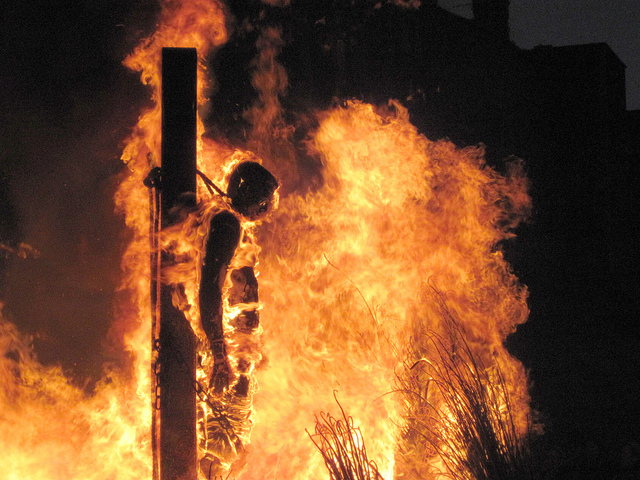
jesus burns

Sell Your Clothes and Buy a Sword

… and he who has no sword, let him sell his garment and buy one.  Luke 22:36

This clearly refers to the physical world of Jesus’s kingdom and not the spiritual world.

Use the Sword

Think not that I have come to send peace to the world.  I come not to send peace, but the sword.  Matthew 10:34

One of Jesus’s disciples in fact did in fact do just this by cutting off the ear of a servant of the High Priest with the sword. Luke 22:49-50;  Matthew 26:51.

jesus sword


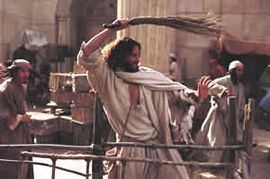
Use the Whip

    And when he had made a scourge of small cords, he drove them all out of the temple. John 2:15]

Jesus whip

Jesus whipping

Hate your Family and Neighbors

“If anyone comes to me, and does not hate his own father and mother and wife and children and brothers and sisters, yes, and even his own life, he cannot be my disciple.”         Luke 14:26

21 “Brother will betray brother to death, and a father his child; children will rebel against their parents and have them put to death.     Matt 10:21

35 For I have come to turn
“‘a man against his father,
    a daughter against her mother,
a daughter-in-law against her mother-in-law—         Matt 10:35

51 Do you think I came to bring peace on earth? No, I tell you, but division.

52 From now on there will be five in one family divided against each other, three against two and two against three.

53 They will be divided, father against son and son against father, mother against daughter and daughter against mother, mother-in-law against daughter-in-law and daughter-in-law against mother-in-law.”     Luke 12:51-53

37 “Anyone who loves their father or mother more than me is not worthy of me; anyone who loves their son or daughter more than me is not worthy of me.     Matt 10:37

Anyone following your teachings shall be put to death ...

4 For God said, ‘Honor your father and mother’ and ‘Anyone who curses their father or mother is to be put to death.’   Matt 15:4

And I saw heaven opened, and behold a white horse; and he that sat upon him was called Faithful and True, and in righteousness he doth judge and make war. Revelation 19:11

Jesus Rejects his Mother 

47 Someone told him, “Your mother and brothers are standing outside, wanting to speak to you.”
48 He replied to him, “Who is my mother, and who are my brothers?” 49 Pointing to his disciples, he said, “Here are my mother and my brothers.     Matt 12:48

32 A crowd was sitting around him, and they told him, “Your mother and brothers are outside looking for you.”
33 “Who are my mother and my brothers?” he asked.
34 Then he looked at those seated in a circle around him and said, “Here are my mother and my brothers.      Mark 3:33

4 “Woman, why do you involve me?” Jesus replied. “My hour has not yet come.”       John 2:4

 

jesus gives finger

Make Them Blind

For judgment I have come into this world, that those that do not see may see, and those who see may be made blind.  John 9:39

This statement contradicts the statement by Jesus;

‘Judge not that you may be judged.’     Matthew 7:1

Suffer the Wrath of God

He who believes in the son has everlasting life.  But he who does not believe in the son shall not see life, but shall suffer the everlasting wrath of God.  John 3:36

‘Love thy neighbor’ only applies to people who believe in Jesus, otherwise a persons fate is suffering the everlasting wrath of God.

This position is in conflict with the Jewish Talmud which states,

The righteousness of nations will have a share in the World to Come.  Tosefta, Sanhedrin 13

Any individual, whether Jew or Gentile, man or woman, servant or maid can bring the Divine presence upon himself in accordance with his deeds.   Tana DeBei Eliahu Rabba 9

Jesus, Did you Forget???

Whoever hates his brother is a murderer.    1 John 3:15

Husbands love your wives. . . . For no man ever yet hated his own flesh. Eph. 5:25, 29

Resist not evil, but whoever shall smite you on your right cheek, turn to him the other also. Matthew 5:39

All they that take the sword shall perish with the sword.   Matthew 26:52

And suddenly there was with the angels a multitude of the heavenly host praising God and saying, glory to God in the highest, and on earth peace.     Luke 2:13, 14

Honour your father and mother.     Eph 6:2

Blessed are the peacemakers.      Matthew 5:9

One of them ... drew his sword, and struck a servant of the high priest's, and smote off his ear. Then said Jesus ... Put up again thy sword into his place: for all they that take the sword shall perish with the sword.       Matthew 26:51-52

Glory to God in the highest, and on earth peace, good will toward men.       Luke 2:14

Peace I leave with you, my peace I give unto you: not as the world giveth, give I unto you.       John 14:27

These things I have spoken unto you, that in me ye might have peace.      John 16:33

The word which God sent unto the children of Israel, preaching peace by Jesus Christ.      Acts 10:36

pigs over cliff

Jesus Casts the Swine to their Death.

32 He said to them, “Go!” So they came out and went into the pigs, and the whole herd rushed down the steep bank into the lake and died in the water.    Matthew 8:32

13 He gave them permission, and the impure spirits came out and went into the pigs. The herd, about two thousand in number, rushed down the steep bank into the lake and were drowned.     Mark 5:13

33 When the demons came out of the man, they went into the pigs, and the herd rushed down the steep bank into the lake and was drowned.    Luke 8:33

Fig Tree Withered When?

Immediately 

Withering of fig tree:   the disciples saw it wither immediately. 

19 And when he saw a fig tree in the way, he came to it, and found nothing thereon, but leaves only, and said unto it, Let no fruit grow on thee henceforward for ever. And presently the fig tree withered away.

20 And when the disciples saw it, they marvelled, saying, How soon is the fig tree withered away!     Matt 21:19-21

Next day

It only withered the next day.

13 And seeing a fig tree afar off having leaves, he came, if haply he might find any thing thereon: and when he came to it, he found nothing but leaves; for the time of figs was not yet.

14 And Jesus answered and said unto it, No man eat fruit of thee hereafter for ever. And his disciples heard it.

20 And in the morning, as they passed by, they saw the fig tree dried up from the roots.

21 And Peter calling to remembrance saith unto him, Master, behold, the fig tree which thou cursedst is withered away.      Mark 11:13-14, 11:20-21

Jesus You Dummy! It wasn't the Season for figs!!!!!

13 Seeing in the distance a fig tree in leaf, he went to find out if it had any fruit. When he reached it, he found nothing but leaves, because it was not the season for figs. 14 Then he said to the tree, “May no one ever eat fruit from you again.” And his disciples heard him say it.     Mark 11:13-21

When did Jesus curse the fig tree?

Before driving the merchants from the temple.

And on the morrow, when they were come from Bethany, he was hungry: And seeing a fig tree afar off having leaves, he came, if haply he might find any thing thereon: and when he came to it, he found nothing but leaves; for the time of figs was not yet. And Jesus answered and said unto it, No man eat fruit of thee hereafter for ever. And his disciples heard it.

And they come to Jerusalem: and Jesus went into the temple, and began to cast out them that sold and bought in the temple, and overthrew the tables of the moneychangers, and the seats of them that sold doves; And would not suffer that any man should carry any vessel through the temple. And he taught, saying unto them, Is it not written, My house shall be called of all nations the house of prayer? but ye have made it a den of thieves.        Mark 11:12-17

After driving the merchants from the temple.

And Jesus went into the temple of God, and cast out all them that sold and bought in the temple, and overthrew the tables of the moneychangers, and the seats of them that sold doves.
...
And he left them, and went out of the city into Bethany; and he lodged there. Now in the morning as he returned into the city, he hungered. And when he saw a fig tree in the way, he came to it, and found nothing thereon, but leaves only, and said unto it, Let no fruit grow on thee henceforward for ever. And presently the fig tree withered away.       Matthew 21:12-19
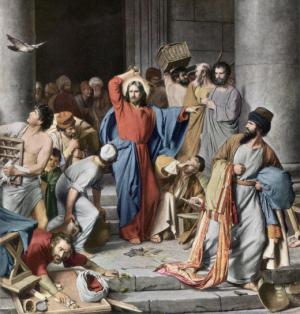
jesus overturns money tables

Jesus Overturns the Money Tables

Jesus created a violent disturbance making people lose money at a time when thousands gathered in Jerusalem for Passover.

12 Jesus entered the temple courts and drove out all who were buying and selling there. He overturned the tables of the money changers and the benches of those selling doves.    Matthew 21:12

15 On reaching Jerusalem, Jesus entered the temple courts and began driving out those who were buying and selling there. He overturned the tables of the money changers and the benches of those selling doves,     Mark 11:15

45 When Jesus entered the temple courts, he began to drive out those who were selling.   Luke 19:45

15 So he made a whip out of cords, and drove all from the temple courts, both sheep and cattle; he scattered the coins of the money changers and overturned their tables.     John 2:15

Image removed.

When did Jesus's temple tantrum occur?

At the beginning of his ministry

This beginning of miracles did Jesus in Cana of Galilee ...
After this he went down to Capernaum, he, and his mother, and his brethren, and his disciples: and they continued there not many days. And the Jews' passover was at hand, and Jesus went up to Jerusalem. And found in the temple those that sold oxen and sheep and doves, and the changers of money sitting: And when he had made a scourge of small cords, he drove them all out of the temple, and the sheep, and the oxen; and poured out the changers' money, and overthrew the tables; And said unto them that sold doves, Take these things hence; make not my Father's house an house of merchandise. John 2:11-16

The day of his trimphal entry

And as he went, they spread their clothes in the way. And when he was come nigh, even now at the descent of the mount of Olives, the whole multitude of the disciples began to rejoice and praise God with a loud voice for all the mighty works that they had seen; Saying, Blessed be the King that cometh in the name of the Lord: peace in heaven, and glory in the highest.
...
And he went into the temple, and began to cast out them that sold therein, and them that bought. Luke 19:36-45

The day after his triumphal entry

And when they drew nigh unto Jerusalem, and were come to Bethphage, unto the mount of Olives, then sent Jesus two disciples, Saying unto them, Go into the village over against you, and straightway ye shall find an ass tied, and a colt with her: loose them, and bring them unto me. ... And brought the ass, and the colt, and put on them their clothes, and they set him thereon. And a very great multitude spread their garments in the way; others cut down branches from the trees, and strawed them in the way. And the multitudes that went before, and that followed, cried, saying, Hosanna to the son of David: Blessed is he that cometh in the name of the Lord; Hosanna in the highest. ... And Jesus went into the temple of God, and cast out all them that sold and bought in the temple, and overthrew the tables of the moneychangers, and the seats of them that sold doves, And said unto them, It is written, My house shall be called the house of prayer; but ye have made it a den of thieves. Matthew 21:1-13

And when they came nigh to Jerusalem, unto Bethphage and Bethany, at the mount of Olives, he sendeth forth two of his disciples, And saith unto them, Go your way into the village over against you: and as soon as ye be entered into it, ye shall find a colt tied, whereon never man sat; loose him, and bring him. ... And they brought the colt to Jesus, and cast their garments on him; and he sat upon him. And many spread their garments in the way: and others cut down branches off the trees, and strawed them in the way. ... And on the morrow ... they come to Jerusalem: and Jesus went into the temple, and began to cast out them that sold and bought in the temple, and overthrew the tables of the moneychangers, and the seats of them that sold doves; And would not suffer that any man should carry any vessel through the temple. And he taught, saying unto them, Is it not written, My house shall be called of all nations the house of prayer? but ye have made it a den of thieves. Mark 11:1-17

Don’t Give to Cesar

Jews at that time of horrible Roman occupation and confiscation believed that nothing rightfully belonged to Cesar.  Jesus was saying that what the Romans were taking were not theirs.   He was saying DON’T pay Romans anything.  The things that were  Caesar’s ……. was violence.

And Jesus answering said unto them, Render to Caesar the things that are Caesar’s, and to God the things that are God’s. And they marvelled at him.    Mark 12:17

The Terrorist Jesus

In 175 B.C.E.,Antiochus IV Epiphanes, the son of Antiochus III invaded Judea.

Judaism was outlawed.  In 167 BCE Antiochus ordered an altar to Zeus erected in the Temple. He banned circumcision and ordered pigs to be sacrificed at the altar of the temple.  The sacrifice of pigs to the Greek gods was standard ritual practice in the Ancient Greek religion.

In 165 B.C.E. the Jewish revolt against the Seleucid monarchy was successful. The Temple was liberated and rededicated.

In 63 B.C.E. Judea and the Galilee area was conquered by the Roman General Pompey.  In B.C.E. 31 the areas were ruled by Herod the Great until his death in 4 C.E.  After his death a Jewish uprising happened again that the Romans crushed.

Zealot John the Baptist

In 26 C.E. John the Baptist preached that God was going to help to establish a Jewish, non-Roman Kingdom, and that kingdom was at hand.  John the Baptist was very popular among the people and they regarded him a prophet, one of the highest honors.

The New Testament states his beheading was because he was in mere opposition to the King’s niece’s marriage.

For Herod himself had sent forth and laid hold upon John, and bound him in prison for Herodias’ sake, his brother Philip’s wife: for he had married her.     Mark 6:17

Historian Josephus reported that the ruler Herod Antipas beheaded John the Baptist in 29 C.E. because the Romans feared he would lead another anti-Roman uprising.        Antquities, Josephus 18:5:2

Zealot Jesus

John’s cousin Jesus, continued to preach the same.  Jesus would even pray, ‘let you will be done “on earth” as it is in heaven.’  Jesus violently turned over the tables filled with money at the Temple.  Pontius Pilate arrested and executed Jesus for his claiming to be king and opposing Roman taxes.

4 After arresting him, he put him in prison, handing him over to be guarded by four squads of four soldiers each. Herod intended to bring him out for public trial after the Passover.     Acts 12:4

Why Jesus was a Terrorist.

Everyone referred to Jesus as if he were the King.  The titles were  Christ,  King of Israel,  Son of David,  Son of God,  Son of Man.  These all are titles referring to an earthly kingdom.

CHRIST – Jesus asked Peter who he was and Peter answered, “You are the Christ.”  Christ is a Greek word that means the Messiah.  Peter knew that Christ was the title given to every King of Israel.  Peter would follow what Jesus said to do and not what Rome said.

KING OF ISRAEL – Nathanial, a disciple of Jesus told Jesus, “You are the King of Israel”.  Messiah means anointed King, one who has a claim to the throne of David, a throne that rules an earthly kingdom.

Nathanael answered and saith unto him, Rabbi, thou art the Son of God; thou art the King of Israel.     John 1:49

SON OF DAVID – Two blind men begged Jesus to heal them.  They called out to him, “Lord, Son of David, have mercy on us.”  This statement shows that Jesus had claimed the throne of David.

SON OF GOD – This was an honorary title given to every Jewish King of Israel.  It alludes to the fact that they were descendants from King David and acted piously as if they were God’s son.  Psalm 2:7 refers to God’s son.  Psalm 2 is recited at every coronation of the King of Israel.  “Son of God” is a royal title given throughout the centuries to the reigning King of Israel.

SON OF MAN – This is a name given by Daniel the Prophet to the Messiah regarding his kingship and that all nations and tongues would recognize his dominion and his reign would be established forever.  Daniel 7:13, 14.  By Jesus using this term he was claiming to be the Messiah and claiming dominion over the nations of the world, including Rome.  And people were following him.

Jesus He Tried

According to prophesies of Zecharaiah, Jesus tried to do and fulfill them himself so he could be the Messiah.

1.   Zecharaiah stated that the Messiah would ride into Jerusalem on a donkey,

“Rejoice greatly, O daughter of Zion!  Shout, O daughter of Jerusalem!  Behold, your King is coming to you;  He is just and having salvation,  Lowly and riding on a donkey,  A colt, the foal of a donkey.     Zecharaiah 9:9.

7  They brought the donkey and the colt and placed their cloaks on them for Jesus to sit on.  Matthew 21:1, 2, 7.

Image removed.

Jesus rode into Jerusalem on a donkey,

2.   Zecharaiah stated that the Messiah would wage a violent war against all those nations who were against Israel,

9  On that day I will set out to destroy all the nations that attack Jerusalem    Zechariah 12:9-10

Jesus was preaching this.

3.   Zecharaiah stated that this war would start on the Mount of Olives,

On that day his feet will stand on the Mount of Olives, east of Jerusalem, and the Mount of Olives will be split in two from east to west, forming a great valley, with half of the mountain moving north and half moving south.     Zecharaiah 14:4

Jesus was arrested on the Mount of Olives where he was with his many followers,

30 And when they had sung an hymn, they went out into the mount of Olives.     Matthew 26:30, 36

14 When they had sung a hymn, they went out to the Mount of Olives.     Mark  14:25. 26.

I guess things just didn’t work out like Jesus wanted.

Image removed.

Jesus Arrested

Romans sent a cohert (a very large number of soldiers somewhere between 300 and 600 soldiers) to arrest Jesus.  They feared his many followers would fight the arresting soldiers when Jesus would be taken into custody.

47 While he was still speaking, Judas, one of the Twelve, arrived. With him was a large crowd armed with swords and clubs, sent from the chief priests and the elders of the people     Matthew 26:47

43 Just as he was speaking, Judas, one of the Twelve, appeared. With him was a crowd armed with swords and clubs, sent from the chief priests, the teachers of the law, and the elders.     Mark 14:43

52 Then Jesus said to the chief priests, the officers of the temple guard, and the elders, who had come for him, “Am I leading a rebellion, that you have come with swords and clubs?   Luke 22:52

12 Then the detachment of soldiers with its commander and the Jewish officials arrested Jesus. They bound him    John 18:12

Charges against Jesus

Opposed Taxes (OUCH!!!) –

And they began to accuse him, saying, “We have found this man subverting our nation. He opposes payment of taxes to Caesar and claims to be Messiah, a king.”     Luke 23: 2

Perverting the Nation –

12 Jesus entered the temple courts and drove out all who were buying and selling there. He overturned the tables of the money changers and the benches of those selling doves.     Matthew 21:12

Forbidding to give Tribute to Cesar – (ouch again)

17 Then Jesus said to them, “Give back to Caesar what is Caesar’s and to God what is God’s.”

And they were amazed at him.     Mark 12:17

Saying He is a King –

37 “You are a king, then!” said Pilate.

Jesus answered, “You say that I am a king. In fact, the reason I was born and came into the world is to testify to the truth. Everyone on the side of truth listens to me.”     John 18:37

 And they began to accuse him, saying, We found this fellow perverting the nation, and forbidding to give tribute to Caesar, saying that he himself is Christ a King.    Luke 23:2

The High Priest said he was a threat to the Jews.

 If we let him thus alone, all men will believe on him: and the Romans shall come and take away both our place and nation.     John 11:48

A Zealot threat to the Temple and Israel

The High Priest stated, “If we let him [Jesus] alone like this, everyone will believe in him and the Romans will come and take away both our place [the Temple] and the nation.  It was expedient that one man should die for the people,”  John 11:48, 50

Image removed.

Sign Posted on the Cross

Pontius Pilate wanted everyone to know the reason Jesus was crucified.  He attached a board at the top of the cross that said “King of the Jews”

26 The written notice of the charge against him read: the king of the jews.     Mark 15:26

Rome was making a statement to all the Jews that this man was executed for sedition, and someone better think twice if he wants to go down that same path.

The Term “King”

Josephus used the word “king” as a leader of a band of insurgents.  It was a leader by force with others following him.  A “created king immediately.”         Antiquities of the Jews, Josephus, 17:10:8

When Jesus therefore perceived that they would come and take him by force, to make him a king, he departed again into a mountain himself alone.     John 6:15

Then Nathanael declared, “Rabbi, you are the Son of God; you are the king of Israel.”      John 1:49

The Two Thieves Crucified with Jesus

Correct translation of “thieves” is armed rebels.

Thieves was the word translated in Luke 23:32, Matthew 27:38, Mark 15:27.  However the well known historian of that time Josephus used the same word many times to mean armed rebel against Rome, i.e.

Cumanus sent his troops against the sizable force of Jewish peasants and their brigand leaders [christian word for thieves].         Antiquities of the Jews, Josephus, 20:6:3

High Priest Along with the Romans

The High Priest and the Sadducees joined the Romans to be against the disciples.

And as they spake unto the people, the priests, and the captain of the temple, and the Sadducees, came upon them,     Acts 4:1

Peter

An Angel broke out Peter and the apostles from jail and were told to go preach in the Temple.

19 But during the night an angel of the Lord opened the doors of the jail and brought them out. 20 “Go, stand in the temple courts,” he said, “and tell the people all about this new life.”    Acts 5:19

Peter and the other apostles were flogged for whatever they were preaching.  The well respected Gamaliel of the Sanhedrin compared Peter to a well known zealot and stated at that time,

For before these days rose up Theudas, boasting himself to be somebody; to whom a number of men, about four hundred, joined themselves: who was slain; and all, as many as obeyed him, were scattered, and brought to nought.  37 After this man rose up Judas of Galilee in the days of the taxing, and drew away much people after him: he also perished; and all, even as many as obeyed him, were dispersed.     Acts 5:36-37

38 Therefore, in the present case I advise you: Leave these men alone! Let them go! For if their purpose or activity is of human origin, it will fail.   Acts 5:38

When Peter was later arrested they bound him then chained him to two Roman soldiers.  In addition to that they placed two Roman soldiers at the door of his cell. I’m sure there were many other soldiers near by.  They were expecting trouble in the form of a large number of men similar to the 400 men that rallyed for Theudas.

6 The night before Herod was to bring him to trial, Peter was sleeping between two soldiers, bound with two chains, and sentries stood guard at the entrance.     Acts 12:6

At Peters trial by the Jewish High Court (the Sanhedrin) the leader of the Pharisee Party, Gamaliel compared Peter to Theudas, the current leading anti Roman zealot.  He also compared Peter to Judas of Galilee who founded the Zealot Party.  Peter was considered to be a dangerous anti Roman zealot.

Paul

Paul was arrested because he was a leader of other zealots.

“We have found this man to be a troublemaker, stirring up riots among the Jews all over the world. He is a ringleader of the Nazarene sect”    Acts 24:5

He was arrested on the Mount of Olives where Zechariah believed God would begin the messianic war against those opposing Jerusalem.

35 When Paul reached the steps, the violence of the mob was so great he had to be carried by the soldiers.

36 The crowd that followed kept shouting, “Get rid of him!”        Acts 21:35-36

38 “Aren’t you the Egyptian who started a revolt and led four thousand terrorists out into the wilderness some time ago?”     Acts 21:38

Unable to find Paul, some Jews dragged Jason and some brothers before the city officials shouting, “These who have turned the world upside down have come here too.  Jason has harbored them, and these are all acting contrary to the decrees of Caesar, saying there is another king, Jesus.”   Acts 17:6 to 8

Remember in the past Paul would go to Damascus, a foreign nation, and illegally kidnap and execute Christians who fled Judea because of their anti-Roman zealotry.       Acts 9:1, Acts 20:26, Acts 22:4, Acts 22:20, 1 Cor 11:32

Jesus’ Disciples had Rebel Nicknames

Five of Jesus’ disciples had zealot nicknames.

Simon the zealot,  Matthew 10:2.

Peter was called bar-Jonah written bariona.  Bariona in Aramaic means zealot.  Matthew 16:17.

Judas was referred to as “Isacariot,” Isacariot is a transliteration from Latin to Aramaic means “dagger-man.”  Scarius was applied to zealots opposed to the Roman rule of Judea.  Mark 3:14, Matthew 10:2

John and James the sons of Zebedee were referred to by their nickname “boanerges” which means “son of fiery zeal” or “sons of thunder” [bener ra’ash].  This was a name given to the warrior zealot.  Mark 3:17

Death of James

Jesus’ brother James was executed by the King Harod in 62 C.E. because he was a threat to the Roman security interests.

And he killed James the brother of John with the sword.       Acts 12:2

After the Death of Jesus

After the death of James, the Zealot Party lead a revolt  in 66-70 C.E. which resulted in the destruction of the Temple.

The Zealot and Pharisee Parties led an uprising against Rome in 132-135 C.E. which resulted in the total destruction of the whole country of the Jews at that time.