discover how our capabilities can improve your business
Teaser Image
alt

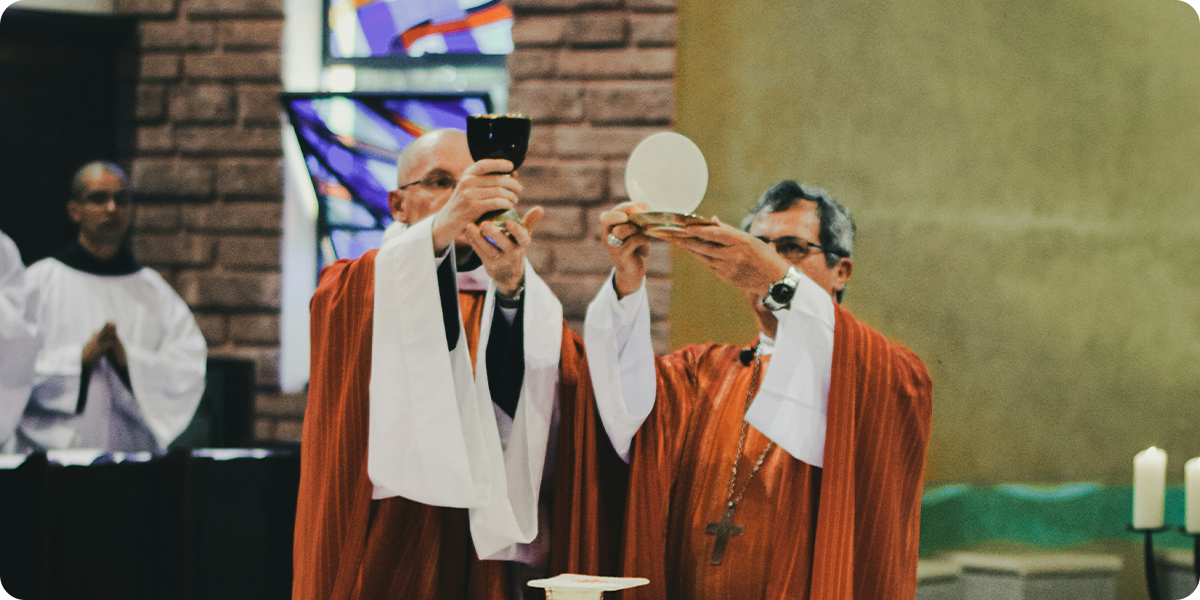
This is My Body

This is My Body...

Image removed.


26 While they were eating, Jesus took bread, and when he had given thanks, he broke it and gave it to his disciples, saying, “Take and eat; this is my body.”

27 Then he took a cup, and when he had given thanks, he gave it to them, saying, “Drink from it, all of you. 28 This is my blood of the covenant, which is poured out for many for the forgiveness of sins. 29 I tell you, I will not drink from this fruit of the vine from now on until that day when I drink it new with you in my Father’s kingdom.”        Matthew 26:26

22 While they were eating, Jesus took bread, and when he had given thanks, he broke it and gave it to his disciples, saying, “Take it; this is my body.”

23 Then he took a cup, and when he had given thanks, he gave it to them, and they all drank from it.

24 “This is my blood of the covenant, which is poured out for many,” he said to them. 

25 “Truly I tell you, I will not drink again from the fruit of the vine until that day when I drink it new in the kingdom of God.”       Mark 14:22  

The Roman Catholics state that the Eucharist is the natural body and blood of Christ Jesus verè et realiter.  Protestants agree with the Catholics and state that it is the body of Christ verè et realiter, then add spiritually by grace and efficacy.  ??? What ???

In the following passage Jesus commanded his believers to do a sacrament in rememberance of him: 

19 And he took bread, gave thanks and broke it, and gave it to them, saying, “This is my body given for you; do this in remembrance of me.”   Luke 22:19

20 In the same way, after the supper he took the cup, saying, “This cup is the new covenant in my blood, which is poured out for you.      Luke 22:20

This ritual of making bread wafer and wine (consecrated by a priest of course) into the actual body of a god has gone on for hundreds and thousands of years before the Jesus appointed birthdate.  In this manner, they ate their god.  And the Egyptians, who practiced this exact "sacrament" to Osirus possibly as long ago as 3150 years before any A.D. date.  The Worship of Osiris begins in Pre-Dynastic Period of Egypt. c. 3150 BCE - c. 30 BCE.  The bread and wine was brought to the temple by the worshipers.

Cicero, the greatest orator of Rome, and one of the most illustrious of Rome's statesmen, born in the year 106 B. C., mentions it in his writings his wonderings at the strangeness of the bread/wine rite.

"How can a man be so stupid," says he, "as to imagine that which he eats to be a God?"

From the beginings of the mysteries among the Pagans, the Eucharistia is one of the oldest rites of antiquity.

The followers of the Grand Lama in Tibet and Tartary offer to their god a sacrament of bread and wine.

The first Christian missionary that went to tibet, P. Andrada La Crozius, wrote about his findings in Tibet;

"Their Grand Lama celebrates a species of sacrifice with bread and wine, in which, after taking a small quantity himself, he distributes the rest among the Lamas present at this ceremony."

In the Indian and the Parsee religions, the devotees drink the juice of the Soma, or Haoma plant.  They consider it a god.  Mr. Baring Gould wrote:

"Among the ancient Hindoos, Soma was a chief deity; he is called 'the Giver of Life and of health,' the 'Protector,' he who is 'the Guide to Immortality.' He became incarnate among men, was taken by them and slain, and brayed in a mortar. But he rose in flame to heaven, to be the 'Benefactor of the World,' and the 'Mediator between God and Man.' Through communion with him in his sacrifice, man, (who partook of this god), has an assurance of immortality, for by that sacrament he obtains union with his divinity."

Pythagoras, the renown Grecian philosopher, was born about the year 570 B. C.  He performed this ceremony of the bread/wine sacrament he brought back from a visit to Egypt.

The "King of Righteousness," Melchizedek, "a priest of the Most High God," brought out BREAD and WINE as a sign or symbol of worship to experience God's presence.

Then Melchizedek king of Salem brought out bread and wine. He was priest of God Most High,    Genesis 14:18

The Rev. Dr. Milner stated;

"It was in offering up a sacrifice of bread and wine, instead of slaughtered animals, that Melchizedek's sacrifice differed from the generality of those in the old law, and that he prefigured the sacrifice which Christ was to institute in the new law from the same elements. No other sense than this can be elicited from the Scripture as to this matter; and accordingly the holy fathers unanimously adhere to this meaning."

This is wishful thinking to justify their pagan beliefs.  This bread and wine sacrament was offered to God and eaten before God by Jethro and the elders of Israel, [Exodus 18:12] and some of the mourning Israelites broke bread and drank "the cup of consolation," in remembrance of the departed, "to comfort them for the dead."   

Persia—the religion of Mithra, the Mediator, the Redeemer and Saviour—that we find the sacrament of the Christians, and from which the Christians evidently borrowed from. Those who were initiated into the mysteries of Mithra, or became members, took the sacrament of bread and wine.

M. Renan, writing of Mithraicism, says:

"It had its mysterious meetings: its chapels, which bore a strong resemblance to little churches. It forged a very lasting bond of brotherhood between its initiates: it had a Eucharist, a Supper so like the Christian Mysteries, that good Justin Martyr, the Apologist, can find only one explanation of the apparent identity, namely, that Satan, in order to deceive the human race, determined to imitate the Christian ceremonies, and so stole them."

St. Justin, writes alluding to the bread wine ceremony:

"The apostles, in the commentaries written by themselves, which we call Gospels, have delivered down to us how that Jesus thus commanded them: He having taken bread, after he had given thanks,  said, Do this in commemoration of me; this is my body. And having taken a cup, and returned thanks, he said: This is my blood, and delivered it to them alone. Which thing indeed the evil spirits have taught to be done out of mimicry in the Mysteries and Initiatory rites of Mithra. "For you either know, or can know, that bread and a cup of water (or wine) are given out, with certain incantations, in the consecration of the person who is being initiated in the Mysteries of Mithra."

The Eucharist of the Lord and Saviour, as the Magi called Mithra, the second person in their Trinity, or their Eucharistic sacrifice, was always made exactly and in every respect the same as that of the orthodox Christians.

The Persian Magi introduced the worship of Mithra into Rome.  These mysteries were solemnized in a cave. In the process of initiation there, candidates were also administered the sacrament of bread and wine, and were marked on the forehead with the sign of the cross. 

The ancient Greeks also had their "Mysteries," wherein they celebrated the sacrament of the Lord's Supper. The Rev. Robert Taylor, speaking of this, says:

"The Eleusinian Mysteries, or, Sacrament of the Lord's Supper, was the most august of all the Pagan ceremonies celebrated, more especially by the Athenians, every fifth year,  in honor of Ceres, the goddess of corn, who, in allegorical language, had given us her flesh to eat; as Bacchus, the god of wine, in like sense, had given us his blood to drink. . . . "From these ceremonies is derived the very name attached to our Christian sacrament of the Lord's Supper,—'those holy Mysteries;'—and not one or two, but absolutely all and every one of the observances used in our Christian solemnity. Very many of our forms of expression in that solemnity are precisely the same as those that appertained to the Pagan rite."

Prodicus (a Greek sophist of the 5th century B. C.) says that, the ancients worshiped bread as Demeter (Ceres) and wine as Dionysos (Bacchus);  therefore, when they ate the bread, and drank the wine, after it had been consecrated, they were doing as the Romanists claim to do at the present day, i. e., eating the flesh and drinking the blood of their god.  Mosheim, the celebrated ecclesiastical historian, acknowledges that:

"The profound respect that was paid to the Greek and Roman Mysteries, and the extraordinary sanctity that was attributed to them, induced the Christians of the second century, to give their religion a mystic air, in order to put it upon an equal footing in point of dignity, with that of the Pagans. For this purpose they gave the name of Mysteries to the institutions of the Gospels, and decorated particularly the 'Holy Sacrament' with that title; they used the very terms employed in the Heathen Mysteries, and adopted some of the rites and ceremonies of which those renowned mysteries consisted. This imitation began in the eastern provinces; but, after the time of Adrian, who first introduced the mysteries among the Latins, it was followed by the Christians who dwelt in the western part of the empire. A great part, therefore, of the service of the Church in this—the second—century, had a certain air of the Heathen Mysteries, and resembled them considerably in many particulars." 

These mysteries were, as we have said, also celebrated in honor of Bacchus as well as Ceres. A consecrated cup of wine was handed around after supper, called the "Cup of the Agathodaemon"—the Good Divinity.  Throughout the whole ceremony, the name of the Lord was many times repeated, and his brightness or glory not only exhibited to the eye by the rays which surrounded his name (or his monogram, I. H. S.), but was made the peculiar theme or subject of their triumphant exultation.  

The mystical wine and bread were used during the Mysteries of Adonis, the Lord and Saviour.  In fact, the communion of bread and wine was used in the worship of nearly every important deity. 

The rites of Bacchus were celebrated in the British Islands in heathen times,  and so were those of Mithra, which were spread over Gaul and Great Britain.  We therefore find that the ancient Druids offered the sacrament of bread and wine, during which ceremony they were dressed in white robes,  just as the Egyptian priests of Isis were in the habit of dressing, and as the priests of many Christian sects dress at the present day.

Among some negro tribes in Africa there is a belief that "on eating and drinking consecrated food they eat and drink the god himself." 

The ancient Mexicans celebrated the mysterious sacrament of the Eucharist, called the "most holy supper," during which they ate the flesh of their god. The bread used at their Eucharist was made of corn meal, which they mixed with blood, instead of wine. This was consecrated by the priest, and given to the people, who ate it with humility and penitence, as the flesh of their god.  Lord Kingsborough, in his "Mexican Antiquities," speaks of the ancient Mexicans as performing this sacrament; when they made a cake, which they called Tzoalia. The high priest blessed it in his manner, after which he broke it into pieces, and put it into certain very clean vessels. He then took a thorn of maguery, which resembles a thick needle, with which he took up with the utmost reverence single morsels, which he put into the mouth of each individual, after the manner of a communion.  The writer of the "Explanation of Plates of the Codex Vaticanus,"—which are copies of Mexican hieroglyphics—says:

"I am disposed to believe that these poor people have had the knowledge of our mode of communion, or of the annunciation of the gospel; or perhaps the devil, most envious of the honor of God, may have led them into this superstition, in order that by this ceremony he might be adored and served as Christ our Lord."  The Rev. Father Acosta says: "That which is most admirable in the hatred and presumption of Satan is, that he hath not only counterfeited in idolatry and sacrifice, but also in certain ceremonies, our Sacraments, which Jesus Christ our Lord hath instituted and the holy Church doth use, having especially pretended to imitate in some sort the Sacrament of the Communion, which is the most high and divine of all others." 

He then relates how the Mexicans and Peruvians, in certain ceremonies, ate the flesh of their god, and called certain morsels of paste, "the flesh and bones of Vitzilipuzlti."

"After putting themselves in order about these morsels and pieces of paste, they used certain ceremonies with singing, by means whereof they (the pieces of paste) were blessed and consecrated for the flesh and bones of this idol."

These facts show that the Eucharist is another piece of Paganism adopted by the Christians. The story of Jesus and his disciples being at supper, where the Master did break bread, may be true, but the statement that he said, "Do this in remembrance of me,"—"this is my body," and "this is my blood," was undoubtedly invented to give authority to the mystic ceremony, which had been borrowed from Paganism.

Why should they do this in remembrance of Jesus? Provided he took this supper with his disciples—which the John narrator denies [According to the "John" narrator, Jesus ate no Paschal meal, but was captured the evening before Passover]—he did not do anything on that occasion new or unusual among Jews. To pronounce the benediction, break the bread, and distribute pieces thereof to the persons at table, was, and is now, a common usage of the Hebrews. Jesus could not have commanded born Jews to do in remembrance of him what they already practiced, and what every religious Jew does to this day. The whole story is evidently a myth, as a perusal of it with the eye of a critic clearly demonstrates.

The Mark narrator informs us that Jesus sent two of his disciples to the city, and told them this:

13 So he sent two of his disciples, telling them, “Go into the city, and a man carrying a jar of water will meet you. Follow him. 14 Say to the owner of the house he enters, ‘The Teacher asks: Where is my guest room, where I may eat the Passover with my disciples?’ 15 He will show you a large room upstairs, furnished and ready. Make preparations for us there.”

16 The disciples left, went into the city and found things just as Jesus had told them. So they prepared the Passover.          Mark 14:13-16

It is interesting to note that a man in Jerusalem should have had an unoccupied and properly furnished room just at that time, when two millions of pilgrims sojourned in and around the city. The man, it appears, was not distinguished either for wealth or piety, for his name is not mentioned; he was not present at the supper, and no further reference is made to him. It appears rather that the Mark narrator imagined an ordinary man who had a furnished room to let for such purposes, and would imply that Jesus knew it prophetically. 

The Matthew narrator's account is free from these embellishments, and simply runs thus: Jesus said to some of his disciples—the number is not given —

18 He replied, “Go into the city to a certain man and tell him, ‘The Teacher says: My appointed time is near. I am going to celebrate the Passover with my disciples at your house.’” 19 So the disciples did as Jesus had directed them and prepared the Passover.        Matthew 26:18-19

As early as the second century, however, the seeds were planted, when we find Ignatius, Justin Martyr, and Irenæus advancing the opinion, that the mere bread and wine became, in the Eucharist, something higher— something heavenly —without, however, ceasing to be bread and wine.  After the third century the task of presenting the bread and wine came to be confined to the ministers or priests.  As in Christ Jesus two distinct natures, the divine and the human, were wonderfully combined, so in the Eucharist there was a corresponding union of the earthly and the heavenly.

Transubstantiation is the invisible change of the bread and wine into the body and blood of Christ.  The credulity of the age, with its love for the wonderful and magical, the interest of the priesthood to add lustre, in accordance with the heathens, to a rite which enhanced their own priestly office, resulted in the doctrine of Transubstantiation being declared an article of faith of the Christian Church.  Luther maintained a corporeal, and Calvin a real presence of Christ in the Eucharist; and the opinion of Zuinglius, that it is no more than a spiritual communion, a simple memorial, has slowly prevailed in the reformed churches. 

At the present day, the Greek and Roman Catholics alone hold to the original doctrine of the real presence.  Of all the religious observances among heathens, Jews, or Turks, none has been the cause of more hatred, persecution, outrage, and bloodshed, than the Eucharist. Christians persecuted one another like relentless foes, and thousands of Jews were slaughtered on account of the Eucharist and the Host.
Teaser Image
name jesus

The Name "Jesus"

The Name Jesus

  • choosing name jesus

    Jesus


Constantine Created the Name "Jesus"

Hail Zeus.  Constantine created the “universal” or “Catholic” religion to stop religious factions from waring against each other.  In doing this he made an amalgamation name from the names from all the religious factions.  That amalgamation name was “Jesus Christ.”

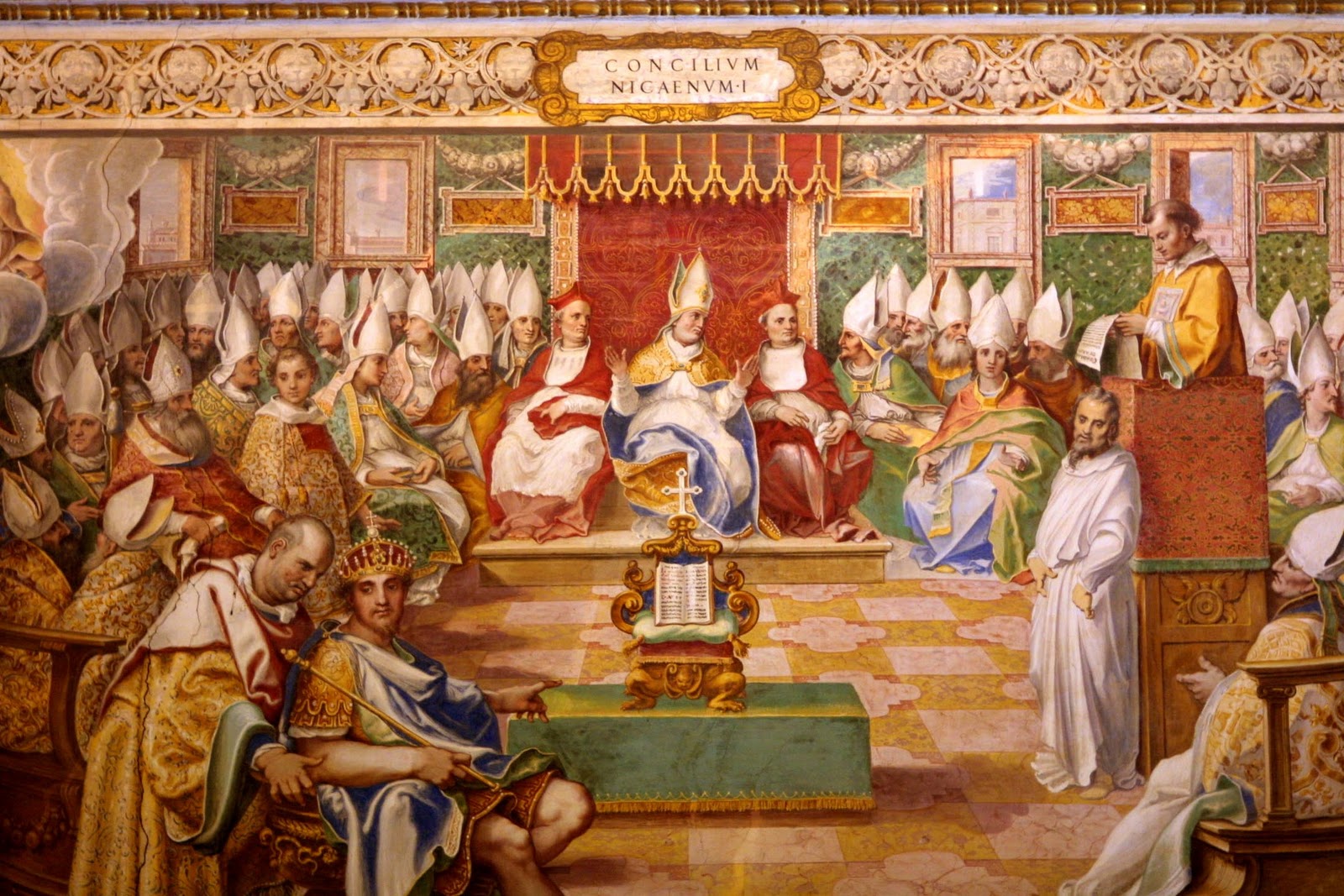
council of NiceaCouncil of Nicea

The Making of “The Name” at Nicaea

The name Jesus is not a Hebrew name. The name “Jesus Christ” or “Christ Jesus” was a name created at the Council of Nicaea.  The name united two of the major religious factions at that time.  It was an amalgamation of names.

The name “Jesus” was derived from the name Hesus of the Druids, Joshua of the Israelites, Horus / Iusa of the of the Egyptians, IES / Iesios of the Dionysians / Samothracians, Zeus of the Greeks……

…..and the word “Christ” derived from Krishna/Christos of India, the Anointed Jews (Christ means anointed), and KRST of Egypt.

***No "Jesus" Name on Original Manuscripts***

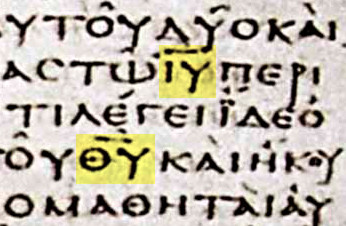
The name “Jesus Christ” did not appear in any Greek or Latin writings before the Council of Nicaea.  They called it a "sacred abbreviation" ... It was two letters of the Greek alphabet .... similarly looking like an "I E" in English.

Later manuscripts had different sacred abbreviations.

sacred abreviation

IY=man-God OY= God

English Meaning?

Greek Word?

Nominative (Subject)

Genitive (Possessive)

God

Θεός

ΘΣ

ΘΥ

Lord

Κύριος

ΚΣ

ΚΥ

Jesus

Ἰησοῦς

ΙΣ

ΙΥ

Christ/Messiah

Χριστός

ΧΣ

ΧΥ

Son

Υἱός

ΥΣ

ΥΥ

The name Yi-Zeus

Constantine worshiped the Sun. “Yio-Zeus” in Greek means “Dawn of Zeus.” Zeus was the king of the gods. Is this name a close resemblance to the sound of the name “Jesus”? [People don’t like pronouncing double vowels and drop the second vowel].   Coincidence?

Zeus is the Greek form of sanskrit Dyhaus pitar, “Father Heaven.”  The name is linked with Babylonian myths of Zu the storm bird, a thrower of thunderbolts.  The Romans called him Jupiter or Jove;  The European Christians substituted the word Jesus for Zeus.

The name ie-Zeus

It is written that the word ie was a common shout by the people meaning “hail.”  This word would be followed by the emperor’s name, as in ie-Cesar.  In this case it would be “Hail Zeus.”   This is a natural sound of human expression the dictionary defines as; Used as an exclamation of pleasure, approval, elation, or victory; the word “Yay.”

ie ZeusJe-Zeus

Jesus was a Common Greek Name.

The name Jesus appears to have been fairly common at the time of Christ’s life.  (Josephus, “Ant.”, XV, ix, 2; XVII, xiii, 1; XX, ix, 1; “Bel. Jud.”, III, ix, 7; IV, iii, 9; VI, v, 5; “Vit.”, 22)

Was the name Jesus was imposed by God’s express order???

Therefore God exalted him to the highest place and gave him the name that is above every name,   Philippians 2:9

And behold, thou shalt conceive in thy womb and bring forth a Son, and shalt call His name Jesus.  Luke 1:31

And she shall bring forth a Son, and thou shalt call His name Jesus, for He shall save His people from their sins.” Matthew 1:21

Hesus, of the Keltic Druids 834 BCE

Hesus is the God of the Druids having been crucified with a lamb on one side and an elephant on the other side. A representation of this can be seen on the fire-tower of Brechin. The symbolism of the Elephant is that it is the largest animal in the world and represents all the sins of the world. The symbolism of the lamb is one of innocence and represents the victim. Christian use this same symbolism by saying “the lamb of God who takes away the sins of the world.” This infers that Jesus was the victim and takes away the sins of the world. This legend is found among the Canutes of Gaul.

IES / Iesios of the Dionysians/Samothracians

In Greek the name stated to be the translation of Jesus is spelled iesous.  Adding up the gematria assigned to each Greek letter of the name the total comes to 888.

I   E   S   O   U   S

10 + 8 + 200 + 70 + 400 + 200  =  888

Each of the 24 letters of the Greek alphabet when all are added up, the total of their assigned gematria number equivalent totals 888.  888 is considered a luck number.

In Pythagoreans teachings 888 is the string ratio of a whole tone (666 is the string ratio of a perfect fifth). Pythagoras worked out the frequency ratios (or string length ratios with equal tension) and found that they had a particular mathematical relationship.

The octave was found to be a 1:2 ratio and what we today call a fifth to be a 2:3 ratio. Pythagoras concluded that all the notes could be produced by these two ratios as (3/2)*(3/2)*(1/2) gave 9/8 which is a second and so on.

Numerology was very popular during the timeframe assigned to the life of Jesus Christ.

Horus AKA Iusa of the Egyptians

Iusa was represented as both the ass and the ox, or the short horned bullock in the cult of Atum-Ra.  The ox and the ass along with worshipers of an infant child found in the catacombs of Rome are representative of Iusa and not Jesus.

The story of Jesus riding on two asses in one version, and on an ass and the foal of an ass in another version, was in the triumphal procession to Jerusalem.  This is another example of Jesus doing the same thing Iusa did.  Iusa was the Egyptian Jesus story of the Kamite mythos 2500 B.C.  The youthful son-god rode upon an ass as Isua or as “Horus with the royal countenance.”

Krishna AKA Christos of India

Krishna disciples also gave him the title of “Jezeus” or “Jeseus” which means pure essence.  Krsna in Sanskrit.  This god’s worship can be traced back to the 400 B.C.E.

In present day, Krishna is one of the most widely revered and most popular of all Indian divinities.

KRST of Egypt

Horus is read as KRST.

Walk on water? KRST (Horus) did it! Jesus restored sight to the blind?  Horus did that a few thousand years before.  Crucified in a very dramatic trial next to two thieves?  Yes KRST (Horus) did that also.

Christians Say Yashua

Today a large number of Christians admit that the name Jesus is “mis-translation” and the real name is Yashua.  Yashua sounds like a different name.  There is no “eee” sound in the name that so dominates the word Jesus.    The “ah” sound found twice in the name Yashua is non-existent in the name Jesus. The “oo” sound in Yashua is not found in the name Jesus.  The “uh” sound in Jesus is not found in the name Yashua.

Messiah Name

Based on Psalm 72:17 many Jewish sages believe that the actual name of the Messiah will be Ianun.

What does the "Word of God" say his name is?

It's a secret. No one knows his name.

His eyes were as a flame of fire, and on his head were many crowns; and he had a name written, that no man knew, but he himself.       Revelation 19:12

Jesus

The angel of the LORD appeared unto him in a dream, saying, Joseph, thou son of David, fear not to take unto thee Mary thy wife: for that which is conceived in her is of the Holy Ghost. And she shall bring forth a son, and thou shalt call his name JESUS.       Matthew 1:21

Emmanuel

A virgin shall be with child, and shall bring forth a son, and they shall call his name Emmanuel. Matthew 1:23

Alpha and Omega

I am Alpha and Omega.       Revelation 1:8

The Lion of the tribe of Juda, the Root of David

Behold, the Lion of the tribe of Juda, the Root of David, hath prevailed to open the book, and to loose the seven seals thereof.      Revelation 5:5

Faithful and True

I saw heaven opened, and behold a white horse; and he that sat upon him was called Faithful and True, and in righteousness he doth judge and make war.      Revelation 19:11

The Word of God

He was clothed with a vesture dipped in blood: and his name is called The Word of God.     Revelation 19:13

King of Kings and Lord of Lords

He hath on his vesture and on his thigh a name written, KING OF KINGS, AND LORD OF LORDS.     Revelation 19:16

The bright and morning star

I am the root and the offspring of David, and the bright and morning star.       Revelation 22:16

Since Christians (wrongly) believe that the words of Isaiah 9:6 refer to Jesus, I guess I should add the names in this verse to the list.
[Ever heard anyone (other than the Book of Mormon) call Jesus "the everlasting Father"?]

Wonderful, Counsellor, The mighty God, The everlasting Father, the Prince of Peace

For unto us a child is born, unto us a son is given: and the government shall be upon his shoulder: and his name shall be called Wonderful, Counsellor, The mighty God, The everlasting Father, The Prince of Peace.      Isaiah 9:6

Teaser Image
alt

Messiah Requirements

Jesus Messiah?

Image removed.

Jesus MESSIAH REQUIREMENTS???

NOT.  The Christians constantly proclaim that Jesus was the Messiah, and that he fulfilled all the requirements described in the Old Testament. The Torah (Old Testament) describes six criteria which must be fulfilled before a person can be declared the Messiah.

1.  He must be the direct descendant of King David and King Solomon

2.  He must be anointed King of Israel

3.  He must return the Jewish people to Israel

4.  He must rebuild the Temple in Jerusalem

5.  He must bring peace to the world and end all war.

6.  He must bring knowledge of God to the whole world

1  Genealogy

The Messiah must be Jewish and from the Tribe of Judah.  Since Jesus had no birth father he is not from the Tribe of Judah. He must be from the linage of David.   If Jesus was adopted by Joseph then Jesus is not qualified to be the Messiah since adoption does not affiliate one to a Tribe. The Messiah must be from the seed of Solomon.  Luke claimed that Jesus descended from Nathan, David’s other brother.  Thus Luke eliminates Jesus as the Messiah. The genealogies vary as much as 15 generations more from the gospel of Matthew to the gospel of Luke.  And who was the grandfather of Jesus?  Matthew says it was Jacob.  Luke says it was Heli.  Matthew and Luke have totally different people in the linage of Jesus.  And according to Luke, Joseph was 300 years older than Mary (assuming a generation is 20 years times 15 generations).  I think this was the origin of the “May-December relationship” expression.

2  Anointed King

Messiah means anointed with oil.  This is in the context of anointing a King as King Saul and King Solomon were anointed with oil by the prophet Samuel.  Kings were anointed with oil by High Priests and Prophets to give authenticity to the King.

Matthew claimed that John the Baptist was Elijah the prophet (Matthew 11:11-14, 17:12-13).

The Gospel of John claimed that John the Baptist was NOT Elijah (John 1:21).

Jesus claimed he was king of an other worldly kingdom (John 18:36).  When governor Pilate asked Jesus if he was he king of the Jews,  Jesus answered “Yes.”

Jesus was anointed on his head and his feet by two nameless women, and before his burial.  These women were not prophets and there was no indication in the New Testament that these anointings bestowed kingship.

3  Bring the Jewish People Back

Shortly after Jesus’s death the people were expelled from Israel, the opposite of what the Messiah will do.

He will arise a banner for the nations and assemble the cast-aways of Israel; and He will gather in the dispersed ones of Judah from the four corners of the earth.  Isaiah 11:12

It shall be on that day the Hashem will thresh, from the surging [Euphrates] river to the Brook of Egypt, and you [Israel] will be gathered up one by one, O Children of Israel.  It shall be on that day that a great shofar will be blown, and those who are lost in  the  land of Assyria and those cast away in the land of Egypt will come [together], and they will prostrate themselves to Hashem on the holy mountain in Jerusalem.    Isaiah 27:12-13

I will return the captivity of Judah and captivity of Israel, and will rebuild them as at first.   Jeremiah 33:7

Image removed.

4  Rebuild the Temple

The Temple was standing during the life of Jesus.  It was destroyed shortly after his death.  Where is the Temple that Jesus rebuilt?

I will seal a covenant of peace with them: it will be an eternal covenant with them:  and I will emplace them and increase them, and I will place My Sanctuary among them; I will be a God to them and they will be a people to Me.  Then the nations will know that I am Hashem who sanctifies Israel, when My sanctuary will be among them forever.  Ezekiel 37:26-28

It will be in the end of days that the Mountain of the Temple of Hashem will be firmly established as the most prominent of the mountains, and it will be exalted up about the hills, and peoples will stream to it.   Micah 4:1

It will happen in the end of days; The Mountain of the Temple of Hashem will be firmly established as the head of the mountains, and it will be exalted above the hills, and all the nations will stream to it.  Many peoples will go and say, ‘Come let us go up to the Mountain of Hashem, to the Temple of the God of Jacob, and he will teach us of His ways and we will walk in His paths.’  Isaiah 2:2-3

5  Bring Peace to the World and End All War

Jesus certainly did not bring peace to the world.  Israel was destroyed shortly after the death of Jesus.  The last 2000 years have been the most violent period in History, much of which the Catholic Church was responsible for.  Since Israel has been established in 1948 it has experienced nothing but wars.

I will seal a covenant of peace with them; it will be an eternal covenant with them; and I will emplace them and increase them, and I will place My Sanctuary among them forever.  Ezekiel 37:26

He will judge between many peoples, and will settle the arguments of mighty nations from far away.  They will beat their swords into plowshares and their spears into pruning knives; nation will not lift sword against nation, nor will they learn war anymore.  Micah 4:3

He will judge among the nations, and will settle the arguments of many peoples.  They shall beat their swords into plowshares and their spears into pruning hooks;  nation will not lift sword against nation and they will no longer study warfare.  Isaiah 2:4

6  Bring Knowledge of God to the World

Jesus did NOT bring knowledge of God to the world.  Christians admit that their God the Trinity is a “mystery.”  Just the fact the Christians proselytize to make people believe in what God is, is proof that there is no knowledge of God in the world.

They will neither injure nor destroy in all of My sacred mountain; for the earth will be as filled with knowledge of Hashem as water covering the sea bed.  Isaiah 11:9

The glory of Hashem will be revealed, and all flesh together will see that the mouth of Hashem has spoken.   Isaiah 40:5

For then I will change the nations [to speak] a pure language, so that they all will proclaim the Name of Hashem, to worship Him with a united resolve.       Zephaniah 3:9

They will no longer teach – each man his fellow, each man his brother – saying, ‘know Hashem!  for all of them will know Me, from their smallest to their greatest – the word of Hashem – when I will forgive their iniquity and will no longer recall their sin.’   Jeremiah 31:33

He is Coming Again?  What?

And as a final note,there is no mention even remotely of any “second coming” in the Torah.  It is an utter fabrication by the Christians to give credibility to their imaginings.  In the investment world it’s called “pie in the sky” referring to getting some reward in the future, that seems impossible to reasonably believe you would get such a big return.  And in reality, the return never comes.  The reality that comes is the feeling of being a fool.

The Messiah is NOT going to be put to death!!!

From that time on Jesus began to explain to his disciples that he must go to Jerusalem and suffer many things at the hands of the elders, the chief priests and the teachers of the law, and that he must be killed and on the third day be raised to life.   Matthew 16:21

31 He then began to teach them that the Son of Man must suffer many things and be rejected by the elders, the chief priests and the teachers of the law, and that he must be killed and after three days rise again.

32 He spoke plainly about this, and Peter took him aside and began to rebuke him.   Mark 8:31-32

Then he [Jesus] took the twelve aside and said to them, “Behold, we are going up to Jerusalem and all things that arewritten by the prophets concerning the Son of Man will be accomplished.  For he will be delivered to the Gentiles and will be mocked and insulted and spit upon.  They will scourge him and kill him and the third day he will rise again.”    Luke 18:31-33

Where is this written by the prophets?????????

It isn’t !!!!!!!!!!!  The New Testament is the Word of God???  I don’t think so.

“But what about you?” he asked. “Who do you say I am?” Peter answered, “You are the Messiah.”   Mark 8:29

The disciples of Jesus knew the Messiah was not to be killed.

The disciples did not understand any of this. Its meaning was hidden from them, and they did not know what he was talking about.  Luke 18:34

Peter took him aside and began to rebuke him. “Never, Lord!” he said. “This shall never happen to you!”    Matthew 16:22


Teaser Image
jesus historical

Jesus Historical

Jesus Historical?


Everyone loves a story.  They don’t even care if it’s false, as long as it is entertaining.  If someone says it’s a true story, they will believe it because it was such a good story.

The SUPER HERO story

The ultimate story for the everyday man is the “idol worship HERO” story.

This story has been told since the dawn of history.   It involves a hero that is God like, half man half God.  There is an imenent severe problem where everyone will be hurt, and only he can rescue the day.  He overcomes the challenge and everyone respects him and he can get the girl of his choice.

Then there is the Ultimate HERO story.  It personifies God as the Hero.  It involves a human that had a divine birth that was special.  It involves a predicted birth and a supernatural conception.  As a child of age 13 this individual was exceedingly wise compared to the smartest adults of the time.  He escapes a mean ruthless ruler that want to kill him because the sooth sayers have predicted he will be just and overthrow the ruler.  He has a divine calling and fights demons.  He becomes popular and is hailed as a king.  Then the tide turns and he is betrayed and is not popular, and then he is executed.  This execution is often on a hilltop.  Then our hero is vindicated and taken to heaven where he reins there.

This story has been going on forever and is seen in the characters of Hercules, Apollonius of Tyana, Padma Sambhava, Gautama Buddha, Krishna, just to name a few.  There are many variants of this story but the drama is always the same.

The Jesus story fits this God HERO story almost perfectly.  Which makes it suspect as to it’s authenticity.  Man’s desire to idol worship is so great.  Both temples were destroyed because of idol worship.  This idol worship includes the desire for everyone to idol worship even the story teller, themselves, by revering them as knowing the answer to life.  So verification of the historical events of an idol worship story is so important.

Known Historians:

APOLLONIUS … APPIAN … APPION OF ALEXANDRIA … ARRIAN … AULUS GELLIUS … COLUMELLA … DAMIS … DIO CHRYSOSTOM … DION PRUSEUS … EPICETUS … FAVORINUS … FLORUS LUCIUS … HERMOGONES SILUS ITALICUS … JOSEPHUS … JUSTUS OF TIBERIUS … JUVENAL … LUCANUS … LUCIAN … LYSIAS… MARTIAL … PATERCULUS … PAUSANIAS … PERSUIS … PETRONIUS … PHAEDRUS … PHILO-JUDAEUS … PHLEGON … PLINY THE ELDER … PLINY THE YOUNGER … PLUTARCH … POMPONIUS MELA … PTOLEMY … QUINTILIAN … QUINTIUS CURTIUS … SENECA … STATIUS … SUETONIUS … TACITUS … THEON OF SMYRNA … VALERIUS FLACCUS … AND VALERIUS MAXIMUS.

History——————————————–

FORTY-ONE known and respected Historians of the time period have written NOTHING about Jesus !!!  There were also THREE HUNDRED known writers that wrote about life in those times.  Not one mentioned Jesus or any of the fantastic stories that allegedly occurred in the New Testament.

1. Being born of a virgin mother;

2. Three Magi following the brightest star forever to see the demigod;

3. The slaying of the innocent babies [Infanticide];

4. Raising the dead, healing the blind and lame;

4. Having the sky turn to blackness when Jesus died;

5. Earthquakes in the region;

6. The zombie saints coming out of their graves going to Jerusalem; and

7. The Resurrection [Risen How?]

At least one of these world headline news events would have at least a small mention by at least one of the foregoing historians and prolific writers.   But, NO…NO … they are totally silent!

Nothing about the miracles, nothing about the dead Saints BODIES rising to life from the their graves after the crucifixion and walking around the city and appeared to people, as is depicted in the New Testament.

52 The bodies of many holy people who had died were raised to life.

53 They came out of the tombs after Jesus’ resurrection and went into the holy city and appeared to many people.      Matthew 27:52

Nothing was written about the fantastical story of mass infanticide throughout the region.  Herod’s wickedness was documented but he was not stupid enough to do something that would make the whole population riot.

When Herod saw that the wise men had tricked him, he was furious. So he gave an order to kill all the baby boys in Bethlehem and in the surrounding area who were two years old or younger. This was in keeping with the time he learned from the wise men.      Matthew 2:16

The quote of Jeremiah 3:14 in Matthew 2:18 is taken out of context to try and get credibility by alledging the event (killing of baby boys) happened and was prophesied.

18 “A voice is heard in Ramah,
weeping and great mourning,
Rachel weeping for her children
and refusing to be comforted,
because they are no more.”      Matthew 2:18

The weeping is about the offspring of Rachael being killed in war (grown men in battle).  Here is the full text of Jeremiah chapter 3 ==>  Jeremiah Chapter 3.

What about the walking on water???  how about the feeding 5,000 people with five loaves of bread and two fishes???

Nothing about the huge amount … 470 Roman soldiers … that were sent to rescue …. Paul (???)…from the crowds, and the Romans kept good records.

23 Then he called two of his centurions and ordered them, “Get ready a detachment of two hundred soldiers, seventy horsemen and two hundred spearmen to go to Caesarea at nine tonight.

24 Provide horses for Paul so that he may be taken safely to Governor Felix.”   Matthew 23:23

It seems these historians didn’t write anything because they had already passed away in the first part of the first century.  So the third century (325 B.C.) story writing of the New Testament was completed then.  And there would be no witnesses for several centuries to refute the story telling.

Josephus who wrote in 93 C.E. with a vague reference …. however there are two versions.  Someone added to the original.

The first version made a reference to “James, the brother of Jesus. with the translator at his own whim adding to his translation a phrase that he thought should have been written.  The added phrase was  “known as the Christ.”  This phrase was added.

The second version is much longer and is known to have been added by someone who altered the original text.  It was a statement to bolster Christianity.

Two Yeishus

There were two Yeishus from the areas around Jerusalem that were special and were written about in the Jewish Talmud.

YEISHU BEN PANDIRA

This Yeishu was stoned to death and hung on a tree.  His crimes were treason and sorcery.  He died on the eve of Passover in Jerusalem.  This happened during the reign of Alexander Jannaeus (106 to 79 BCE).  This occurred 100 years before the alleged birth of the Christian Jesus-God.

This Yeishu had five disciples whose names were; Mattai, Naqi, Neitzer, Buni, and Todah. The disciple name Mattai is a close name to Matthew and could be where the name Matthew came from.

YEISHU BEN STADA

This Yeishu lived 100 years after the Jesus-God’s alleged birth.  He was also stoned and hanged for treason and sorcery on the eve of Passover.  But his death occurred in Lydda not Jerusalem.  It is said that he brought spells from Egypt in a cut in his flesh.  He was called a madman.  He was caught by hidden witnesses.

Note:

Neither was crucified on a cross.  Both were 100 years apart from the alledged birth date of the Jesus-God.